
What Is an EV Battery?
An electric vehicle (EV) battery is a large rechargeable pack that stores the electricity powering your car’s motor. Made of lithium-ion cells, electric vehicle (EV) batteries store electrical energy chemically and release it on demand — the more energy they hold, the farther you go on a single charge.
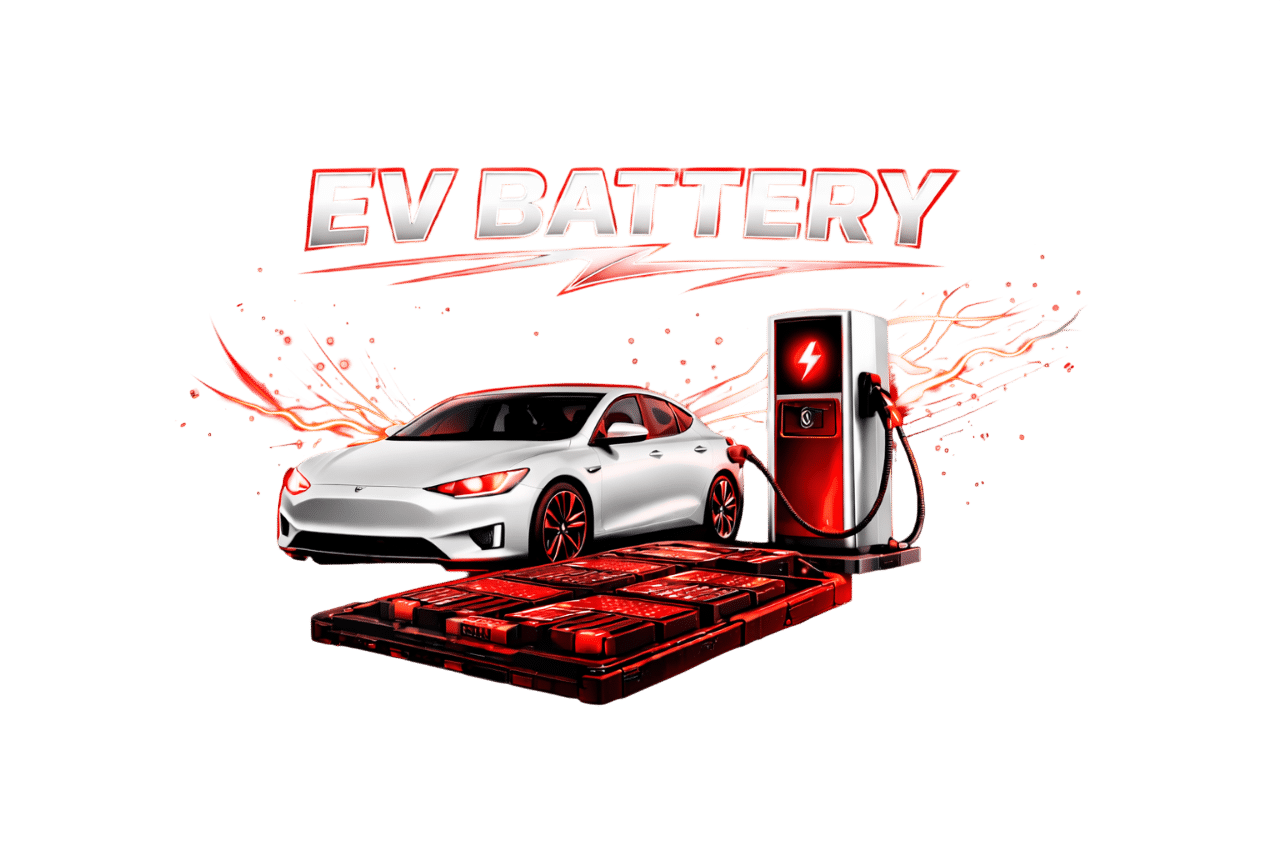

Your EV battery is also the most expensive component in the vehicle, making up 30 to 50 percent of the total car cost. A built-in computer called the Battery Management System (BMS) monitors every cell continuously to keep it safe, balanced, and performing at its best.
The BMS tracks state of charge (SOC), state of health (SOH), and cell voltage in real time — protecting against overcharging, overheating, and premature capacity degradation.
How Do EV Batteries Work?
Your EV battery pack is built from thousands of individual cells, grouped into modules, which are assembled into the full pack that sits beneath your car’s floor.
Each cell runs on a simple electrochemical reaction. When you charge, lithium ions move from the cathode to the anode and get stored there. When you drive, those ions flow back — and that movement generates the electrical current that powers your motor.
Four main components make this work:
- Anode: usually made of graphite, stores lithium ions during charging.
- Cathode: made of a lithium metal compound, it releases ions when you drive.
- Electrolyte: the liquid or gel medium that lets ions move between electrodes.
- Separator: a thin barrier that keeps the anode and cathode from touching directly.
The Battery Management System sits on top of all this. It continuously monitors EV battery voltage, temperature, and charge level in real time — preventing overcharging, managing heat, and keeping every cell balanced.
Simple Guide to Electric Vehicle Battery Specifications
Spec | Typical Range | What it means for you |
|---|---|---|
Capacity | 40 – 100 kWh | More kWh = more driving range per charge |
Voltage | 400V – 800V | 800V enables significantly faster charging |
Weight | 300 – 600 kg | Heavier packs offer more range but affect handling |
Lifespan | 8 – 15 years | Expect 10–20% capacity loss over the life of the car |
Warranty | 8 years / 100k–150k miles | Federal minimum — some brands offer more |
Everything You Need to Know About EV Batteries
Six guide collections covering how EV batteries work, degrade, charge, and get replaced — written for real US EV owners.
Battery Basics
How cells, modules, and packs work together — the foundation every EV owner should know.
View guidesLithium-Ion Batteries
NMC vs. LFP chemistry, ion flow, and why the chemistry choice changes range and lifespan.
View guidesSolid-State Batteries
The next-gen tech promising faster charging and higher density — what’s real vs. hype.
View guidesEV Charging
Level 1, 2, and DC fast charging explained — plus how charging habits affect degradation.
View guidesBrand Specific Batteries
Tesla, Ford, Chevy, Hyundai and more — how longevity and specs compare across brands.
View guidesBattery Health & Lifespan
Degradation, safety systems, and replacement costs — what actually shortens a pack’s life.
View guides