
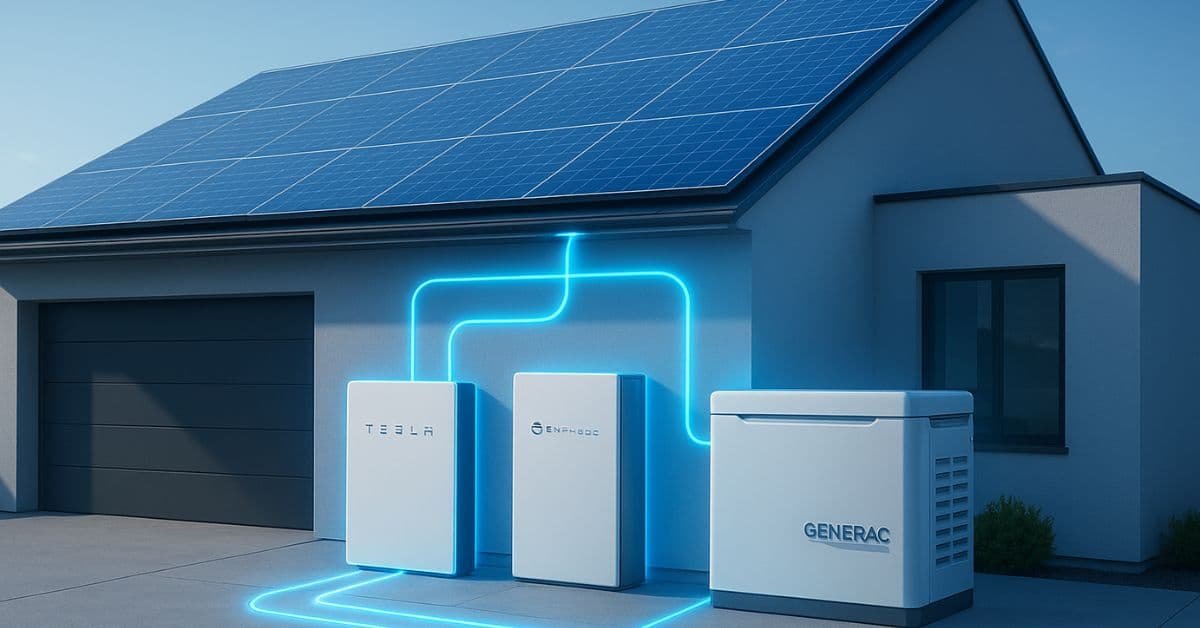
Tesla Powerwall Alternatives: Which Home Battery Is Best?

Almost everyone knows the Tesla Powerwall when they think of home energy storage. People choose it because it is powerful, looks good, and is often a good value. A person must ask if Powerwall is the best choice for their home.
The market for home batteries has grown significantly. Today, many other excellent batteries can replace the Tesla Powerwall. These may be a better fit for a person’s needs. Some batteries offer more extended guarantees. Others are easier to integrate into specific solar systems. A few can even save a person more money later. We will look at the best competing batteries. We will compare what each one offers. We will give the simple facts needed to choose the perfect home battery system.
Check out our guide on Tesla Battery Myths Debunked: Facts Every Driver Should Know.
Best Tesla Powerwall Alternatives
While the Powerwall is a great product, several competitors have stepped up to offer strong features and performance.
Here are the top alternatives we will compare:
1. Enphase IQ Battery
Solar installers really like the Enphase IQ Battery. The battery uses microinverter technology, making it very safe and reliable. If one part of the battery breaks, the rest of the system still works. People can easily add more power to the system later because of its modular design.
If you want deeper insights into Tesla’s battery reliability over time, read more about Tesla Battery Degradation: Complete Guide to Longevity.
2. Generac PWRcell
Generac makes trusted home backup power products. The company is famous for its generators. The PWRcell system is a strong and flexible choice. Homeowners can use it with a Generac generator for the best home backup solution. The PWRcell is known for making a lot of power. That power is suitable for running big machines, like air conditioners, when the power goes out.
3. FranklinWH aPower
The FranklinWH aPower is a new system. It is quickly becoming popular. It is special because it already has a smart home energy management system built in. The system lets people control and watch all their energy. People can watch solar, battery, grid, and generator power. They do all this from one simple app. The aPower offers homeowners many features, giving them total control.
For a detailed breakdown of common Tesla battery issues, check out Top 5 Tesla Battery Problems and How to Fix Them.
3. LG Chem RESU Prime
LG is a world leader in making batteries. Their RESU Prime series is a good and trusted choice. It has a high energy density. This means it holds a lot of power in a small space. The battery is strong and trustworthy. It works well with many different solar inverters.
Home Battery Comparison: Specs and Cost
When people compare home batteries, they must look at the numbers, not the brand name. The table below shows the most important facts for the Powerwall and other good choices.
| Battery | Usable Capacity (kWh) | Continuous Output (kW) | Chemistry | Warranty | Est. Cost per kWh* |
|---|---|---|---|---|---|
| Tesla Powerwall 3 | 13.5 | 11.5 | LFP | 70% at 10 years | $752 |
| Enphase IQ 5P (3 modules) | 15.0 | 11.52 | LFP | 60% at 15 years | $821 |
| FranklinWH aPower 2 | 15.0 | 10.0 | LFP | 70% at 12 years | $844 |
| Canadian Solar EP Cube (5 modules) | 19.9 | 7.6 | LFP | 80% at 10 years | $551 |
| Panasonic EVERVOLT EVX-15 | 13.5 | 7.6 | LFP | 60% at 12 years | $810 |
Key Takeaways from the Table
- Cost: The Canadian Solar EP Cube costs the least for each kWh of energy it stores. The Powerwall has a good price, but it is not the cheapest.
- Power: The Tesla Powerwall 3 and the Enphase IQ 5P give the most continuous power. This power is important for running large machines, such as water pumps or air conditioners.
- Warranty: Enphase offers the longest warranty. It lasts for 15 years. This gives people the most comfort for a long time.
Want to understand how Tesla batteries perform against other brands? Read our comparison: Tesla vs Ford vs Chevy: EV Battery Longevity in 2025.
Real-World Home Battery Performance
Choosing a battery is not just about its specs. It is about how the system works in your home every day. We gathered information from real users. The information gives you a complete picture.
Case Study
We spoke with a homeowner in California, Mark, who recently installed a solar-plus-storage system. Mark was initially set on the Powerwall but changed his mind after talking to several installers.
“I was ready to sign for the Powerwall, but the 10-year warranty felt a little short for such a big investment. My installer showed me the Enphase IQ Battery, which came with a 15-year warranty. For me, that extra five years of coverage was worth the slightly higher upfront cost. It felt like a safer bet for the next decade and a half.“
User Quotes on Key Features
Homeowners often share their experiences online, giving us a clear view of the pros and cons of each system:
On Power Output: “The Tesla Powerwall can support my A/C with no soft starter. That was a big factor for me because I live in a hot climate and need that power when the grid goes down.”
On Modularity: “The Enphase system was a bit more expensive up front, but felt safer and more modular for future expansion. I like that I can add a single battery unit later if my energy needs grow.”
On Support: “Support is hit or miss on both sides, so I went with the installer who answered all my calls and helped size everything clearly. The installer is just as important as the battery brand.”
How to Choose the Right Home Battery
The decision to buy a home battery is a big one. Here is a simple, actionable guide to help you make the right choice.
5 Key Factors to Consider
1. Backup Goal: You want to back up your whole house or only the most important things. Your choice will decide the size (kWh) and power (kW) you need.
2. Solar System Type: If your system already uses an Enphase microinverter, an Enphase battery will work perfectly with it. If you have a different system, the Powerwall or Generac may match better.
3. Power Needs: Look at the continuous output (kW). A large central air conditioner, an electric stove, or a well pump requires a battery with a high kW rating, such as the Powerwall 3 or Enphase IQ 5P.
4. Warranty: Compare the length of the warranty (10, 12, or 15 years) and the guaranteed end-of-warranty capacity (usually 60% to 80%). A higher percentage is better.
5. Installer Experience: A battery is only good if the installation is good. Choose a local installer with a good reputation and extensive experience with the specific battery brand you want.
Questions to Ask Your Installer
When you get quotes, ask these questions to make sure you are getting the right system:
- Will this system run my air conditioner and my refrigerator simultaneously?
- What is the total installed cost, and what is the estimated cost per kWh after tax credits?
- How long is the warranty, and what is the process if I need a repair?
- Can I easily add more battery capacity to this system in the future?
FAQs
How long does a home battery last during a power outage?
The battery’s size (kWh) and the amount of power you use (kW) determine this. A battery with 13.5 kWh, such as the Powerwall, can run important appliances for about 12 to 24 hours. If someone backs up their whole house, the battery might only last 6 to 10 hours. To make the battery last longer, you must use less power or install more batteries.
Can I go completely off-grid with a home battery?
Yes, but this is very hard and expensive. Most home batteries are designed to provide backup power and help people save money on their power bills. To live completely off-grid, you need a much larger battery bank and a solar setup that can generate enough power even on cloudy days.
Is it worth buying a home battery if I don’t have many power outages?
Yes, for two main reasons: Time-of-Use (TOU) savings and energy independence. With TOU pricing, you charge the battery when power is cheap (like when the sun shines at noon) and use the stored power when it is expensive (like in the evening). Doing this can save hundreds of dollars each year. This makes the battery a way to make money, not just a backup machine.
Conclusion
People choose the right Tesla Powerwall alternative based on their power needs, budget, and backup power goals. Systems like Enphase, Generac, FranklinWH, and Canadian Solar all work well. They offer long warranties and use dependable LFP chemistry. Homeowners should compare capacity, output, and the cost per kWh to find the best fit. A person can achieve energy independence and reliable backup power for many years with the right battery and installer.