
Tesla Battery Degradation: Causes and How to Prevent It

Tesla battery degradation is the gradual loss of a battery’s ability to hold its full charge over time. Every lithium-ion battery experiences this — it is a normal part of electrochemical aging, not a defect. What matters for Tesla owners is understanding what accelerates it and what slows it down, so your battery retains as much capacity as possible over hundreds of thousands of miles.
This guide focuses on the root causes of degradation and the proactive habits that prevent it. If you are experiencing a specific problem right now — such as overnight drain, a charging error, or a warning light — see our Tesla Battery Troubleshooting Guide for symptom-by-symptom fixes.
What Is Tesla Battery Degradation?
Battery degradation happens when the electrochemical structure inside lithium-ion cells breaks down gradually with use and time. The result is a battery that can store less total energy than it could when new. In practical terms, this means a shorter driving range on a full charge.
Two processes drive degradation. Calendar aging happens regardless of how much you drive — the battery ages simply because time passes and the cells are under constant chemical stress. Cycle aging happens through use — every charge and discharge cycle causes microscopic wear to the cell structure. You cannot stop calendar aging, but you have significant control over how fast cycle aging progresses through your charging and driving habits.
Tesla’s own data shows batteries lose roughly 5% capacity in the first year, then the rate slows dramatically — reaching only about 12% total loss after 200,000 miles. The initial drop is the steepest; after that, degradation becomes very gradual for most owners.
Main Causes of Tesla Battery Degradation
1. Heat
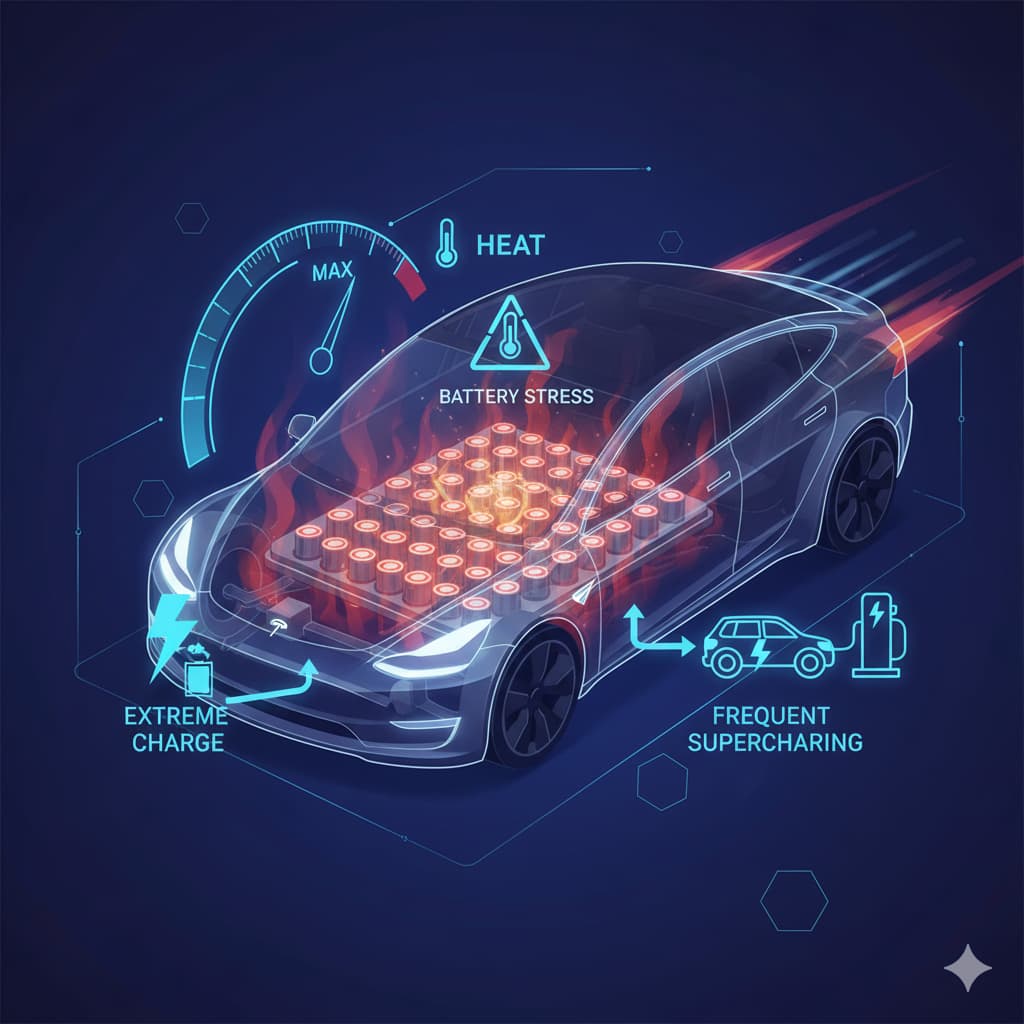
Heat is the single most damaging environmental factor for lithium-ion batteries. High temperatures accelerate the chemical reactions inside the cells, speeding up the breakdown of the electrode materials and the electrolyte. This causes permanent, irreversible capacity loss.
Heat enters your battery system in three main ways. Parking in direct sunlight on hot days raises the battery temperature even when the car is off. Aggressive driving — rapid acceleration and hard braking — generates internal heat inside the battery pack during high current draw. Frequent Supercharging also introduces heat because DC fast charging pushes high current through the cells, generating more thermal stress than slower Level 2 home charging.
Tesla’s liquid cooling system works hard to manage this heat, but minimizing heat exposure in the first place reduces the system’s workload and slows degradation meaningfully.
2. Extreme States of Charge
Lithium-ion cells experience the most electrochemical stress at the very top and very bottom of their charge range. Keeping a battery at 100% charge for extended periods puts the cathode material under constant stress, accelerating the breakdown of the crystal structure that stores lithium ions. This is why Tesla recommends against leaving NMC batteries at 100% for long periods when you are not about to drive.
At the other extreme, deeply discharging a battery below 10 to 20% also stresses the cells. The anode material — typically graphite — experiences structural strain at very low charge states, which contributes to long-term capacity loss. The Battery Management System (BMS) works to prevent actual zero-percent discharge by maintaining a small hidden buffer, but consistently running the battery very low still accelerates aging.
3. High Mileage and Charge Cycles
Every time you deplete and recharge the battery, it completes one charge cycle. With each cycle, small amounts of lithium become permanently trapped in the electrode structure and can no longer participate in energy storage. This is normal and unavoidable — but the rate at which it happens is influenced by how you charge. Shallow cycles (charging from 40% to 80%) cause less wear per cycle than deep cycles (charging from 5% to 100%).
| Mileage | Average Capacity Loss (NMC) | Degradation Rate |
|---|---|---|
| 25,000 miles | ~5% | Steepest |
| 50,000 miles | ~7% | Slowing |
| 100,000 miles | ~10% | Very slow |
| 200,000 miles | ~12% | Minimal |
4. Cold Weather
Cold temperatures do not cause permanent degradation in the same way heat does, but they do affect how the battery performs and, if handled incorrectly, can contribute to long-term wear. When a lithium-ion battery is very cold, lithium ions move more slowly through the electrolyte. Charging a cold battery — especially fast charging — can cause lithium plating on the anode, which permanently reduces capacity over time.
The safest approach in cold weather is always to precondition the battery before charging. Tesla’s navigation system automatically triggers battery preconditioning when you route to a Supercharger, bringing the battery to optimal temperature before charging begins. This prevents lithium plating and allows the full charging speed the car is capable of.
How to Prevent Tesla Battery Degradation
1. Set the Right Daily Charge Limit
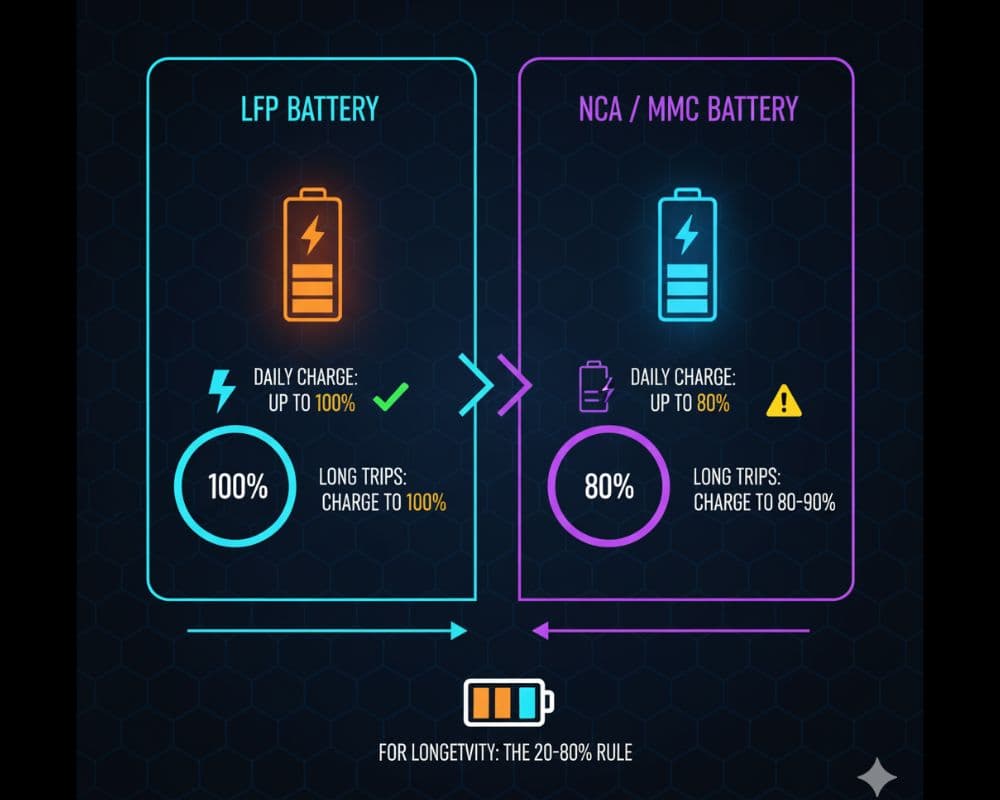
This is the most impactful single habit for long-term battery health. The correct charge limit depends on which battery chemistry your Tesla uses.
Battery Type | Daily Charging Recommendation | Long Trip Recommendation |
|---|---|---|
LFP (Standard Range) | Charge to 100% at least once per week | Charge to 100% just before departure |
NMC (Long Range and Performance) | Set limit to 80 to 90% for daily use | Charge to 100% only when needed for a long journey |
Set your charge limit in the Tesla app or directly on the car’s charging screen. For NMC batteries, only charge to 100% when you genuinely need the full range and plan to drive immediately — do not leave it sitting at 100% overnight.
2. Rely on Home Charging, Not Supercharging
Supercharging is excellent for long trips, but it should not be your primary daily charging method. DC fast charging pushes high current through the cells, generating more heat than Level 2 AC charging. Over thousands of sessions, the difference in heat exposure adds up to a measurable difference in long-term capacity retention.
For daily driving, charge at home with a Wall Connector or Level 2 charger overnight. This slower charging method is cooler, gentler on the cells, and — because it finishes around the time you wake up — ensures the battery does not sit at a high charge level for hours longer than necessary. Use Supercharging confidently for road trips; just avoid making it a daily habit when home charging is available.
3. Manage Temperature Exposure
Reducing your battery’s exposure to extreme temperatures is one of the most effective long-term prevention strategies. In hot weather, park in a garage or shaded area where possible. If the car must sit outside in summer heat, enable the Cabin Overheat Protection setting — it uses a small amount of battery power to keep the interior temperature from climbing so high that the battery is affected.
In cold weather, always precondition the battery before driving or charging. Use the Tesla app to schedule departure so the car warms the battery while still plugged in. This costs wall power rather than battery power and brings the cells to their optimal operating temperature before you put them under load.
4. Avoid Deep Discharges
Keep the battery above 20% charge whenever practical. The 20 to 80% range is where lithium-ion cells experience the least electrochemical stress. Running the battery consistently below 10 to 15% — especially in cold temperatures — accelerates the structural wear on the anode material and contributes to faster capacity loss over time.
If you are going to store your Tesla for an extended period (several weeks or longer), park it with the battery at around 50%. This is the lowest-stress charge level for long-term storage and minimises calendar aging during the period it is not in use.
5. Keep the Car Plugged In When Parked
When your Tesla is parked at home, keep it plugged in. This allows the Battery Management System to maintain optimal cell balance, run thermal management from wall power rather than battery power, and handle background software functions without drawing down the charge. An unplugged Tesla parked in extreme temperatures will use its own battery to manage heat or cold, adding unnecessary cycles and stress.
How Fast Does Tesla Battery Degradation Really Happen?
A real-world example illustrates the typical pattern well. A 2018 Model 3 Long Range owner reported a starting capacity of 310 miles. After the first year and approximately 20,000 miles, capacity had dropped to around 295 miles — a 5% loss. Over the following three years and another 60,000 miles, capacity dropped by only 5 additional miles. The first year produces the steepest drop; after that, the rate of loss slows dramatically.
Large-scale studies across thousands of Tesla owners confirm this non-linear pattern. The initial drop is partly caused by the BMS recalibrating its capacity measurement and a small, unavoidable physical change in the cells as they settle into their operating state. After this stabilisation period, owners who follow good charging habits can expect minimal further loss for many years.
Experiencing a specific battery problem right now? See our troubleshooting guide: Tesla Battery Problems and How to Fix Them
Conclusion
Tesla battery degradation is a normal, manageable part of EV ownership. The data shows that Tesla batteries hold up remarkably well over time — losing only around 12% capacity after 200,000 miles when properly maintained. The steepest loss happens in the first year; after that, the rate slows significantly for most owners.
The habits that matter most are straightforward: set the right daily charge limit for your battery chemistry, rely on home Level 2 charging rather than Supercharging for daily use, avoid extreme temperatures where possible, keep the battery above 20%, and leave the car plugged in when parked at home. These five habits cost nothing and can make a measurable difference to your battery’s health across the life of the vehicle.
