
Tesla Battery Technology in 2026: The Future of Power

If you own a Tesla or plan to get one, you know the battery is the most important part. It gives your car its range (how far it can go), its speed, and its quick charging.
In 2026, Tesla’s battery technology is changing fast! This is because of two things. First, they have a new kind of battery called the 4680 cell. Second, they are smart about using different types of battery chemicals.
Tesla is changing the design of the battery cell itself. They are also using new materials. These changes are good news! They are helping make Tesla cars more affordable. Also, the cars can do more than before.
The Game-Changer: Tesla’s 4680 Battery Cell
The 4680 battery cell is the biggest change to Tesla’s power source since the company began. This is more than just a new size. It is a full redesign that improves performance. It improves how the car works. It also lowers the cost to make the battery.
Tesla used to use smaller cells, called the 18650 and the 2170. Changing to the larger 4680 cell was a basic engineering choice. This decision helps the battery work better and deliver much more power.
What is the 4680 Cell?
The name “4680” just tells you its size. The battery is 46 millimeters wide. It is also 80 millimeters tall. This cell is much bigger than the old ones. Because it is bigger, it can hold more battery stuff inside. So, it stores more energy. But the best part is inside the cell. It uses a special feature called the tableless design.
Detailed Guide: Understanding Tesla’s 4680 Battery Innovation
No More Tabs
Older batteries have a small piece of metal called a tab. This tab connects the inside of the battery to the outside. This tab makes the electricity travel a long way.
When electricity travels a long way, it creates something called resistance. This resistance also makes a lot of heat. Heat is bad for a battery! It hurts the battery’s life and makes it charge slowly.
How the 4680 Cell Works
The 4680 cell is a newer kind of battery. It uses a full-pole ear design. This is like saying the whole top and bottom of the inside part become the connection point.
Think about a roll of paper towels. An old battery connects at only one small spot on the roll. But the 4680 cell connects all the way around the edges of the roll. This makes the path for the electricity super short. Because the path is shorter, the battery has much less resistance inside. It also makes much less heat.
Tesla 4680 Cell vs. Traditional 2170 Cell
| Feature | Traditional Tabbed Cell (e.g., 2170) | Tesla 4680 Cell |
|---|---|---|
| Size (Diameter x Height) | 21mm x 70mm | 46mm x 80mm |
| Current Path | Long, single tab | Short, full-pole ear (tabless) |
| Internal Resistance | Higher | Significantly lower (up to 5× reduction) |
| Power Output | Standard | Up to 6× more power [1] |
| Energy Density | Standard | Up to 5× more energy per cell [1] |
| Manufacturing | Simpler, established wet process | More complex, requires high-precision laser welding |
Good News for Your Electric Car
This new battery design gives big, real benefits to people who own an electric car (EV). These benefits change how you drive your car.
1. Quicker Charging
The battery now creates less heat when you charge it. This is because it has less internal resistance. The car’s cooling system can then send more power to the battery for longer.
This means your car will charge faster. You will see the biggest speed change when the battery is between 20% and 80% full. In some car models, the total charging time is now up to 16% shorter!
2. Drive Farther
The battery cell is bigger and made better. So, it can hold more energy. When car makers specially use this cell, they build the battery into the car (called a structural pack), so you can drive more miles on one charge.
Just the cell’s better design helps your car go about 16% farther.
Battery technology directly affects how far each Tesla can travel. Compare every model in our Tesla Battery Range Guide: All Models Compared.
3. Better Driving Power
The battery can give your car power more quickly. It means your car can speed up faster.
You get better overall driving performance. This is helpful when you need a lot of power fast. For example, you can get onto the highway or pass another car much more easily.
Manufacturing Challenges: The Dry Electrode Process
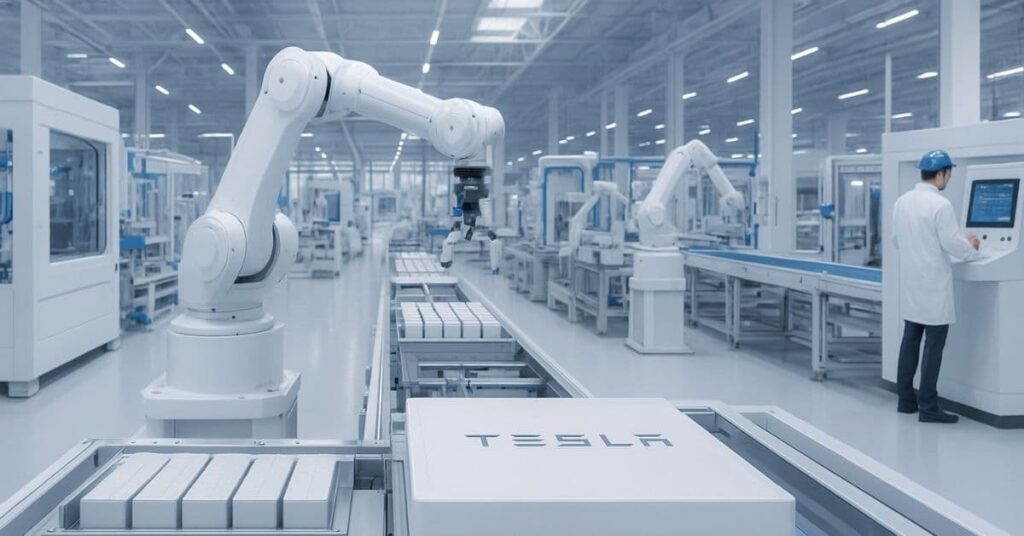
In the old way of making batteries, people used a “wet” process. They mix the battery stuff (active materials) with liquids. This creates a wet, thick mix called a slurry. Then, they spread this wet mix onto metal foil. This process uses a lot of energy. Why? Because big, expensive ovens must heat up and dry the liquid out.
Tesla’s Dry Electrode Technology changes this. Tesla bought the company Maxwell Technologies to get this idea. This dry process means they don’t need most of those liquids. Instead, they use the battery stuff as a dry powder. They simply roll the dry powder onto the metal foil.
Why the New Way is Better
This new process is a huge change because it helps in a few important ways:
- Saves Energy: It gets rid of the big drying ovens.
- Needs Less Space: The factory doesn’t need as much room for equipment.
- Costs Less Money: It greatly cuts the cost to build a battery factory and the energy it uses.
Even though it’s better, making this dry coating process work perfectly in huge amounts has been very hard for Tesla. Elon Musk called this difficult work “the machine that builds the machine.” Tesla is now working fast to build more batteries at its big factories (Gigafactories) in Texas and Berlin. They want to make 100 GWh of these new 4680 batteries by the end of 2026.
The Chemistry Mix: LFP, NMC, and the Future of Materials
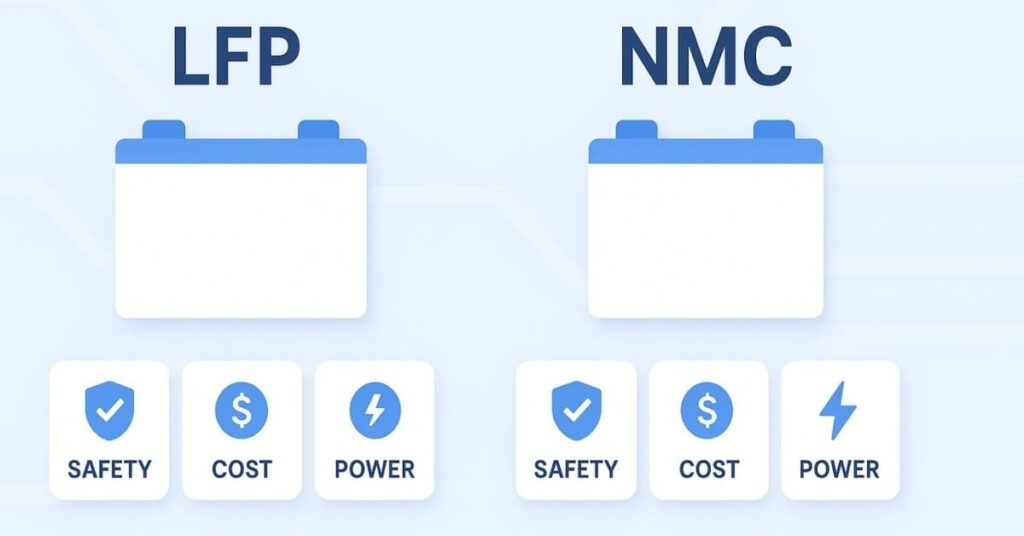
Tesla is really smart when it comes to batteries. They don’t just use one type of battery material. Instead, Tesla uses the best material for each job. This plan helps them save money. It also makes sure they always have enough battery material. This way, they can sell cars at different prices with different power levels.
Tesla selects different battery chemistries based on cost, range, safety, and performance. Read our NCA vs NMC vs LFP: Which Tesla Battery Is Best? guide for a detailed comparison.
Lithium Iron Phosphate (LFP): The Affordable Workhorse
LFP stands for Lithium Iron Phosphate. These batteries use iron and phosphate. These materials are cheaper and easier to find than the nickel and cobalt in other batteries. This makes LFP batteries great for the least expensive cars.
1. Best Uses
These batteries work best in basic cars, like the standard Model 3 and Model Y. They also power the Powerwall home storage.
Learn more about battery options in our Tesla Model 3 Battery: Complete Guide.
2. Big Good Point
You can charge LFP batteries to 100% every day. You don’t have to worry about the battery getting weaker over time. This makes charging super simple for the car owner. Also, LFP batteries are safer and less likely to catch fire. This is called thermal runaway.
3. Price and Materials
LFP batteries are important for Tesla’s goal to sell many affordable cars. By using LFP in standard cars, Tesla needs less nickel and cobalt. This lets them save those materials for their faster, high-power cars.
Tip for LFP Battery Owners: If your car has an LFP battery, charge it to 100% at least once a week. This is important! This full charge helps the car’s computer, called the Battery Management System (BMS), get an accurate reading. The BMS then knows exactly how much power is left in your battery.
Nickel Manganese Cobalt (NMC): The High-Performance Champion
NMC batteries are the high-performance choice, offering the best energy density—meaning they pack the most energy into the smallest space.
Best For
Long-range and Performance vehicles where maximum range and power are needed.
Key Advantage
They deliver the longest driving range and the highest power output for maximum acceleration. Tesla is continuously increasing the nickel content (moving toward high-nickel chemistries like NCMA, which includes Aluminum) to boost energy density while reducing the use of expensive and ethically challenging cobalt.
My Advice: For NMC batteries, it’s best to keep the daily charge limit set to 80% or 90% and only charge to 100% when you need the full range for a long trip. Holding a high state of charge (like 100%) for long periods can accelerate degradation in nickel-based cells.
The Next Frontier: Silicon and Solid-State
For 2026 and beyond, the focus is on two major material changes that will define the next generation of EV batteries:
1. Using Silicon
Tesla is trying hard to put silicon into the main part of their 4680 battery cell. This part is called the anode.
Right now, batteries use graphite. Silicon is much better. It can hold up to 10 times more lithium ions than graphite can. Because of this, using silicon could make the car’s range a lot longer—maybe 20% more or even more!
But there is a problem. When you charge and uncharge a battery, silicon grows bigger and then shrinks a lot. This stress can break the battery cell. Tesla’s engineers are working to build a silicon anode strong enough to handle the stress.
2. Solid-State Batteries
Another big goal for all car companies is solid-state batteries. Tesla is not making these yet.
Most batteries now have a liquid part called an electrolyte. This liquid can catch fire. A solid-state battery uses a solid material instead of this flammable liquid. This will make the batteries safer and better.
Case Study: The Structural Battery Pack and Cell-to-Vehicle Design
The 4680 cell is not just a cell; it’s part of a new vehicle design philosophy called the structural battery pack or Cell-to-Vehicle (CtV) architecture. This is a radical shift in how the car is built.
In traditional EV design, the battery pack is a heavy, self-contained box that is bolted onto the car’s chassis. The car’s body still needs its own structural components to handle crash forces.
In the structural pack design, the 4680 cells themselves are glued directly to the car’s front and rear underbody castings, making the battery pack a core structural component of the vehicle. The cells are the structure.
The Impact of the Structural Pack:
- Lighter Car: The heavy outer box and many inside parts of the battery pack are gone. Taking them out makes the car weigh less. A lighter car uses less energy, drives better, and can go farther (range).
- Safer Car: The cells are held inside a very strong, stiff structure. This helps the car handle a crash better. It can absorb and spread out crash forces.
- Lower Cost: This design makes building the car much simpler. It uses fewer parts and needs fewer steps to put the car together. This is a big reason why the company wants to make a cheaper electric car. It cuts down on the cost of both materials and the making of the car.
How Tesla Battery Packs Are Assembled
Understanding Tesla’s battery cell technology is only half the story. To fully answer how Tesla batteries work, it’s important to understand how thousands of individual cells are assembled into a complete battery pack—and how the pack’s systems keep everything safe and running efficiently.
From Cell to Module to Pack
Tesla groups small cells into larger units to handle the huge amount of power needed for a car. Think of it like building a big wall from many small bricks.
Thousands of cells connect to form a module. A typical Tesla battery pack has several modules. All the modules then go inside a large, sealed metal case — this forms the complete battery pack. The pack sits flat under the car floor, which saves interior space and lowers the center of gravity for better handling and crash safety.
| Component | What It Is | Why It’s Important |
|---|---|---|
| Lithium-Ion Cell | The smallest battery unit. | Stores the actual energy. |
| Module | A group of hundreds of cells. | Makes the pack easier to manage and cool. |
| Battery Pack | The complete unit under the car. | Powers the entire vehicle. |
Thermal Management

When a Tesla battery pack is driving fast or charging quickly, the cells get very hot. If they get too hot, they can be damaged or even catch fire. The thermal management system prevents this.
Tesla uses a special liquid cooling system that runs through the pack to:
- Cool the Battery: It pulls heat away from the cells when they are working hard.
- Warm the Battery: In cold weather, the system heats the cells to the right temperature before you drive or charge—cold batteries don’t perform well.
Keeping the battery at the perfect temperature (around 70°F or 21°C) is key to making it last a long time and perform its best.
Battery Management System (BMS): The Brain of the Pack
The Battery Management System (BMS) is the computer brain that runs the entire battery pack. It watches over every single cell and performs three critical jobs:
- Safety Check: Stops cells from getting too hot or too full. If one cell has a problem, the BMS can isolate it to keep the rest of the pack safe.
- Health Report: Continuously checks the battery’s health and reports how much energy remains — this is your driving range estimate.
- Cell Balancing: Makes sure all cells charge to the same level. A weaker cell can harm how the whole battery performs if left unbalanced.
The BMS is a big reason why Tesla battery packs are so reliable and safe over hundreds of thousands of miles.
Learn why Tesla batteries have an excellent safety record in Why Tesla Batteries Are Safer Than Other Electric Car Batteries.
How Long Does a Tesla Battery Pack Last?
Tesla’s warranty covers the battery for 8 years or up to 150,000 miles (exact coverage depends on the car model). In the real world, batteries last much longer. Studies show that after 200,000 miles, most Tesla batteries still hold about 85% to 90% of their original capacity. For the average driver, the battery will likely last 15 to 20 years before any significant range reduction.
Practical Advice for Maximizing Your Tesla Battery Life
As an EV owner, you have a lot of control over the health and longevity of your battery.
You can also follow our Best Practices to Extend Your Tesla Battery Life for additional maintenance tips.
Here are some actionable tips based on the latest battery science and my experience with EV ownership:
Daily Charging Habits
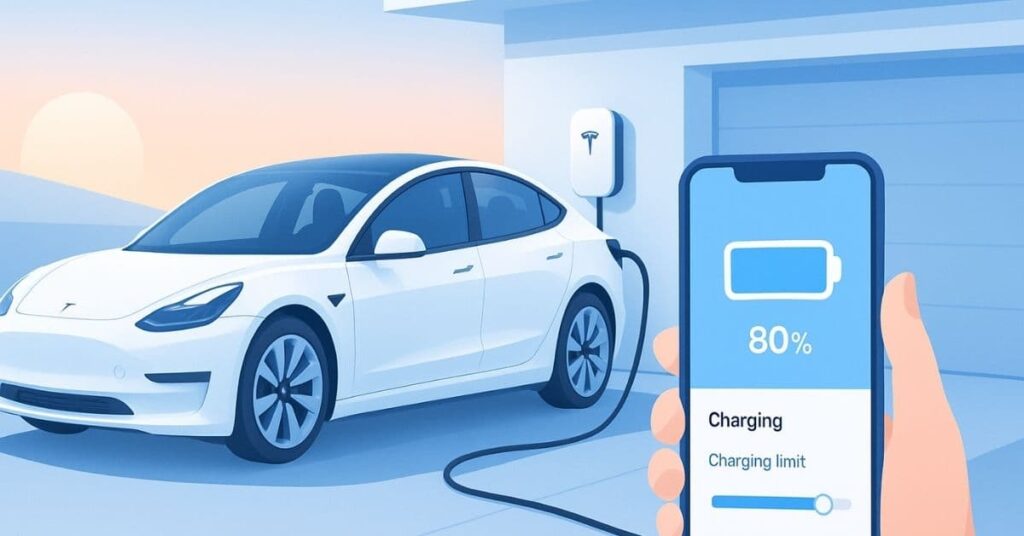
The most important factor in battery health is your daily charging routine. It’s simple: avoid keeping your battery at 100% or 0% for long periods.
| Battery Type | Daily Charging Recommendation | Why It Matters |
|---|---|---|
| LFP (Standard Range) | Charge to 100% regularly (at least once a week). | LFP chemistry benefits from a full charge to maintain accurate range calibration and ensure long-term health. Its iron-phosphate cathode stays stable even at high charge levels. |
| NMC (Long Range / Performance) | Set the charge limit between 80% and 90%. | High-nickel chemistry can degrade faster if kept at 100% too long. Keeping the charge in the mid-range helps extend lifespan and performance. |
| Both Types | Plug in whenever possible, even for short sessions. | Batteries stay healthiest between 30% and 70%. Frequent, gentle charging is better than letting them drop too low or charging from empty to full often. |
Learn what causes long-term battery wear in our Tesla Battery Degradation: Causes and How to Prevent It guide.
Driving and Storage Tips
Avoid Extreme Temperatures: Batteries hate being too hot or too cold. If possible, park in a garage or shaded area. While the car’s thermal management system is excellent at cooling or heating the battery, minimizing extreme exposure helps the system work less, saving energy and wear.
1. Precondition Your Battery
Use the Tesla app to precondition your battery before a trip or before Supercharging. This brings the battery to the optimal temperature for charging and driving, which is especially important in cold weather. A warm battery accepts a charge much faster and delivers better performance.
2. Limit Fast Charging
While Supercharging is convenient, it generates more heat than home charging. Try to use Level 2 (home or public) charging for your daily needs and save Supercharging for long road trips. Think of Supercharging as a necessary tool, not a daily habit.
4. Monitor Your Degradation
You can track your battery’s health over time. A small amount of degradation (5-10%) is normal in the first few years. If you notice a sudden, significant drop, contact Tesla service.
Some battery issues can point to developing faults. Read Tesla Battery Problems: Symptoms, Causes and Fixes to recognize the warning signs.
Conclusion
Tesla uses two main battery strategies: mass-producing the 4680 cell and using different chemistries. The 4680 cell features a tabless design, Dry Electrode manufacturing, and structural integration. This design lowers costs, increases range, and speeds up charging.
Tesla matches LFP chemistry to standard-range vehicles and high-nickel NMC to performance models. This secures the supply chain and provides the right battery for every driver. Advanced thermal management and an intelligent BMS keep every cell safe and efficient for 15 to 20 years.
New technologies like silicon and solid-state will keep Tesla at the front of the electric vehicle industry.
You can also track battery condition with the tools recommended in Best Apps and Tools to Monitor Your Tesla Battery Health.
