
How Long Does It Take to Charge a Tesla Using Solar Power?

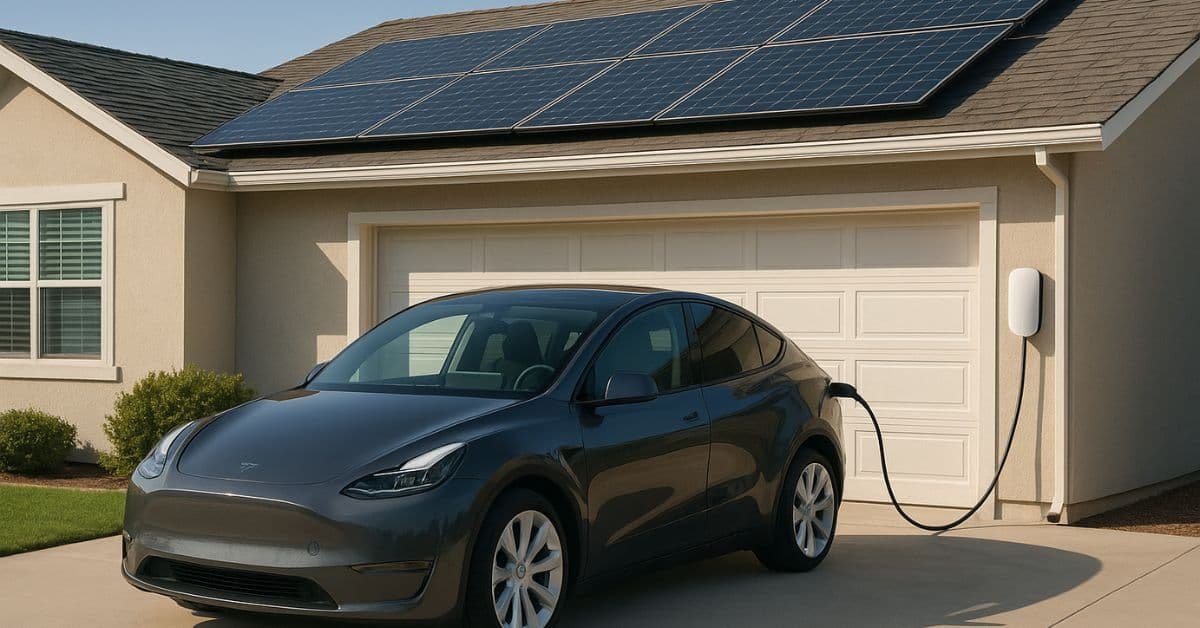
If you own a Tesla and have solar panels, you probably ask: How long does it take to charge a Tesla using solar power?
It can take anywhere from 4 hours to over 30 hours to fully charge a Tesla with solar power. The huge difference depends on three main things: how big your solar system is, how much sun you get that day, and how empty your Tesla battery is. A typical home solar system (around 8 kW) can add about 25 to 40 miles of distance per hour to your Tesla on a sunny day. Solar charging is often slower than Supercharger charging, but it is free and clean.
Check out How Fast Can You Charge a Tesla Battery?
How to Calculate Your Tesla Solar Charging Time
You need to know three simple numbers to figure out your charging time. The basic rule is:
Charging Time (Hours) = Energy Needed (kWh) / Charging Rate (kW)
Step 1: Find the Energy Needed (How Empty is Your Battery?)
A Tesla battery size is measured in kilowatt-hours (kWh). Most Tesla models have a battery size between 60 kWh and 100 kWh.
| Tesla Model | Battery Size (Approx.) | Energy Needed for 50% Charge |
|---|---|---|
| Model 3 (Standard Range) | 60 kWh | 30 kWh |
| Model Y (Long Range) | 75 kWh | 37.5 kWh |
| Model S/X (Long Range) | 100 kWh | 50 kWh |
If your battery is half-empty (50% charge), you need half of the total kWh. For a Model Y, that is about 37.5 kWh.
Read more about the Tesla Battery Degradation Guide here.
Step 2: Find Your Solar Charging Rate (How Fast is Your Sun Power?)
Your solar charging rate is the power your solar panels are making. This power goes straight to your car. People measure this rate in kilowatts (kW).
- Solar System Size: A typical home solar system is between 5 kW and 10 kW.
- Real-World Output: A 10 kW system might produce 8 kW on a sunny day. If your house uses 3 kW for lights and AC, then only 5 kW is left to charge your Tesla.
- Minimum Rate: Tesla’s “Charge on Solar” feature often needs at least 1.2 kW of steady extra solar power to start charging.
For our example, we will use a reasonable, steady solar charging rate of 5 kW.
Learn more in Tesla Powerwall Energy Storage Tips.
Step 3: Calculate the Time
Now, we use the simple math:
- Charging Time: 37.5 kWh (Energy Needed) / 5 kW (Charging Rate) = 7.5 hours
So, it would take 7.5 hours of peak sunlight to charge your half-empty Tesla Model Y using a 5 kW solar charging rate.
| Factor | Example Value | What It Means |
|---|---|---|
| Tesla Model | Model Y | Tells us the battery size. |
| Energy Needed | 37.5 kWh | The power your house uses at the same time. |
| Solar System Size | 10 kW | The total power your panels can make. |
| Home Use | 3 kW | Power your house uses at the same time. |
| Net Charging Rate | 5 kW | The power left over to charge your Tesla. |
| Total Charging Time | 7.5 hours | The power is needed to go from 50% to 100%. |
What Affects Your Tesla Solar Charging Time?
Your Tesla’s solar charging time depends on a few simple factors.
1. Size of Your Solar System (More Panels = Faster Charging)
The size of your solar system is the most direct factor. The more solar panels you have, the more power you can make, and the faster your Tesla will charge.
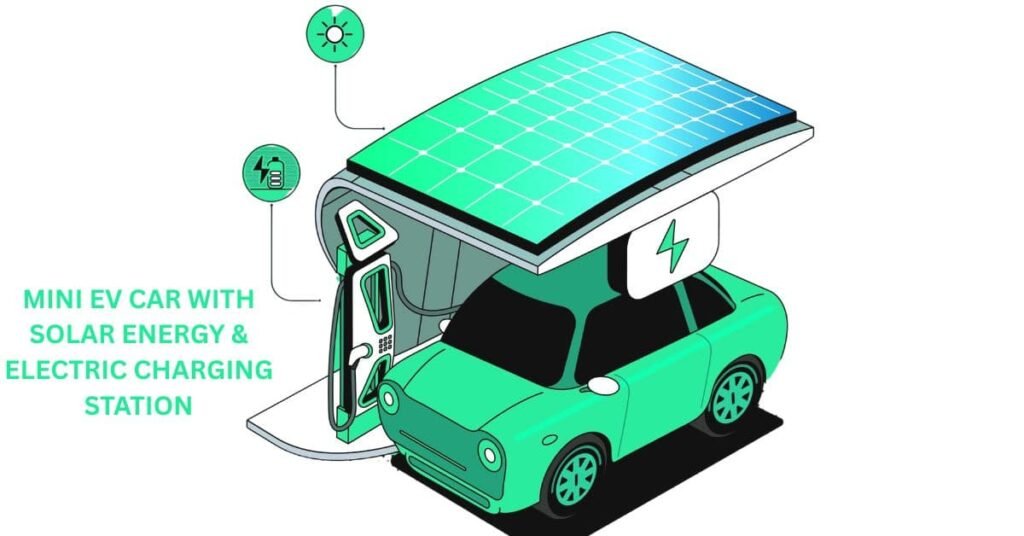
- Small system (3 kW): Your charging rate may be only 2 kW. Charging 37.5 kWh would take 18.75 hours.
- Large system (12 kW): Your charging rate might be 8 kW. Charging 37.5 kWh would take 4.7 hours.
If you want a fast solar charge, you need a large solar system. It must make much more power than your house uses.
See details in Why Tesla Batteries Handle Weather Better.
2. Time of Day & Weather Conditions
Solar panels only work when the sun is out. Your charging rate isn’t the same all day.
- Peak Sun Hours: Fastest charging occurs between 10 AM and 3 PM. The sun is at its highest and strongest then.
- Cloudy Days: On a very cloudy day, your solar system might only make 10% to 30% of its normal power. A 5 kW charging rate could drop to 0.5 kW. This makes the charge time much, much longer.
- Nighttime: Solar panels generate no power. If you charge at night without a battery, your Tesla uses power from the electric company, not the sun.
3. Your Home’s Power Usage (Sharing Solar Power)
Your whole house shares in the electricity generated by your solar panels.
Case study: “When my air conditioner turns on in the summer, I see my Tesla’s charging speed drop right away,” says Sarah K., a Tesla owner in Florida. “The solar power goes to the AC first, and only the leftovers go to the car.”
If you run your washing machine, dryer, or air conditioner while charging, your Tesla will charge more slowly. Those things are taking power away from the car. The best time to charge is when your house is using the least amount of power.
4. Your Charging Level (Level 1 vs. Level 2)
The type of charger you use also limits how fast your Tesla can charge.
- Level 1 Charging (Standard Wall Outlet): This is the slowest way. It delivers about 1.4 kW to your car. Even with a huge solar system, your car can only charge at this slow rate. It adds about 3 to 5 miles of distance per hour.
- Level 2 Charging (Tesla Wall Connector): This is the best choice for solar. It can charge your car at 7 kW to 11 kW or more.
5. Using a Tesla Powerwall (Day & Night Charging)
A Tesla Powerwall (or other home battery) changes the whole game. It lets you store the extra solar power you generate during the day for later use.
- No Powerwall: You must charge during the day when the sun is out.
- With Powerwall: You can charge your Tesla at night using the solar power you saved. This means you can charge at the fastest rate your charger allows, even when the sun is down. The Powerwall acts like a savings account for power. It makes your solar charging time more flexible and reliable.
How Tesla’s “Charge on Solar” Feature Works
Tesla has a special feature in its app called “Charge on Solar.” The feature helps you use as much of your free solar power as possible.
How “Charge on Solar” Works
- It looks at Your Solar: The Tesla app talks to your solar system.
- It finds the Extra Power: It sees how much power your panels are making that your house is not using.
- It Starts Charging: It only sends that extra power to your car. If a cloud passes over and the power drops, the car will slow down or stop charging until the sun comes back out.
The feature is excellent because it ensures you use your own clean, free power first. You are not buying power from the electric company. You can set a “Charge Limit” (like 80%) and a “Solar Charge Limit” (like 100%). The car will charge up to 80% from any source. Then it will only use solar power to get to 100%.
Conclusion
The time it takes to charge a Tesla with solar power is not one single number. It is a simple math problem. It is based on how much power your Tesla needs and how much power your solar panels are making. Most Tesla owners with a good-sized solar system can expect to add a full day’s worth of driving distance (about 40 miles) in just 2 to 3 hours of peak sunlight. You can easily manage your charging time by understanding the key factors. You can then enjoy the benefits of driving on completely free, clean energy.
FAQs
Can I charge my Tesla with solar panels without a Powerwall?
Yes, you can. You do not need a Powerwall. However, you must charge your Tesla during the day when the sun is shining. Without a Powerwall, you cannot store the solar power to charge your car at night.
Is it bad for my Tesla battery to charge it slowly with solar?
No, slow charging is actually better for your Tesla battery life than fast charging (like Supercharging). Slow charging produces less heat. This helps keep the battery healthier for longer.
How many miles of range do I get per hour of solar charging?
This depends on your solar charging rate. If your solar system is sending 5 kW to your car, you are adding about 20-25 miles per hour to a Tesla Model 3 or Model Y.
Does the “Charge on Solar” feature work with non-Tesla solar panels?
The “Charge on Solar” feature works best when you have a Tesla Powerwall and Tesla Solar. If you have a different solar brand, you may need a third-party smart EV charger. The smart charger can talk to your solar system to do the same job.
Will my Tesla charge if the power grid goes down?
If you have a Tesla Powerwall, your solar system will keep working. You can charge your Tesla even if the power grid is down. If you do not have a Powerwall, your solar system will shut off for safety reasons. You will not be able to charge.
For more help, check Best Practices to Extend Tesla Battery Life.