
What Battery Chemistry Does Volkswagen Use?

This page is based on NHTSA recall filings, Volkswagen and PowerCo announcements, QuantumScape’s SEC filings and published cell teardowns.
Volkswagen’s battery story has three different answers depending on where the car is built — and most articles mix them into one wrong one. In the United States, the answer is simple: NMC, from two Korean suppliers split by model year.
In Europe, a third supplier leads. In China, VW works with CATL and already sells an LFP car you cannot buy anywhere else. On top of all three sits PowerCo, VW’s own battery company, whose Unified Cell started production in December 2025 and is meant to power most of the Group’s EVs from 2030. This guide keeps the three worlds separate, because the chemistry in a Chattanooga ID.4 has nothing to do with a supplier list written for a European hatchback.
Quick answer
Every Volkswagen EV sold in the United States today uses an NMC (nickel manganese cobalt) lithium-ion battery. US-built ID.4s use cells from SK On’s American arm; the imported 2021–22 cars used LG Energy Solution cells. No US-sold VW uses LFP, and CATL does not supply Volkswagen in America — CATL’s VW work is in China.
Key figures:
US ID.4 packs: 62 and 82 kWh, both NMC · Battery warranty (US): 8 years / 100,000 miles, 70% capacity floor · PowerCo Unified Cell production: started December 2025 (Salzgitter) · First LFP VWs: Europe’s entry models, from 2027
What VW uses in the United States today
Which cells power the US-built ID.4?
Every US-sold Volkswagen EV runs on NMC cells — and since late 2022 they have come from SK On’s American factories. The ID.4 is the car that matters here. US production began in Chattanooga, Tennessee in October 2022, and those cars (model year 2023 onward) use cells from SK Battery America, SK On’s US arm.
What proves the SK On supply line?
That supply line is a matter of public record: NHTSA recall 26V-630 covers 22,524 Chattanooga-built ID.4s for a thermal-propagation risk in their SK cells, with an interim instruction to charge to no more than 80% while the remedy is prepared.
What about the imported 2021–22 cars?
The earlier cars — the imported 2021 and 2022 ID.4s built in Germany — used LG Energy Solution pouch cells of an NMC 712 recipe, established by published teardowns of the 82 kWh pack. Both US pack sizes, 62 kWh and 82 kWh, are NMC in either case.
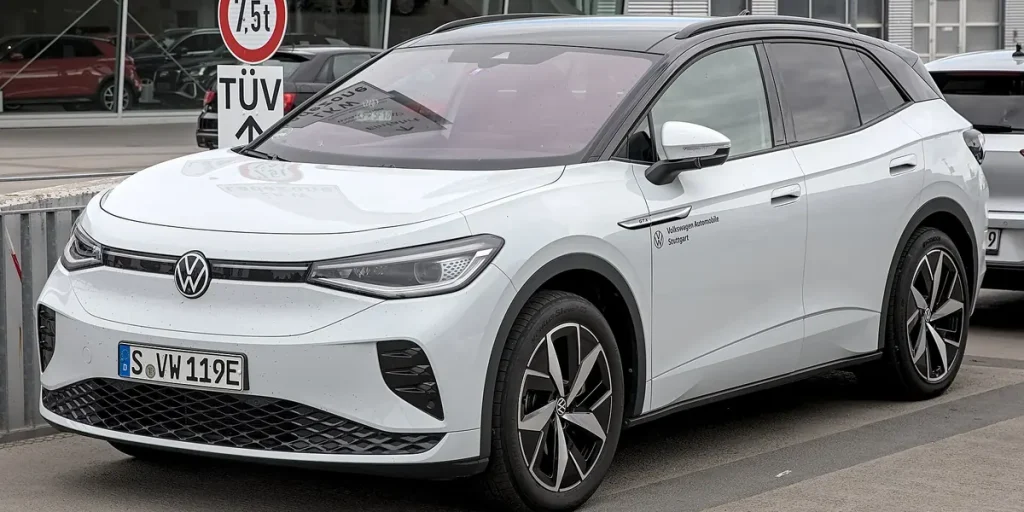
Recall 26V-630 is the document that proves the US supply chain: 22,524 Chattanooga ID.4s, SK Battery America cells, and an 80% interim charge cap — the kind of detail that never appears in VW’s marketing.
The rest of the US range
The ID. Buzz follows the same chemistry with one honest unknown: Volkswagen does not publish its cell supplier. The US ID. Buzz is built in Hanover, Germany, and uses an NMC pack (91 kWh gross in the long-wheelbase US version). Secondary battery databases attribute its cells to LG Energy Solution, which is plausible given the Hanover supply lines, but VW has never confirmed it, so treat any source that states it as settled fact with care. What is confirmed for both US models is the warranty: 8 years or 100,000 miles with a 70% capacity floor.
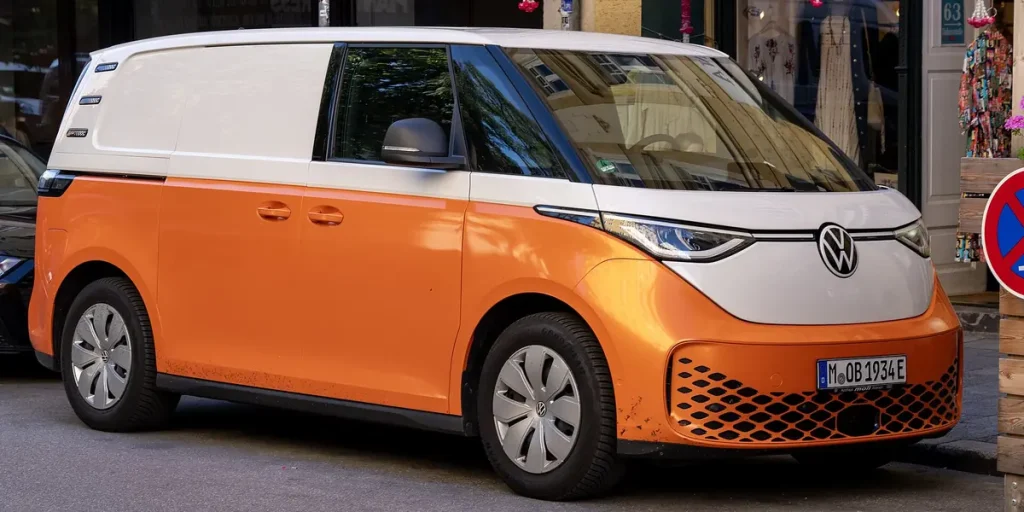
Quick view: The US Buzz is NMC-powered like the ID.4, but Volkswagen has not named its cell supplier — databases point to LG Energy Solution, unconfirmed. Both US models share the 8-year/100,000-mile warranty with a 70% capacity floor.
Europe and China are different stories
How do VW’s supplier nominations divide the world?
CATL supplies Volkswagen in China only — and the one LFP Volkswagen already on sale is a Chinese-market car. Volkswagen’s own supplier nominations divide the world cleanly: SK for North America; LG Energy Solution, Samsung SDI and SK On for Europe, where LGES leads; CATL for China. So when a supplier list names CATL for Volkswagen — as lists written for the Group’s European programmes often do — it is describing Chinese production or future European programmes, never an American car.
Where is the LFP Volkswagen already on sale?
China is also where VW’s chemistry has already diversified: since March 2025, SAIC Volkswagen has sold an ID.3 with a 53.6 kWh LFP pack built on CATL cells, the first LFP Volkswagen anywhere.
The line-up at a glance
One table, kept honest by separating what is on sale from what is planned.
| Car / market | Chemistry | Cell supplier |
|---|---|---|
| ID.4, US-built (2023– ) | NMC | SK Battery America (SK On) |
| ID.4, imported (2021–22) | NMC 712 | LG Energy Solution (pouch cells) |
| ID. Buzz (US) | NMC | Not published by VW |
| ID.3, China (2025– ) | LFP | CATL |
| Electric Urban Car Family, Europe (2026– ) | NMC first, LFP from 2027 | PowerCo Unified Cell (+ interim Gotion supply) |
PowerCo and the Unified Cell
What is the Unified Cell idea?
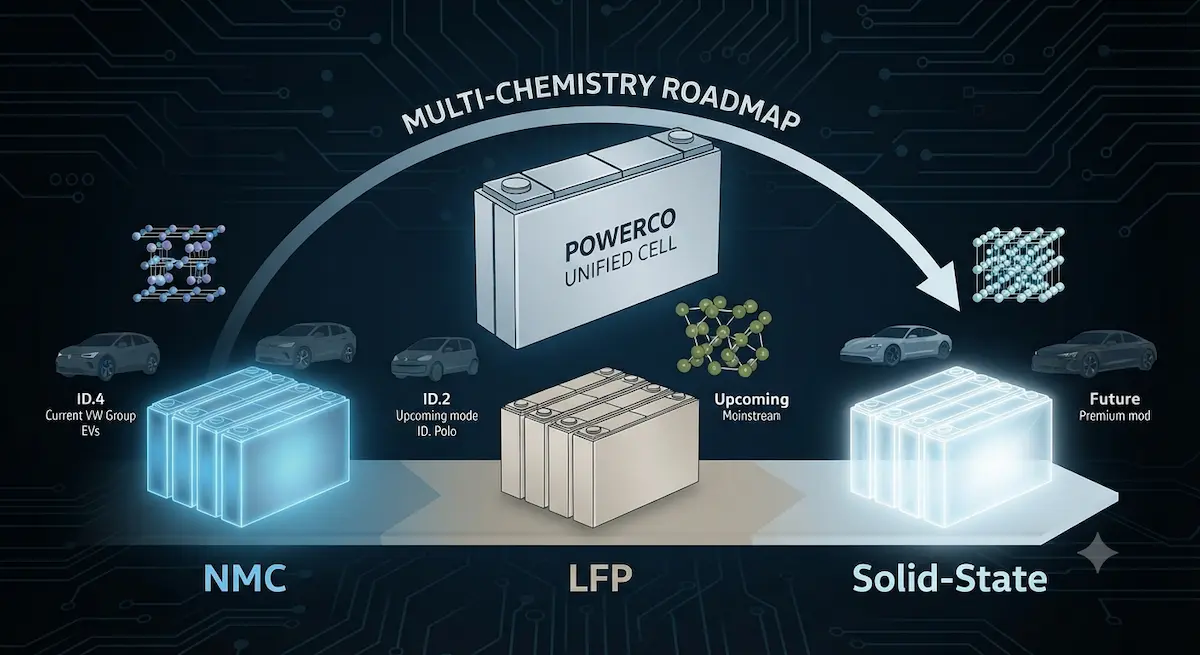
PowerCo is Volkswagen’s own battery company, and its Unified Cell is one prismatic cell format designed to hold several different chemistries. Announced on Power Day in March 2021, the idea is standardisation: the same cell shape and factory equipment everywhere, with the chemistry inside chosen per segment — LFP for entry cars, NMC for the mainstream, higher-performance recipes later. VW’s cost claims are segment-specific: up to 50% savings in the entry segment and up to 30% in the volume segment, with system cost targeted significantly below €100 per kWh.
When did Salzgitter start production?
Production is no longer a plan: the Salzgitter gigafactory started up on 17 December 2025, making NMC Unified Cells first, at 20 GWh rising to 40.
Which cars get the Unified Cell first?
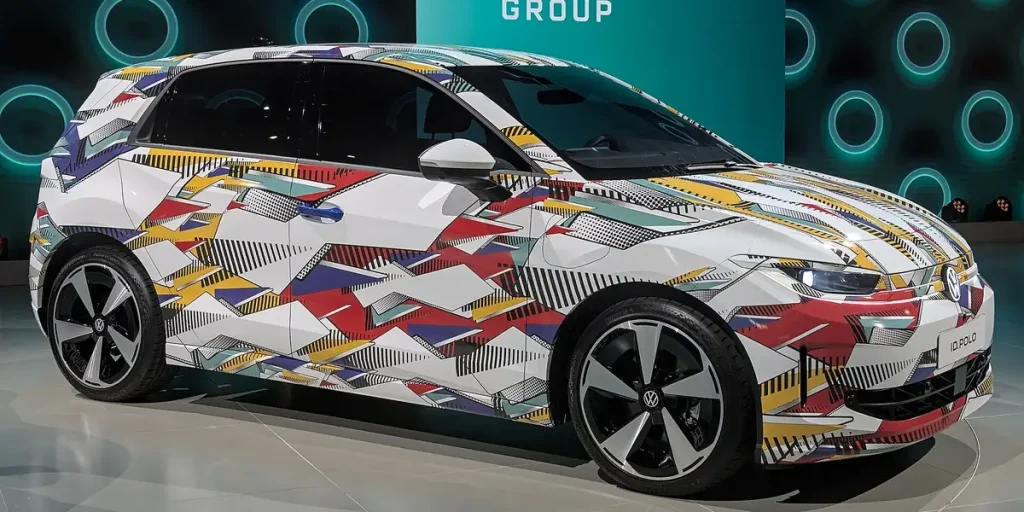
The first cars are Europe’s Electric Urban Car Family — the ID. Polo, ID. Cross, Cupra Raval and Skoda Epiq, from 2026 — with interim cell supply from Gotion’s Hefei plant for Spanish-built cars. Valencia follows as an LFP joint venture with Gotion, producing from 2027, and the St. Thomas plant in Canada has been delayed to 2029. VW expects the Unified Cell in more than 80% of the Group’s EVs from 2030.
The LFP transition, in the right order
Volkswagen’s LFP era starts in Europe’s cheapest cars, starts later than most headlines say, and has no announced US chapter. The order matters: the Electric Urban Car Family launches on NMC in 2026, and the LFP versions follow in 2027, fed by the Valencia joint venture. That is also why “Volkswagen has switched to LFP” is wrong as a present-tense claim — outside China, exactly zero LFP Volkswagens are on sale today, and the entry cars themselves are not coming to the United States. For US buyers, LFP arrives at VW only if and when a future US model adopts the Unified Cell, which VW has not announced.
Quick view: Outside China, no LFP Volkswagen is on sale yet. Europe’s entry cars launch on NMC in 2026 and add LFP versions in 2027, while no US LFP Volkswagen has been announced.
Solid-state: the QuantumScape partnership
What did the QuantumScape deal cover?
Volkswagen is QuantumScape’s industrial partner — and there is still no production date, from anyone, for a solid-state VW. The structure is real and substantial. In July 2024, PowerCo took a non-exclusive licence to industrialise QuantumScape’s lithium-metal technology at up to 40 GWh per year, with an option to double that to 80, backed by a $130 million royalty prepayment tied to technical progress. A July 2025 expansion added up to $131 million in milestone payments and a further 5 GWh per year.
Where does the technology stand now?
QuantumScape’s QSE-5 cells have run in a Ducati V21L demonstration bike since IAA in September 2025, and VW’s total investment in the company stands at $300 million. Against that, PowerCo itself says further development steps are still necessary before production — so any article giving you a launch year for a solid-state Volkswagen, including 2028, is guessing.
Owner notes
Two practical notes for VW owners reading this page.
- First, the battery warranty on US VW EVs is 8 years or 100,000 miles, guaranteeing at least 70% of the original capacity — the figure to check any used ID.4 against.
- Second, this page is about the traction battery that drives the car; like every EV, a Volkswagen also carries a small 12-volt battery for the electronics, and the replacement questions that crowd search results are usually about that one, which any auto-parts store handles.
Frequently asked questions
What battery chemistry does Volkswagen use?
In the United States, NMC — nickel manganese cobalt — in both the ID.4 and the ID. Buzz. Globally VW also builds NMC cars in Europe and an LFP car in China, and its own PowerCo Unified Cell will carry both chemistries in Europe.
Is a Volkswagen battery NMC or LFP?
If the car was sold in the US, it is NMC. The only LFP Volkswagen on sale today is the Chinese-market ID.3; LFP versions of Europe’s entry models follow from 2027. No US LFP Volkswagen has been announced.
Who makes Volkswagen’s EV batteries?
For US cars: SK On’s American arm (SK Battery America) for US-built ID.4s, and LG Energy Solution for the imported 2021–22 cars. Europe is led by LG Energy Solution with Samsung SDI and SK On; CATL supplies China. Volkswagen’s own PowerCo began making Unified Cells in December 2025.
Does CATL supply Volkswagen in the US?
No. CATL’s Volkswagen nomination covers China. Supplier lists that include CATL describe Chinese production or future European programmes — not American cars.
What is the PowerCo Unified Cell?
One standardised prismatic cell format from VW’s own battery company, designed to hold different chemistries (LFP for entry cars, NMC for mainstream models) so factories and cars can share equipment. Production started at Salzgitter in December 2025; VW expects it in over 80% of Group EVs from 2030.
Will VW switch from NMC to LFP?
Only at the affordable end, and gradually. Europe’s entry family launches on NMC in 2026 with LFP versions from 2027; mainstream and US models stay NMC for now.
When will a solid-state Volkswagen arrive?
Nobody has announced a date. PowerCo’s QuantumScape licence (2024, expanded 2025) industrialises the technology at up to 40 GWh per year, and demonstration vehicles run, but PowerCo says further development steps are still necessary.
Conclusion
Volkswagen does not have one battery chemistry — it has one per market, plus a plan to unify them. Today’s American answer is NMC from SK On or LG Energy Solution, depending on where the car was built. The future answer is PowerCo’s Unified Cell, already in production in Germany, carrying NMC first and LFP for the cheapest cars. Keeping those two answers separate — and CATL in China, where it belongs — is the whole of the subject.
