
VW ID.4 Battery: Complete Owner Guide

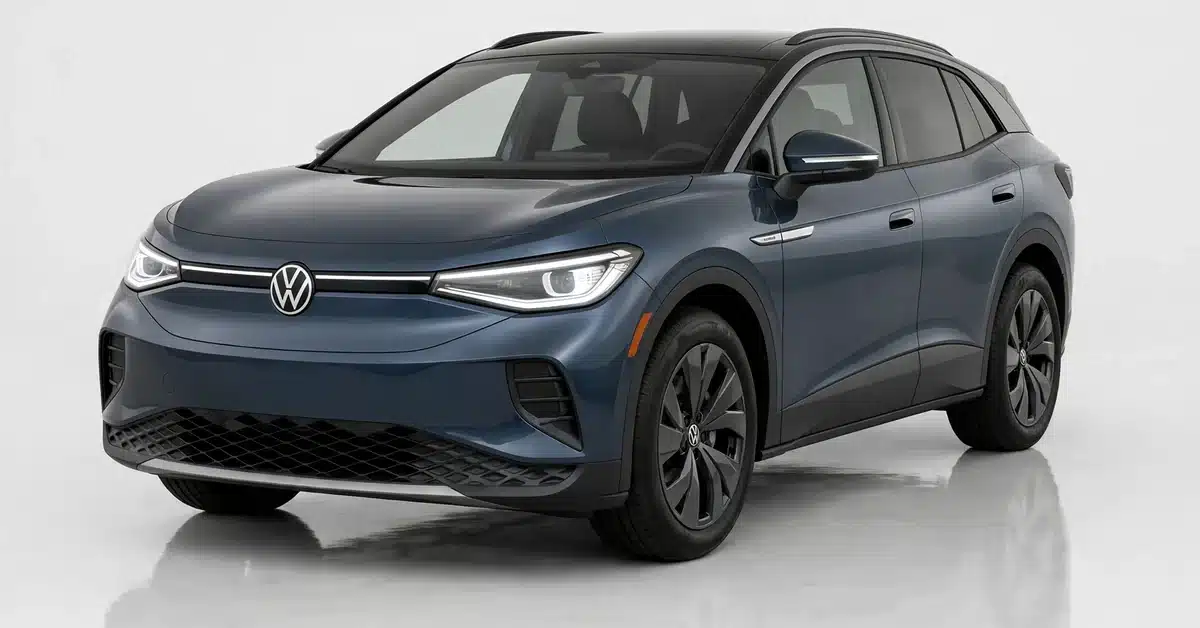
The VW ID.4 runs on Volkswagen’s MEB platform, with an NMC battery pack under the floor. US models come with one of two packs: a 62 kWh pack (58 kWh usable) in the Standard, or an 82 kWh pack (77 kWh usable) in the Pro and AWD Pro. Both are built from pouch cells — supplied by LG Energy Solution in the early German-built cars and by SK On in the US-built cars from Chattanooga. The big pack holds 288 cells in 12 modules and weighs about 1,078 pounds (489 kg). This guide covers the specs, real-world degradation, charging, warranty, replacement costs, and the 2026 battery recall every owner should know about.
Quick answer
US ID.4s use one of two NMC packs: a 62 kWh pack (58 usable) in the Standard, or an 82 kWh pack (77 usable) in the Pro, both built from pouch cells. Independent test data puts battery health at 81-91% between 50,000 and 80,000 miles, and VW covers the pack for 8 years or 100,000 miles down to 70% capacity.
Key figures:
Packs 62 kWh (58 usable) / 82 kWh (77 usable) – EPA range up to 291 miles (Pro RWD) – DC charging up to 175 kW, 10-80% in about 30 minutes – Warranty 8 years / 100,000 miles, 70% floor
VW ID.4 Battery: Full Specs
| Specification | Standard (62 kWh) | Pro / Pro S (82 kWh) | AWD Pro (82 kWh) |
|---|---|---|---|
| Gross capacity | 62 kWh | 82 kWh | 82 kWh |
| Usable capacity | 58 kWh | 77 kWh | 77 kWh |
| Chemistry | NMC | NMC | NMC |
| Cell format | Pouch (216 cells) | Pouch (288 cells) | Pouch (288 cells) |
| Voltage architecture | 400V | 400V | 400V |
| EPA range | About 209 miles | About 291 miles (RWD) | About 263 miles |
| Peak DC charge rate | 140 kW | 175 kW (2023+) | 175 kW (2023+) |
| 10–80% DC charge time | About 29 min | About 30 min | About 30 min |
| AC charging (Level 2) | 11 kW | 11 kW | 11 kW |
| Pack weight | About 842 lb (382 kg) | About 1,078 lb (489 kg) | About 1,078 lb (489 kg) |
What’s Inside the VW ID.4 MEB Battery Pack
The VW ID.4’s Long Range battery pack contains 12 modules, each holding 24 NMC pouch cells — 288 cells total. The 12 modules use an 8-series, 3-parallel (8s3p) configuration to achieve the pack’s 82 kWh gross capacity. Cell supply depends on where the car was built: US cars built in Chattanooga use SK On cells made in Georgia, while the 2021-2022 cars imported from Germany use LG Energy Solution cells. CATL supplies ID.4s for some other markets, but not US cars. The pouch cells differ from the cylindrical cells in Tesla or Rivian — they are flat, rectangular, and stacked in modules with cooling plates between groups of cells.
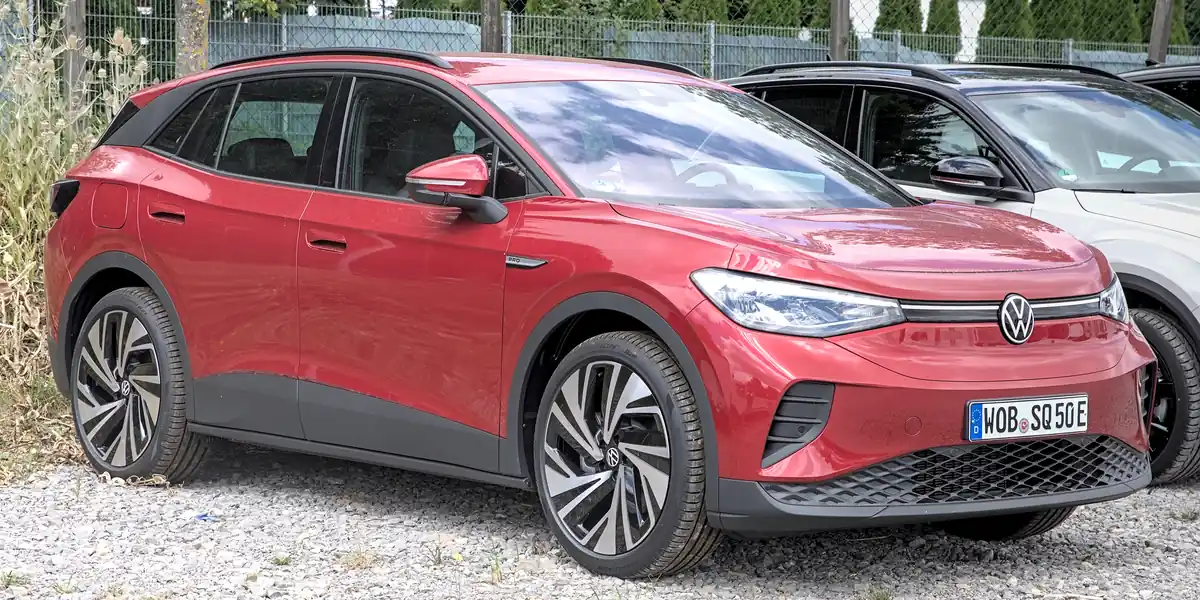
The pack operates at approximately 350–400V — a standard 400V architecture, not 800V like the Porsche Taycan or Hyundai Ioniq 5. This limits the ID.4’s peak DC charging rate: the Pro model tops out at 135 kW in the 2021-2022 cars and at 175 kW from 2023 on. This is the same charging ceiling shared by the coupe-styled VW ID.5, which uses an identical MEB battery and electronics.
For most daily use with Level 2 home charging, the 400V architecture is invisible — 11 kW AC charges the 77 kWh Long Range pack to full in approximately 8 hours overnight. It becomes a practical consideration only for road-trip fast charging, where competitors like the Ioniq 5 charge twice as fast from larger packs.
The pack uses active liquid thermal management with a bottom-plate cooling system — coolant flows through the base plate of the battery, underneath the cells. This is less intimate thermal contact than systems with cooling between each cell layer (as used in VW’s more premium competitors), contributing to the ID.4’s moderate fast-charging peak rather than the ultra-high rates of 800V rivals.
One more battery hides in plain sight: like every EV, the ID.4 also carries a small 12V battery that powers the electronics, lights and locks. When owners ask whether the ID.4 has two batteries, this is the second one — and it is serviced and replaced separately from the high-voltage pack.
VW ID.4 Battery Degradation: Real-World Data
Testing by Voltest across more than 13,000 EVs includes real VW ID.4 Pro models with 50,000+ miles on the original 77 kWh pack. All had NMC pouch cells. Key findings:
- Battery health range at 74,000 miles average: 81%–91% SOH — a meaningful spread showing individual variation in charging habits and climate significantly affects degradation rate
- Average degradation: Approximately 9–19% capacity loss at 74,000 miles — somewhat more than the Chevy Bolt or Hyundai Ioniq 5 at comparable mileage, but still within a comfortable range
- Owners maintaining 80% daily charge limit: Consistently in the 88–91% range at 74,000 miles
- Owners who regularly charged to 100%: More commonly in the 81–86% range at similar mileage
- Annual degradation rate: Approximately 1.5–2.5% per year based on available owner data
| Mileage | Typical SOH (77 kWh Pro pack) | Estimated Remaining EPA Range |
|---|---|---|
| 0–20,000 miles | 96–100% | 280–291 miles |
| 20,000–50,000 miles | 91–96% | 265–280 miles |
| 50,000–80,000 miles | 85–92% | 248–268 miles |
| 80,000–100,000 miles | 80–88% | 233–256 miles |
VW ID.4 Battery Warranty
VW backs the ID.4’s battery with an 8-year / 100,000-mile warranty against defects and excessive capacity loss. In the U.S. and Canada, VW defines “excessive” as the 77 kWh usable pack falling below approximately 54 kWh of usable capacity (70% of original). Based on real-world data, most ID.4 Pro owners are well above this threshold through the warranty period with reasonable charging habits.
The 2026 ID.4 Battery Recall: What Owners Should Do
In October 2026, Volkswagen recalled 22,524 US ID.4s from model years 2023 to 2026 — all built in Chattanooga with SK On cells — because some high-voltage battery cells may not meet specifications and could fail or, in rare cases, cause a fire. Volkswagen estimates only about 0.1 percent of the recalled cars actually carry the defect, and earlier recall rounds in 2026 covered additional cars for related cell problems.
Until the final repair is ready, Volkswagen advises affected owners to limit charging to 80 percent. You can check your car free with the NHTSA recall lookup or through Volkswagen’s owner portal by VIN. Recall repairs are free, and a recall is separate from the 8-year battery warranty — having recall work done does not use up any warranty coverage.
ID.4 Charging: Practical Guide
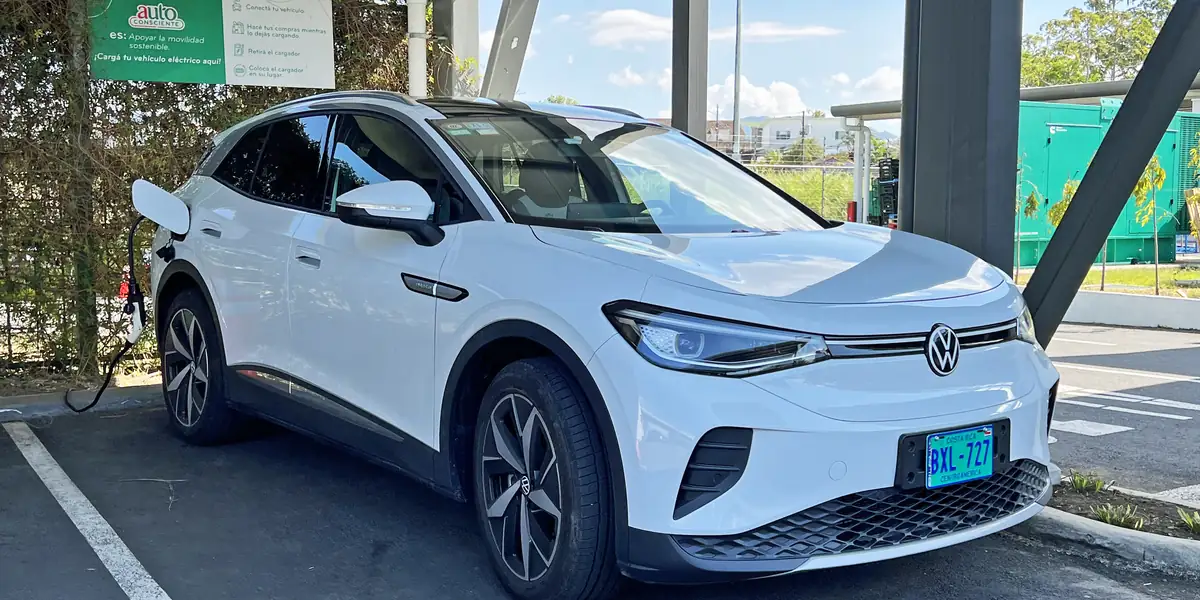
- Home charging (Level 2, 11 kW): The ID.4’s 11 kW onboard AC charger fills the 77 kWh Long Range pack in approximately 8 hours — typical overnight charging from empty to full. Most owners set a departure timer to complete charging at 80% by morning.
- DC fast charging peak: up to 175 kW on 2023 and later Pro models (125-135 kW on 2021-2022 cars), taking the 82 kWh pack from 10 to 80 percent in about 30 minutes. AWD Pro models charge at the same 175 kW peak.
- Route to chargers using ID. navigation: The ID.4’s navigation system triggers battery preconditioning when routing to a DC fast charger. Third-party navigation apps like Google Maps do not trigger this feature — always use the built-in nav for optimal charging preparation.
- Charging performance in cold weather: At temperatures below -5°C, the ID.4’s charge rate throttles significantly — 175 kW peak becomes 60–80 kW before the battery has warmed. Preconditioning while still plugged in at home before departure meaningfully helps in cold climates.
ID.4 vs Competitors: Battery Comparison
| EV | Battery | EPA Range | Peak DC Charge | 10–80% Time |
|---|---|---|---|---|
| VW ID.4 Pro (Long Range) | 77 kWh NMC (400V) | 291 miles | 175 kW | ~30 min |
| Hyundai Ioniq 5 Long Range | 77.4 kWh NMC (800V) | 303 miles | 235 kW | ~18 min |
| Tesla Model Y Long Range | ~82 kWh NCA/NMC (400V) | 330 miles | 250 kW (V4) | ~20 min |
| Chevy Equinox EV LR | 82 kWh NMC (400V) | 319 miles | 150 kW | ~25 min |
| Ford Mustang Mach-E ER | 91 kWh NMC (400V) | 303 miles | 150 kW | ~38 min |
Full specs for the Ford rival above are in our Ford Mustang Mach-E battery guide.
Tips to Protect Your VW ID.4 Battery Long-Term
- Set the daily charge target to 80%: The ID.4’s Charging settings menu allows an 80% charge target for daily use. Keeping NMC at 80% vs 100% is the single most impactful habit for long-term capacity retention.
- Limit DC fast charging frequency in hot weather: The ID.4’s bottom-plate cooling system is less aggressive than side-plate or direct-cooling systems. In temperatures above 30°C, allowing 20–30 minutes between consecutive DC fast charging sessions avoids prolonged elevated pack temperature.
- Use the scheduled departure feature: Available in the ID.4’s Charging settings, scheduled departure timing causes the car to charge slowly overnight and finish at the target SoC close to departure time — minimizing time spent at high charge in warm conditions.
- Check battery health annually: OBD2 apps compatible with VW (Car Scanner app with a Bluetooth OBD2 dongle) can read the Maximum Energy Content (MEC) of the battery, giving a precise SOH percentage rather than relying on guesswork from the range display.
Frequently Asked Questions
What size battery does the VW ID.4 have?
US models come with two packs: the Standard has a 62 kWh battery with 58 kWh usable, and the Pro and AWD Pro have an 82 kWh battery with 77 kWh usable. Both are NMC lithium-ion packs built from pouch cells. For 2026, Volkswagen dropped the 62 kWh version, so new ID.4s are 82 kWh only.
Who makes the VW ID.4 battery?
The cells come from two suppliers. US-built ID.4s from Chattanooga use SK On cells made in Georgia. The 2021-2022 cars imported from Germany use LG Energy Solution cells. Volkswagen assembles the cells into finished packs itself.
What is the battery life of a VW ID.4?
Testing by Voltest across thousands of EVs puts ID.4 Pro battery health at 81 to 91 percent between 50,000 and 80,000 miles, with degradation slowing after the first years. Owners who keep a daily 80 percent charge limit tend to sit at the top of that range. Volkswagen warranties the pack for 8 years or 100,000 miles down to 70 percent capacity.
How much does the VW ID.4 battery weigh?
The 82 kWh pack weighs about 1,078 pounds (489 kg) — roughly a quarter of the car’s total weight. It sits flat under the floor between the axles, which also keeps the car’s center of gravity low.
How long does an ID.4 take to charge?
On a DC fast charger, 2023 and later Pro models peak at 175 kW and charge from 10 to 80 percent in about 30 minutes; the Standard peaks at 140 kW and needs about 29 minutes. At home on an 11 kW Level 2 charger, a full charge takes about 8 hours for the big pack and about 6 hours for the small one.
Is my ID.4 part of the battery recall?
Volkswagen recalled 22,524 US ID.4s from model years 2023 to 2026 in October 2026 over a possible cell defect, and advises affected owners to charge to 80 percent until the repair is ready. Enter your VIN on the NHTSA recall lookup to check your car. Recall repairs are free and separate from the battery warranty.
Conclusion
The VW ID.4 battery is a competent, well-cooled NMC pack that serves its mainstream crossover role well — 291 miles of EPA range, reliable fast charging (175 kW on 2023 and later cars), and proven durability showing 81–91% SOH at average 74,000 miles in real-world testing. Its 400V architecture limits peak DC charge rate compared to 800V competitors like the Ioniq 5, and the bottom-plate cooling design is less aggressive than the best in class.
Buyers wanting more range from the same platform should compare our VW ID.7 battery guide. The 8-year / 100,000-mile warranty with a 70% capacity threshold provides solid long-term protection, and VW’s continued production of the ID.4 in Tennessee supports IRA tax credit eligibility for U.S. buyers.
