
Honda Prologue Battery: Complete Guide

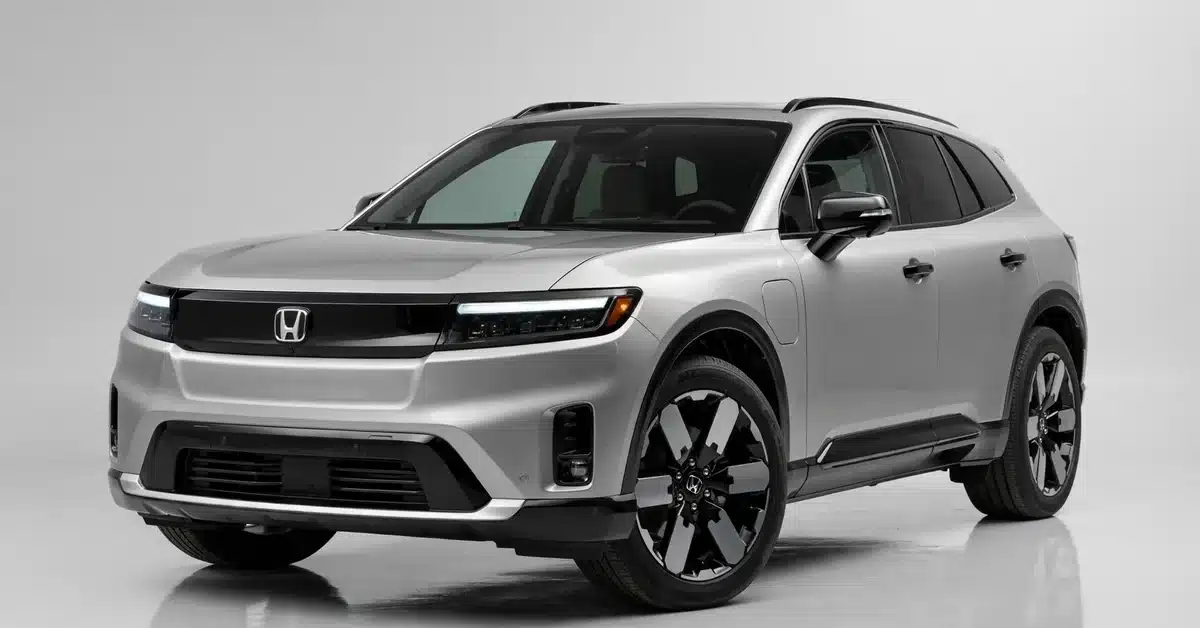
The Honda Prologue battery is an 85 kWh Ultium lithium-ion pack co-developed with General Motors — the same battery platform shared with the Chevrolet Blazer EV, Acura ZDX, and Cadillac Lyriq. Built on GM’s BEV3 platform at the Ramos Arizpe, Mexico plant, the Prologue delivers up to 308 miles of EPA range in front-wheel-drive form and supports 150 kW DC fast charging that adds approximately 65 miles in 10 minutes.
Beneath Honda’s sheetmetal and interior design is proven GM battery technology — and Honda’s 85 kWh figure is the pack’s usable capacity, a more honest number than the gross ratings most rivals quote. This guide covers the Prologue battery’s full specs, the Ultium platform connection, charging performance, battery life, warranty terms, and replacement cost.
Quick answer
The Honda Prologue uses an 85 kWh Ultium battery with NCMA pouch cells — GM technology in a Honda body. Front-wheel-drive cars are EPA-rated at up to 308 miles, and DC fast charging peaks at 150 kW. Note that Honda’s 85 kWh figure is the usable capacity, not the pack’s total size. Honda covers the battery for 8 years / 100,000 miles.
Key figures: Battery 85 kWh usable (about 89–90 kWh total) · EPA range 283–308 miles · DC peak 150 kW · Home charging 11.5 kW · Warranty 8 years / 100,000 miles · Replacement pack $15,689 (Honda parts list, before labor)
Honda Prologue Battery: Full Specs (2026)
| Variant | Battery | Drivetrain | EPA Range | Power | Peak DC Rate |
|---|---|---|---|---|---|
| Prologue EX / Touring (FWD) | 85 kWh Ultium | FWD | 308 miles | 220 hp / 164 kW | 150 kW |
| Prologue Touring (AWD) | 85 kWh Ultium | AWD | 294 miles | 300 hp / 224 kW | 150 kW |
| Prologue Elite (AWD) | 85 kWh Ultium | AWD | 283 miles | 300 hp / 224 kW | 150 kW |
The Ultium Connection: Why the Prologue Uses GM’s Battery
Honda and GM announced an electric vehicle partnership in 2021 — rather than developing an entirely new battery platform from scratch, Honda chose to use GM’s proven Ultium system for the Prologue’s first-generation entry into the mainstream EV market. The Prologue rides on GM’s BEV3 platform and shares frame rails, floor structure, front and rear suspension subframes, pedal box, steering column, and battery pack with the Chevrolet Blazer EV.
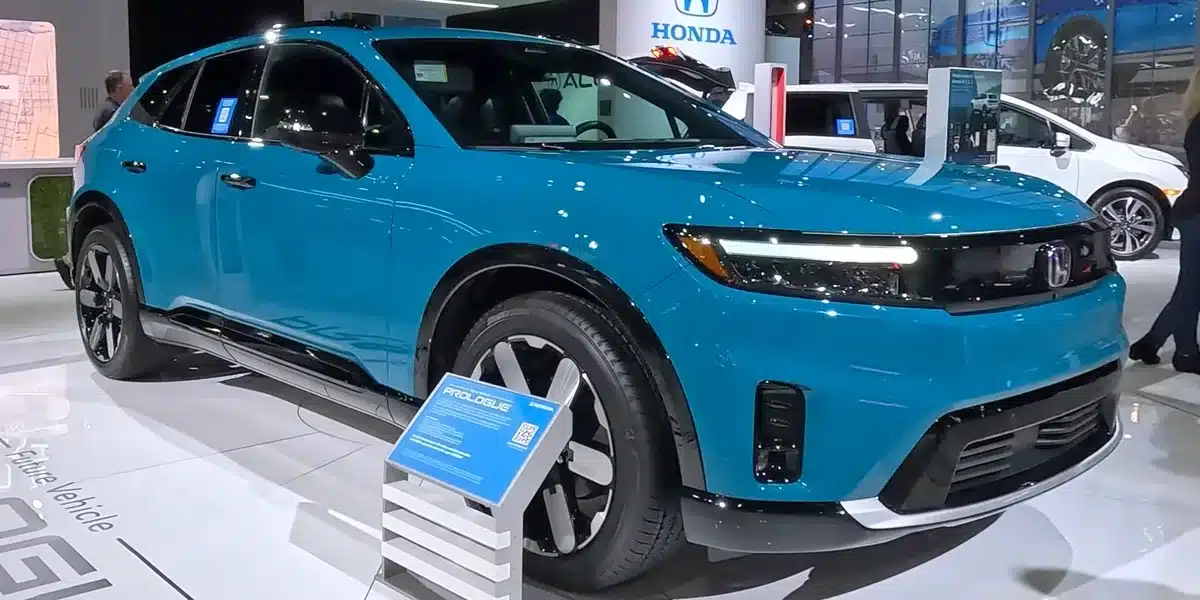
Honda engineers did customize what they could — independently tuning steering calibration, springs, and dampers, and designing all exterior sheetmetal and interior from scratch. The result is a vehicle that drives and feels distinctly like a Honda despite its GM underpinnings. The Ultium battery uses NCMA (Nickel Cobalt Manganese Aluminum) chemistry with active liquid thermal management — the same advanced cathode chemistry powering the Lyriq, Silverado EV, and Equinox EV.
One ownership note: the Prologue is a short-run model. Honda has confirmed production ends in December 2026, making the 2026 model year the last. Honda remains responsible for warranty, parts and service support, and the shared Ultium platform keeps the underlying hardware common with high-volume GM models.
The Prologue’s Real Battery Capacity: 85 kWh Usable
The 85 kWh figure confuses many shoppers, because Honda quotes it differently from most brands. It is the pack’s usable capacity — the energy you can actually use. The pack’s total (gross) capacity is roughly 89–90 kWh, with the difference held back as a protective buffer at the top and bottom of the charge range.
That is also why owner OBD2 scanner readings of 92–94 kWh caused excitement in Prologue forums. Those readings reflect the battery management system’s raw capacity estimates, not extra usable energy — no Prologue can use more than its 85 kWh usable rating. Judged on usable capacity, Honda’s number is more honest than the gross figures most rivals advertise.
Honda Prologue Charging Speeds
| Charging Method | Power | Prologue (85 kWh rated) |
|---|---|---|
| Level 1 (120V) | ~1.4 kW | ~65 hours full |
| Level 2 (240V, 11.5 kW) | 11.5 kW | ~8 hours full |
| DC Fast (150 kW) | 150 kW peak | ~35 min (10–80%); ~65 miles in 10 min |
The 150 kW peak DC charging rate is solid for a 400V platform midsize SUV — matching the Toyota bZ and beating the Kia Niro EV (85 kW), though lagging behind 800V rivals. Honda provides three charging package options at no additional cost with each Prologue purchase — including a portable dual-level charger (120V and 240V), home charger installation support via HondaLink, and access to a growing network of public chargers. An available Honda NACS-CCS adapter enables access to over 23,500 Tesla Supercharger ports.
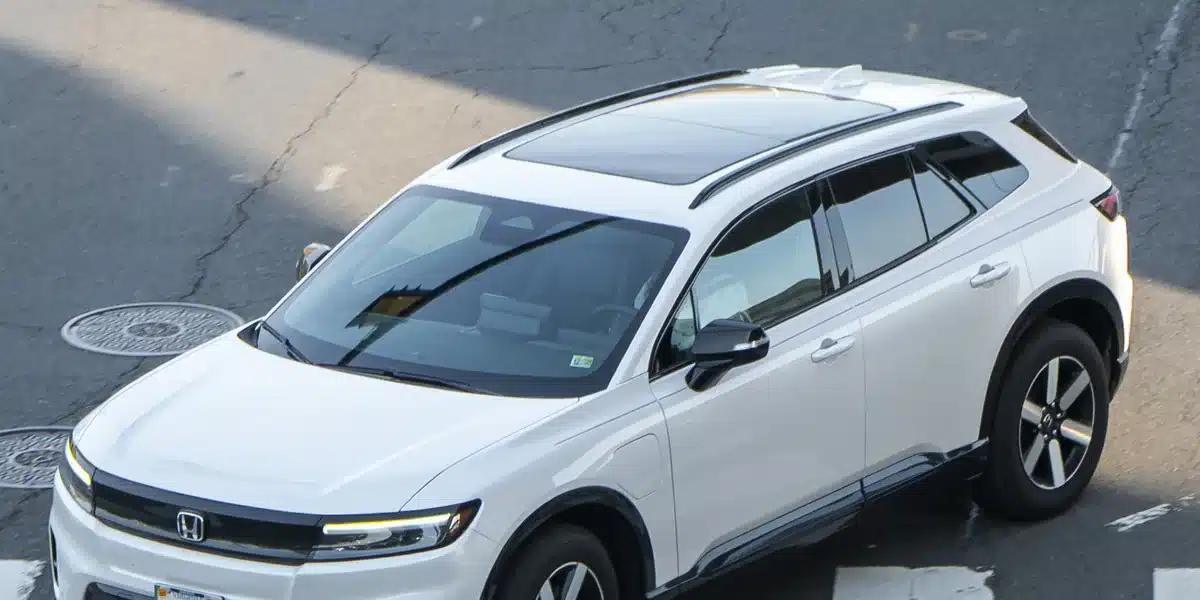
One common question: there is no 19.2 kW home-charging option on the Prologue — every trim charges at up to 11.5 kW on Level 2. That still refills the pack overnight in about 8 hours, which covers the vast majority of daily driving.
Honda Prologue Battery Degradation and Warranty
How long does a Prologue battery last? The pack is designed to outlast the car for most owners. Fleet data across all EVs (Geotab’s 22,700-vehicle study) shows modern packs losing about 2.3% of capacity per year on average — roughly 82% remaining at 8 years — and liquid-cooled NCMA packs like this one sit at the durable end of that range.
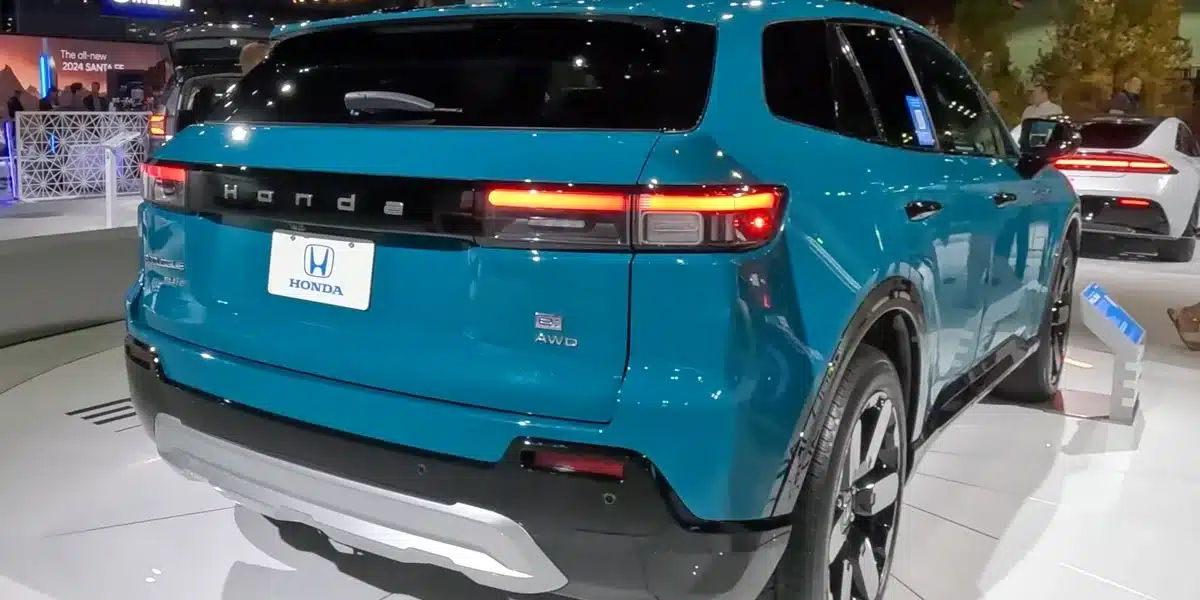
Honda covers the Prologue battery with an 8-year / 100,000-mile warranty against defects and capacity loss, backed by Honda’s broader vehicle warranty. Early owner data — including the 3,000-mile performance summaries shared in owner forums — paints an encouraging picture:
Unlike GM — which publishes a 75% capacity threshold for its own Ultium cars — Honda does not state a single capacity percentage for the Prologue in its consumer warranty materials. In practice, a pack that loses capacity far beyond the normal range for its age is assessed by Honda under the warranty’s capacity-loss coverage. Keep service records, and raise any sudden range drop with a dealer early, while the car is well inside the term.
- Measured state of health: Used Prologues checked by the EV battery platform Recharged read 94–97% state of health — roughly 3–6% capacity loss in the first 1–2 years, in line with healthy NCMA packs
- Real-world efficiency: Owners consistently report 3.7–4.2 miles per kWh — above the efficiency implied by the official 85 kWh and 308-mile rating
- Firmware OTA updates: GM/Honda have issued over-the-air updates that improved both range and charging performance — the Ultium platform’s software-updatable BMS is a long-term longevity advantage
- Annual degradation expectation: Approximately 1–2% per year, consistent with NCMA chemistry under active liquid cooling
Honda Prologue Battery Replacement Cost
A full Prologue pack replacement is the repair owners ask about most — and Honda, unusually, publishes the part. Honda’s parts catalog lists the complete high-voltage battery at $15,689 before labor, so expect a dealer-fitted total in the region of $16,000–$18,000. Third-party trackers quote similar totals, and prices should ease as salvage packs from the Prologue’s GM siblings enter the market.
Most owners will never pay it. The 8-year / 100,000-mile warranty covers failures and abnormal capacity loss first, and the Ultium pack is modular — a dealer can replace individual modules rather than the whole pack when a fault is localized. A used or refurbished Ultium pack is the third route, shared with the Blazer EV and Equinox EV.
Honda Prologue 12-Volt Battery
Yes — like every EV, the Prologue also carries a small 12-volt battery, an AGM (H5 / Group 47) unit that runs the electronics, locks and displays. It typically lasts about 3 to 5 years and costs roughly $180–$320 for the part, or $250–$500 fitted at a dealer. When it weakens, the car can show electrical warnings or refuse to start even with a healthy main battery — and replacing it is a normal workshop job, not a dealer-only repair.
Prologue vs Blazer EV: Same Battery, Different Car
| Feature | Honda Prologue FWD | Chevy Blazer EV RS FWD |
|---|---|---|
| Battery | 85 kWh Ultium NCMA | 85 kWh Ultium NCMA |
| EPA Range | 308 miles | 334 miles |
| Peak DC Rate | 150 kW | 150 kW |
| Power | 220 hp | ~288 hp |
| Heat Pump | Yes | Yes (standard) |
| Body style | Honda-styled midsize SUV | Chevy-styled midsize SUV |
Full specs for the Blazer EV in the table above are in our dedicated Chevy Blazer EV battery guide.
Charging Tips for Honda Prologue Owners
- Charge to 80% for daily driving: Honda’s owner’s manual recommends charging to 80% or less for daily use, and keeping the battery above 20% where possible. Raise the limit to 100% only before road trips that need maximum range.
- Use HondaLink for navigation-triggered preconditioning: Route to DC chargers via the built-in navigation or HondaLink for the best charging experience at fast stations.
- Get the NACS adapter for Supercharger access: The Honda NACS-CCS adapter opens over 23,500 Tesla Supercharger ports — a significant road-trip advantage worth purchasing early.
- Track your state of health: An OBD2 app such as CarScanner can show the pack’s estimated capacity over time. Readings move a little with temperature, so track the trend across months rather than reacting to a single number.
What type of battery is in the Honda Prologue?
The Prologue uses an 85 kWh Ultium pack with NCMA (nickel cobalt manganese aluminum) pouch cells, built by Ultium Cells, the GM–LG Energy Solution joint venture. The pack has 10 modules on a 400V architecture, and GM builds the whole car for Honda at Ramos Arizpe, Mexico. It is a nickel-rich lithium-ion battery, not an LFP pack.
How big is the Honda Prologue battery?
85 kWh of usable capacity, with a total (gross) pack size of roughly 89–90 kWh. That gives up to 308 miles of EPA range in front-wheel-drive form, 294 miles for the Touring AWD, and 283 miles for the Elite. OBD2 readings above 85 kWh reflect the management system’s raw estimates, not extra usable energy.
How long does a Honda Prologue battery last?
Early data is reassuring: used Prologues measured by the battery platform Recharged read 94–97% state of health after 1–2 years. Fleet-wide, modern EV packs lose about 2.3% of capacity per year on average (Geotab), and this liquid-cooled NCMA pack should comfortably outlast its 8-year warranty for most owners. Heat and long periods at 100% charge remain the biggest accelerators of wear.
How much does a Honda Prologue battery replacement cost?
Honda’s parts catalog lists the complete pack at $15,689 before labor, putting a dealer-fitted replacement in the region of $16,000–$18,000. Most owners never pay it: the 8-year / 100,000-mile warranty covers failures and abnormal capacity loss first. The pack is also modular, so a localized fault can cost far less than a full replacement.
Does the Honda Prologue have a heat pump?
Yes. The Prologue’s Ultium thermal system includes a heat pump that scavenges waste heat to warm the cabin and the battery, which protects winter range and charging speed. A resistive heater supports it in very cold weather.
Does the Honda Prologue have a 12-volt battery?
Yes — a small AGM battery (H5 / Group 47) runs the electronics, locks and displays, separate from the main pack. It typically lasts about 3 to 5 years and costs roughly $180–$320 for the part. A weak 12-volt battery can cause warning messages or a no-start even when the main battery is healthy.
Conclusion
The Honda Prologue battery is GM’s proven Ultium NCMA technology in a Honda package — delivering up to 308 miles of EPA range and 150 kW DC fast charging. Its 85 kWh rating is the usable figure, a more honest number than the gross capacities most rivals advertise. Buyers curious about the Chevrolet-badged sibling sharing this same platform should see our Chevy Blazer EV battery guide. The Ultium platform’s OTA-updatable BMS, conservative capacity reporting, and NCMA chemistry durability give the Prologue a strong long-term battery outlook. For Honda buyers who want their brand’s quality, reliability reputation, and cabin design combined with a proven GM battery platform and class-competitive range, the Prologue battery delivers exactly that in 2026.
