
Chevy Bolt EUV Battery: 65 kWh Size, Recall, Range & Used Prices

Researched from Chevrolet and GM warranty documents filed with the NHTSA, the EPA’s fueleconomy.gov, Recurrent’s Bolt fleet data, Cars.com’s live listings and GM Authority — November 2026.
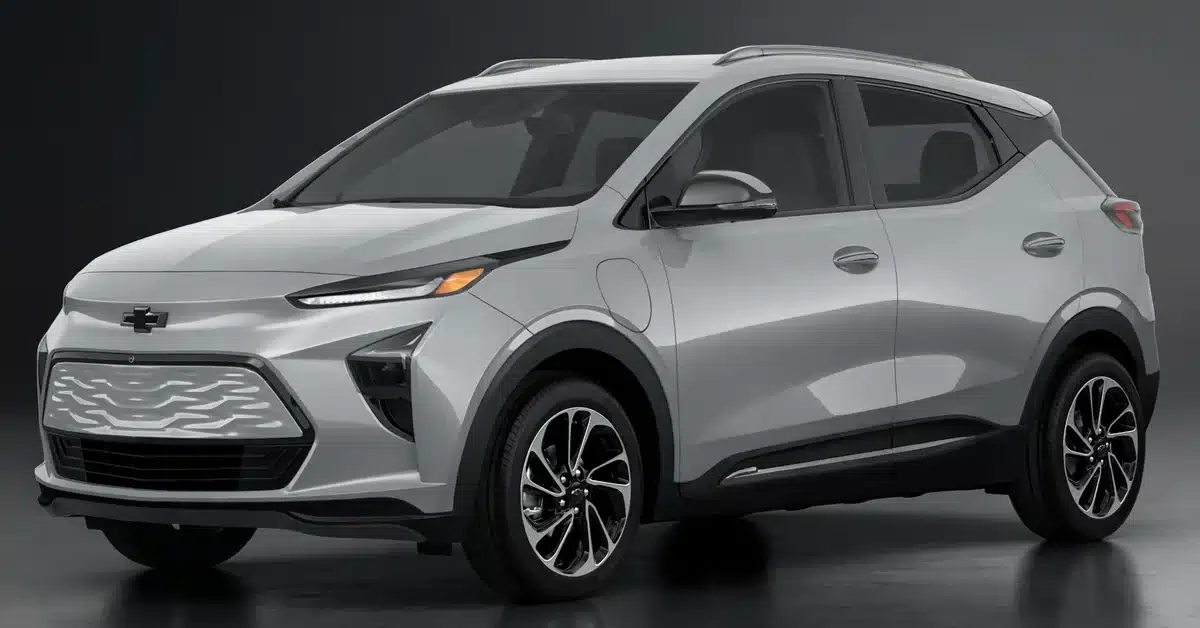
The Bolt EUV carries a 65 kWh lithium-ion pack (NMC cells made by LG) under a longer, roomier body than the Bolt EV hatchback — same 200 hp motor, 247 miles of EPA range, and the same slow 55 kW DC fast charging. Only the 2022 EUV was caught in the fire recall; its fix was diagnostic software, not a new pack. Used, they average about $19,500 (2022) to $20,850 (2023) in the US.
• Battery: 65 kWh usable (66 kWh gross), NMC, LG cells
• Range: 247 miles EPA; about 190 miles at a steady 75 mph
• Charging: 55 kW DC peak; 11.5 kW AC; about 7 hours on 240 V
• Warranty: 8 years / 100,000 miles, transfers to the next owner
Same battery, bigger car: EUV vs Bolt EV
The EUV is the Bolt EV’s mechanical twin stretched into a small SUV body — the battery did not change, the space did.
Under the floor sits the same pack family as the hatchback: 65 kWh usable, NMC chemistry, cells supplied by LG. The motor is identical too — 200 hp and 266 lb-ft through the front wheels — so the EUV’s 0–60 mph time of about 6.8 seconds matches the EV’s.
What the stretch buys is room. The wheelbase grows to 105.3 inches and rear legroom to 39.1 inches, which is the number that matters if adults ride in the back. Cargo space is 16.3 cubic feet behind the seats and 56.9 with them folded. For the hatchback’s own battery story — sizes by year, the 60 kWh original pack, replacement costs — see our Chevy Bolt EV battery owner guide.
Bolt EUV battery specs
Every EUV, both years and both trims, uses the one 65 kWh pack — there was never a bigger-battery option.
| Item | Bolt EUV (2022–2023) |
|---|---|
| Battery size | 65 kWh usable / 66 kWh gross |
| Chemistry | NMC lithium-ion, cells by LG |
| Cells | 288 in a 96s3p layout, about 355 V |
| Motor | 200 hp (150 kW), 266 lb-ft, front-wheel drive |
| EPA range | 247 miles (LT and Premier) |
| Efficiency | 115 MPGe combined; 29 kWh per 100 miles |
| DC fast charging | 55 kW peak; up to 95 miles added in 30 minutes |
| AC charging | 11.5 kW; full charge in about 7 hours on 240 V |
| Weight | About 3,679 lb |
GM never sold a long-range or performance version. If a listing advertises a bigger EUV battery, it is the seller confusing the EUV with the 2020–2023 Bolt EV hatchback’s 66 kWh label — the same pack, measured and marketed slightly differently.
Range: 247 miles on paper, less on the highway
The EUV matches the hatchback’s 247-mile EPA rating, but its taller body costs it more at speed.
The EPA figures are identical for LT and Premier: 247 miles, 125 MPGe city and 104 highway. In Car and Driver’s 75-mph highway test the EUV managed 190 miles — the upright SUV shape pushes more air than the hatchback, and the gap shows up exactly where road trips happen.
Season matters as much as speed. Recurrent’s fleet data for the Bolt family puts winter range at about 69% of the EPA figure at 32°F, recovering to roughly 94% at 90°F. A January highway run can therefore mean planning around 130–150 miles between charges, not 247.
Charging: the 55 kW ceiling is the car’s one real weakness
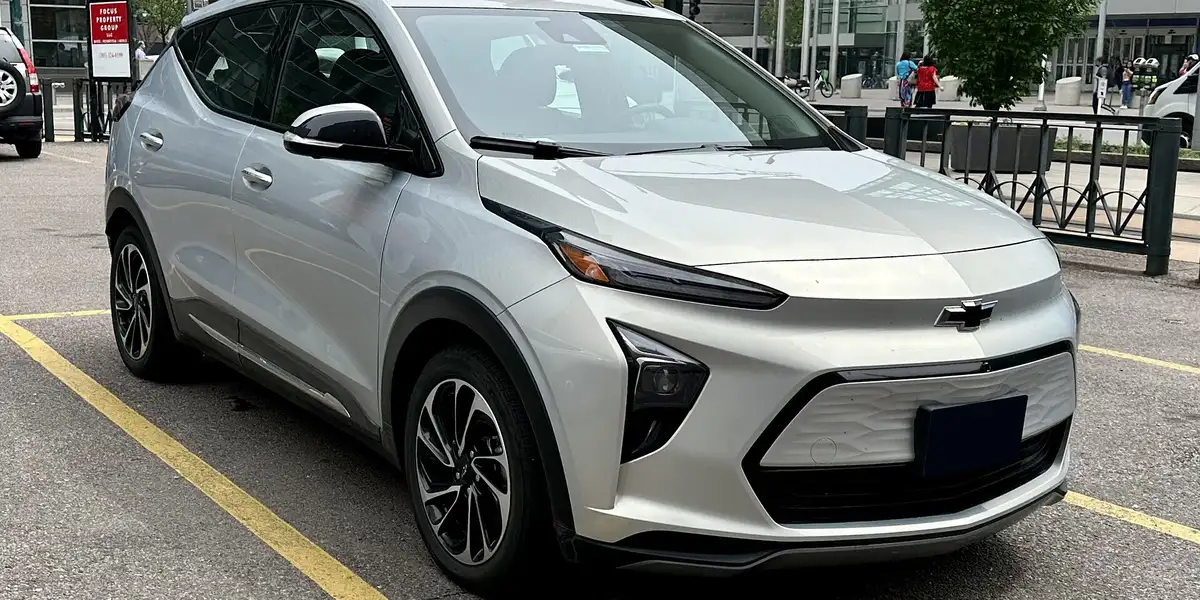
The EUV charges at home perfectly well and on road trips slowly — 55 kW was already behind the class when the car was new.
At home there is nothing to criticise: the 11.5 kW onboard charger refills the pack in about 7 hours on a 240 V circuit, faster than most rivals of its price. Overnight, the EUV is full every morning.
On a DC fast charger the peak is 55 kW, and Chevrolet’s own figure is up to 95 miles of range added in 30 minutes. Against a modern 150 kW car that feels patient; a 10–80% stop is a meal, not a coffee. Nothing in the recall software changed this — the limit is hardware, and no update will raise it.
The fire recall: what EUV owners actually got
Only the 2022 EUV was recalled — the 2023 was never included — and the fix was software that watches the pack, not a replacement battery.
The recall (NHTSA 21V650, August 2021) covered 2020–2022 Bolt EVs and the 2022 EUV. The cause, per the investigation, was two rare defects in the LG cells — a torn anode tab and a folded separator — that could combine to short a cell. GM originally promised new packs for everyone, then from June 2023 switched the 2020–2022 cars to an advanced diagnostic software remedy; the earlier 2017–2019 hatchbacks kept their replacement packs.
How the software remedy works
The software monitors the pack continuously. It starts by limiting charging to 80%; after roughly 6,200 miles (10,000 km) with no anomaly found, it lifts the limit back to 100% automatically — no dealer visit needed. If it does find a defective module, a warning appears in the driver display and the dealer replaces that module. Two follow-up recalls (24V481 and 24V812, 2024) exist because on some cars the software had not been installed correctly the first time.
What a replaced pack or module is worth
Any battery or module fitted under the recall carries a fresh 8-year/100,000-mile GM Service Replacement Parts Limited Warranty that starts on the day of the replacement — GM’s own bulletin 22-NA-119 sets this out. That is why the recall paperwork matters on a used car: a 2022 EUV whose module was swapped in 2025 can carry battery cover into 2033.
Warranty: generous years, no published capacity number
The original battery warranty is 8 years or 100,000 miles and it stays with the car — but Chevrolet publishes no capacity percentage that triggers a claim.
Coverage transfers automatically to used buyers, which is much of the EUV’s used appeal: a 2023 car is covered into 2031. The warranty covers defects in materials and workmanship.
Be clear-eyed about degradation, though. Chevrolet’s consumer pages talk about excessive capacity loss without publishing a number, and the recall-parts bulletin states no capacity floor either. Hyundai and Ford print a 70% floor; for the Bolt, no equivalent published figure exists, so do not let a seller quote one at you.
How long does the EUV’s battery last?
Fleet data says the Bolt pack ages slowly: about 96% of original range after 3 years and 94% after 5.
Those figures come from Recurrent’s community data across the Bolt family — over a billion real-world miles. They describe range retention, which is what drivers feel, and they cover the same 65 kWh pack the EUV uses.
The practical reading for a used buyer: a 2022 EUV at typical mileage should still deliver around 230–235 miles on a full charge in mild weather. A car showing dramatically less is a reason to run the VIN through the recall check and ask questions, not a normal Bolt.
Used prices and the checks that matter
In November 2026, Cars.com listings average $19,551 for a 2022 EUV and $20,850 for a 2023 — Premier trims run about $1,600–$1,800 above LT.
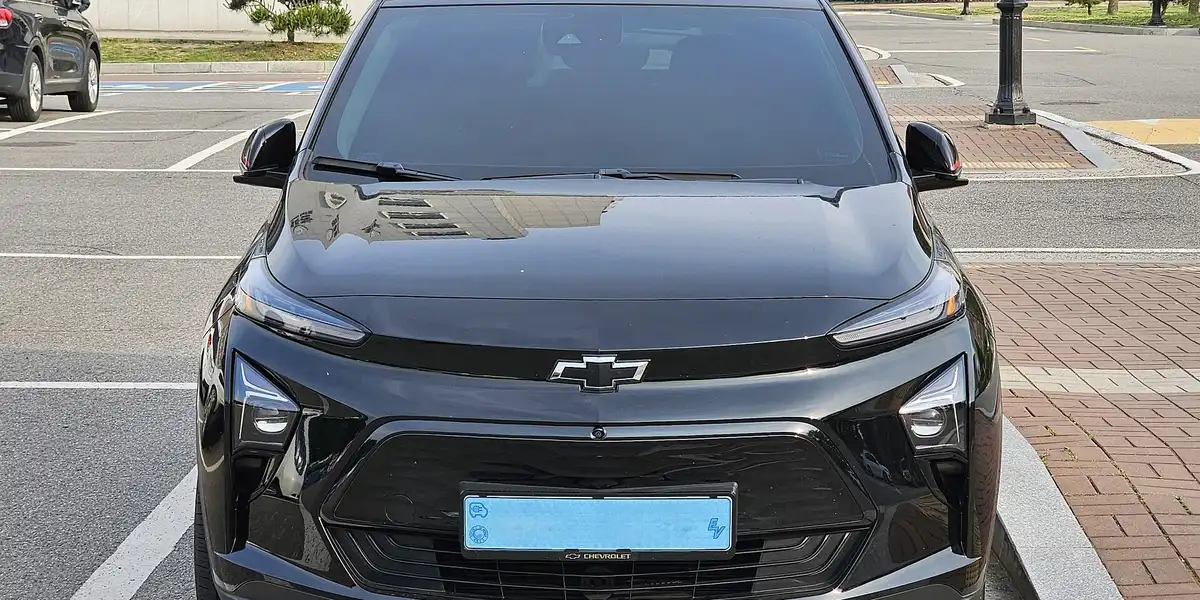
Three checks decide whether a specific car is a bargain or a trap. First, run the VIN on NHTSA’s or Chevrolet’s recall lookup: it confirms whether a 2022 car’s software remedy was completed — and the 2024 follow-up recalls mean “done in 2022” is not the end of the story. Second, ask whether any module or pack was replaced under the recall, because that paperwork carries the fresh 8-year parts warranty. Third, charge it to 100% and read the range estimate against the Recurrent figures above; a healthy pack should sit near them.
The Premier is worth its premium for one reason: it is the only trim that offered Super Cruise hands-free driving (the Launch Edition had it too). If you will not use it, an LT at $18,500 leaves money for tyres.
The 2027 Bolt: the EUV shape is the one that came back
When the Bolt returns for 2027, it returns as an EUV — GM dropped the hatchback and kept this body.
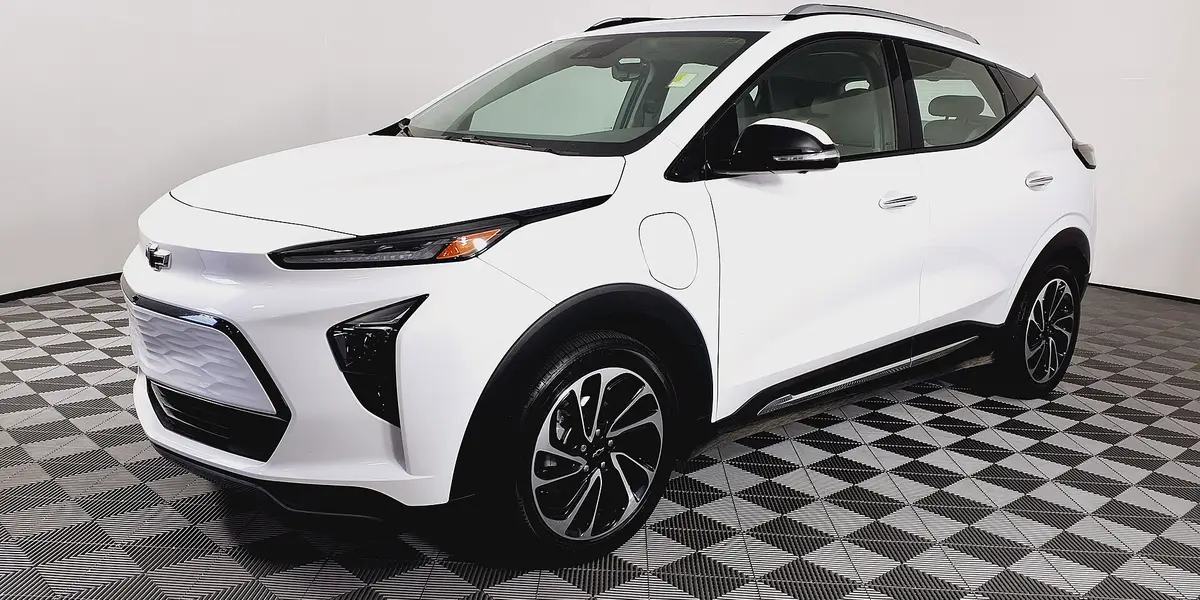
The new car keeps the EUV’s silhouette and fixes the old car’s two weaknesses: a 65 kWh LFP pack (cell-to-pack, so no modules in the old sense), a native NACS port, and 150 kW DC charging for a 10–80% charge in 26 minutes. The EPA has already rated it at 262 miles. Prices start at $28,995, with a $29,990 Launch Edition, built in Kansas from January 2026 as what GM calls a limited run.
If you are cross-shopping a used EUV against the new car, the honest summary is this: the used car gives you the same shape and space for about $9,000 less; the new car gives you triple the charging speed and a chemistry that tolerates daily 100% charging.
Frequently asked questions
Was the Bolt EUV recalled for battery fires?
Only the 2022 model year. The 2023 EUV was not part of NHTSA recall 21V650. The 2022 car’s remedy was diagnostic software (with later installation-correction recalls), not a standard pack replacement; if the software finds a bad module, that module is replaced under the recall.
How big is the Bolt EUV battery?
65 kWh usable (66 kWh gross), NMC chemistry with cells made by LG. Every EUV — 2022 and 2023, LT and Premier — uses the same pack.
How long does a Bolt EUV take to charge?
About 7 hours from empty on a 240 V home charger (11.5 kW). On a DC fast charger it peaks at 55 kW and adds up to 95 miles in 30 minutes by Chevrolet’s figure.
Does the battery warranty transfer to a second owner?
Yes. The 8-year/100,000-mile battery warranty stays with the vehicle, and any pack or module fitted under the fire recall carries its own fresh 8-year/100,000-mile parts warranty from the day it was installed.
Is the 2027 Bolt the same car as the EUV?
Same body style, different battery. The 2027 Bolt uses the EUV shape with a new 65 kWh LFP pack, a NACS port and 150 kW charging — the hatchback version does not return.
Conclusion
The EUV is the thinking person’s used EV bargain — provided you check its recall paperwork before you fall for the price.
You get 247 miles of range, real rear-seat room, an 8-year battery warranty still running, and fleet data showing the pack ages gracefully, for under $21,000 in most of the US. The costs are a 55 kW fast-charge ceiling that makes road trips slow, and a recall history that rewards buyers who run the VIN and ask for the documents. Do those two checks, and the EUV is exactly what it looks like: the roomiest cheap EV of its era, with the battery receipts to back it up.
