
BMW i4 M50 Battery: Complete Guide

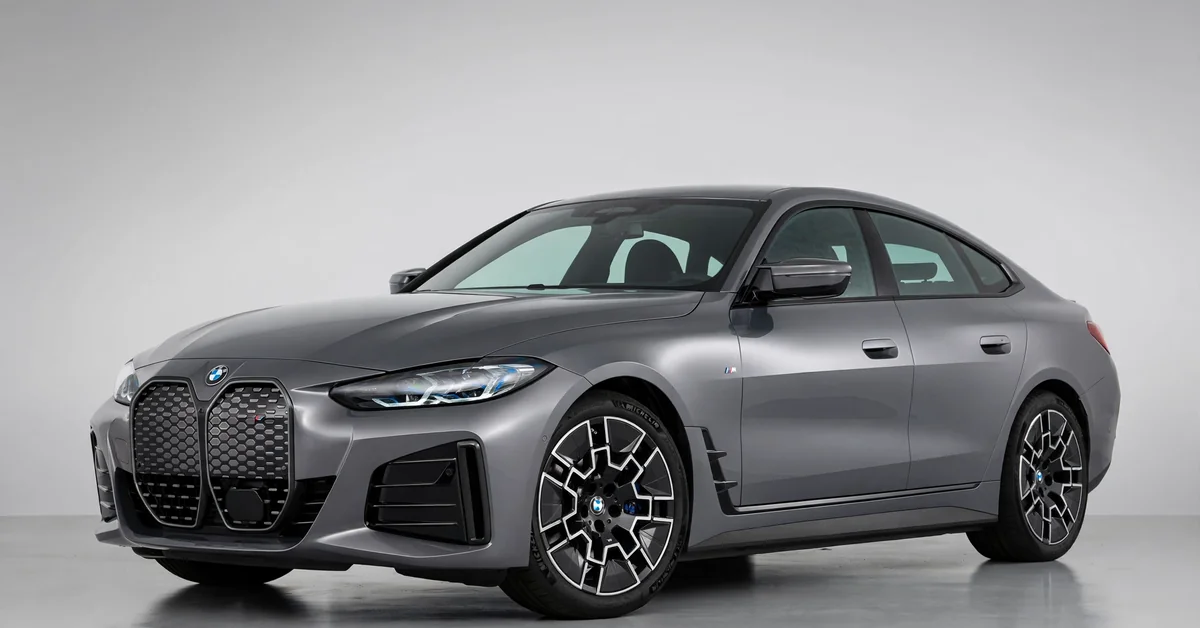
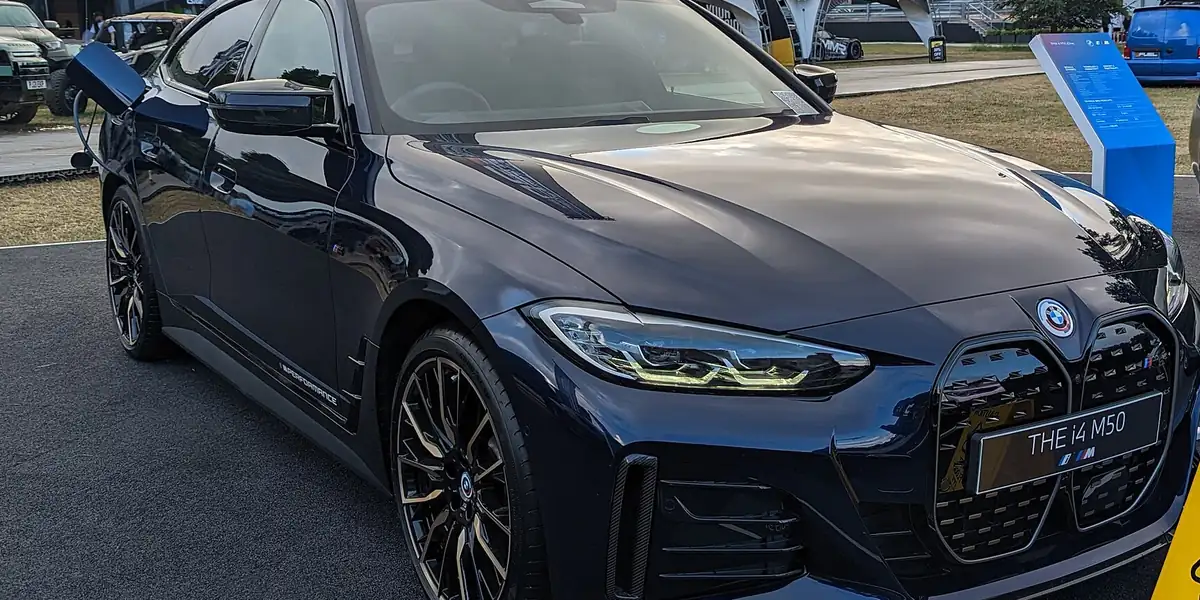
The BMW i4 M50 battery is the same 83.9 kWh (81.5 kWh usable) NMC pack as the other large-battery i4s — 324 prismatic cells in seven modules — tuned for performance: 536 hp in normal driving, 544 hp on Sport Boost, and 0–60 mph in 3.7 seconds. DC fast charging peaks at 200 kW (10–80% in about 31 minutes) and EPA range is 270 miles on 19-inch wheels — the price of dual-motor performance; the single-motor eDrive40 stretches to 333 miles on 18-inch wheels.
The M50 was sold in the US for model years 2022–2025; for 2026 the M60 (593 hp) replaces it as the flagship in the i4’s final year. The smaller eDrive35 uses a different, smaller pack (70.2 kWh gross, 66 kWh usable).
Quick answer
The BMW i4 M50 uses the i4’s large pack: 83.9 kWh gross, 81.5 kWh usable, high-nickel NMC prismatic cells. It makes 536 hp (544 hp on Sport Boost), hits 0–60 mph in 3.7 seconds, charges at up to 200 kW DC and covers 270 miles EPA on 19-inch wheels. Sold in the US for 2022–2025 from $65,900 at launch; the M60 replaced it for 2026. Most battery repairs are module-level, not a full pack.
Key figures: 81.5 kWh usable · 200 kW DC peak, ~31 min 10–80% · 536 hp (544 Boost) · 270 mi EPA (19″) · 8 yr / 100,000 mi warranty, 70% floor
BMW i4 Battery: All Variants Compared
| Variant | Battery | Drive | Power | 0–60 mph | EPA Range | WLTP Range | DC Rate |
|---|---|---|---|---|---|---|---|
| eDrive35 (base) | 70.2 kWh NMC (66 usable) | RWD | 281 hp | ~5.9 sec | 276 miles | ~285 miles | 180 kW |
| eDrive40 (mid) | 83.9 kWh NMC | RWD | 335 hp | ~5.5 sec | 333 miles | ~360 miles | 200 kW |
| xDrive40 (AWD) | 83.9 kWh NMC | AWD | 395 hp | ~5.1 sec | 287 miles | ~330 miles | 200 kW |
| M50 (performance) | 83.9 kWh NMC | AWD | 536 hp (544 Boost) | 3.7 sec | 270 miles (19″) | 318 miles | 200 kW |
The 83.9 kWh NMC 811 Battery Architecture
The i4’s battery uses high-nickel NMC prismatic cells — the ‘NMC 811’ label (roughly 80% nickel, 10% manganese, 10% cobalt) is industry consensus rather than a BMW-published specification — BMW’s highest-nickel cathode chemistry. The pack comprises four modules of 72 cells plus three modules of 12 cells — 324 prismatic cells total. At 398.5V nominal and 210.6 Ah, the pack provides excellent energy density in its 108 mm tall floor-mounted enclosure. BMW developed the motor, battery management, and power electronics entirely in-house — part of the fifth-generation eDrive system.
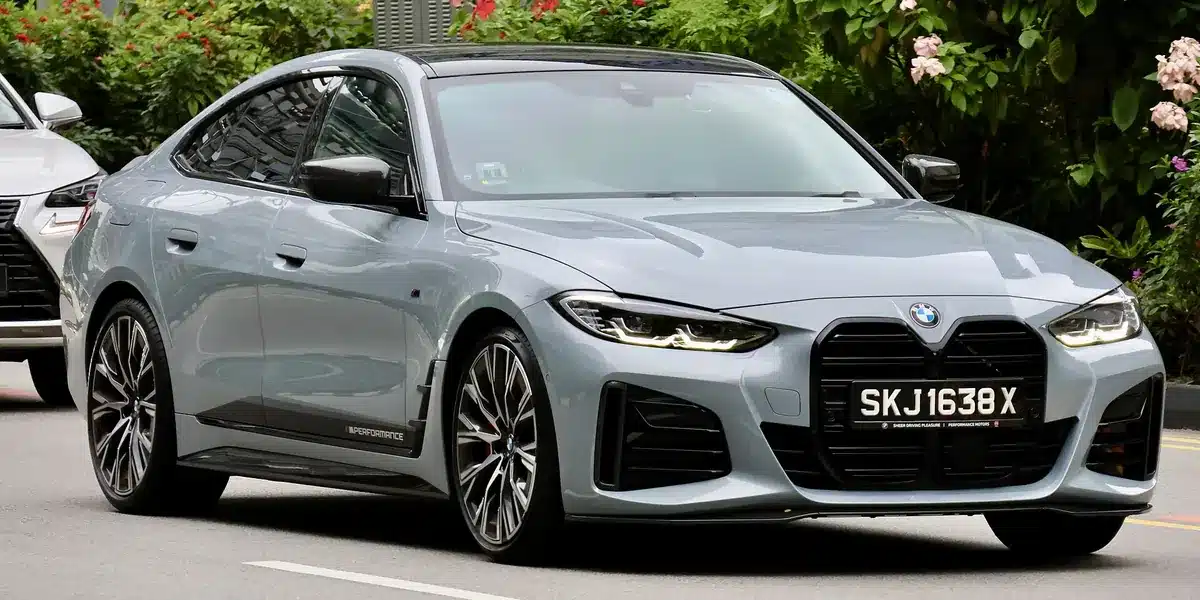
The NMC 811 chemistry required BMW to reduce cobalt content by two-thirds compared to earlier generations. No rare earth materials are used in the motor — a sustainability advantage BMW highlights. The 81.5 kWh usable from 83.9 kWh gross leaves a buffer of just 2.4 kWh — slim by industry standards, and part of how the i4 extracts so much range from its pack.
Read more: our BMW i4 battery guide covers this shared pack across every variant in depth.
M50 Performance Mode: Boost
The M50 makes 536 hp in normal driving. The Sport Boost function raises output to 544 hp for bursts of about 10 seconds — similar in spirit to the Ioniq 5 N’s N Grin Boost. The front motor produces 255 hp; the rear adds 308 hp. Together they deliver 586 lb-ft of torque through BMW’s xDrive AWD with torque vectoring capability.
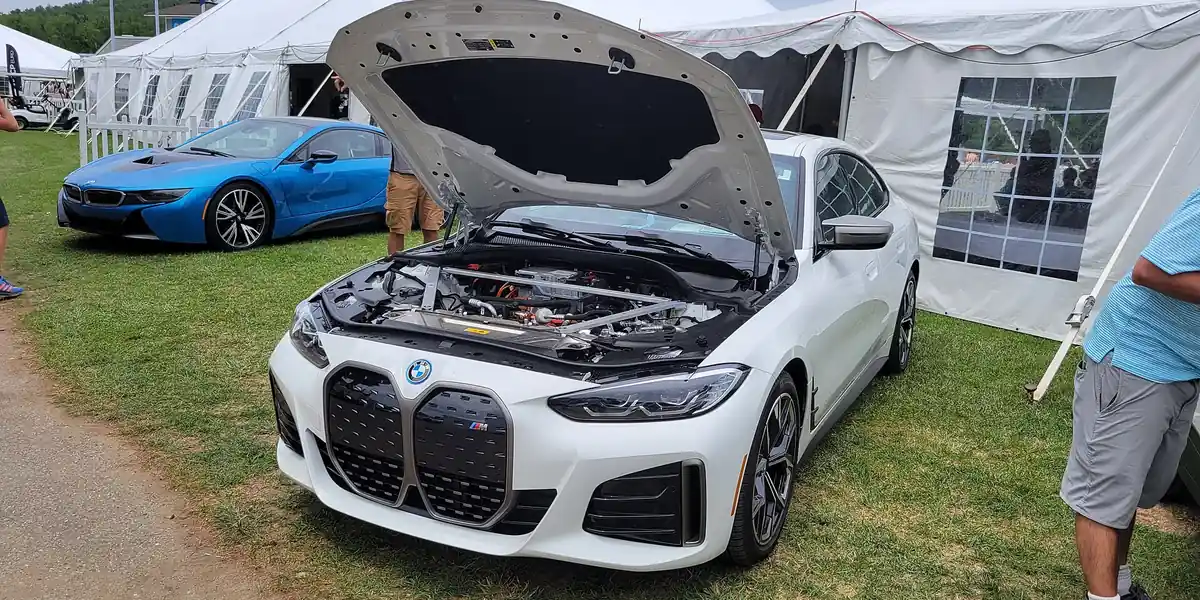
The M50’s 3.7-second 0–60 mph makes it one of the quickest electric sedans under $80,000. The adaptive M dampers provide track-tuned suspension firmness alongside real-world ride compliance. BMW’s 34 mm lower centre of gravity vs the G20 3 Series sedan significantly improves lateral dynamics. The i4’s CLAR platform — shared with petrol BMWs — enables excellent chassis tuning but lacks the purpose-built EV platform benefits of rivals like the Ioniq 6.
BMW i4 Charging Speeds
| Method | Power | i4 M50 (81.5 kWh usable) |
|---|---|---|
| Level 1 (120V) | ~1.4 kW | ~65 hours full |
| Level 2 (11 kW) | 11 kW | ~8.25 hours full |
| DC Fast (200 kW peak) | 200 kW | ~31 min (10–80%); ~97 miles in 10 min |
The 200 kW DC rate adds up to about 97 miles of range in 10 minutes on the M50, per BMW. A full 10–80% session completes in approximately 31 minutes. BMW’s integrated preconditioning system warms the battery via navigation routing to DC chargers. Without preconditioning in cold weather, charging can fall far below the 200 kW peak — always use navigation-routed DC charging for peak speeds.
Real-World Range
- M50 (19-inch wheels), mild weather motorway: Approximately 230–260 miles at 70–75 mph — the dual motors add weight and front-motor drag losses at cruise
- M50 (20-inch wheels): EPA drops to 227 miles — avoid 20-inch wheels if range matters more than aesthetics
- eDrive40 (18-inch wheels), mild weather: Approximately 270–295 miles — the single-motor RWD maximises efficiency from the same 83.9 kWh pack
- Cold weather: Approximately 20–25% reduction from mild-weather figures — BMW’s thermal management is effective but NMC 811 chemistry is sensitive to cold
The 2026 i4 Update: M60 Replaces M50
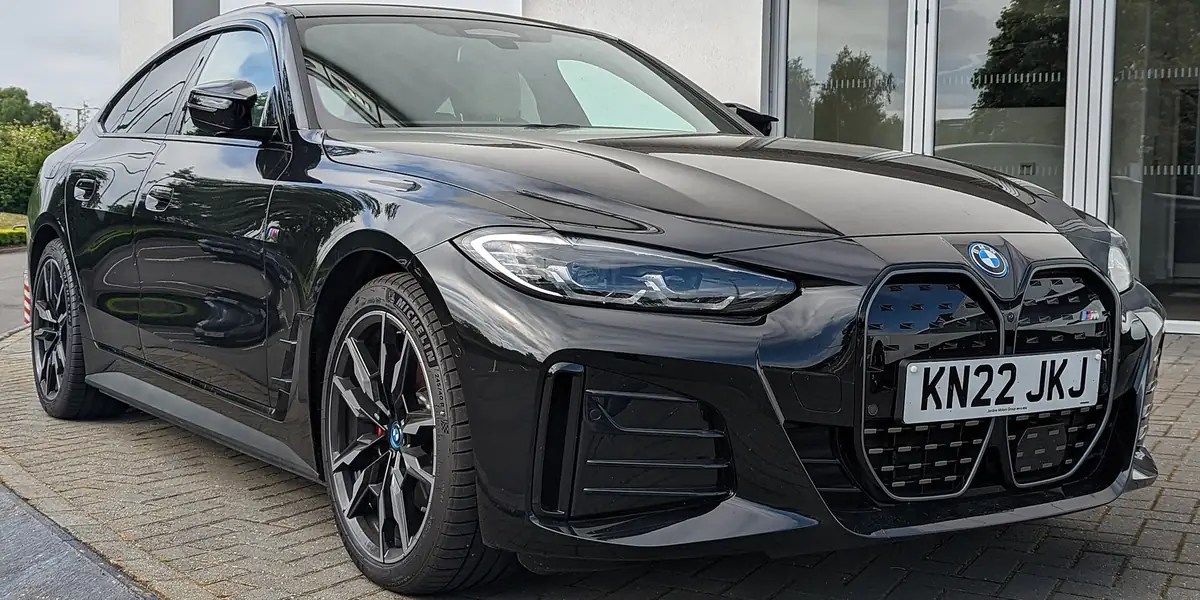
The 2026 BMW i4 refreshes the lineup — the M50 is replaced by the i4 M60 with updated motor outputs and specifications. The M60 makes 593 hp, is rated at 278 miles EPA on 19-inch wheels (232 miles on 20-inch), and starts at $70,700. It keeps the same 83.9 kWh pack and 200 kW DC charging, and 2026 is the i4’s final model year. The eDrive40 and xDrive40 continue with the same 83.9 kWh battery and minor specification updates.
Battery Warranty and Long-Term Health
BMW covers the i4 battery with an 8-year / 100,000-mile warranty against defects and capacity below 70% of original. Measured data (AVILOO’s used-i4 sample) puts median battery health at 95.6% at about 31,000 miles, 94.3% at about 62,000 miles and 93.6% at about 93,000 miles; one long-term M50 owner analysis measured 3.5–4.0% loss at two years and 50,000 miles. There is no health readout in the car or the My BMW app. A BMW dealer’s ISTA Battery Health Quick Report can confirm exact state of health on request — worth doing before purchasing used.
BMW i4 M50 Battery Replacement Cost and Module Repairs
BMW does not publish a US price for a full i4 pack. Fitted estimates for a complete replacement typically run about $12,500–$25,000 — but BMW’s own OEM pack kit lists at roughly $37,000 for the part alone, so a dealer full-pack quote can land far higher. Get the breakdown in writing before approving anything.
The repair most owners actually face is smaller. The pack is modular — seven modules — and a single failed module can be replaced on its own: roughly $1,500–$1,750 for the module plus $1,500–$2,500 in labour, so a module-level repair typically lands in the low-to-mid thousands. That is why ‘how common is module replacement?’ is the question M50 owners ask most — it is the car’s real repair story, and it is far cheaper than a pack.
Read more: our EV battery replacement cost guide compares pack prices across brands.
Recalls to Check on a Used M50
Three recalls are worth checking on any i4. The big one is the 2025 drive-motor software recall covering 35,414 US i4s (2022–2025): the software can shut the high-voltage system down by mistake, cutting drive power; the fix is a software update, at a dealer or over the air. A 2024 recall (24V-135) covers certain 2024 M50s for a battery module with insufficient weld seams — dealers replace the module free of charge. A small 2025 recall (25V-470) covers just two 2022–2023 i4s for battery modules that were not assembled to specification. Check any car’s VIN before buying: the NHTSA recall lookup shows open recalls by VIN.
The i4 M50’s 12-Volt Battery
Like every i4, the M50 also carries a conventional AGM 12-volt battery for the computers, locks and displays. It typically lasts 3–6 years, and a weak one can cause warning lights and no-start conditions that look like high-voltage problems. Dealer replacement with the required battery registration typically runs about $500–$1,100 (the battery itself is roughly $250–$290) — the new battery must be registered to the car so the charging system manages it correctly.
BMW i4 M50 vs Performance EV Rivals
| Model | Battery | EPA Range | Peak DC Rate | 0–60 mph | Starting Price |
|---|---|---|---|---|---|
| BMW i4 M50 | 83.9 kWh NMC | 270 miles | 200 kW | 3.7 sec | ~$65,900 |
| Hyundai Ioniq 6 SE LR AWD | 84 kWh NMC 800V | ~281 miles | ~235 kW | ~5.1 sec | ~$46,000 |
| Tesla Model 3 Performance | ~82 kWh NMC | ~315 miles | 250 kW | 2.9 sec | ~$54,990 |
| Porsche Taycan (base) | ~97 kWh NMC 800V | ~249 miles | 320 kW | ~5.1 sec | ~$99,000 |
Charging Tips for BMW i4 M50 Owners
- Set daily limit to 80%: NMC 811 benefits significantly from avoiding constant 100% — 80% of 81 kWh provides ~65 kWh covering 220+ miles daily without stressing cells
- Always precondition via navigation: Route to DC chargers through BMW’s navigation system — this activates battery preconditioning for the full 200 kW charge rate in cold weather
- Plug & Charge: enable it in the My BMW app — on supported networks the car authenticates itself, so charging starts without an app tap or card
- Choose 19-inch wheels: The M50 with 19-inch wheels achieves 270 miles EPA; switching to 20-inch wheels drops this to 227 miles — a 16% range penalty for aesthetics alone
Frequently Asked Questions
How big is the BMW i4 M50 battery?
83.9 kWh gross, 81.5 kWh usable — the same large pack as the eDrive40 and xDrive40, with 324 prismatic NMC cells in seven modules. (The eDrive35 uses a smaller 70.2 kWh pack.) EPA range is 270 miles on 19-inch wheels, about 227 miles on 20-inch.
How much does a BMW i4 M50 battery replacement cost?
A full pack fitted typically runs about $12,500–$25,000 by independent estimates, and BMW’s OEM pack kit lists around $37,000 for the part alone. Most real repairs are module-level: one module is roughly $1,500–$1,750 plus $1,500–$2,500 labour. Inside the 8-year / 100,000-mile warranty (70% floor), a qualifying failure is BMW’s cost.
How long does the BMW i4 M50 battery last?
AVILOO’s used-i4 measurements show median health of 95.6% at about 31,000 miles and 93.6% at about 93,000 miles; an M50 owner analysis measured 3.5–4.0% loss at two years and 50,000 miles. There is no in-car health readout — a dealer’s ISTA report is the check.
Was the BMW i4 M50 discontinued?
Yes — the M50 was sold in the US for model years 2022–2025. For 2026 the M60 (593 hp, from $70,700) replaces it as the flagship, in the i4’s final model year.
Is battery module replacement common on the i4 M50?
It is the most common battery repair owners discuss: the pack’s seven modules can be replaced individually, and two recalls (24V-135 weld seams on certain 2024 cars; 25V-470 assembly on two 2022–2023 cars) were module-level fixes done free. A failed module out of warranty typically costs in the low-to-mid thousands fitted.
Does the BMW i4 M50 have a 12-volt battery?
Yes — a conventional AGM 12-volt battery, lasting about 3–6 years. Dealer replacement with the required registration runs about $500–$1,100, and a weak 12-volt battery can trigger warnings that look like high-voltage faults.
Conclusion
The BMW i4 M50 battery is a highly capable 83.9 kWh NMC 811 pack delivering 536 hp (544 hp on Sport Boost) and 3.7-second 0–60 mph with 31-minute DC fast charging. The 270-mile EPA range is the honest trade-off for dual-motor AWD performance from the same pack as the 333-mile eDrive40. BMW’s in-house eDrive development, NMC cells with a slim 2.4 kWh buffer, and proven CLAR platform make the i4 M50 a technically refined performance EV. For 2026, the M60 carries the flagship role into the i4’s final year with 593 hp.
