
BMW i5 Battery: Complete Guide

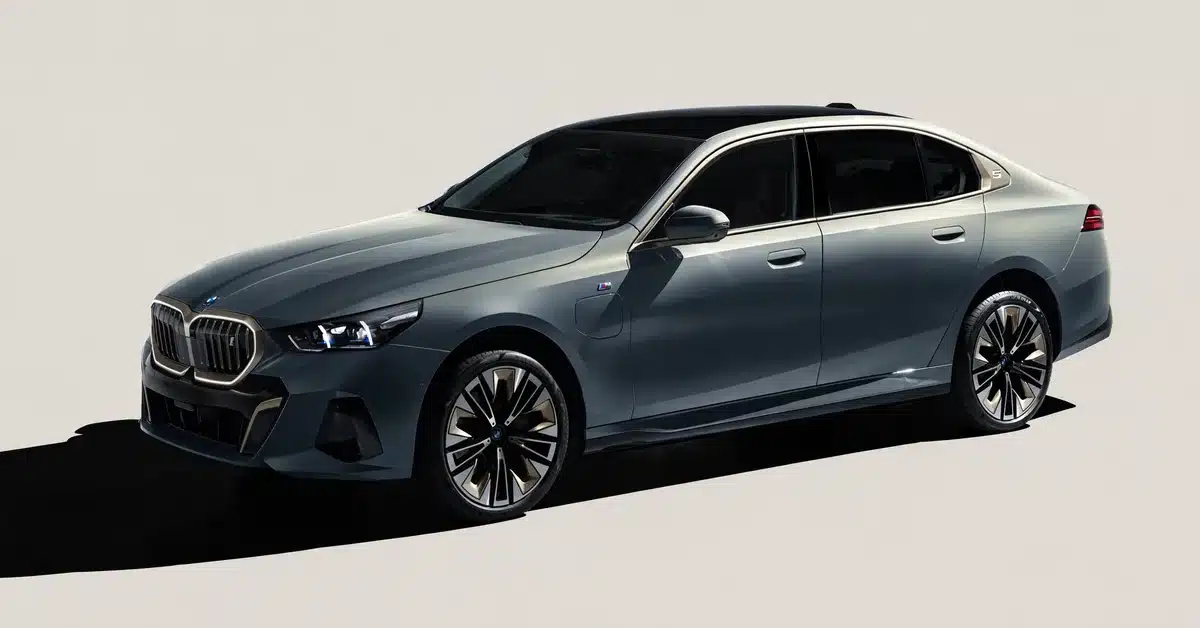
The BMW i5 battery is a single pack shared by all three US variants: 84.3 kWh by BMW USA’s figure, with high-nickel NMC prismatic cells (global spec sheets split the same pack as 84.4 kWh gross and 81.2 kWh usable). The eDrive40 (335 hp, rear-wheel drive) returns up to 310 miles of EPA range for 2026; the dual-motor xDrive40 (389 hp) up to 278 miles; and the M60 (593 hp) up to 277 miles.
DC fast charging peaks at 205 kW, adding 86–96 miles in about 10 minutes. For 2026 the M60 became the first BMW sold in the US with a native NACS port, and every i5 built from March 2026 has one. Like every BMW EV, the i5 also carries a separate 12-volt battery for its electronics — covered below.
Quick answer
Every US BMW i5 uses the same battery: 84.3 kWh by BMW USA’s figure (global spec sheets split it as 84.4 kWh gross, 81.2 kWh usable), with high-nickel NMC prismatic cells. Range runs up to 310 miles EPA (2026 eDrive40), DC fast charging peaks at 205 kW, and the 2026 M60 was BMW’s first US model with a native NACS port. A separate AGM 12-volt battery runs the car’s electronics.
Key figures: 84.3 kWh · up to 310 mi EPA (2026) · 205 kW DC peak, ~30 min 10–80% · 86–96 mi added in 10 min · 8 yr / 100,000 mi warranty, 70% floor
BMW i5 Battery: Full Specs by Variant
| Variant | Battery | Drivetrain | EPA Range (U.S.) | WLTP Range | Power | Peak DC Rate |
|---|---|---|---|---|---|---|
| i5 eDrive40 Sedan (RWD) | 84.3 kWh NMC | RWD | 278–310 miles | ~343 miles | 335 hp | 205 kW |
| i5 xDrive40 Sedan (AWD) | 84.3 kWh NMC | AWD | 259–278 miles | ~295 miles | 389 hp | 205 kW |
| i5 M60 xDrive (AWD) | 84.3 kWh NMC | AWD | 239–277 miles | ~310 miles | 593 hp | 205 kW |
Ranges shown are the 2026 ratings. For 2026, revised silicon-carbide inverter components and lower-friction wheel bearings lifted the eDrive40 from 295 to 310 miles; 2024–2025 cars rate lower (eDrive40 up to 295 miles, M60 up to 256 miles). Wheel size matters throughout: the eDrive40 spans 310 miles on 19-inch wheels down to 278 on 21-inch.
Inside the BMW i5 Battery
The BMW i5 uses the same fifth-generation NMC prismatic-cell battery architecture as the BMW i4 and BMW iX. All cells are actively liquid-cooled. The pack integrates directly into the vehicle floor — BMW’s CLAR platform is shared with the gasoline 5 Series, which lets BMW build the i5 and the 5 Series alongside each other at the Dingolfing plant.
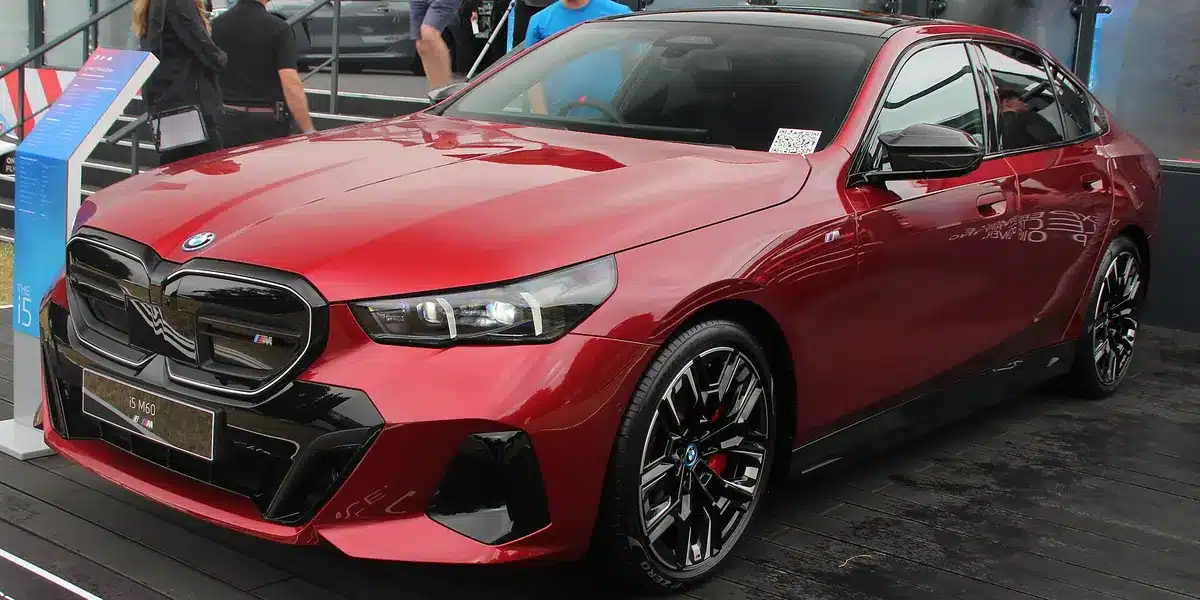
Why do sources quote two different sizes? BMW USA publishes a single figure — 84.3 kWh. Global spec sheets split the same pack as 84.4 kWh gross and 81.2 kWh usable, which leaves a buffer of about 3.2 kWh — slim by industry standards, and part of how the i5 extracts its range. Active thermal management keeps the pack in its optimal temperature window during charging and driving, and a standard heat pump improves cold-weather efficiency across all i5 variants.
Read more: our BMW i4 battery guide covers this same fifth-generation pack in the smaller sedan.
The i5 M60: 593 HP From the Same Battery
The M60 shares the identical pack with the eDrive40 and xDrive40. Its 593 hp comes from a high-performance dual-motor setup drawing more current from the same cells, and it reaches 0–60 mph in about 3.7 seconds. The cost is range: the M60 returns up to 277 miles EPA for 2026 (on 19-inch wheels) against the eDrive40’s 310 miles.
BMW i5 Charging Speeds
| Method | Power | i5 (84.3 kWh) |
|---|---|---|
| Level 1 (120V) | ~1.4 kW | ~65 hours full |
| Level 2 (240V, 11 kW) | 11 kW | ~8.5 hours full |
| DC Fast (205 kW peak) | 205 kW | ~30 min (10–80%) |
The 205 kW peak DC rate is the i5’s strong suit on road trips: BMW quotes 86–96 miles of range added in about 10 minutes, and a 10–80% session takes roughly 30 minutes. Real-world sessions typically complete in 30–35 minutes on a compatible 200+ kW charger.
Preconditioning matters for hitting those numbers. The i5 preheats or precools its battery automatically when a DC charging station is set as the navigation destination, and it can also be started manually — ‘Pre-condition battery’ in the Charging menu, or in the My BMW App on cars built from July 2024. Arriving with a cold battery is the commonest reason an i5 charges well below its 205 kW peak.
2026 NACS Port: Native Supercharger Access
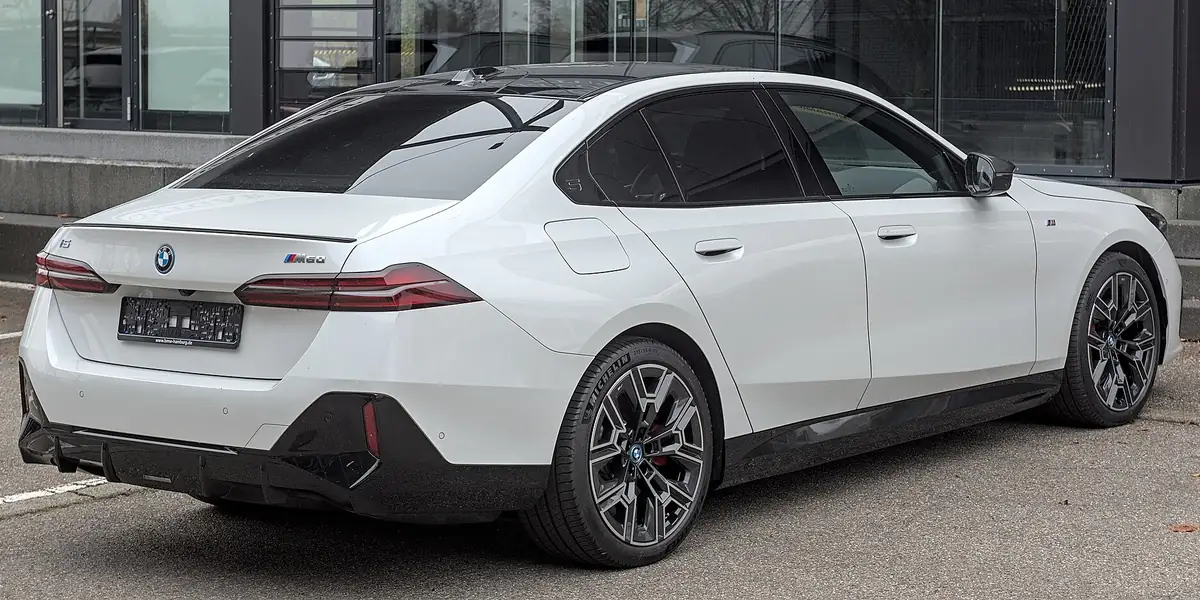
The 2026 BMW i5 M60 was the first BMW sold in the US with a native NACS (SAE J3400) port — direct access to Tesla Supercharger V3 and V4 stations without an adapter. From March 2026, every US i5 — eDrive40 and xDrive40 included — is built with the native port, and those cars include AC and DC adapters in the box for CCS and J1772 chargers.
Earlier i5s with the CCS port are not left out: BMW opened Supercharger access to its US drivers on December 10, 2025 (more than 25,000 plugs), using the BMW-approved Lectron Vortex Plus adapter (about $180) once the car has the required Remote Software Upgrade. On NACS-equipped cars, Plug & Charge works at Superchargers with a payment method set up through Shell Recharge in the My BMW app.
i5 Real-World Range
- eDrive40 (RWD): up to 310 miles EPA for 2026 on 19-inch wheels (278 on 21-inch); 2024–2025 cars up to 295 miles
- xDrive40 (AWD): up to 278 miles EPA for 2026; M60: up to 277 miles on 19-inch wheels, 259 on 21-inch
- Highway driving at a steady 70 mph typically lands 10–15% below the EPA figure in mild weather
- Cold weather: expect roughly a 20–25% reduction from mild-weather range; the standard heat pump limits the winter penalty
BMW i5 Battery Warranty
BMW covers the i5 battery with an 8-year / 100,000-mile warranty; BMW’s current warranty booklet sets the capacity floor at 70% — if the pack falls below 70% of its original capacity inside the term, BMW repairs or replaces it.
No large independent degradation dataset exists for the i5 yet; fleet-wide data across modern EVs (Geotab, 22,700+ vehicles) averages about 2.3% capacity loss per year, and healthy i5 packs should broadly follow the same fifth-generation pattern as the i4’s. Isolated owner reports of much faster loss point to a faulty module, not normal ageing — and that is a warranty conversation. BMW recommends keeping the battery between 20% and 80% for everyday use; the My BMW App makes the 80% charge limit easy to schedule.
BMW i5 Battery Replacement Cost
BMW does not publish a fitted US price for an i5 pack. BMW’s own parts catalogue lists the complete high-voltage battery unit at about $52,800 — that is a list price for the part, before labour, and few owners ever pay it: failures inside the 8-year / 100,000-mile warranty are BMW’s cost, and the pack is modular, so a single failed module can be replaced on its own for a fraction of a full pack.
Out of warranty, used and salvage packs are the realistic route — complete i5 packs have been listed from about $5,600 — and a specialist’s diagnosis should always come before any pack decision. Get the breakdown (part, labour, and whether a module repair is possible) in writing.
Read more: our EV battery replacement cost guide compares pack prices across brands.
Recalls to Check on a Used i5
Two recalls are worth checking on an i5. The significant one is the 2025 drive-motor software recall (25V-395): on about 4,700 model-year 2024 i5s, the software can falsely detect a ‘double-isolation’ fault and shut the high-voltage system down, cutting drive power after a warning; the remedy is a software update, at a dealer or over the air. The second, 24V-135 (2024), covers a battery module with insufficient weld seams — for the i5 it affects exactly one 2024 eDrive40, and the module is replaced free of charge. Check any car’s VIN before buying: the NHTSA recall lookup shows open recalls by VIN.
The i5’s 12-Volt Battery
The i5 also carries a conventional 12-volt AGM battery for the computers, locks, displays and contactors. The BMW original is a 70 Ah AGM (part 61216805461, about $250–$276 from dealer parts departments); quality replacements are Group 48 / H6 AGM batteries at roughly $250–$295. As on other BMWs, the new battery must be registered to the car so the charging system manages it correctly.
The known i5 quirk is early 12-volt drain: some owners report the battery going flat while the car sits parked — a parasitic draw that triggers ‘Battery Management’ warnings. A weak 12-volt battery can also cause warning lights and no-start conditions that look like high-voltage problems, so on a used i5 it is the first thing to test.
i5 vs Competitors: Luxury Electric Sedan Battery Comparison
| Model | Battery (Usable) | EPA Range | Peak DC Rate | Starting Price |
|---|---|---|---|---|
| BMW i5 eDrive40 | 84.3 kWh NMC | 278–310 miles | 205 kW | $67,100 |
| Mercedes EQE 350+ | 90.6 kWh NMC | ~350 miles | 170 kW | ~$74,900 |
| Hyundai Ioniq 6 LR RWD | 84 kWh NMC (800V) | 361 miles | ~235 kW | ~$42,000 |
| Tesla Model S Long Range | ~100 kWh NCA | 410 miles | 250 kW | ~$74,990 |
Full specs for the Tesla and Mercedes rivals above are in our Tesla Model S battery guide and Mercedes EQE battery guide.
Charging Tips for BMW i5 Owners
- Set daily limit to 80%: BMW’s My BMW App allows a charge target — NMC benefits significantly from this habit
- Native NACS cars (2026 M60, and all i5s built from March 2026): plug straight into Supercharger V3 and V4 stations — no adapter needed; keep the included CCS adapter in the car for other networks
- Plug & Charge at IONNA: The i5 supports ISO 15118 Plug & Charge at IONNA stations — automatic billing, no app or card needed
- CCS-port cars and Superchargers: use only the BMW-approved Lectron Vortex Plus adapter (about $180), and install the Remote Software Upgrade before your first Supercharger session
Frequently Asked Questions
How big is the BMW i5 battery?
84.3 kWh by BMW USA’s published figure. Global spec sheets split the same pack as 84.4 kWh gross and 81.2 kWh usable — the difference is the reporting convention, not a different battery. All three US variants (eDrive40, xDrive40, M60) use the same pack.
How long does a BMW i5 battery last?
The design life is 10–20 years; the warranty runs 8 years / 100,000 miles with a 70% capacity floor in BMW’s current booklet. No i5-specific degradation dataset exists yet — fleet data across modern EVs averages about 2.3% loss per year. There is no health readout in the car; a dealer’s diagnostic report is the check on a used car.
How much does a BMW i5 battery replacement cost?
BMW’s parts catalogue lists the complete pack at about $52,800 for the part alone, but that list price is rarely what an owner pays: warranty covers the first 8 years / 100,000 miles, failed modules can be replaced individually, and used packs have been listed from about $5,600.
How fast does the BMW i5 charge?
Up to 205 kW DC — about 30 minutes for 10–80%, adding 86–96 miles in roughly 10 minutes per BMW. Precondition the battery (automatic when a DC charger is the navigation destination, or manually in the Charging menu) to reach the peak. AC charging is 11.5 kW, a full charge in about 8 hours.
Does the BMW i5 have a 12-volt battery?
Yes — a 70 Ah AGM battery (Group 48 / H6 class) for the electronics, lasting roughly 3–5 years. Replacements run about $250–$295 and must be registered to the car. Early drain while parked is a known i5 complaint — a flat 12-volt battery is the first thing to check on a car that will not start.
Can a BMW i5 charge at a Tesla Supercharger?
Yes. The 2026 M60 — and every i5 built from March 2026 — has a native NACS port and plugs straight in. Earlier CCS-port cars charge at Superchargers with the BMW-approved Lectron Vortex Plus adapter (about $180) after a software upgrade; BMW opened that access on December 10, 2025.
Conclusion
The BMW i5 battery delivers 84.3 kWh of NMC capacity in one of the most refined luxury electric sedans available. The eDrive40’s 310 miles EPA range and 205 kW fast charging make it a capable road-trip partner. The M60’s 593 hp from the same battery provides supercar performance with sedan practicality. Buyers wanting BMW’s electric SUV flagship on similar underlying technology should also see our BMW iX battery guide. The 2026 NACS update on the M60 eliminates the main charging friction for U.S. drivers.
