
CUPRA Raval Battery: Complete Guide

Facts checked against CUPRA and CUPRA UK releases and price lists, EV Database, Euro NCAP, the KBA recall register and named road tests (AutoExpress, Carwow, AM Online).
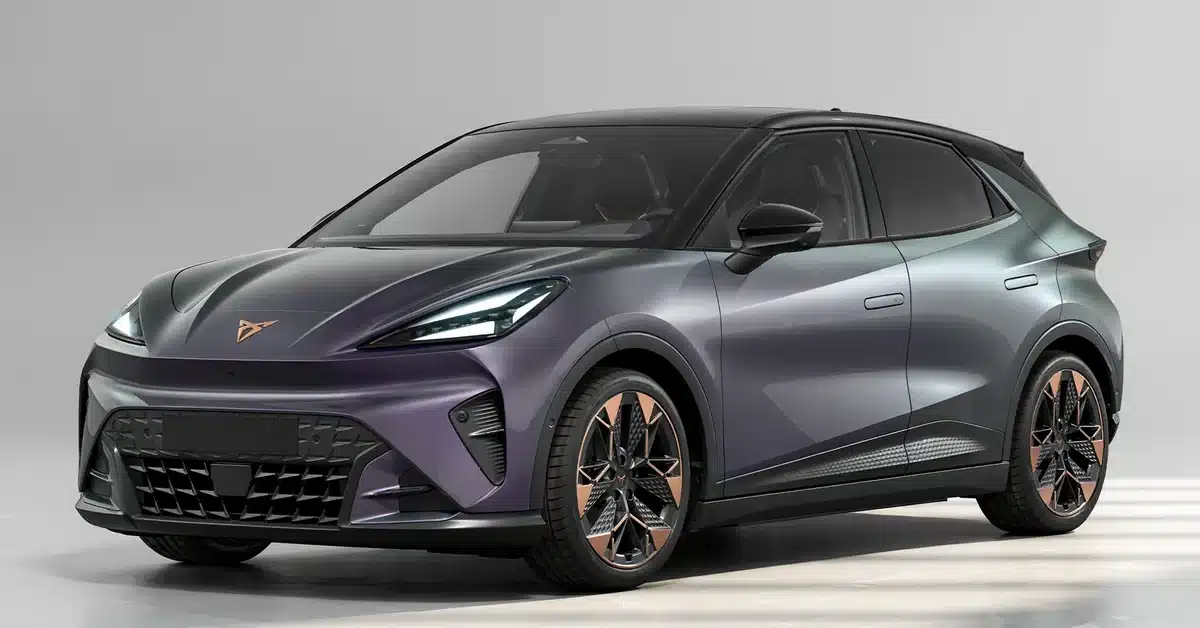
The CUPRA Raval is the first of Volkswagen Group’s new Electric Urban Car Family to reach the market: premiered in Barcelona on 9 April 2026, built by SEAT S.A. at Martorell in Spain, and on European roads since July 2026 (UK cars followed around September). It offers two batteries — a 37 kWh LFP pack and a 52 kWh NMC pack — on the group’s MEB+ platform, front-wheel drive.
This guide’s most important service is precision about charging, because the Raval has three different DC charging rates depending on the variant — 50, 88 or 105 kW — and most coverage, including this page until now, blurs them into one wrong figure. Everything below is variant-labelled for that reason.
Quick answer: The CUPRA Raval has two batteries: a 37 kWh LFP pack (net; EV Database lists 38.5 nominal / 37.5 usable) and a 52 kWh NMC pack (56.0 nominal / 51.7 usable). DC charging is 50 kW on the entry Origin, 88 kW on the other 37 kWh cars and 105 kW on all 52 kWh cars — there is no 130 kW version. WLTP range runs from 186–193 miles (Origin) to 276–277 miles (52 kWh cars); the battery warranty is 8 years or 160,000 km at a 70% floor.
Key figures: 37 LFP / 52 NMC · motors 85–166 kW · AC 11 kW · boot 441 litres · UK from £23,785
CUPRA Raval Battery Specs: Every Variant
One table, four versions — because the charging column changes with every row.
| Variant | Battery | Motor | WLTP range | DC peak | 10–80% (claimed) |
|---|---|---|---|---|---|
| Origin | 37 kWh LFP | 85 kW (116 PS) | 186–193 miles | 50 kW | ~60 min |
| V1 / V2 | 37 kWh LFP | 99 kW (135 PS) | 203–204 miles | 88 kW | ~23 min |
| V1 / V2 | 52 kWh NMC | 155 kW (211 PS) | 276–277 miles | 105 kW | ~24 min |
| VZ / VZ Extreme | 52 kWh NMC | 166 kW (226 PS) | 236–240 miles | 105 kW | ~24 min |
Both packs are built from the Volkswagen Group’s standardised unified cell — one prismatic format (256 × 24.8 × 106 mm) in a cell-to-pack design — with the battery systems assembled at Martorell itself. CUPRA has not published a cell supplier for this car, and none is named here. The architecture is 400-volt class on both packs.
The figure almost nobody prints: the entry-level Origin charges at 50 kW maximum, with a CUPRA-claimed 10–80% time of about an hour. The 88 kW rate belongs to the 99 kW cars only. If you are comparing the cheapest Raval against rivals, compare it as a 50 kW car.
First of the Electric Urban Car Family
The Raval leads a four-car family — and its timeline explains several figures that look odd in isolation.
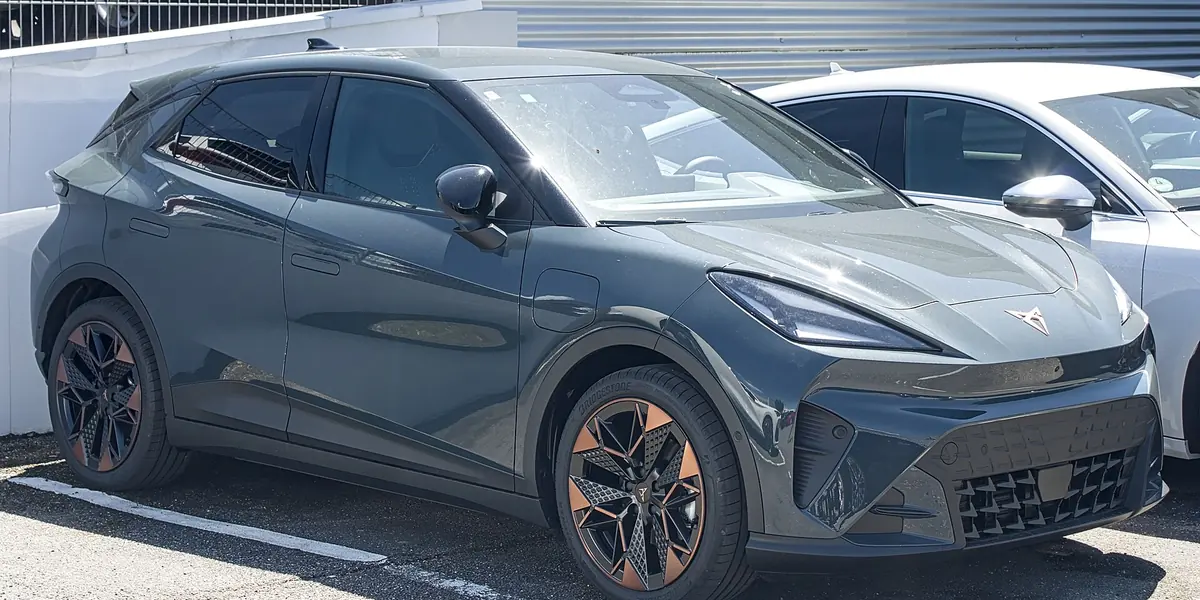
The family was announced together: the Raval’s name was confirmed at IAA Munich in September 2025 (the camouflaged car in the photograph below is from that presentation), and it premiered first, in April 2026, with series production at Martorell from June. Its siblings — the VW ID. Polo and the Škoda Epiq — share the platform, the packs and the unified cell, with their own charging figures that must not be borrowed for this car (the Epiq’s higher claimed DC rate is the likely source of the Raval’s phantom “130 kW”).

CUPRA Raval Charging: Three Different Answers
Ask “how fast does the Raval charge?” and the honest answer is: which one?
What are the Raval’s DC charging rates by variant?
DC peaks by variant are in the specs table: 50 kW (Origin), 88 kW (37 kWh, 99 kW motor), 105 kW (all 52 kWh cars), with CUPRA-claimed 10–80% times of about 60, 23 and 24 minutes respectively. A “130 kW” figure circulates in retail and review copy for the 52 kWh car; it appears in none of CUPRA’s claimed specifications and should be ignored. A 52 kWh test car’s own display corroborates the real figures — a 105 kW ceiling and a 24-minute claim.
What about AC charging, the heat pump and V2L?
On AC, an 11 kW three-phase charger is standard: a full charge takes about 4 hours (37 kWh) or 5 hours 45 minutes (52 kWh), or about 6 and 8¼ hours on a 7.4 kW home wallbox (EV Database figures). Navigation-linked battery preconditioning is fitted. A heat pump is optional, not standard — £960 in the UK. Vehicle-to-load (3.6 kW via a Type 2 adapter) is available on the 52 kWh cars; the base 37 kWh car does not support it, and there is no vehicle-to-grid.
CUPRA Raval Range and Efficiency
The 52 kWh car’s 276–277 miles is the headline; the variant bands underneath it are what buyers actually choose between.
By version (WLTP): Origin 186–193 miles; the 99 kW 37 kWh cars 203–204 miles; the 155 kW 52 kWh cars 276–277 miles (CUPRA’s headline is “up to 444 km”); the VZ 236–240 miles, a figure Spanish homologation reporting shows is tyre-dependent. EV Database’s real-range estimates — labelled estimates, not tests — are about 150 miles (37 kWh), 205 miles (52 kWh) and 190 miles (VZ).
Measured tests so far: AutoExpress recorded 4.5 mi/kWh in a 52 kWh V1 on a motorway-inclusive route; AM Online’s first drive of the 155 kW car returned 4.0 mi/kWh in warm conditions (about 230 miles); Carwow’s long-term VZ Extreme opened at 3.5 mi/kWh in mixed use (about 180 miles). A July 2026 addition, the continental Raval Plus, pairs the LFP pack with a stronger 134 kW motor — CUPRA’s specs page lists it at up to 328 km (204 miles) with the same 23-minute DC charge as the other 99 kW-class cars; it was announced in Spain from €29,000.
The Raval VZ: 226 PS and an Electronic Differential
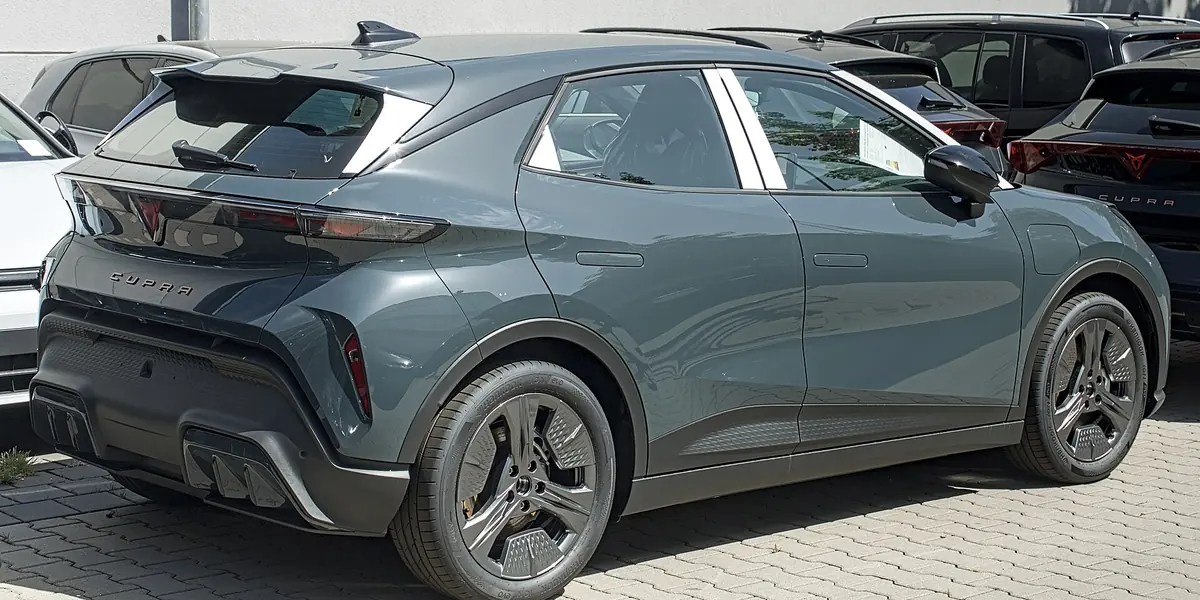
The VZ is a genuine hot hatch: 166 kW (226 PS), 290 Nm, 0–100 km/h in 6.8 seconds and a 175 km/h top speed.
It uses the 52 kWh NMC pack (WLTP 236–240 miles) and adds hardware the lesser cars do not have: an electronic limited-slip differential (e-VAQ) as standard, and DCC Sport adaptive dampers — also standard, with up to 15 settings. (The stored version of this page called the dampers optional and the output “222 hp”; 222 is simply the imperial-horsepower conversion of the same 166 kW.) UK prices: VZ £34,995 (£33,495 with the grant), VZ Extreme £36,310 (£34,810 with the grant).
CUPRA Raval Prices and the £1,500 Grant
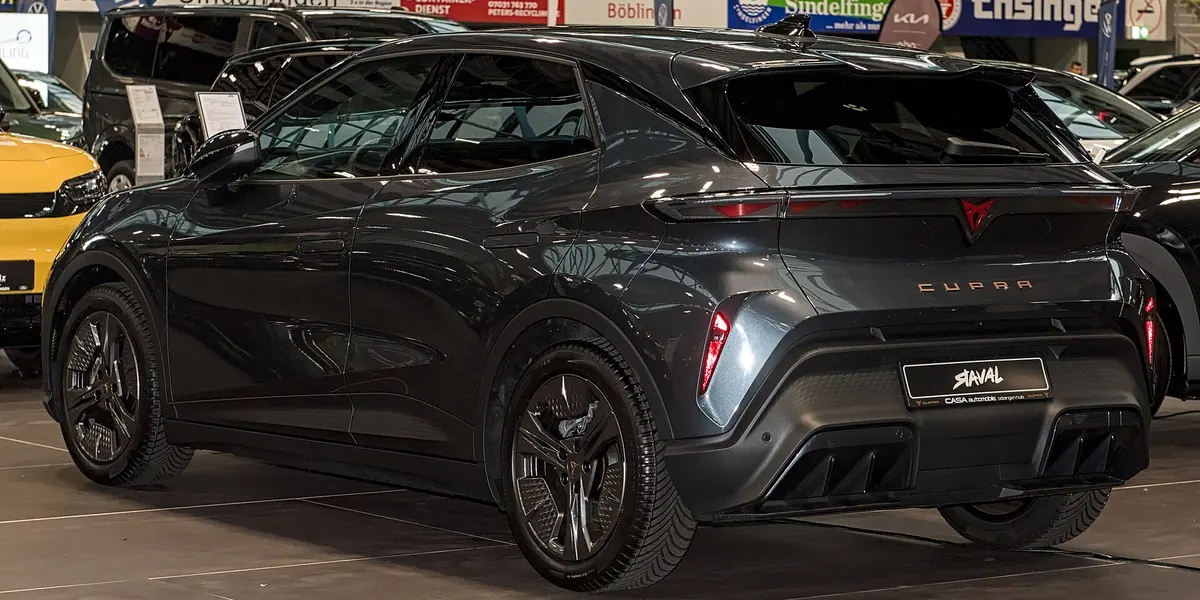
The Raval is a Band 2 grant car — £1,500, confirmed since May 2026 — and the entry Origin is not eligible at all.
What are the UK list prices and grant prices?
UK list prices (CUPRA UK, April 2026): Origin £23,785 · V1 37 kWh £26,995 · V2 37 kWh £29,580 · V1 52 kWh £29,995 · V2 52 kWh £32,580 · VZ £34,995 · VZ Extreme £36,310. With the £1,500 Electric Car Grant applied where eligible: V1 37 kWh £25,495 · V2 37 kWh £28,080 · V1 52 kWh £28,495 · V2 52 kWh £31,080 · VZ £33,495 · VZ Extreme £34,810. The grant reached the 52 kWh cars first (May 2026), with the 37 kWh V1/V2 added later; the Origin receives no grant, so its price is £23,785 exactly — not the lower figures that circulated in premiere-week reporting.
How is the £1,500 grant band decided?
The bands are awarded on the sustainability of a car’s production — manufacturing carbon and the maker’s verified science-based targets. There is no UK-content or trade-agreement test, whatever older coverage implied.
Practicality: A 441-Litre Boot and No Frunk
The boot is the verified headline: 441 litres with the seats up — large for a four-metre hatchback.
There is no frunk (0 litres), and CUPRA has not published a seats-folded volume, so none is quoted here. The car is 4,046 mm long on a 2,599 mm wheelbase with five seats.
Degradation and the Battery Warranty
No degradation data exists for this battery — the first cars were delivered in summer 2026 — and the warranty is tiered, which most coverage flattens.
The contractual position: 8 years or 160,000 km (in the UK, 8 years or 100,000 miles) with capacity held above 70%. CUPRA’s European terms are stepped — at least 78% to 3 years/60,000 km, 74% to 5 years/100,000 km, then 70% to the full term — and UK cars bought with the Electric Car Grant get an additional commitment: CUPRA acts if content falls below 80% within 3 years/40,000 miles. The vehicle warranty is 5 years or 90,000 miles. Any percentage-per-year degradation figure for this car would be invented; the first real evidence will come from the 2026 fleet in time.
CUPRA Raval Battery Replacement Cost
CUPRA publishes no replacement price for the Raval’s battery, and no verified independent quote exists for this pack.
The car is new and every pack is years inside its warranty; general figures for packs of this size live in our guide to what an EV battery replacement costs, but none of them is a Raval price.
Recall and Safety Rating
The Raval has one recall — for seat belts, not the battery — and a split Euro NCAP rating: four stars standard, five with the Safety Pack.
What does the Raval’s only recall cover?
The recall (KBA reference 17072R, CUPRA campaign 69C8, published October 2026) covers the Raval and the Terramar built between June 2025 and September 2026 — 10,151 cars across both models — for front seat belts that may be incorrectly fastened at the lower anchorage; the remedy is a workshop inspection, free of charge. It is technically independent of the October 2026 battery-cell recall that affects older MEB cars including the CUPRA Born: that action covers a different cell (LG pouch, not this car’s prismatic unified cell) on a different platform generation, and does not apply to the Raval.
Four stars or five — what is the Raval’s Euro NCAP rating?
Euro NCAP tested the Raval under its new 2026 protocols (results 2 September 2026): four stars with standard equipment (Safe Driving 58%, Crash Avoidance 66%, Crash Protection 91%, Post-Crash 95%), rising to five stars with the optional Safety Pack (72% / 77% / 91% / 95%), which adds predictive adaptive cruise control and front cross-traffic alert and is standard in most European markets. A flat “five-star Raval” claim is only half the result.
Frequently Asked Questions
What battery does the CUPRA Raval have?
Two, by variant: a 37 kWh LFP pack (Origin, V1, V2) and a 52 kWh NMC pack (V1, V2, VZ, VZ Extreme) — quoted net; EV Database lists 38.5/37.5 kWh nominal/usable for the small pack and 56.0/51.7 for the large one. Both use the Volkswagen Group unified cell in a cell-to-pack design on the MEB+ platform.
What is the fastest charging speed for the CUPRA Raval?
105 kW DC, on the 52 kWh cars (10–80% in about 24 minutes, claimed). The 37 kWh cars charge at 88 kW (99 kW motor, ~23 minutes) or 50 kW (the entry Origin, about 60 minutes claimed). No Raval charges at 130 kW, despite that figure appearing in some retail copy.
How far can the CUPRA Raval go on a full charge?
WLTP: 186–193 miles (Origin), 203–204 miles (37 kWh, 99 kW), 276–277 miles (52 kWh) and 236–240 miles (VZ). EV Database’s real-range estimates are about 150, 205 and 190 miles for the 37 kWh, 52 kWh and VZ cars respectively.
Does the CUPRA Raval have a heat pump?
Not as standard — it is a £960 option in the UK. The car does have navigation-linked battery preconditioning for fast charging.
When can I order a CUPRA Raval?
UK order books opened on 21 May 2026. European deliveries began in July 2026; UK customer cars followed around September 2026.
How much does the CUPRA Raval cost in the UK?
From £23,785 (Origin) to £36,310 (VZ Extreme) at list. Eligible versions take £1,500 off under the Electric Car Grant — the V1 37 kWh is £25,495 with it — but the Origin is not grant-eligible.
What is the battery warranty on the CUPRA Raval?
Eight years or 160,000 km (100,000 miles in the UK) with capacity held above 70%; CUPRA’s European terms step through 78% (3 years/60,000 km) and 74% (5 years/100,000 km) on the way. The vehicle warranty is 5 years or 90,000 miles.
Is the CUPRA Raval being recalled for its battery?
No. Its only recall (campaign 69C8, October 2026) concerns front seat-belt anchorages on early cars. The October 2026 battery-cell recall covers older MEB models with a different cell — including the CUPRA Born — and does not include the Raval.
What is the CUPRA Raval’s Euro NCAP rating?
Four stars with standard equipment under the 2026 protocols, and five stars with the optional Safety Pack fitted (standard in most European markets).
How much does a Raval battery cost to replace?
CUPRA publishes no replacement price and no verified independent quote exists. The packs are covered by the 8-year warranty, so replacement cost is a question for the 2030s for almost every owner.
Conclusion
Read by variant, the Raval is a strong small EV; read as a blur, it acquires a 130 kW charger it does not have and a £21,285 price that never existed.
The verified car: two sound packs on a modern platform, honest charging figures that differ by trim — including a slow-charging entry model buyers should know about — the full £1,500 grant picture, a tiered 8-year warranty, and a safety rating that depends on one option pack. That is the car this page now describes.
