
Renault 4 E-Tech Battery: Sizes, Chemistry, Range and Charging


Researched from EV Database and EVKX pack data, Renault Group and Renault UK material, Autocar’s 3,000-mile long-term test, and reporting from Electrifying, Carwow, Parkers and electrive.
The Renault 4 E-Tech’s battery story looks simple — two packs, one platform — but the details have moved fast. A third, cheaper LFP battery was announced in October 2026, the headline range has crept up, and much of what is written about this car’s bidirectional charging is, frankly, ahead of UK reality. This guide sticks to what is verified.
UK buyers get one battery: a 52 kWh usable NMC pack (55 kWh gross) with up to 247 miles of WLTP range — 415 km on the updated 2027 range — and 100 kW DC charging. Europe also gets a 40 kWh NMC car Renault does not sell in the UK, and a 37 kWh LFP entry version called Jogging was announced in October 2026. The battery is covered for 8 years or 100,000 miles down to 70% capacity, and V2L works today — but there is no Renault V2G service on sale in the UK yet.
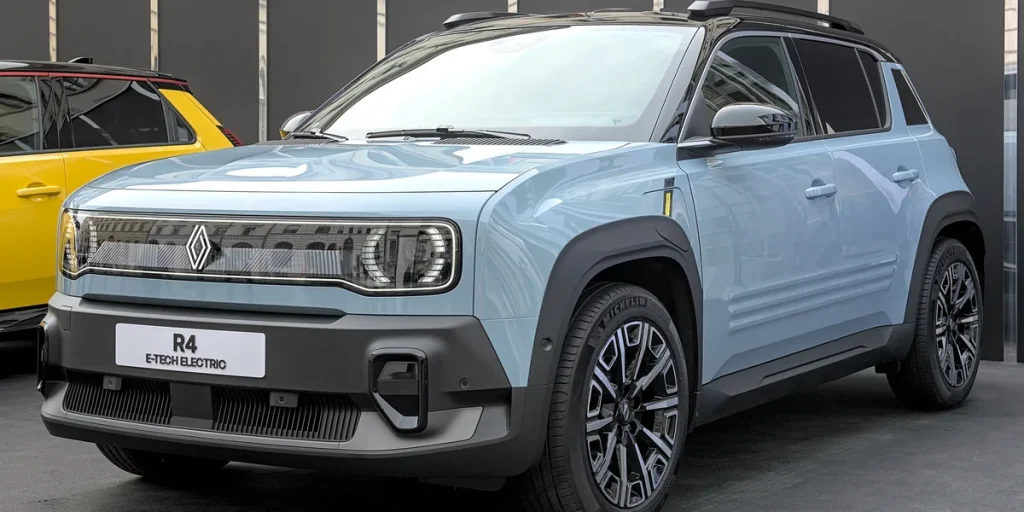
Renault 4 E-Tech battery packs at a glance: 40 kWh, 52 kWh — and a new 37 kWh LFP
There are two NMC batteries today, both named by usable capacity, and a third LFP pack joining the range.
Both launch packs sit on Renault’s AmpR Small platform at 400 volts. The 40 kWh “Urban Range” car pairs its battery with a 120 hp motor, while the 52 kWh “Comfort Range” car gets 150 hp. Renault names both packs by the energy you can actually use — more honest than the gross-figure marketing some rivals still lead with.
| Battery | Usable | Gross | Chemistry | WLTP range | DC peak |
|---|---|---|---|---|---|
| 37 kWh “Jogging” (from late 2026) | 37 kWh | — | LFP | 305 km | — |
| 40 kWh “Urban Range” | 40.0 kWh | 43.0 kWh | NMC | 308 km (310 km updated) | 80 kW |
| 52 kWh “Comfort Range” | 52.0 kWh | 55.0 kWh | NMC | 409 km (415 km updated) | 100 kW |
Which battery can you actually buy in the UK?
UK cars are 52 kWh only — Renault has never sold the 40 kWh version here, so treat any UK review built around the smaller pack with suspicion; it is a European-market model. The new Jogging, announced at the Paris Motor Show in October 2026, uses a 37 kWh LFP cell-to-pack battery and a 110 hp motor shared with the Twingo E-Tech. It is due in Europe before the end of 2026, but Renault has not confirmed UK availability.
What is the Renault 4’s battery made of?
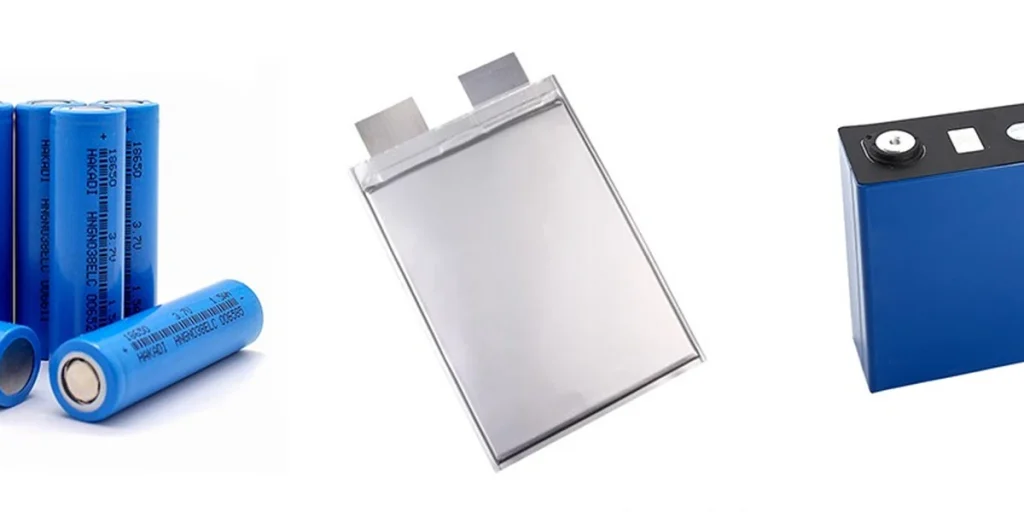
Both launch packs are NMC pouch cells, assembled into packs at Renault’s Douai plant in France — only the incoming Jogging switches to LFP.
This is the question this page gets asked most, so here is the full picture rather than the one-word answer most guides give. NMC stands for nickel manganese cobalt, the cathode chemistry in both packs. The cells are pouch format, and the layouts differ: the 40 kWh battery carries 93 cells in a 93s1p arrangement across 3 modules and weighs 240 kg, while the 52 kWh uses 184 cells in a 92s2p layout across 4 modules and weighs 300 kg.
Who supplies the cells?
Packs are assembled at Douai, and Renault Group’s named NMC cell partners are AESC in Douai itself, LG Energy Solution in Poland and Verkor in Dunkirk. The AESC gigafactory next to the Douai plant started production in June 2025, initially supplying cells for Renault’s volume cars such as the Renault 5, with higher-performance cells continuing from LG Energy Solution. One thing to be straight about: Renault has never published which supplier’s cells sit in which Renault 4 pack, so any source claiming a neat per-pack split is guessing.
What does the “Renault 4+” name mean?
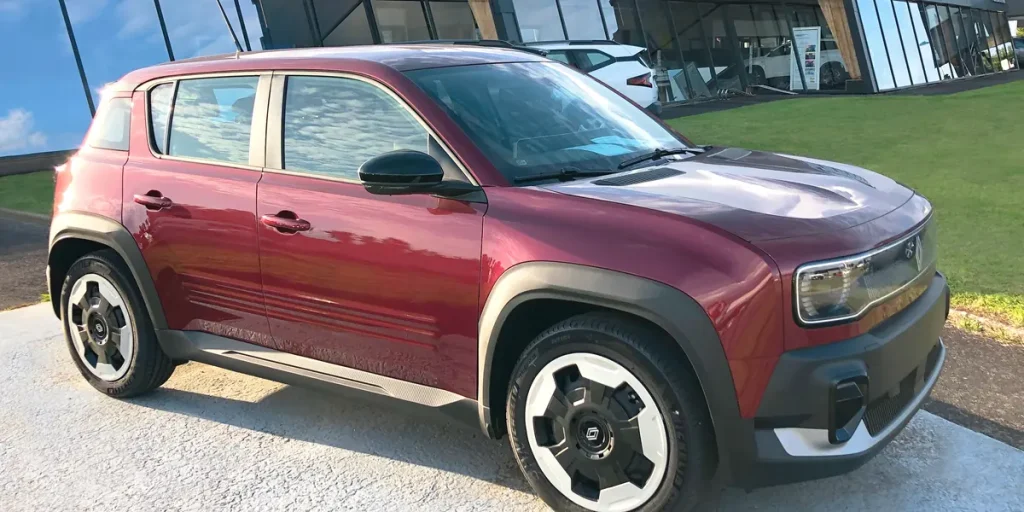
The “+” in Renault 4+ is not a trim level or a bigger battery. It marks UK cars whose battery is sourced from Renault’s Douai plant in France, and that French sourcing is what qualifies the car for the full £3,750 Electric Car Grant. The battery is the same 52 kWh pack — the badge is about where it comes from, and what it saves you.
How far does it go? WLTP range by battery and trim
The 52 kWh car is rated at up to 247 miles in the UK today, and the updated range lifts that to 415 km (258 miles).
On the current range, UK figures for the 52 kWh car run from 241 to 247 miles depending on trim and wheel size, and the 40 kWh car’s standard WLTP figure is 308 km. Renault’s official consumption figures are 14.7 kWh/100 km (40 kWh) and 15.1 kWh/100 km (52 kWh). The October 2026 update nudges both cars — 310 km and 415 km — through aerodynamic and battery-management tweaks, but those numbers belong to the updated cars, not a 2025 car already on a driveway.
Real-world range: what UK tests actually recorded
Plan on roughly 200 miles in normal UK use, and nearer 160–165 miles on a cold motorway run.
WLTP is a fair-weather, mixed-driving number, and the Renault 4 is no exception. Autocar ran a 52 kWh car for 3,000 miles in its long-term test and recorded 206 miles of real-world range, averaging 4.0 miles per kWh. On a 65–70 mph motorway cruise in mild weather it held around 200 miles — respectable for a boxy, upright car.
What do other testers get?
Parkers averaged 4.2 miles per kWh over 250 UK miles, pointing to roughly 208–223 miles in warm weather, and warns to expect under 150 miles in winter. Electrifying’s long-term running produced about 4.6 miles per kWh in warm weather — around 240 miles — but cold motorway work dropped it to roughly 160 miles, and Carwow observed 4.1 miles per kWh. The spread across UK testers is tight: low-200s normally, mid-100s when it is cold and fast.
Charging: DC and AC speeds and times
The 52 kWh car peaks at 100 kW DC and takes about half an hour for a 15–80% rapid charge; at home, most UK owners will charge at 7.4 kW, not 11 kW.
Rapid charging is this car’s honest weak point — 100 kW is merely adequate in 2026 — although the peak is easy to reach because most UK rapid chargers deliver 150 kW or more. The average matters more: EV Database records about 75 kW across a 10–80% charge on the 52 kWh car, taking 31 minutes. Renault quotes 15–80% in 30 minutes; both figures appear here because they measure different windows.
| Charging method | 40 kWh | 52 kWh |
|---|---|---|
| DC rapid, peak | 80 kW | 100 kW |
| DC 10–80% | ~32 min (avg ~55 kW) | ~31 min (avg ~75 kW) |
| AC 11 kW (three-phase), 0–100% | ~4 hrs 30 min | ~5 hrs 45 min |
| AC 7.4 kW (typical UK home), 0–100% | ~6 hrs 30 min | ~8 hrs 30 min |
What will home charging actually look like?
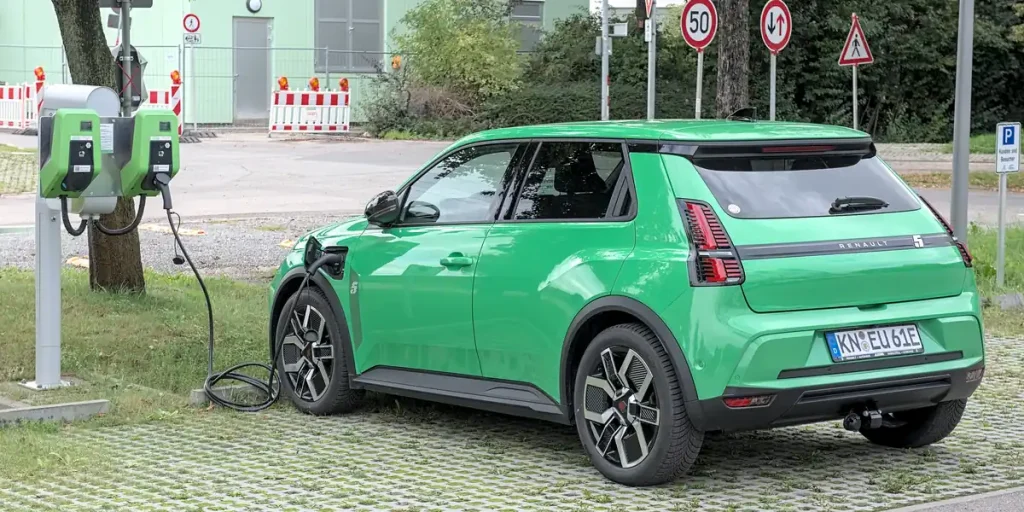
The onboard AC charger is 11 kW, but that rate needs a three-phase supply, which most UK homes do not have. On a normal single-phase wallbox you get 7.4 kW, so a full charge takes around eight and a half hours — an overnight charge, and one worth knowing about before you buy rather than after. The charge port sits at the front-left, with Type 2 for AC and CCS for rapid charging.
Battery preconditioning: automatic on the way to a charger, manual on new cars
Yes — the Renault 4 preconditions its battery for rapid charging automatically when a charger is set as the destination in the built-in navigation.
This question comes up in two forms, and they are different features. En route to a rapid charger, the car warms or cools the pack so it arrives at the right temperature to charge at full speed; EV Database records this automatic, navigation-based preconditioning on both packs. Separately, the scheduled programmes set in the car or the My Renault app pre-warm or cool the cabin while the car is plugged in, spending grid electricity instead of battery charge — useful, but cabin conditioning, not battery preconditioning.
The October 2026 update closes the remaining gap: updated cars get a manual preconditioning control on every version, so owners no longer rely on the sat-nav trick. Buying used, check the model year before assuming your car has it.
Heat pump: standard, and why it matters in winter
A heat pump is standard on every Renault 4, on both battery sizes.
That is not a given at this price, and it is one of the car’s genuinely good standard-fit decisions. A heat pump moves heat rather than generating it, so warming the cabin in winter costs far less range than a resistive heater would. It does not abolish the winter penalty — Electrifying still saw around 160 miles on cold motorway runs — but it is a large part of why the cold-weather numbers hold up as well as they do.
V2L: running devices from the car
V2L works today: plug the adapter into the charge port and the car will supply up to 3.7 kW AC from one exterior outlet.
This is the bidirectional feature UK owners can actually use right now — power tools, camping kit, or essentials during a power cut. It needs no tariff, no approval and no hardware beyond Renault’s Type 2 adapter. When you see a “3.6 kW bidirectional” figure quoted for this car, that number belongs to V2L, whatever the text around it claims.
V2G and V2H: what is actually live, country by country
The car has the hardware — an 11 kW AC bidirectional charger — but a buyable V2G service exists only in some countries, and the UK is not one of them yet.
Hardware capability and a service you can sign up for are two different things, and Renault’s marketing does not always keep them separate. The car can feed power back at up to 11 kW AC — to a home (V2H) or the grid (V2G) — once paired with a bidirectional wallbox and a supporting energy contract. Whether you can buy that package depends entirely on where you live:
- France — live since October 2024. Mobilize Power sells a complete service: the PowerBox Verso bidirectional wallbox, a Mobilize electricity contract, and a grid connection with a Linky smart meter and injection approval. Renault France’s compatibility list includes the Renault 4.
- France — a second offer announced. Renault Group and EDF announced a V2G partnership in October 2026, with services expected by summer 2027. Announced, not live.
- Netherlands — live in 2026. A residential V2G offer for Renault cars runs through a compatible charge point and energy contract, with three-phase supply and a smart meter required.
- UK — not yet a retail service. No UK equivalent of the French Mobilize Power contract is on sale as a standard tariff. The honest answer: the car can do it and the wallbox exists, but you cannot yet buy the Renault V2G service the way a French owner can — anyone saying otherwise is selling the future as the present.
Battery warranty: 8 years and a 70% floor
The battery is covered for 8 years or 100,000 miles in the UK, with a 70% capacity floor.
If the pack’s capacity falls below 70% inside that window, Renault will repair or replace it — the choice is Renault’s, under the warranty terms. European cover runs to 8 years or 160,000 km. For context, the car carries a 3-year warranty and the powertrain 4 years or 100,000 miles, so the battery cover outlasts both.
There is no battery lease to worry about, either — that was a Zoe-era option, and on the Renault 4 the pack is owned with the car.
UK prices, trims and the Plein Sud — and when you can actually get one
UK prices start at £27,395 list, which becomes £23,445 after the full £3,750 Electric Car Grant (checked November 2026).
The UK range is three trims, all on the 52 kWh battery: Evolution+ at £27,395, Techno+ at £29,895 and Iconic+ at £31,895. Because the battery is Douai-sourced — that “+” again — every trim qualifies for the full Band 1 grant, bringing after-grant prices to £23,445, £25,945 and £27,945. List prices have crept up slightly since launch, so read the headline as “from £23,445” rather than a promise.
What does the Plein Sud cost?
The Plein Sud adds a full-length electric folding canvas roof, unveiled in June 2026 — a roof, not a battery change: it uses the same 52 kWh pack and costs around 4 miles of WLTP range. In the UK it is sold as the Canvas versions, at £31,295 (Techno+) and £33,295 (Iconic+) before the grant. UK orders opened in July 2025, first deliveries followed late that year, and the car has been in normal retail supply through 2026.
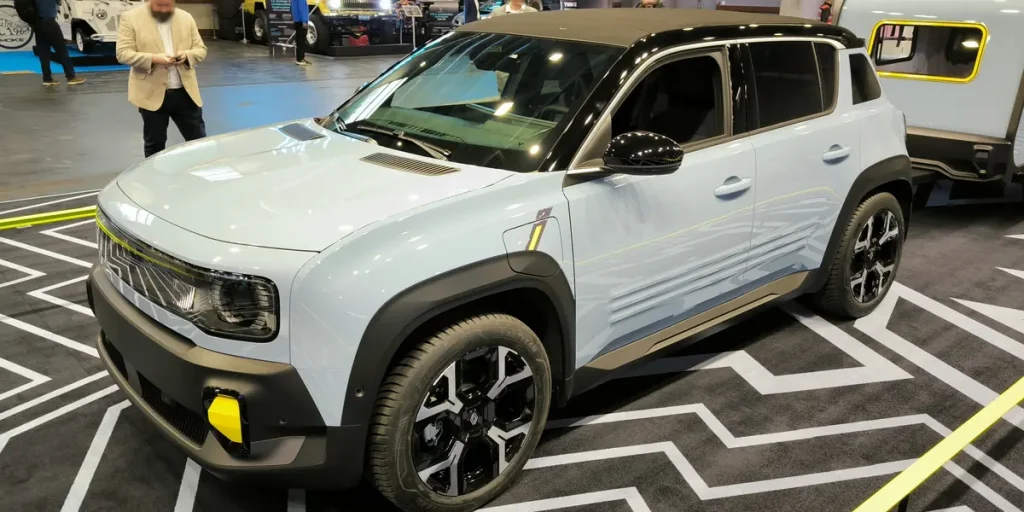
Renault 4 vs Renault 5: same platform — but is it the same battery?
Yes — the batteries are shared, but the Renault 4 is the bigger, more practical car built around them.
Both cars sit on the AmpR Small platform and use the same packs, motors, DC charging speeds and bidirectional onboard charger. What differs is the body: the Renault 4 is the longer, taller car at 4,143 mm, with a 420-litre boot, while the Renault 5 is the smaller hatchback — smaller and lighter enough to squeeze slightly more range from the same pack. If the boot matters, the 4 is the one; if not, the 5 does the same battery job for a little less.
For the full breakdown of the shared pack in the smaller car, see our Renault 5 E-Tech battery guide.
How long will the battery last, and what would a replacement cost?
Nobody knows yet — and any source quoting you a Renault 4 degradation rate or a replacement-pack price is making it up.
The car has been on sale for barely a year. There is no fleet degradation dataset for it, no owner state-of-health survey, and Renault does not publish a retail price for a replacement pack. The one piece of context worth having is generic, and labelled as such: Geotab’s 2025 fleet study of around 22,700 EVs found an average of roughly 2.3% capacity loss per year across all models — a fleet-wide average, not a Renault 4 figure.
Two practical points follow. Inside the warranty window, the 70% floor is your real protection: fall below it and the problem is Renault’s. And because the pack is built from 3 or 4 modules rather than sealed as one unit, module-level repair is the realistic out-of-warranty path if part of the pack ever fails — a judgement from the pack’s construction, not a Renault promise.
Charging tips for Renault 4 owners
Five habits, all drawn from how this car actually behaves — no generic filler.
- Send the car to the charger via the built-in nav before a rapid charge, especially in cold weather, so automatic preconditioning brings the pack to temperature; on updated cars, use the manual control instead.
- Expect the average, not the peak: a 10–80% rapid session averages about 75 kW on the 52 kWh car, so plan stops of around half an hour.
- Know your home rate: on single-phase you charge at 7.4 kW, not 11 kW — a full charge is an overnight job of roughly eight and a half hours.
- Precondition the cabin while plugged in in winter, using the scheduled programmes, so the warmth comes from the grid, not the battery.
- Leave the heat pump to it: it is standard and automatic — there is no setting to find.
Frequently Asked Questions
Is the Renault 4 E-Tech battery NMC or LFP?
The cars on sale today are NMC — both packs use nickel manganese cobalt pouch cells. LFP arrives only on the 37 kWh Jogging announced in October 2026, and Renault has not confirmed that version for the UK.
Is the 40 kWh Renault 4 sold in the UK?
No. UK cars are 52 kWh only; the 40 kWh Urban Range version is a European-market model. Every UK trim uses the 52 kWh pack.
Does the Renault 4 precondition its battery when it is plugged in?
Two different features are often confused here. Battery preconditioning for rapid charging happens automatically en route when a charger is set in the built-in navigation, and updated cars add a manual control. What runs while plugged in is scheduled cabin preconditioning, warming or cooling the interior on grid power.
Can the Renault 4 do V2G in the UK?
Not as a buyable service, not yet. The car has an 11 kW bidirectional charger and V2L works today at 3.7 kW, but the complete V2G package — wallbox plus energy contract — is on sale in France and the Netherlands, with no UK equivalent as a standard offer.
How long is the Renault 4 battery warranty?
Eight years or 100,000 miles in the UK (160,000 km in Europe), with the pack covered if capacity drops below 70% in that period. Renault decides whether to repair or replace it.
How much does a replacement Renault 4 battery cost?
There is no published price. Renault does not sell the pack as a priced retail part in any public catalogue, and the car is too new for an independent market to have formed. Within warranty, a pack below 70% capacity is Renault’s cost, not yours.
Conclusion
The Renault 4’s battery is a known quantity in the best sense: a Douai-built NMC pack with honest usable figures, a standard heat pump and a proper 8-year warranty.
Its weaknesses are equally clear — rapid charging that is adequate rather than fast, and V2G marketing well ahead of what UK owners can buy. Set against that, real-world range holds up in UK testing, and the incoming LFP Jogging shows where the range goes next. Judge the car on the 52 kWh pack, the 200-odd real miles and the £23,445 after-grant price, and you are judging the car Renault actually sells.
