
Rivian R1T Battery: Complete Guide

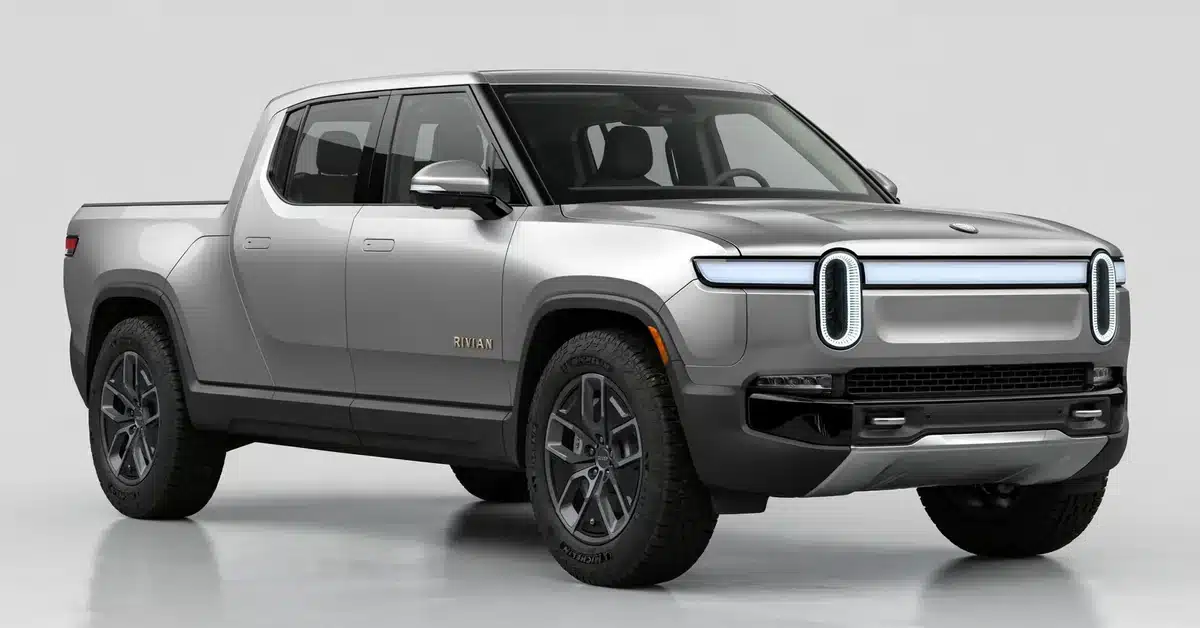
The Rivian R1T battery is available in three configurations — Standard (LFP, 92.5 kWh), Large (NCA, 108.5 kWh), and Max (NCA, 140 kWh usable) — making it one of the most flexible battery lineups of any electric truck.
The 2025 generation brought a significant chemistry change: the Standard pack now uses LFP (Lithium Iron Phosphate) from the same cells as Rivian’s commercial delivery vans, while the Large and Max packs use high-nickel NCA chemistry from Samsung SDI. This chemistry split between Standard and premium packs is unique among American electric trucks and creates meaningfully different ownership experiences for each buyer type, and largely carries over to Rivian’s SUV sibling, the Rivian R1S.
Quick answer
The Rivian R1T offers three packs across two generations. Gen 2 (2025+): a 92.5 kWh usable LFP Standard pack (270 miles), a 108.5 kWh usable NCA Large pack (329 miles) and a 140 kWh usable NCA Max pack (410 miles). Gen 1 (2022–2024) used Samsung NCA packs rated at 105–149 kWh. A replacement pack runs about $28,000 at Rivian service, and the warranty is 8 years with 120,000–175,000 miles depending on year and configuration.
Key figures: 92.5 / 108.5 / 140 kWh usable (Gen 2) · up to 410 mi · 220 kW DC peak · warranty trigger below 70% of rated capacity
Rivian R1T Battery: All Pack Options and Specs (2025–2026)
| Pack | Chemistry | Usable Capacity | Supplier | EPA Range (Dual Motor) | Starting Price (2025) |
|---|---|---|---|---|---|
| Standard | LFP | 92.5 kWh usable (95.6 kWh Rivian-rated) | Rivian/commercial van supplier | ~270 miles | ~$71,700 |
| Large | NCA (Samsung SDI) | 108.5 kWh usable (109.8 kWh Rivian-rated) | Samsung SDI | 300–329 miles | ~$76,900 |
| Max | NCA (Samsung SDI) | 140 kWh usable (141.5 kWh gross) | Samsung SDI | 410 miles | ~$88,700 |
How the packs are built: the Standard pack has 4 modules and 252 cells, the Large 7 modules and 6,048 cells, the Max 9 modules and 7,776 cells (Rivian’s own specification table).
The ‘rated’ figures above are Rivian’s nameplate capacities — the numbers its warranty trigger uses; the usable figures are what you can actually drive on. One buying trap: some Gen 2 trucks were sold as ‘Large+’, which is a Max pack software-locked to Large capacity, with a paid unlock planned by Rivian — check which pack a used truck actually carries.
Standard Pack: LFP Chemistry and What It Means
The 2025 Standard pack switch to LFP (Lithium Iron Phosphate) is one of the most important changes in Rivian’s lineup. LFP chemistry offers three specific advantages for Standard pack R1T owners that NMC cannot match.
- Charge to 100% daily: LFP tolerates daily full charging far better than nickel chemistries — Rivian’s guidance for this pack is to charge to 100% regularly so the battery management system can calibrate, instead of the Daily 70% preset the Large and Max packs use. This simplifies the ownership experience significantly, especially for owners who work the truck hard and want maximum range every day.
- Longer cycle life: LFP delivers 2,000–5,000+ cycles vs NMC/NCMA’s 1,500–2,000 — particularly valuable for high-mileage owners who will cycle the battery more than typical passenger car drivers.
- Better safety margin: LFP’s ~270°C thermal runaway onset vs NCMA’s ~195–210°C gives Standard pack owners a meaningful safety advantage for off-road use where pack damage risk is higher — rocks, trail debris, or water crossings.
- Simpler serviceability: Rivian explicitly cites easier service as a rationale for the LFP Standard pack — the olivine structure’s stability makes the cells more predictable in diagnostic and replacement workflows.
The tradeoff: LFP’s lower energy density means the Standard pack delivers 270 miles vs the Large pack’s 300–329 miles — a meaningful gap for owners who regularly drive more than 200 miles in a day or who often tow at highway speeds.
Large Pack: NCA Samsung SDI Cells
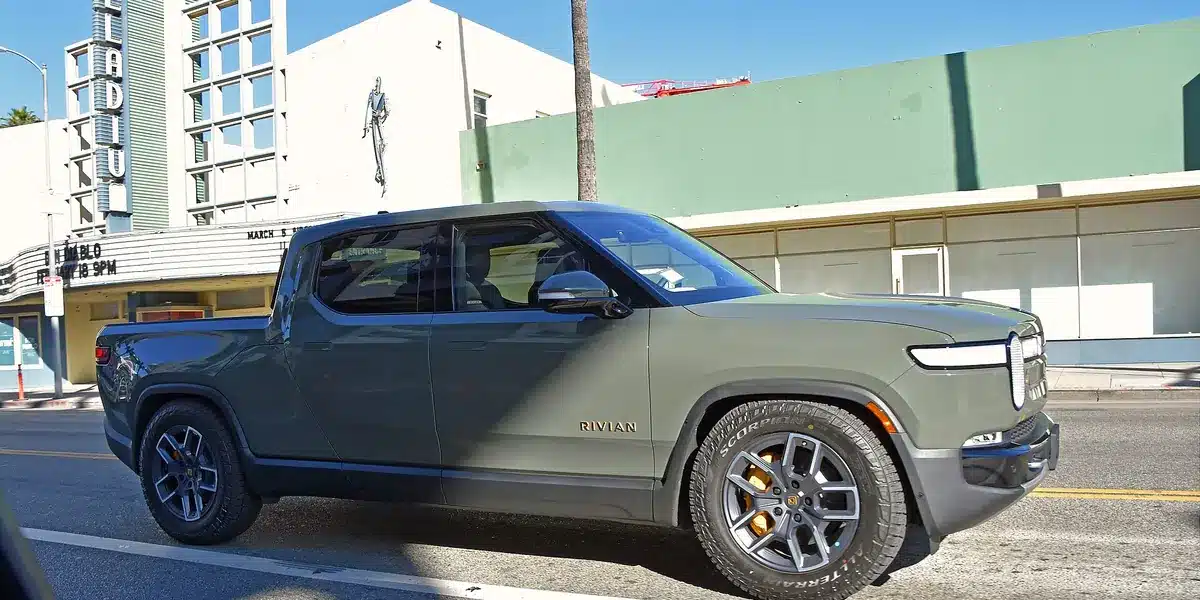
The Rivian R1T Large pack uses NCA (Nickel Cobalt Aluminum) cylindrical cells from Samsung SDI — specifically Samsung’s 2170-format 53G cells (the upgraded generation from the original 50G cells used in Gen 1 Rivian). The transition from 50G to 53G cells increased energy per cell by approximately 6%, contributing to the newer Large pack’s improved energy density relative to its physical dimensions.
The Large pack uses die-cast structural carriers (introduced in 2025) that reduce pack mass while maintaining structural rigidity — Rivian reports reduced manufacturing cost from this design change as well. The 2025 Large pack usable capacity is 108.5 kWh (109.8 kWh Rivian-rated), delivering 300–329 miles depending on trim, wheel size, and drivetrain configuration.
Max Pack: NCA Chemistry and Maximum Range
The Rivian R1T Max pack uses NCA (Nickel Cobalt Aluminum) chemistry from Samsung SDI — a high-nickel cathode (Rivian does not publish the exact ratio) with the highest energy density in Rivian’s lineup. It holds 141.5 kWh in total, of which 140 kWh is usable, in the same physical pack envelope as the Large pack.
Rivian’s charge presets for the nickel packs are Daily 70%, Extended 85% and Trip 100%. At 140 kWh usable, the 70% Daily preset still provides about 98 kWh of accessible energy — nearly the entire Large pack — which gives Max owners ample daily range while protecting the high-nickel cathode from the accelerated degradation that occurs at high state of charge. The Max pack delivers 410 miles of EPA range in Dual Motor configuration.
R1T Battery Pack Comparison: Which Is Right for You?
| Factor | Standard (LFP, 92.5 kWh) | Large (NCA, 108.5 kWh) | Max (NCA, 140 kWh) |
|---|---|---|---|
| EPA range (Dual Motor) | ~270 miles | 300–329 miles | 410 miles |
| Daily charge limit | 100% (recommended) | 70% daily (85% extended, 100% trips) | 70% daily (85% extended, 100% trips) |
| Cold weather retention at -20°C | 65–80% (LFP) | 75–85% (NMC) | 75–85% (NCA) |
| Cycle life | 2,000–5,000+ | 1,500–2,500 | 1,500–2,000 |
| Thermal runaway onset | ~270°C | ~200–210°C | ~195–210°C |
| Best for | Daily drivers, off-road focus, simplicity | Road trips, balanced use | Maximum range, long haul towing |
Gen 1 R1T (2022–2024): The Original Packs
The first-generation R1T used Samsung 2170 NCA cells in three sizes Rivian rated at 105 kWh (Standard), 135 kWh (Large) and 149 kWh (Max). The Standard pack was a software-locked version of the Large hardware, and a Standard+ variant offered 121 kWh usable for 315 miles. The launch trucks were Quad-Motor only; Dual-Motor versions followed.
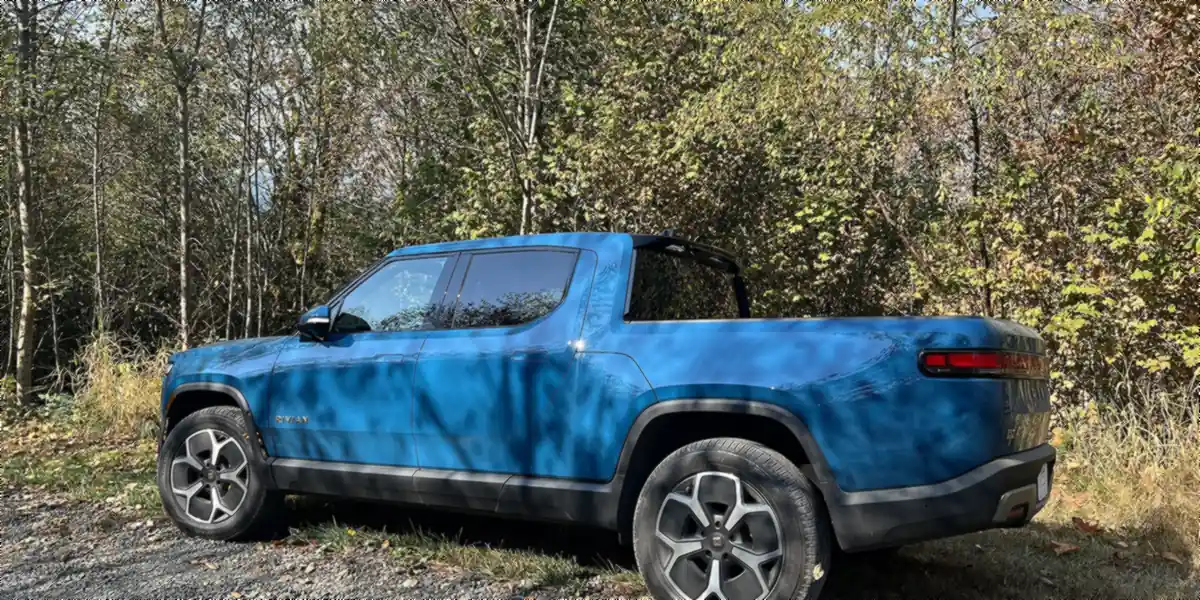
Gen 1 range (Dual Motor, 21-inch wheels): Standard about 270 miles, Standard+ 315 miles, Large up to 352 miles, Max up to 400 miles; the Quad-Motor Large truck was rated at 328 miles. If you are shopping used, the exact pack matters more than the badge — and the warranty tier (below) depends on the configuration, not just the year.
Rivian R1T Charging Speeds
- DC fast charging peak rate: Up to 220 kW on CCS1 chargers (DC Fast) for Large and Max packs — meaningfully faster than the F-150 Lightning’s 155 kW cap
- Standard LFP pack DC fast rate: Up to 200 kW
- Large pack (10–80%): Approximately 30–35 minutes at 220 kW peak
- Max pack (10–80%): Approximately 35–41 minutes at 220 kW peak
- Level 2 (AC): 11.5 kW onboard charger — Large pack fills in approximately 11 hours, Max pack in approximately 14 hours
- Rivian Adventure Network: Rivian’s proprietary DC fast chargers (up to 200 kW) are now fully open to non-Rivian EVs with CCS adapters, expanding coverage significantly
Connector note: the 2025 R1T uses a CCS1 inlet and charges on Tesla Superchargers with an approved adapter; from the 2026 model year the R1T carries a native NACS inlet. Rivian’s own Adventure Network stations are also open to other EVs.
Rivian R1T Battery Warranty
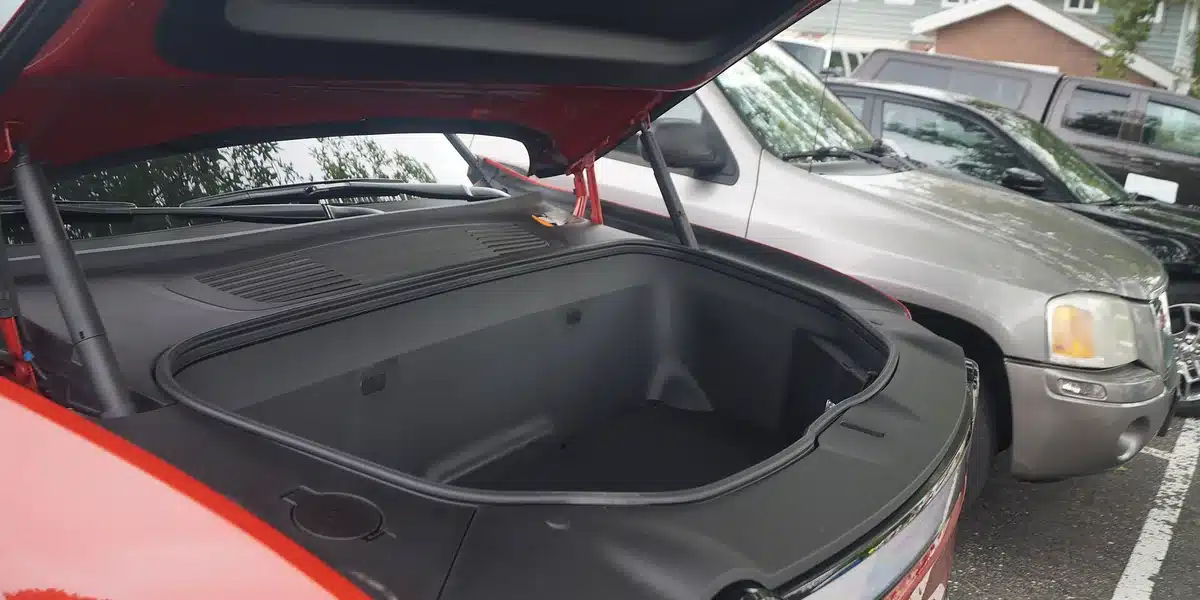
Rivian’s battery warranty is not one number — the mileage limit depends on the model year and configuration, per Rivian’s New Vehicle Limited Warranty Guide (effective December 31, 2024). Every version runs 8 years, and the trigger is published: Rivian covers a pack that loses 30% or more of its normal minimum usable rated capacity — in other words, one that falls below 70%.
- 2022–2024 Quad-Motor with the Large pack: 8 years / 175,000 miles
- 2022–2024 Dual-Motor with the Large or Max pack: 8 years / 150,000 miles
- 2022–2024 Standard and Standard+ packs: 8 years / 120,000 miles
- 2025 Large and Max packs: 8 years / 150,000 miles
- 2025 Standard pack: 8 years / 120,000 miles
The often-quoted ‘8 years / 175,000 miles for every Rivian’ is wrong — that figure applies only to the launch Quad-Motor Large-pack trucks.
Rivian R1T Battery Replacement Cost
Rivian does not publish a price list, but the anchors are unusually visible. Rivian’s own care documentation has used a sample figure of about $28,000 for a new pack; third-party trackers put a full replacement at $28,000–$45,000 depending on pack size and labour. Owner-reported refurbished packs have changed hands at around $12,500, and used packs appear from about $8,000 — before fitting.
For most owners the warranty decides first: 8 years with 120,000–175,000 miles depending on configuration (above), triggered when the pack loses 30% or more of its rated usable capacity. A pack that fails inside those terms is Rivian’s bill, not yours.
Read more: our EV battery replacement cost guide compares pack prices across brands.
Rivian R1T Battery Degradation: Owner Data
The R1T only launched in 2022, so there is no large independent degradation dataset for it yet — beware any source quoting precise Rivian percentages. What exists is fleet context plus individual owner measurements:
- Fleet context: Across 22,700+ EVs of all brands, Geotab’s data averages about 2.3% capacity loss per year, with liquid-cooled packs like Rivian’s generally at the gentler end.
- One measured owner case: A long-term owner analysis of a 135 kWh Gen 1 Large pack measured roughly 1.4% capacity loss per year — a single truck, but a real measurement rather than a projection.
- What you can control: The nickel packs age fastest at high charge — use the Daily 70% preset for everyday driving and save 100% for trips. The LFP Standard pack is the exception: charge it to 100% regularly, as Rivian recommends, so the pack can calibrate.
The R1T’s 12-Volt Battery
The R1T also runs a conventional lead-acid 12-volt battery for its computers, locks and displays. Early Gen 1 trucks (built to about February 2023) carried two of them; trucks built from March 2023 carry one. Life is short — about 2–3 years — and a dead 12-volt battery can immobilize the truck completely. Replacement at Rivian service runs about $485–$518; independent fitted quotes run higher. Owners who tire of the cycle sometimes fit an aftermarket sodium drop-in (such as Ohmmu’s) — an owner option, not a Rivian part.
Frequently Asked Questions
How big is the Rivian R1T battery?
Three Gen 2 packs: Standard 92.5 kWh usable (95.6 kWh Rivian-rated), Large 108.5 usable (109.8 rated) and Max 140 usable (141.5 kWh in total). Gen 1 packs were rated at 105, 135 and 149 kWh. ‘Rated’ is Rivian’s nameplate figure — the one its warranty uses; ‘usable’ is what you can actually drive on.
What battery chemistry does the R1T use?
The Standard pack is LFP; the Large and Max packs are high-nickel NCA — all Samsung cylindrical cells. The Standard’s LFP chemistry is why it can charge to 100% regularly, while the nickel packs use a 70% daily preset.
How long does the R1T battery last?
There is no large R1T-specific dataset yet. Fleet data across EVs averages about 2.3% loss per year (Geotab); one long-term owner measurement on a Gen 1 Large pack found about 1.4% per year. The warranty runs 8 years in every configuration.
How much does an R1T battery replacement cost?
About $28,000 fitted at Rivian service is the documented sample figure; third-party trackers put a full replacement at $28,000–$45,000. Refurbished packs have been reported at around $12,500 and used packs from about $8,000, before fitting. Inside the warranty period, a qualifying pack is Rivian’s cost.
What is the R1T battery warranty, exactly?
8 years always; the miles depend on the truck — 175,000 for 2022–2024 Quad-Motor Large, 150,000 for Dual-Motor Large/Max and for 2025 Large/Max, 120,000 for Standard packs. Rivian covers a pack that loses 30% or more of its rated usable capacity.
Does the R1T have a 12-volt battery?
Yes — a conventional lead-acid 12-volt battery (two of them on early Gen 1 trucks, one from March 2023). It lasts about 2–3 years, costs roughly $485–$518 fitted at Rivian service, and a dead one can immobilize the truck.
Conclusion
The Rivian R1T battery lineup is the most diverse of any electric truck — LFP for simplicity and longevity, NMC Large for balanced range and capability, NCA Max for maximum range. The 2025 Standard LFP introduction is the most significant chemistry decision Rivian has made since launch — bringing daily 100% charging, 2,000+ cycle life, and better off-road safety margins to the entry-level R1T.
Buyers wanting the same battery technology in an SUV body should see our Rivian R1S battery guide, or the smaller, more affordable Rivian R2 battery guide. For most buyers, the Large pack at 300–329 miles offers the best balance of cost, range, and everyday usability. The long battery warranty — 8 years, and up to 175,000 miles on the launch configuration — seals the R1T’s case as the most complete electric truck battery package available in 2025–2026.
