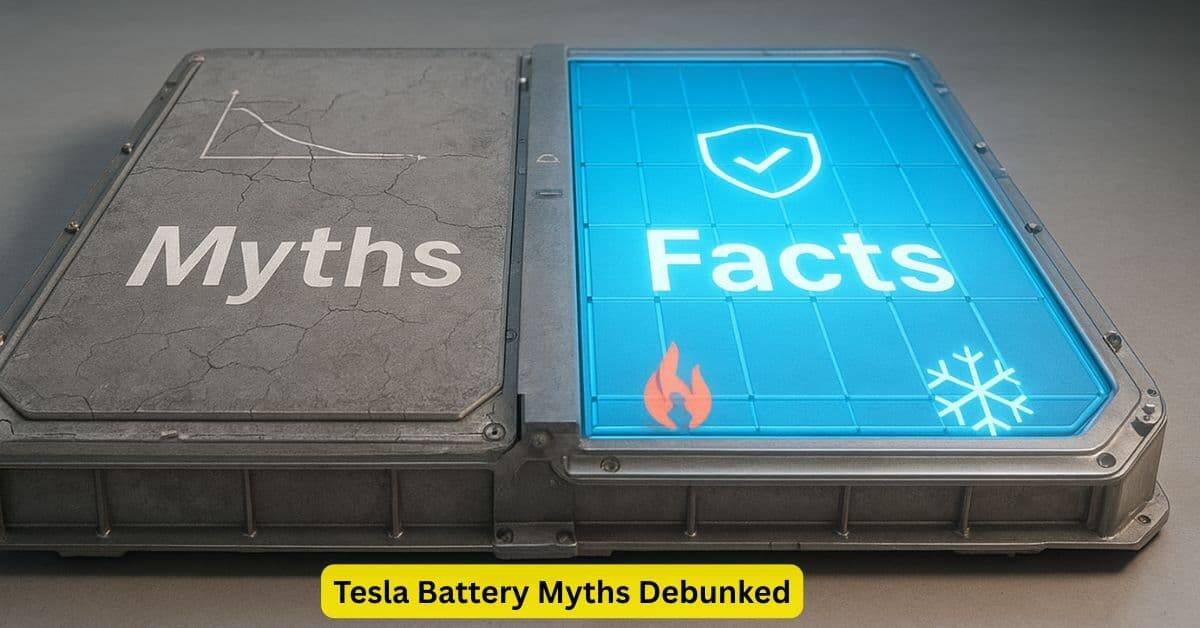
New technology always attracts rumors and misinformation. The electric vehicle (EV) world has the same problem, especially with Tesla battery stories. You may have heard common ideas. People say the batteries die fast. They also say replacing them costs too much money, and they can easily catch fire.
The honest answer is that these stories often come from old technology or simply not understanding things. Tesla batteries are among the best in the world. Their performance is much better than the stories suggest. The rest of the content will use real information, official words, and expert ideas. It will show the truth about the most common stories. It will give you clear and simple facts to help you understand the most important part of every Tesla car.
Myth 1: Tesla Batteries Degradate Quickly
Many people believe that after a few years, a Tesla battery will be useless.
The Fact: Degradation is Slow and Stabilizes
Tesla batteries are actually built to last a very long time. Data from many Tesla cars shows that battery power does not decline in a straight line. Instead, it follows a pattern:
- Initial Drop: The power drops a little bit quickly during the first 20,000 to 30,000 miles.
- Stabilization: After the start, the power loss slows significantly and stabilizes.
Read more about range loss here: Tesla Battery Degradation Guide.
Studies show that the average Tesla still has 90% of its original driving range after 100,000 miles. The average driver drives about 12,000 miles each year. This means they will still have almost all of their first driving distance after eight years. The battery is made to last longer than the car itself.
Actionable advice
Daily driving charge: Keep the battery charge between 20% and 80% for everyday driving.
Supercharging use: Supercharging is okay, but use Level 2 (home) charging for most of your needs.
LFP battery advice: If a car has a newer LFP battery, Tesla recommends charging it to 100% at least once a week. Doing this helps the battery’s computer stay accurate.
Myth 2: Tesla Battery Replacement Costs More Than the Car Itself
A massive bill to replace the battery after the warranty ends scares many people who might buy an EV (electric vehicle).
The Fact: Warranty Coverage is Extensive, and Costs are Dropping
Extensive Warranty Coverage: Tesla’s battery warranty is one of the best. It usually covers 8 years or 100,000 to 150,000 miles. The miles depend on the car model. The warranty promises the battery will still hold at least 70% of its original power. Owners will have the battery covered for almost all the time they own the car. Battery problems do not happen often. The warranty covers most problems.
The Real Cost of Replacement: A battery replacement outside the warranty can cost a lot of money, but everyone knows the price. Replacing a battery without a warranty costs about $12,000 to $22,000. Parts and work are included in the estimate.
Learn more on repair pricing here: Tesla Battery Replacement Cost Info.
Case Study
The Declining Cost of Battery Packs The cost of battery packs has dropped by over 80% in the last ten years. The cost keeps going down. New features like the 4680 cell help lower the price. More electric cars are made, and battery production grows. Because of this, the cost to replace a battery will keep falling. The price you see today will not be the price you pay in 10 years.
Myth 3: Electric Cars Catch Fire More Often Than Gas Cars
An image of an EV fire often makes the news. The image causes people to wrongly believe that electric cars are more dangerous than regular cars.
The Fact: EVs are Statistically Safer
Official data shows electric cars are much less likely to catch fire than gasoline cars. Tesla says its cars are 11 times less likely to catch fire for each mile driven than the average gasoline car in the United States. Electric car fires are harder to stop because of the chemical reaction in the battery. However, they happen much less often. The risk of a fire depends on how much material in the car can burn. Gasoline can catch fire easily.
See more safety details here: Why Tesla Batteries Are Safer Than Others.
Fire Incidents in Gas vs Electric Vehicles
| Vehicle Type | Fire Incidents per 100,000 Sales |
|---|---|
| Gasoline Vehicles | ~1,530 |
| Electric Vehicles | ~25 |
The table clearly shows that gasoline cars have a much higher fire risk. Tesla’s advanced battery management system (BMS) constantly watches the battery. It prevents the battery from overheating and catching fire. This makes Teslas one of the safest cars on the road.
Myth 4: You Can’t Drive a Tesla in Extreme Cold or Heat
The concern that bad weather will reduce an EV’s driving range or damage its battery is a worry for many people, especially in areas with harsh winters.
The Fact: Tesla’s Thermal Management System is World-Class
Tesla cars have a smart system that controls heat. It warms or cools the battery to keep it at the best temperature for working.
In the Cold: The system uses a little bit of energy to warm the battery before a person drives or charges. Warming the battery reduces how much cold weather reduces driving distance. It also lets the car charge quickly at a Supercharger even in winter. Cold weather reduces driving distance, but the problem is temporary. The car takes care of the battery’s health on its own.
In the Heat: The system cools the battery. Cooling is very important for the battery to last a long time. Heat hurts a lithium-ion battery the most. Tesla’s cooling system is a major reason its batteries lose very little capacity over time.
Actionable Advice: The best way to fight range loss in cold weather is to warm your car up early. While the car is plugged in at home, use the Tesla app to heat the inside and the battery before you drive. Doing that uses power from your house, not the car’s battery. This gives you the most distance you can drive when you start.
Conclusion
Myths about Tesla batteries continue, but the facts are clear. Tesla builds its batteries to last a long time. Strong warranties support the batteries. They are also statistically safer than gasoline-powered cars.
People should look at the data. Batteries keep 90% of their power after 100,000 miles. The warranty coverage is perfect. The chance of fire is low. People can stop believing the rumors by looking at the data. The technology is fully developed, works well, and continues to improve. Choosing an electric car is a good decision.
Explore more care tips here: Best Practices to Extend Tesla Battery Life.
FAQs
Is it true that charging to 100% is bad for the battery?
Charging to 100% can be bad. It depends on the battery. Older NCA/NMC batteries in Long Range models should charge to only 80-90% daily. Newer LFP batteries in Standard Range models should charge to 100% at least once a week. Owners must check their car’s screen for the right advice.
How long does it take to charge a Tesla?
Home (Level 2): Charging takes 8 to 12 hours for a full charge. Most owners charge overnight this way.
Supercharger (DC Fast Charging): Charging takes 20 to 40 minutes to go from 10% to 80%. People use this for long trips.
What happens to old Tesla batteries?
Tesla is committed to a closed-loop recycling system. They do not send batteries to landfills. Instead, they are either:
1. Reused: Used in energy storage products like Powerwalls or Megapacks (second-life use).
2. Recycled: The materials (lithium, cobalt, nickel) are recovered and used to make new batteries.