
Toyota bZ4X Battery: Complete Guide

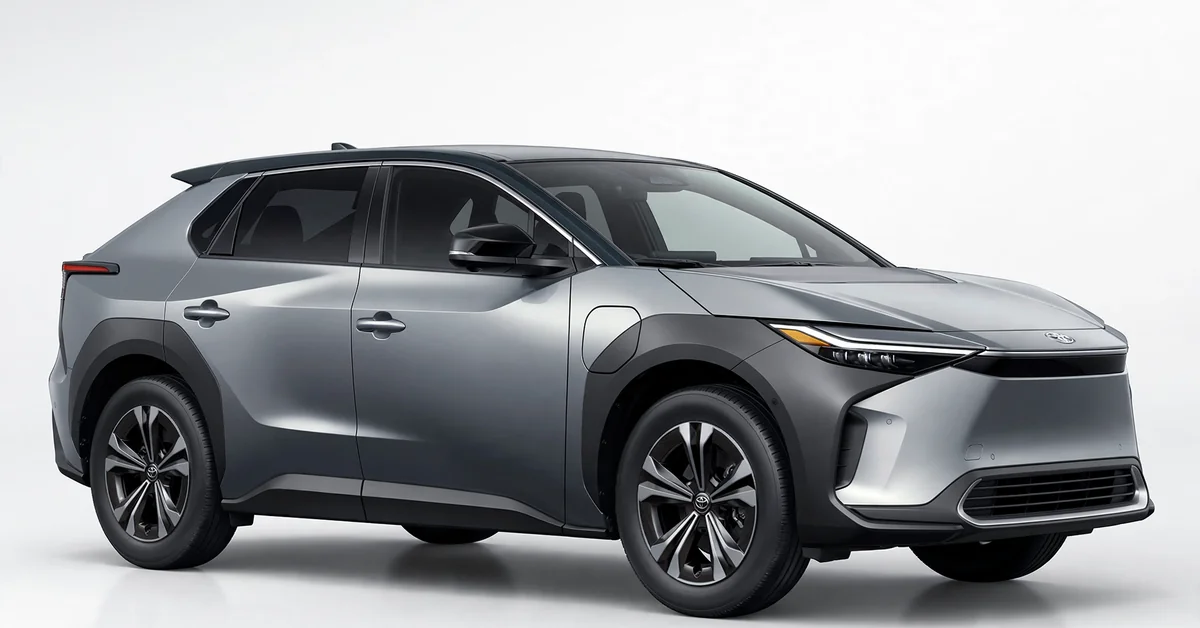
The Toyota bZ4X battery has undergone its most significant upgrade since the model launched in 2022. The 2026 Toyota bZ (renamed from bZ4X) now offers two battery options — a 57.7 kWh entry pack and a 74.7 kWh Long Range pack — delivering up to 314 miles of EPA-estimated range in the FWD Plus configuration. The 2026 model also adds battery preconditioning, a NACS (Tesla Supercharger) port, and 150 kW DC fast charging — directly addressing the three biggest weaknesses of the original bZ4X battery system. This guide covers both the original bZ4X battery and the fully updated 2026 bZ, so you know exactly what changed and what to expect from each generation.
The Toyota bZ4X battery is an NMC lithium-ion pack — never LFP and never NiMH: 71.4 kWh in front-wheel-drive cars (cells from Toyota and Panasonic’s PPES joint venture) or 72.8 kWh in all-wheel-drive cars (CATL cells), with up to 252 miles of EPA range. The renamed 2026 Toyota bZ offers 57.7 and 74.7 kWh packs, up to 314 miles, a native NACS port and standard battery preconditioning. Toyota warranties the pack for 8 years or 100,000 miles and designed it to keep about 90% of its capacity after 10 years.
Key figures:
Packs 71.4 / 72.8 kWh (2023-25) · 57.7 / 74.7 kWh (2026 bZ) · EPA range 222-252 miles, up to 314 in the 2026 bZ · DC peak 150 kW FWD, 100 kW early AWD · Warranty 8 years / 100,000 miles, 70% floor
Toyota bZ4X Battery: Original vs 2026 Update
| Specification | Original bZ4X (2022–2025) FWD | Original bZ4X (2022–2025) AWD | 2026 bZ FWD (57.7 kWh) | 2026 bZ FWD Plus / LR (74.7 kWh) |
|---|---|---|---|---|
| Gross battery capacity | 71.4 kWh | 72.8 kWh | 57.7 kWh | 74.7 kWh |
| Usable battery capacity | ~64–65 kWh | ~64–65 kWh | ~54 kWh | ~69–70 kWh |
| EPA range | ~252 miles | ~222 miles | 236 miles | 288–314 miles |
| Max DC fast charge rate | 150 kW | 100 kW | 150 kW | 150 kW |
| Level 2 AC charging | 6.6 kW (early) / 11 kW (later) | 6.6 kW / 11 kW | 11 kW | 11 kW |
| Battery preconditioning | No (added later via OTA) | No | Yes (standard) | Yes (standard) |
| Charging port | CCS1 | CCS1 | NACS | NACS |
| Chemistry | NMC lithium-ion | NMC lithium-ion | NMC lithium-ion | NMC lithium-ion |
What’s Inside the Toyota bZ4X Battery
The Toyota bZ4X uses NMC (Nickel Manganese Cobalt) lithium-ion cells co-developed with Panasonic under their Prime Planet Energy and Solutions (PPES) joint venture. The pack is arranged in a flat skateboard layout under the cabin floor — the same e-TNGA platform shared with the Subaru Solterra. Toyota uses a conservative buffer management strategy, reserving approximately 7–9 kWh between gross capacity and usable capacity. This means a 71.4 kWh gross pack delivers only about 64–65 kWh to the driver — a protective approach that limits available range but significantly slows visible battery degradation over the vehicle’s life.
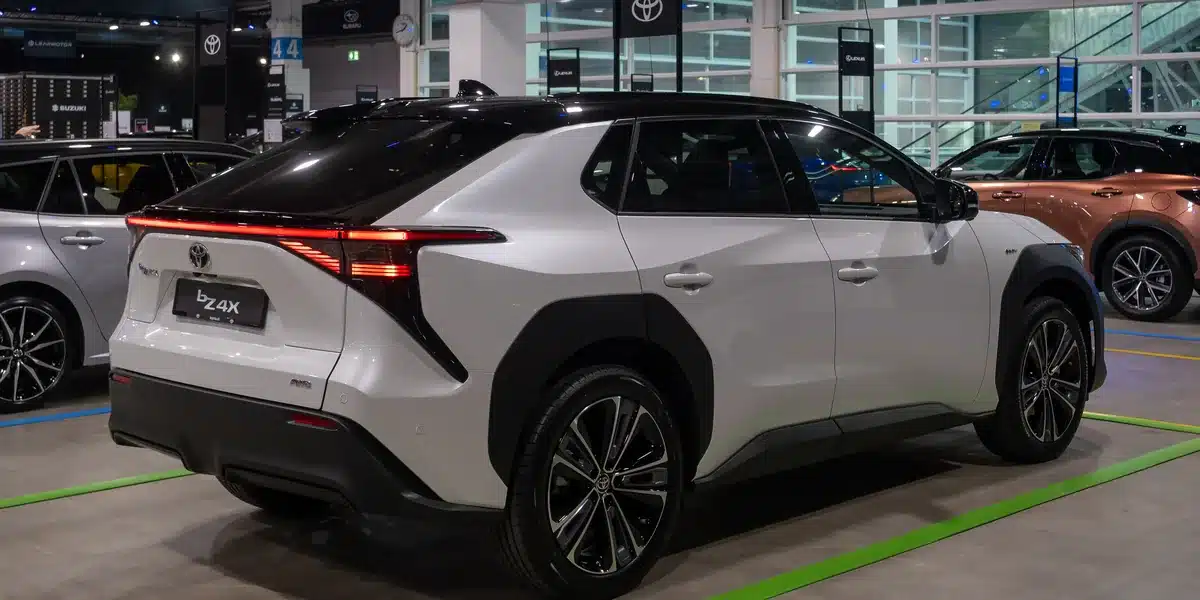
The cooling system uses active liquid thermal management — coolant flows through plates integrated into the battery pack. For the original bZ4X, this system was adequate but not optimized for fast charging — the original AWD model was limited to just 100 kW DC, a significant constraint that left many buyers frustrated at public chargers. The 2026 update standardizes 150 kW DC on all configurations, addressing this directly.
Two supply details cause endless confusion. First, the AWD bZ4X does not use the PPES pack: its 72.8 kWh battery uses CATL cells, still NMC chemistry. Second, no bZ4X or bZ uses an LFP battery, a NiMH battery (that is Toyota’s older hybrid chemistry) or a BYD battery — BYD supplies cells for China-market Toyota models such as the bZ3, not for this car. The front-wheel-drive pack itself is built from 96 prismatic cells in four modules, wired in series at about 355 volts.
The 2026 bZ: What Changed and Why It Matters
Toyota’s 2026 bZ refresh is significant — not cosmetic. Three engineering changes directly improve the battery ownership experience compared to the original bZ4X:
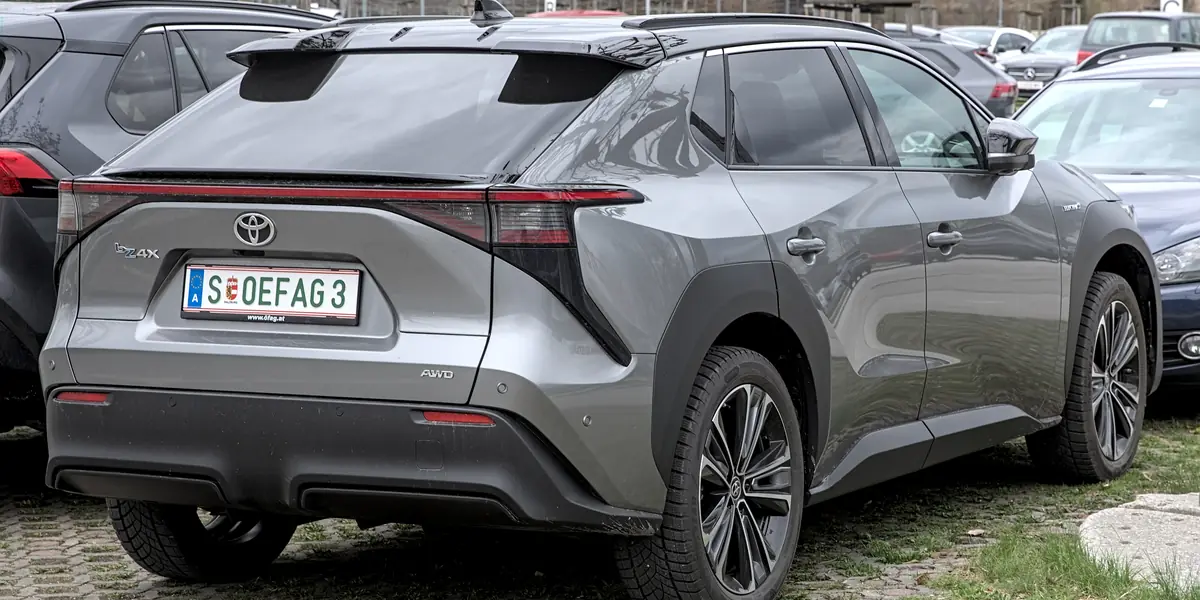
- Battery preconditioning added: The 2026 bZ now automatically heats or cools the battery pack when routing to a DC fast charger via the navigation system — enabling consistent 150 kW charging even in cold weather. The original bZ4X frequently throttled to 30–50 kW on cold days without this feature.
- NACS charging port standard: All 2026 bZ models use the NACS (North American Charging Standard) port — giving access to thousands of Tesla Supercharger V3 and V4 stations nationwide with no adapter needed. This dramatically expands the fast-charging network available to bZ owners beyond CCS-only coverage.
- Larger battery option: The 74.7 kWh battery delivers 25% more range than the 57.7 kWh entry pack — up to 314 miles EPA vs 236 miles. The large pack also enables AWD configurations up to 338 hp in Limited AWD form, up from the original’s modest 214 hp AWD output.
bZ4X Charging: How Fast Does It Actually Charge?
| Charging Method | Power | Original bZ4X FWD (71.4 kWh) | 2026 bZ LR FWD (74.7 kWh) |
|---|---|---|---|
| Level 1 (120V) | ~1.4 kW | ~55 hours full | ~58 hours full |
| Level 2 (240V, 11 kW) | 6.6-11 kW | ~7-11 hours full (faster figure at 11 kW) | ~7.5 hours full |
| DC Fast (50 kW) | 50 kW | ~65 min (10–80%) | ~65 min (10–80%) |
| DC Fast (150 kW) | 150 kW | ~30 min (10–80%) | ~30 min (10–80%) |
Toyota bZ4X Battery Degradation
Toyota’s conservative battery management — holding back a large SoC buffer — has a direct benefit for long-term durability. Recharged’s 2026 analysis of bZ4X degradation data found that Toyota’s strategy keeps degradation in a “fairly narrow, predictable band” over the battery’s life. Key data points from owners and Toyota’s design targets:
- Toyota’s 10-year design target: Around 90% capacity retention after 10 years of typical use — far above the 70% warranty floor, and the clearest sign Toyota expects this pack to outlast the warranty period comfortably
- Estimated annual degradation: Approximately 1.5–2% per year under normal charging habits — consistent with NMC chemistry under liquid cooling and Toyota’s conservative SoC window
- Buffer advantage for used buyers: Because Toyota reserves such a large buffer, even a degraded bZ4X battery retains more protective reserve than competitors — a 15% degraded bZ4X pack still has capacity headroom that a 15% degraded Leaf or Bolt would not
- Hot climate performance: Toyota’s liquid cooling keeps heat-related degradation well below the Nissan Leaf’s passive air-cooled equivalent — bZ4X owners in Arizona and Florida report degradation similar to moderate-climate owners, not the accelerated loss Leaf owners in those regions experience
Toyota bZ4X Battery Warranty
Toyota covers the bZ4X battery with an 8-year / 100,000-mile warranty against defects and capacity loss below 70% of original in the U.S. Some international markets (Japan, Australia) have received 10-year coverage. The warranty covers both the battery cells and the high-voltage battery management system. Given Toyota’s conservative SoC buffer strategy, reaching 70% degradation within 8 years under normal use is unlikely for most owners — the battery design is built to substantially exceed the warranty threshold.
The 10-year / 150,000-mile figure often quoted for Toyota batteries belongs to Toyota’s hybrid battery warranty, not this car — the bZ4X and bZ carry the 8-year / 100,000-mile EV battery warranty.
Toyota bZ4X Battery Replacement Cost
A replacement bZ4X battery is expensive but rarely needed. Expect roughly $10,000-$16,000 for a full pack replacement out of warranty, depending on the pack and labor rates — our EV battery replacement cost guide tracks the figures model by model. With the battery covered for 8 years or 100,000 miles and Toyota designing the pack to hold about 90% of its capacity after 10 years, a full replacement is a late-life event for most owners, and module-level repairs cost less than a whole pack.
bZ4X vs Competitors: Battery Comparison
| Model | Battery | EPA Range | Peak DC Rate | 10–80% Time |
|---|---|---|---|---|
| 2026 Toyota bZ LR FWD | 74.7 kWh NMC | 314 miles | 150 kW | ~30 min |
| Hyundai Ioniq 5 LR (2026) | 84 kWh NMC (800V) | ~320 miles | 263 kW | ~20 min |
| Tesla Model Y LR RWD | ~82 kWh NCA/NMC | 330 miles | 250 kW | ~20 min |
| VW ID.4 Pro LR | 82 kWh NMC | 291 miles | 175 kW | ~30 min |
| Subaru Solterra Premium | 72.8 kWh NMC | ~222 miles | 100 kW | ~35 min |
Tips for Toyota bZ4X / bZ Battery Owners
- Use Toyota’s navigation to DC chargers: On the 2026 bZ, preconditioning activates only through the built-in navigation — always set the charger as a destination via the car’s nav system for best charging speed
- Set daily charge limit to 80%: Even though Toyota’s buffer protects the cells at the top, limiting to 80% as a daily habit provides additional longevity protection — the bZ’s energy settings allow this via the charge timer function
- Use NACS for road trips on 2026 models: Tesla Supercharger V3 and V4 stations are far more numerous than CCS stations in many U.S. regions — the 2026 bZ’s native NACS port makes road-trip planning significantly easier than the original CCS-only bZ4X
- Avoid leaving below 10% for extended periods: Toyota’s conservative buffer management is protective, but extended storage at very low SoC adds unnecessary calendar aging stress to the cells
Frequently Asked Questions
What type of battery does the Toyota bZ4X use?
An NMC (nickel manganese cobalt) lithium-ion battery — not LFP and not the NiMH chemistry of Toyota’s older hybrids. Front-wheel-drive cars use a 71.4 kWh pack with prismatic cells from PPES, Toyota and Panasonic’s joint venture; all-wheel-drive cars use a 72.8 kWh pack with CATL cells. No bZ4X uses a BYD battery.
What is the Toyota bZ4X battery capacity?
71.4 kWh (gross) in front-wheel-drive cars, with about 64 kWh usable, and 72.8 kWh gross in all-wheel-drive cars. The renamed 2026 Toyota bZ offers a 57.7 kWh base pack and a 74.7 kWh long-range pack. The 73.1 kWh figure sometimes quoted is the updated pack’s rating in European specifications.
How long does a Toyota bZ4X battery last — 100,000 or 150,000 miles?
The battery warranty runs 8 years or 100,000 miles, with a 70% capacity floor; the 150,000-mile figure belongs to Toyota’s hybrid battery warranty, not this EV. Toyota designed the pack to retain about 90% of its capacity after 10 years, and normal degradation runs at roughly 1.5-2% per year. Regular DC fast charging does not void the warranty.
Does the Toyota bZ4X use a BYD battery, and can I change it to LFP?
No on both counts. The bZ4X uses PPES (Panasonic-partnered) cells in front-wheel-drive cars and CATL cells in all-wheel-drive cars; BYD supplies batteries for China-market Toyota models like the bZ3 instead. The pack is a sealed, model-specific unit, so an LFP conversion is not possible.
How much does it cost to replace a Toyota bZ4X battery?
Roughly $10,000-$16,000 for a full pack out of warranty, depending on the version and labor. Most owners never face it: the pack is covered for 8 years or 100,000 miles, failures are rare, and replacing individual modules costs less than a complete pack.
Does the bZ4X have a 12V battery?
Yes — a conventional lead-acid 12V battery runs the car’s electronics, locks and controls, separate from the main pack. If it dies, the car may not enter READY mode at all, so a 12V warning or a no-start on a bZ4X is usually the small battery, not the expensive one.
Conclusion
The Toyota bZ4X battery story is one of steady, deliberate improvement — from the original 71.4 kWh pack’s slow AWD charging and lack of preconditioning, to the 2026 bZ’s 74.7 kWh large battery, 314-mile EPA range, 150 kW DC charging, native NACS port, and standard battery preconditioning. Toyota’s conservative SoC buffer strategy keeps long-term degradation low and predictable — at the cost of slightly less accessible range than competitors of equal gross capacity. For buyers who prioritize long-term reliability, a trusted brand service network, and low-maintenance ownership over peak charging speed, the 2026 Toyota bZ offers the most complete version of Toyota’s electric platform to date.
