
Which EVs Use Sodium-Ion Batteries?

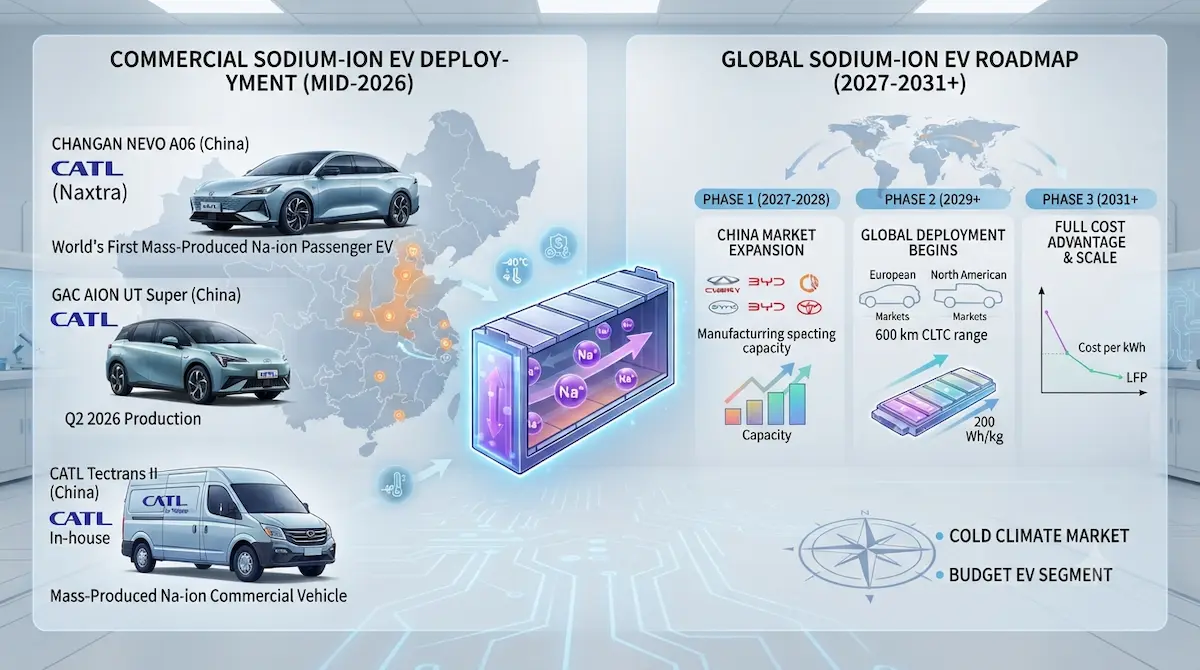
Built from manufacturer announcements and delivery reporting (CATL, HiNa Battery, Farasis, JAC, Changan), Chinese trade press (CnEVPost, CarNewsChina), the IEA’s February 2026 sodium-ion commentary, a peer-reviewed teardown study, and US trade and policy sources. Manufacturer performance figures are labelled as claims wherever they appear.
The honest answer is a short list. As of November 2026, the only electric cars ever delivered to customers with sodium-ion traction batteries are a handful of small, inexpensive models in China: a sodium variant of the JAC Yiwei 3, the JMEV EV3 Youth Edition, and a small run of Chery cars fitted with CATL’s first-generation cells in 2023. The car that dominates the headlines — Changan’s Nevo A06, with CATL’s Naxtra sodium battery — was unveiled in February 2026 with a launch targeted for the middle of the year, but no confirmed customer deliveries had been reported by October 2026.
No sodium-ion EV is on sale in the United States, and none has been announced for the US at any date. Every production or announced sodium car is a Chinese-market model, and American sodium-ion activity is in grid storage, not cars. This guide separates what has actually been delivered from what has merely been announced — because on this topic, most coverage does not. New to the chemistry itself? Start with what a sodium-ion battery for electric cars is.
Quick answer
Only a few small Chinese city cars use sodium-ion batteries today: the JAC Yiwei 3 sodium variant and the JMEV EV3 (both delivered since 2024, in small numbers), plus a limited 2023 Chery run. Changan’s Nevo A06 with CATL’s Naxtra battery was unveiled in February 2026 but had no confirmed deliveries by October 2026. No sodium-ion EV is sold or announced for the United States.
Key figures: Delivered cars’ packs 21–23 kWh, 230–251 km CLTC range · CATL Naxtra cell claim up to 175 Wh/kg (maker figure, not independently measured) · CATL’s own 2026 projection: 10,000–20,000 sodium EVs across all makers · US sodium-ion EVs on sale: zero
The Cars That Have Actually Been Delivered
Two small Chinese hatchbacks — not the headline sedan — are the only sodium-ion cars with confirmed customer deliveries, and both arrived in early 2024.
Which sodium cars were delivered first?
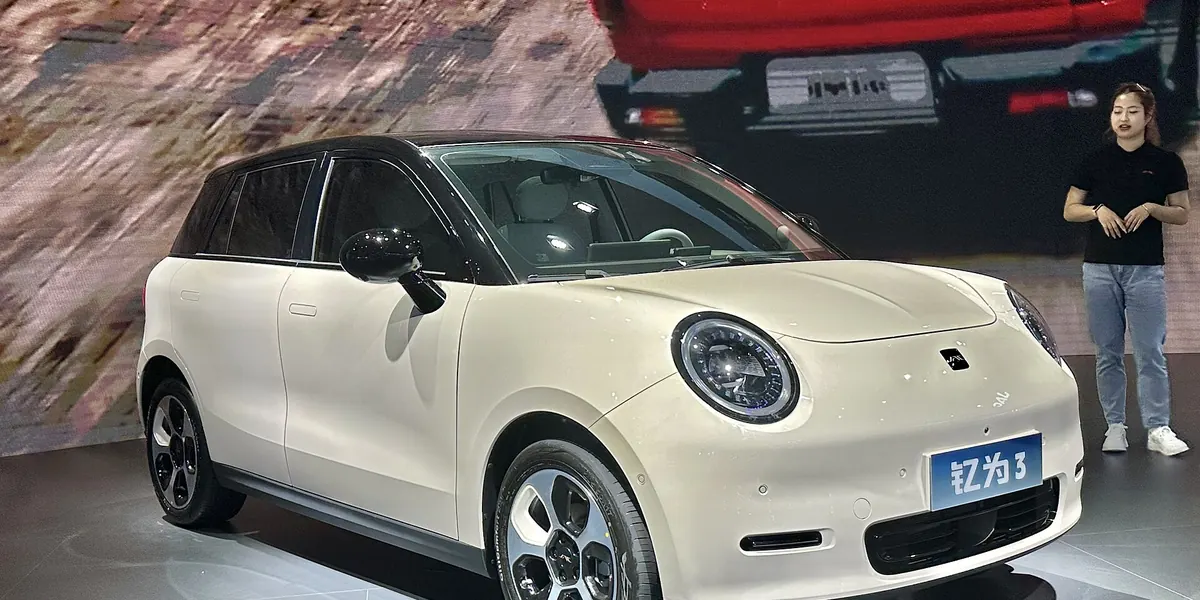
JAC’s Yiwei brand made the first volume deliveries of a sodium-ion car on 5 January 2024, in Anqing, China. The sodium variant of the Yiwei 3 uses cylindrical cells from HiNa Battery in a 23.2 kWh pack, rated at 230 km on China’s CLTC cycle, in a car whose regular versions run LFP packs. JMEV was a step behind: its EV3 Youth Edition, with layered-oxide sodium cells from Farasis Energy in a 21.4 kWh pack rated at 251 km CLTC, rolled off the line in Nanchang on 28 December 2023 and sold through 2024. Neither car is a prototype or a demonstration — both were ordinary, if very small-scale, production models.
What about the Chery run?
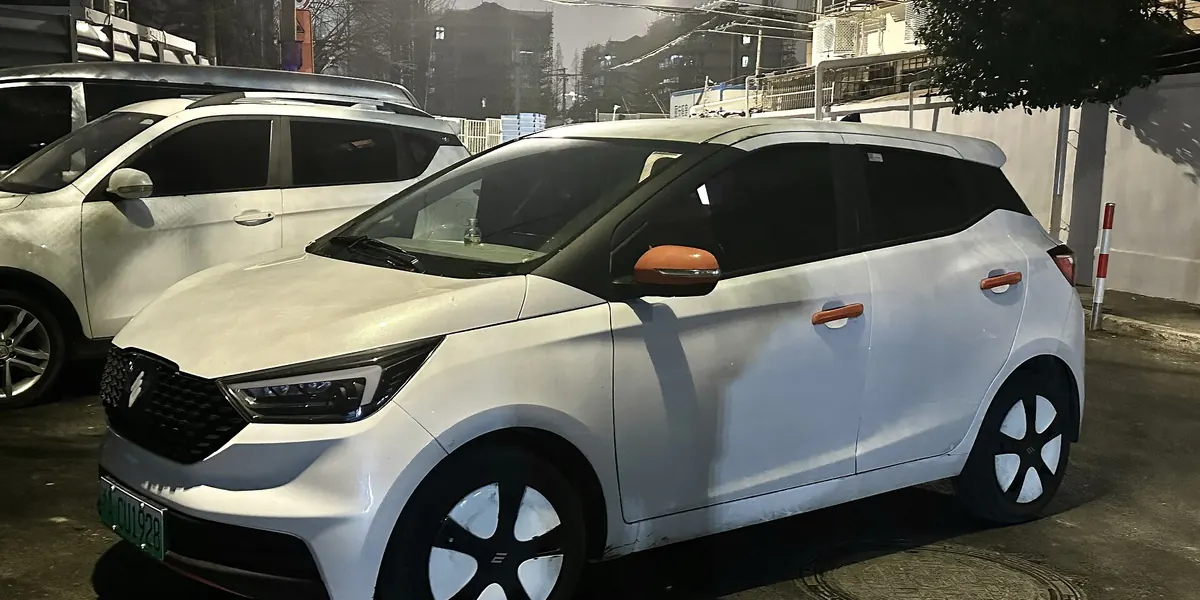
The third delivered case is smaller still. CATL announced in April 2023 that its first-generation sodium battery would debut in a Chery model, and a Chery QQ Ice Cream with CATL sodium cells duly appeared in China’s MIIT catalogue that year; a 2026 analysis records that those cars, with around 170 km of range, sold poorly. Treat the Chery run as real but tiny, and its current status as unclear — no formal discontinuation has been published. A peer-reviewed teardown study of a commercial sodium cell confirms the broad picture: JAC began producing the first sodium-ion passenger car in 2023, using HiNa cells.
| Car | Battery | Status (November 2026) |
|---|---|---|
| JAC Yiwei 3 (sodium variant) | HiNa Battery, 23.2 kWh | Delivered in China since January 2024, small volume |
| JMEV EV3 Youth Edition | Farasis Energy, 21.4 kWh | In production in China since December 2023 |
| Chery QQ Ice Cream (sodium version) | CATL first-generation cells | Sold in China in 2023 in small numbers; current status unclear |
| Changan Nevo A06 (sodium version) | CATL Naxtra, 45 kWh | Unveiled February 2026; launch targeted mid-2026; no confirmed deliveries reported by October 2026 |
| GAC Aion (unnamed model) | CATL Naxtra | Announced for 2026 by CATL’s CTO; no confirmed sodium car on sale |
| BYD models | — | No sodium-ion car on sale or announced; the Seagull uses an LFP Blade battery |
| Any US-market EV | — | None on sale; none announced |
The Headline Car: Changan Nevo A06 and CATL’s Naxtra Battery
The Nevo A06 is the most important sodium-ion car announced so far — and its story shows why every claim on this page carries a date.
What did CATL and Changan unveil?
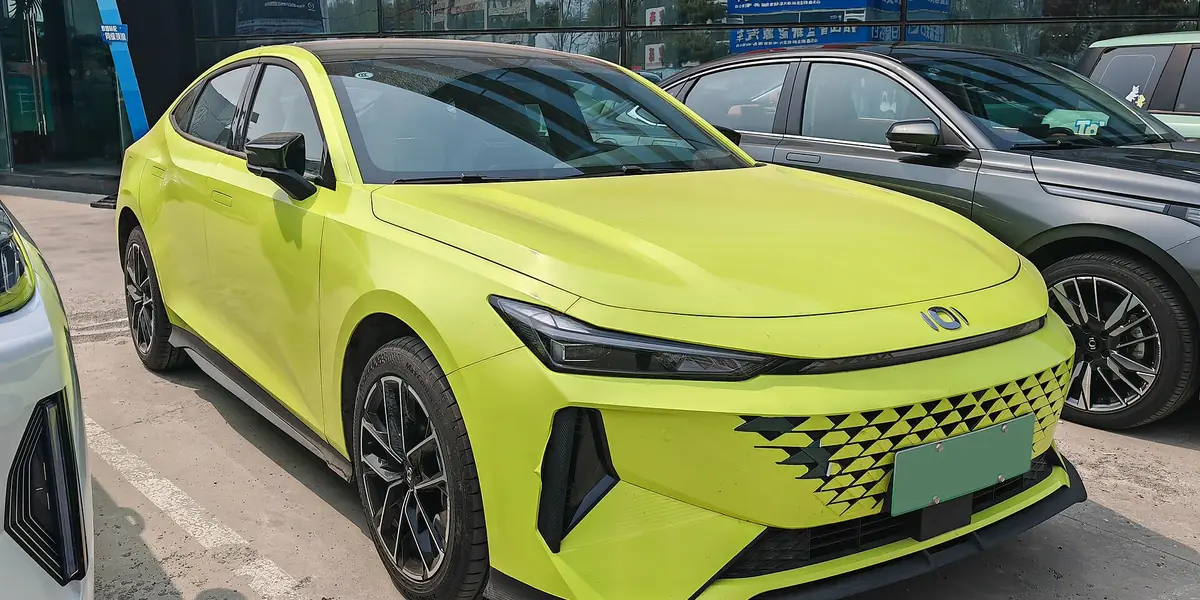
CATL and Changan unveiled the sodium version of the Nevo A06 on 5 February 2026, presenting it as the world’s first mass-produced sodium-ion passenger EV: a 45 kWh Naxtra pack, cell-to-pack construction, and a claimed range above 400 km CLTC. The ‘world’s first’ wording is the makers’ own framing — Yiwei and JMEV cars were delivered two years earlier, at far smaller scale. The regular A06, on LFP batteries and as a range-extended hybrid, has been on sale since late 2025; its prices and its 510–630 km CLTC range figures belong to those lithium versions, not to the sodium car.
What happened to the launch schedule?
What happened next is the part most coverage skips. The launch was targeted for mid-2026, and by October 2026 there was still no confirmation from Changan or CATL that the sodium A06 had reached retail sale. CATL’s own timeline explains the drift: Naxtra was launched in April 2025 with ‘full-scale mass production by the end of 2025’; by June 2026 the emphasis had shifted to mass production in the fourth quarter of 2026, with CATL’s chief manufacturing officer projecting only 10,000 to 20,000 sodium-ion EVs across all manufacturers in 2026. None of this makes the car imaginary — it makes it an announced car on a slipping schedule, reported here as exactly that.
Is the Naxtra battery safe?
Naxtra itself is real technology with certified safety: in September 2025 CATL’s sodium cells and packs passed testing under China’s GB 38031-2025 standard, which from July 2026 requires a battery to show no fire or explosion for two hours after a single cell’s thermal runaway. That certification supports a genuinely lower fire risk than high-nickel lithium-ion. It does not support the ‘cannot catch fire’ wording used in some coverage — sodium cells can still enter thermal runaway.
Why Is All of This Happening in China?
China holds nearly all of the world’s sodium-ion manufacturing capacity, its champion is the world’s largest battery maker, and its budget-car segment is where a cheaper, lower-density battery fits first.
Where did the supply chain form?
CATL and HiNa built the supply chain where the cars are: cathode materials, cell plants and the carmakers willing to fit an unproven chemistry into low-priced models. The segment logic is real — a city car with a 23 kWh pack does not need 250 Wh/kg, and sodium’s raw materials are radically cheaper: soda ash trades at a few hundred dollars a tonne, against lithium carbonate prices that moved between roughly $8,000 and $25,000 a tonne during 2025–26. Chinese policy now helps directly, too: sodium-ion batteries are exempt from the country’s new battery consumption tax through the end of 2028.
Does the cold north explain it?
The popular third explanation — that China’s cold northern regions create a natural first market for sodium’s cold-weather strength — is plausible analysis rather than an established fact, and it is worth noticing that the delivered cars are budget hatchbacks sold on price, in ordinary climates. What is documented is simpler: the two makers who could build sodium cells at any scale (CATL and HiNa) are Chinese, their first car customers were Chinese, and no Western carmaker has yet announced a sodium model of its own. South Korea’s LG Energy Solution is the closest follower, with a sodium pilot line in Nanjing reported in January 2026 — aimed first at energy storage, with LG itself describing its plans as under review.
Sodium-Ion Specs: What Is Claimed and What Is Measured
Sodium-ion’s real numbers are respectable; its headline numbers are manufacturer claims, and the difference matters.
What is the real energy density?
Energy density first. CATL claims up to 175 Wh/kg for its Naxtra passenger-car cell — its own figure, a cell-level maximum, and a fair description of where the best sodium cell now sits: around low-end LFP at cell level, below mainstream LFP and well below nickel chemistries. Cells that have actually shipped are lower: Farasis quotes 140–160 Wh/kg for the EV3’s cells, HiNa publishes a specification of at least 145 Wh/kg, and the one peer-reviewed teardown of a commercial sodium cell recorded a 110 Wh/kg-class specification for that variant.
At pack level the gap shows in range: the Nevo A06’s 45 kWh delivers a claimed 400-plus km CLTC where the same car’s LFP versions manage 510–630 km. Our sodium-ion vs lithium-ion comparison works through the chemistry differences in full.
Cost is the claim furthest from reality today. In a September 2025 Chinese storage tender, sodium-ion systems bid an average of about $153 per kWh against about $79 per kWh for LFP in the same project. Makers forecast parity around late 2026 to 2028 — a forecast, not a price you can buy at yet.
How does sodium perform in the cold?
Cold performance is sodium’s strongest genuine card, and it is still a claim card. CATL says Naxtra keeps roughly 90% of its capacity at −40°C, delivers about three times LFP’s discharge power at −30°C, and can charge at −30°C; HiNa and Farasis quote retention above 90% at −20°C for their shipped cells. No independent fleet has published a winter of results, and CATL does not publish its test protocol, so these figures are reported here as manufacturer claims.
They are promising enough that this site keeps a dedicated page on whether sodium-ion works better in cold weather — and for a US driver today they change nothing, because no sodium car is sold here; the buyable cold-weather choice remains LFP versus NMC, managed with preconditioning and a heat pump.
How long do sodium batteries last?
Cycle life follows the same pattern: impressive claims, thin evidence. CATL claims more than 10,000 cycles for its sodium commercial-vehicle pack and more than 15,000 for a storage product, and BYD’s third-generation sodium cells are reported at around 10,000 cycles — but no standardised, independent cycle-life dataset for a sodium EV pack exists yet, and none of those figures is a passenger-car warranty.
The Hybrid Middle Ground: Sodium Cells Inside Lithium Packs
Some cars you may have read about as ‘sodium-ion EVs’ are actually hybrids whose lithium pack contains a few sodium cells — a different thing from a sodium-ion car.
CATL’s Freevoy pack, launched in October 2024 for range-extended and plug-in hybrid vehicles, is an LFP-based pack that integrates sodium-ion cells under one management system specifically to rescue cold-weather performance: discharge at −40°C and charging at −30°C, where a plain LFP pack struggles. Freevoy fits cars such as the Avatr 07 and Deepal models — all of them lithium-pack hybrids with a sodium assist, not sodium-ion EVs. When a headline says a familiar model ‘has sodium’, this is usually what it means. CATL’s separate Freevoy Dual-Power product is lithium-only, despite the shared name.
What About the United States?
There is no sodium-ion EV on sale in the United States, none announced for the US at any date, and no realistic import route for the Chinese cars that do exist.
Is there a sodium EV for US buyers?
Start with the verdict, because it is the answer most US readers came for: zero. No manufacturer has formally announced a sodium-ion car for the American market, and the Chinese models could not simply be shipped over — Chinese-built EVs face a 100% US tariff, and federal connected-vehicle rules bar China-linked vehicle software from model year 2027. Any website giving a US arrival window for a sodium EV is speculating; no such date has been announced by anyone.
What is America’s sodium story?
America’s sodium story is real but stationary. Peak Energy runs sodium-ion grid-storage systems in the US — a pilot in Colorado running since September 2025, its first grid-scale system energised in Wisconsin in March 2026, multi-gigawatt-hour contracts for 2027 onward, and a Sacramento plant due to start production in early 2027.
GM is involved in exactly that world: its ventures arm led Peak’s $108 million funding round in October 2026, and GM develops sodium cells in its Michigan labs for storage systems under a 2026 partnership — with GM’s position stated plainly in coverage of the deal: do not expect sodium cells in GM EVs, because the energy density is too low. The one US sodium manufacturer that did exist, Natron Energy, ceased operations in September 2025 and cancelled its planned North Carolina gigafactory.
Who Is Actually Still Standing?
The sodium field has already had its shake-out: one giant shipping product, one giant waiting, a pioneer pivoting to trucks and storage, and several famous names gone.
Who is shipping and who is waiting?
CATL is shipping — modest volumes, on a slipping schedule, but shipping — across cars, its Tectrans II sodium pack for light commercial vehicles (launched January 2026), battery swap and storage. BYD, despite owning the segment’s other big name, is waiting: its 30 GWh Xuzhou plant with Huaihai (a maker of two- and three-wheelers) broke ground in January 2024 aimed first at micro-vehicles, and in 2026 BYD ties sodium mass production to demand; there is no sodium BYD car, and the Seagull’s battery is an LFP Blade. HiNa, the pioneer supplier, now centres on commercial vehicles and storage, with a 10 GWh base signed in October 2026.
Who has already left?
The exits matter as much as the entrants. Northvolt — Europe’s flagship, whose sodium cell was developed with Sweden’s Altris — went bankrupt in March 2025; Altris survived independently and works on cathode materials and, with Clarios, sodium for automotive low-voltage batteries, which is also where BAIC’s ArcFox brand has announced sodium auxiliary batteries from 2027 — starter batteries, not traction packs. France’s Tiamat shelved its planned gigafactory in autumn 2026. A field this young, already narrowed to a few serious players, is why this page reports announcements as announcements.
Frequently Asked Questions
Which EVs use sodium-ion batteries?
Only a handful of small Chinese-market cars: the JAC Yiwei 3 sodium variant and the JMEV EV3 Youth Edition, both delivered in small numbers since early 2024, and a limited 2023 run of Chery cars with CATL’s first-generation cells. Changan’s Nevo A06, with CATL’s Naxtra battery, was unveiled in February 2026 with a mid-2026 launch target but had no confirmed customer deliveries by October 2026. No sodium-ion EV is sold outside China.
Can I buy a sodium-ion EV in the United States?
No. No sodium-ion EV is on sale in the US and none has been announced for the US at any date. The Chinese models that exist could not simply be imported either, given the 100% tariff on Chinese-built EVs and federal connected-vehicle rules. US sodium-ion development is in grid storage, led by companies such as Peak Energy.
Will sodium-ion batteries replace lithium-ion in EVs?
No manufacturer claims they will. CATL’s own framing is a ‘dual-chemistry era’ in which sodium takes the low-cost, cold-climate and short-range end while lithium keeps long-range cars; CATL’s chief executive has spoken of sodium eventually taking a 30–40% share as a long-run ambition, not a schedule. Sodium’s lower energy density is structural, so lithium — especially LFP — remains the default for most EVs.
Is the Changan Nevo A06 on sale?
The Nevo A06 itself is on sale in China in LFP battery-electric and range-extended versions. The sodium-ion version was unveiled on 5 February 2026 with a market launch targeted for mid-2026; as of October 2026, neither Changan nor CATL had confirmed retail deliveries of the sodium car, and CATL executives projected only 10,000–20,000 sodium EVs across all makers in 2026.
Does the BYD Seagull use a sodium-ion battery?
No. The Seagull runs BYD’s LFP Blade battery. The sodium Seagull story dates to 2023 media rumours and was never confirmed by BYD, which has no sodium-ion car on sale or announced — its sodium investment is a plant in Xuzhou aimed first at micro-vehicles and two- and three-wheelers.
Are sodium-ion batteries better in cold weather?
In manufacturer testing, yes: CATL claims its Naxtra cells keep about 90% of capacity at −40°C, deliver roughly triple an LFP pack’s discharge power at −30°C, and can charge at −30°C. Those are maker claims without published protocols or independent fleet verification so far. They also cannot help a US buyer today, since no sodium-ion car is sold in the United States.
How long do sodium-ion batteries last?
Nobody knows yet in EV service — the oldest delivered sodium cars date from 2024. Manufacturer claims are high (10,000-plus cycles for some CATL sodium products, around 10,000 reported for BYD’s latest cells), but there is no independent, standardised cycle-life data for a sodium EV pack, and no sodium car carries a cycle-based warranty figure. Treat lifespan claims as projections.
Conclusion
Sodium-ion has crossed the line from laboratory to product — narrowly, in China, and on a slower schedule than its headlines suggest.
The cars that prove the chemistry works in the real world are modest ones: two small hatchbacks delivered since 2024 and a tiny 2023 Chery run. The car that will decide whether sodium becomes a real segment — Changan’s Nevo A06 on CATL’s Naxtra cells — had, by late 2026, been unveiled, certified and repeatedly re-scheduled, but not demonstrably delivered. Around them, the industry’s shape is settling: CATL shipping, BYD waiting on demand, HiNa pivoting to commercial vehicles and storage, and the Western pioneers mostly gone.
For readers in the United States, the practical position is unchanged: there is no sodium-ion EV to buy, none announced, and the chemistry’s near-term American role is holding the grid together, not powering cars. When a sodium car is genuinely announced for this market — with a maker, a model and a date — this page will say so at the top. Until then, everything above the line that reads ‘announced’ should be read as exactly that.
