
Does Sodium-Ion Battery Work Better in Cold Weather?

CATL’s Naxtra announcements (April 2025, February 2026), the IEA’s February 2026 sodium-ion commentary, a peer-reviewed test of commercial sodium-ion cells (Applied Energy, 2026) and Recurrent’s US winter fleet data (November 2026).
Yes — and the interesting part is how much, because two different answers are in circulation and both get quoted as “the” number. CATL, maker of the most advanced sodium-ion EV battery, says its Naxtra cell keeps 90% of its usable power at −40°C. Independent researchers who bought commercial sodium-ion cells and froze them measured 51–62% of capacity at the same temperature. Those are not the same cell, the same test or even the same quantity — and the gap between them is exactly what a buyer needs to understand.
This page separates the claim from the measurement, explains the physical reason sodium genuinely suffers less in the cold than lithium does, covers the cold-charging story honestly (including the catch the launch coverage skipped), and ends with the fact that shapes everything for US readers: as of November 2026, no sodium-ion car is sold in the United States. (The chemistry itself — how sodium-ion works and where it fits — is our sodium-ion explainer; this page is only about the cold.)
Yes, sodium-ion works better in cold weather — at the cell level, by real physics, and by a margin that depends on the cell. CATL claims its newest Naxtra cell retains 90% usable power at −40°C; a peer-reviewed test of the commercial sodium cells you can buy today measured 51–62% capacity retention at −40°C, in a protocol where the lithium-ion reference cells could not sustain discharge at all. LFP — lithium’s cold-weather benchmark — keeps roughly 65–70% at −20°C. The catch for US buyers: every sodium-ion car on sale is a China-market car. None is sold here yet.
Key figures: Na-ion (CATL claim) 90% power at −40°C · Na-ion (measured, buyable cells) 51–62% capacity at −40°C · LFP ≈67% capacity at −20°C
The Numbers, With Their Sources Attached
One table, no invented rows: every figure below names whose test it came from — read the source column before quoting any of them.
Cell | At −20°C | At −40°C | Source |
|---|---|---|---|
CATL Naxtra (newest generation) | ~3× the discharge power of an equivalent LFP cell at −30°C | 90% usable power retained | CATL’s own claims (Apr 2025 / Feb 2026) — manufacturer figures, not independently verified |
Commercial sodium-ion cells (buyable today) | — | 51–62% of capacity | Peer-reviewed population test, Applied Energy (2026) |
NFPP sodium-ion cell (vendor qualification test) | 95% of capacity | >85% of capacity | HEIWIT’s own cell test — vendor data, one cell design |
LFP (lithium iron phosphate) | ≈67% of capacity | Effectively unusable unheated in the same tests | Published low-temperature review + HEIWIT same-test reference cell (67.8% at −20°C) |
NMC (nickel manganese cobalt) | ≈70% of capacity | Effectively unusable unheated in the same tests | Published low-temperature review |
Three reading notes. First, CATL’s −40°C figure is a claim about power delivery in its own announcement wording (the “capacity” version appeared in later launch coverage) — this page keeps CATL’s word. Second, the spread inside sodium-ion itself (95% for one vendor’s NFPP cell, 51–62% across a bought population) is the real headline: “sodium-ion” is a family, not a number, and design decides where a cell lands. Third, the lithium figures are cell-level discharge numbers; what they mean for a car’s winter range is a separate ledger, kept separate below.
Why Sodium Loses Less: The Loose-Coat Effect
In deep cold, the slowest step for any battery is an ion undressing — and sodium wears a looser coat.
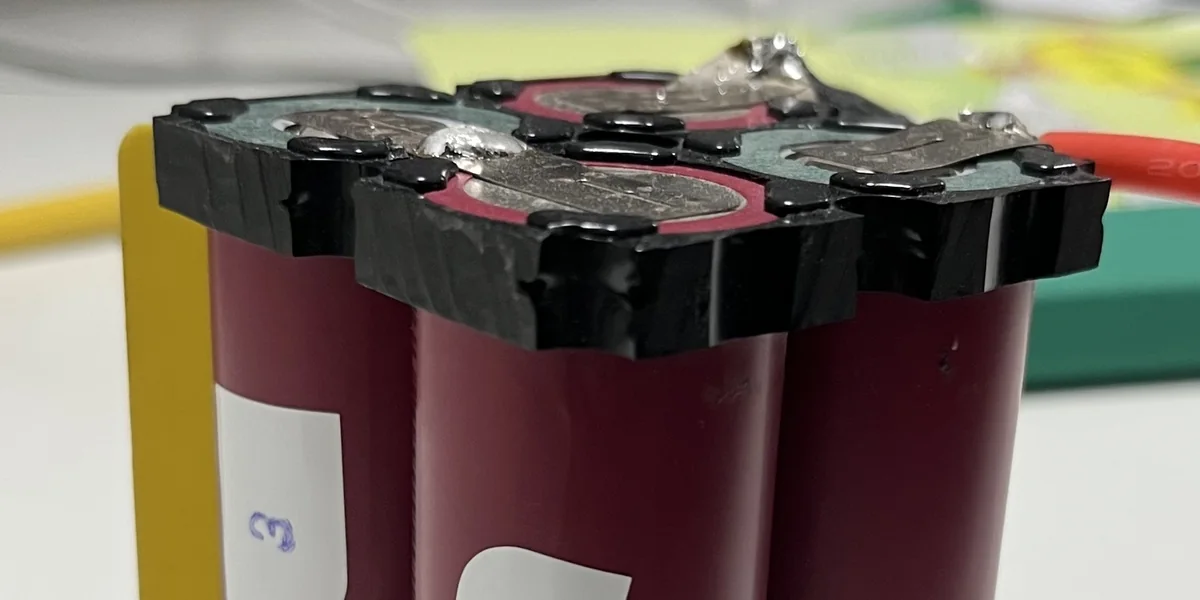
Before a lithium or sodium ion can enter an electrode, it must shed the shell of solvent molecules it travels in. That shedding step — desolvation, part of charge transfer — is where cold does its damage: as temperature falls, its resistance climbs steeply, in both chemistries. The sodium ion is larger than lithium’s (1.02 Å against 0.76 Å) with its charge spread over more surface, so it holds its solvent shell more weakly and pays less to strip it off. That is the physical core of the advantage, and it is real.
Two design qualifiers decide how much of it a given cell keeps. Electrolyte: the most extreme low-temperature results use engineered electrolytes (ether co-solvent systems) that cut the desolvation barrier further — a sodium cell with a mediocre electrolyte does not automatically inherit the headline numbers. Cathode architecture: polyanionic cathodes such as NFPP offer ions an open 3D framework of paths, where LFP’s one-dimensional channels can be blocked with no detour; NFPP was the steadiest cold performer in both independent tests in the table. And sodium’s anode is different by necessity — sodium barely enters graphite, so these cells use hard carbon, whose surface-and-pore storage keeps working when intercalation slows. (Hard carbon returns in the charging section — as the caveat.)
Claimed vs Measured: The Gap Is the Story
The honest answer to this page’s title lives between 90% and 51–62% — and knowing why the two numbers differ is worth more than either.
The peer-reviewed anchor is a 2026 Applied Energy study that bought early-generation commercial sodium-ion 18650 cells — layered-oxide and NFPP types — and froze them alongside lithium-ion references. Every sodium chemistry tested still discharged at −40°C, retaining 51–62% of its room-temperature capacity; the lithium references did not sustain discharge under the same protocol. Cold also widened the spread between individual sodium cells — early-production consistency is part of the story. Set against it, the vendor qualification test of a single well-designed NFPP cell (95% at −20°C, still above 85% at −40°C, with its LFP reference at 67.8% and 0% respectively) shows what the family’s best current designs do.
Laboratory results mark that heading: with a solvation-engineered electrolyte, a hard-carbon sodium full cell held 90.6% retention across 400 cycles at −40°C in published research (Yang et al., reviewed in Chemical Communications, 2025). That is a lab cell, not a product — printed here because it shows the ceiling is a design problem being solved, not a physics wall.
Cold Charging: Better by Design — Not Plating-Proof
Sodium-ion charges more willingly in the cold than lithium does, and CATL has demonstrated charging at −30°C — but no honest source promises full-speed fast charging on a frozen pack, because sodium has its own plating problem.
The demonstrated facts first. At its February 2026 winter test in Inner Mongolia, CATL and Changan’s Nevo A06 charged at −30°C and discharged at temperatures down to −50°C (CATL’s claim for the latter). No charge rate, C-rate or 10–80% time at −30°C has been published by anyone — “charging normally” is the strongest wording the evidence supports, and it is already a genuine step beyond LFP, whose cars must warm or sharply limit charge below freezing to avoid lithium plating (the reason every EV has preconditioning; the whole mechanism is laid out in our weather-and-charging guide).
Now the caveat the launch coverage skipped. Sodium plates too. Hard carbon stores most of its sodium at a voltage plateau only slightly above sodium metal’s — research in the Journal of The Electrochemical Society warns this can make sodium deposition easier to trigger than lithium plating at the same overpotential, and documents rapid capacity fade at −10°C in a commercial sodium cell, attributed to exactly that deposition. The designed-electrolyte studies show plating can be engineered down (one −40°C full cell ran with no plating where a conventional electrolyte plated visibly) — and the industry’s own behaviour confirms the problem is real: BYD’s February 2026 disclosure boasts that its third-generation sodium platform “addressed sodium precipitation issues.”
Companies do not announce fixes for problems that never existed. Verdict: expect far less preconditioning fuss than an LFP car, not immunity.
Retention Is Not Range: Two Different Ledgers
A cell keeping 90% of its capacity in a freezer does not mean a car keeps 90% of its range in January — and conflating the two is how the worst numbers in this topic get manufactured.
Vehicle-level winter range is measured on whole cars, and the losses stack: the battery’s reduced available energy, cabin heating (the biggest single term — several kilowatts that move no wheels), denser cold air, winter tires, reduced regenerative braking. That is why lithium-ion vehicles with cells retaining 65–70% at −20°C post fleet results like Recurrent’s 78% of range kept at 32°F and 70% at 20°F, AAA’s up to −41% at 20°F with heating running, and Norway’s NAF test (January 2026, −31°C driving) where even the best cars lost 29%.
A sodium-ion car keeps more of the first term — its battery’s energy — and pays the rest at the same rate as everyone else: it still heats its cabin with the same physics. Sodium’s winter edge in a real car is real but partial, and anyone quoting you a “93% of range retained” figure has mixed the ledgers.
What You Can Actually Buy: China First, Storage Everywhere, the US Not Yet
Every production sodium-ion car is a Chinese-market car; in the US, sodium-ion exists in 2026 as grid storage and shut start-ups, not as a vehicle.
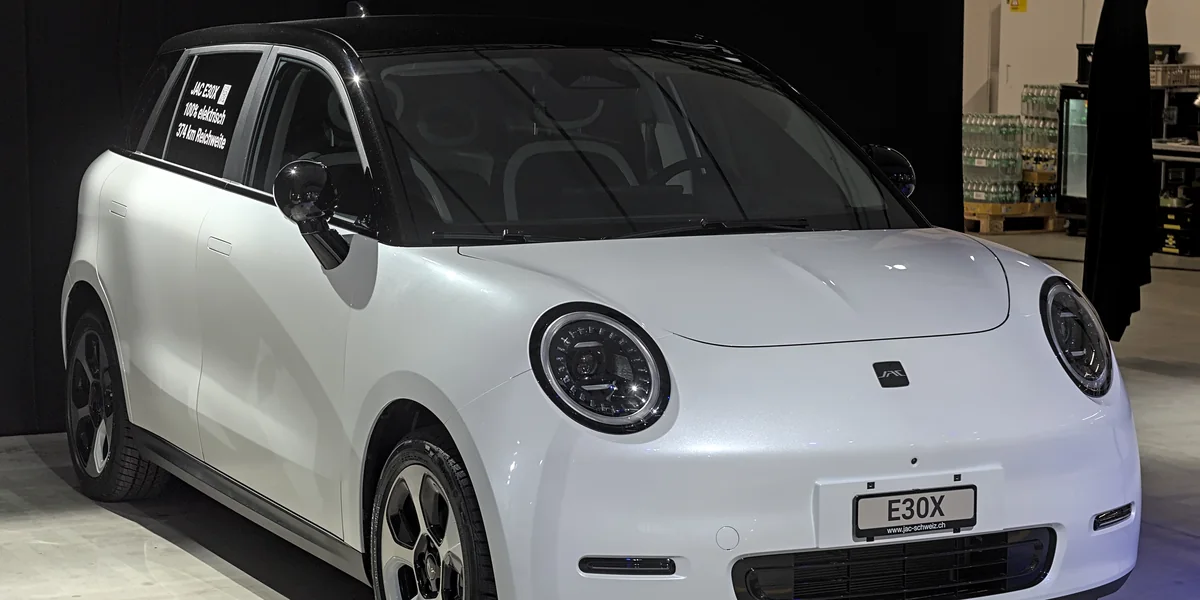
The pioneers are micro cars: JAC’s Yiwei Hua Xianzi (HiNa cells, 23.2 kWh, ~230 km on China’s CLTC cycle) was the first sodium-ion EV delivered, in January 2024, followed by a sodium variant of the larger Yiwei 3; JMEV’s EV3 Youth Edition (Farasis cells) rolled out days earlier in the same class. The step up is CATL and Changan’s Nevo A06 — a 45 kWh Naxtra pack, over 400 km CLTC claimed — unveiled in February 2026 as the first mass-production sodium-ion passenger car program, with its China launch targeted for mid-2026. The full vehicle-by-vehicle list lives on our sodium-ion EVs page; the point here is geography: China only, none announced for the US or Europe.
Two trade-offs travel with the cold advantage. Density: the IEA puts the latest sodium-ion at up to ~175 Wh/kg against ~205 for the latest LFP and ~255–265 for NMC — sodium starts winter with a smaller tank (its worked example: an average SUV manages ~350 km on sodium-ion against 400–600 km on lithium-ion).
Cost: at today’s lithium prices, the IEA finds sodium-ion does not yet undercut LFP in most uses — late-2025 market reporting had sodium packs more expensive per kWh — with the cold-climate niche precisely where it is already cost-effective. And the US chapter is stationary and sobering: America’s own sodium cell maker, Natron Energy, ceased operations in September 2025; the US grid projects now installing sodium-ion (Peak Energy’s) use Chinese-made cells.
Should a Cold-Climate Buyer Wait for Sodium-Ion?
Not in the United States — there is nothing to wait for yet, and the levers that decide your winter today are already on sale.
Sodium-ion’s cold story will matter to US buyers when a US-sold car carries it, and no maker has announced one. The decision a cold-climate buyer actually faces in 2026 is the lithium one: LFP versus NMC (LFP is cheaper and longer-lived but the most cold-sensitive of the lithium family; NMC keeps a little more at −20°C and charges more willingly) — weighed properly on our LFP vs NMC comparison — plus the unglamorous features that beat chemistry in real winters: a heat pump, good preconditioning, and a garage or a plugged-in overnight routine.
If you live somewhere genuinely arctic and sodium-ion reaches your market in a car you otherwise want, its cell-level cold advantage is a real reason to prefer it. Until then it is a technology to watch, not a purchase to plan around.
Frequently Asked Questions
Does sodium-ion work better in cold weather than lithium-ion?
Yes — at the cell level, measurably. The mechanism is physical (sodium ions shed their solvent shell more cheaply, the step that dominates cold resistance), and the tests agree on direction: in a peer-reviewed protocol where commercial sodium-ion cells kept 51–62% of capacity at −40°C, the lithium-ion references could not sustain discharge; a designed NFPP sodium cell kept 95% at −20°C where its LFP reference kept 67.8%. The size of the advantage depends on the cell design, not just the chemistry label.
Is the “90% at −40°C” figure true?
It is CATL’s claim for its newest Naxtra cell — and CATL’s April 2025 wording is 90% of usable power, not capacity (the capacity version came with the February 2026 car announcement). The IEA repeats the figure, attributed to CATL’s latest generation; it is not an independent test result. Independent measurement of the commercial sodium cells available today gives 51–62% at −40°C. Both numbers are on this page with their sources; quote them with their owners attached.
Can sodium-ion batteries fast-charge in freezing weather?
Better than lithium-ion, with limits. CATL demonstrated its Nevo A06 charging at −30°C in winter testing — but published no charge rate for that demonstration, and sodium-ion has its own plating risk on a cold, fast charge (documented in the Journal of The Electrochemical Society; BYD publicly lists solving “sodium precipitation” among its third-generation achievements). Expect much less preconditioning than an LFP car needs — not a promise of full-speed charging on a frozen pack.
Does a sodium-ion EV keep 90% of its range in winter?
No — that mixes two different measurements. The 90%-class figures are cell-level capacity or power retention. A car also spends energy heating its cabin and fights cold air and winter tires; lithium-ion cars lose 20–40% of range in fleet winter tests for those combined reasons, and a sodium-ion car pays every one of those costs except part of the battery term. Sodium’s real-car winter advantage is meaningful and partial.
Which cars use sodium-ion batteries today?
Only Chinese-market cars: JAC’s Yiwei micro cars (HiNa cells, from January 2024), JMEV’s EV3 Youth Edition (Farasis), and CATL/Changan’s Nevo A06 program (45 kWh Naxtra, China launch targeted mid-2026). No sodium-ion EV is sold or announced for the United States or Europe as of November 2026.
Is sodium-ion better than LFP in the cold?
On retention, yes — LFP is lithium’s most cold-sensitive mainstream chemistry at the cell level (≈67% capacity at −20°C in published reviews, and the chemistry that most needs preconditioning before a cold fast charge). Sodium-ion’s advantage is largest exactly against LFP. The trade: LFP’s energy density is higher (~205 vs ~175 Wh/kg for the latest cells, per the IEA), its cost is lower today in most uses, and you can buy an LFP car in the US this week.
Will sodium-ion replace lithium-ion in cold climates first?
It is the most plausible first beachhead — the IEA already calls sodium-ion cost-effective “in particularly cold climates” while it remains pricier than LFP elsewhere. But “first” still means China first: global sodium-ion production in 2025 was under 1% of lithium-ion’s (IEA), manufacturing is concentrated in China, and cold-climate Western markets have no announced sodium-ion car program yet.
Should I delay buying an EV until sodium-ion arrives?
In the US, no — there is no announced sodium-ion car to delay for, and today’s cold-weather experience is decided more by heat pumps, preconditioning and charging routine than by the LFP-vs-NMC choice, let alone a chemistry that is not on sale. If your winters are severe and a sodium-ion model reaches your market in a car you want, treat its cold performance as a genuine point in its favour — with the measured numbers, not the launch numbers, in hand.
Conclusion
Sodium-ion’s cold advantage is real physics with a marketing halo — and this page’s job was to give you both parts separately. The physics: a weaker solvation grip makes sodium the cheaper ion to move in the cold, and independent tests confirm sodium cells discharging where lithium references fail. The halo: a 90% headline that belongs to one maker’s newest cell, stated as power, repeated as capacity, and quoted without its owner.
The buyer’s bottom line for November 2026 is simpler than either: the advantage is genuine, the cars are China-only, and the winter you are about to drive through will be decided by the lithium car you can actually buy — its heat pump, its preconditioning, and where it sleeps at night.
