LFP vs NMC Batteries: Full EV Industry Comparison

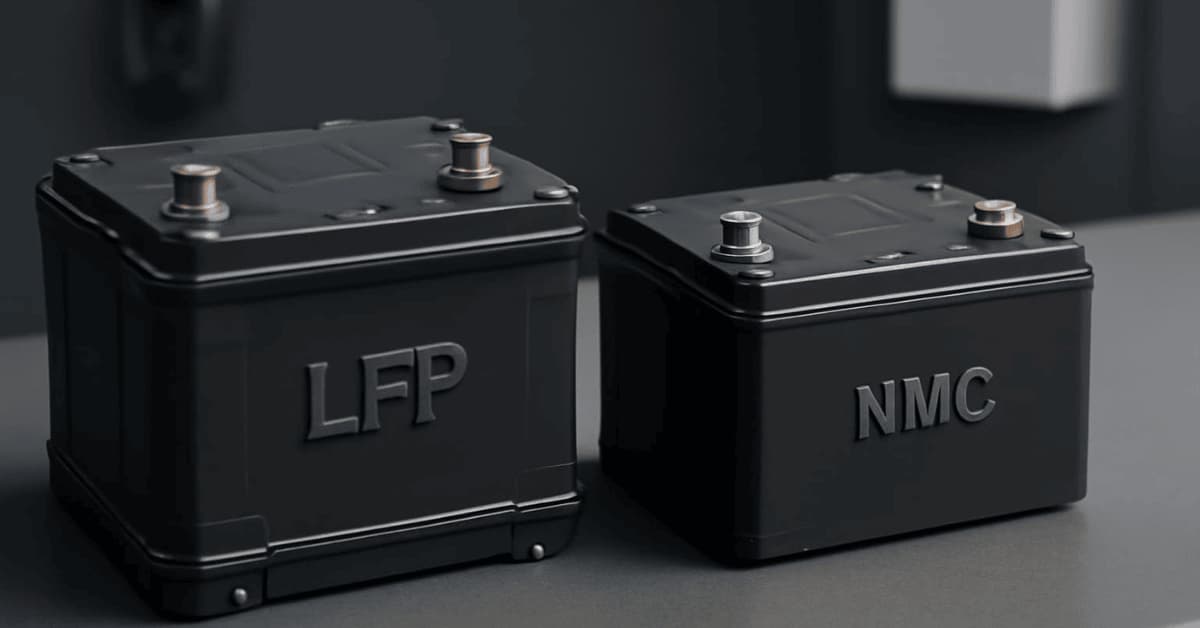
Electric vehicles (EVs) rely on advanced battery technology, and two prominent types dominate the market: Lithium Iron Phosphate (LFP) and Nickel Manganese Cobalt (NMC). While both power the electric revolution, they offer distinct advantages and disadvantages.
To fully appreciate these differences, it helps to start with how an EV battery works — from the cell level all the way to the complete pack. Understanding these differences is crucial for consumers and manufacturers alike, especially as the technology rapidly evolves.
What Are NMC and LFP Batteries?
Let’s break down these two critical battery chemistries. LFP batteries, or Lithium Iron Phosphate (LiFePO4), utilize iron and phosphate as their cathode material. The materials inside an EV battery directly determine performance, safety, and cost — and LFP’s iron-phosphate composition provides a stable voltage of approximately 3.2V.
In contrast, NMC batteries combine nickel, manganese, and cobalt in their cathode, with graphite typically forming the anode. These batteries generally deliver a higher voltage, around 3.6V to 3.7V, making them a preferred choice in the high-performance electric vehicle (EV) industry. Leading manufacturers like Tesla and BYD employ NMC technology in many of their models.
What Is NMC Battery Chemistry in Electric Cars?
NMC stands for Nickel Manganese Cobalt, and the chemistry works by combining these three metals in the cathode at varying ratios — such as NMC 111 (equal parts), NMC 532, NMC 622, and the high-nickel NMC 811 (80% nickel, 10% manganese, 10% cobalt). Higher nickel content increases energy density but also raises thermal sensitivity.
The lithium ions move between the graphite anode and the NMC cathode during charge and discharge cycles. Manganese provides structural stability, nickel delivers high capacity, and cobalt maintains the layered structure that allows fast lithium-ion movement. The result is a high energy density chemistry of 150–220 Wh/kg.
The trade-off is that the cobalt content in EV batteries using NMC chemistry raises both cost and ethical sourcing concerns. Cobalt is primarily mined in the Democratic Republic of Congo under conditions that draw ongoing scrutiny. Manufacturers are actively pushing toward lower-cobalt formulations like NMC 811 and NMC 9-half-half to reduce this dependency.
NMC batteries also have implications for power density vs energy density trade-offs. They are typically optimized for energy density (range) in passenger EVs, but some NMC variants can be tuned for higher power output in performance or commercial applications.
What Is NCA Battery Chemistry Used in EVs?
NCA stands for Nickel Cobalt Aluminum, and it is the third major lithium-ion chemistry used in electric vehicles. Where NMC uses manganese for stability, NCA replaces manganese with aluminum. This substitution produces one of the highest energy densities available in any lithium-ion format — typically 200–260 Wh/kg — making it the choice of Tesla for its flagship long-range vehicles (historically in the Panasonic-produced 18650 and 2170 cells).
NCA chemistry shares many characteristics with NMC:
- High energy density: NCA packs more energy per kilogram than both standard NMC and LFP, contributing to Tesla’s class-leading range figures.
- High cobalt dependency: Like NMC, NCA relies on cobalt, raising the same cost and ethical concerns.
- Thermal sensitivity: NCA has a thermal runaway onset temperature similar to or slightly lower than NMC (around 150–200°C), making robust battery management critical.
- Shorter cycle life than LFP: Typically 500–1,500 cycles, comparable to NMC.
NCA is less common than NMC in the broader EV market — Tesla is its primary adopter — while most other manufacturers use NMC or are transitioning to LFP. The Lithium-Ion vs Lithium-Iron Phosphate comparison is therefore the most commercially relevant choice consumers face today, since NCA remains largely exclusive to Tesla’s supply chain with Panasonic.
Understanding NMC Batteries — The Energy Powerhouse
NMC batteries have historically been the workhorse of the EV industry, powering a wide range of electric cars from early models like the Nissan Leaf to modern high-performance vehicles. This lithium-ion variant has seen significant improvements over the past decade, enhancing EV battery degradation and lifespan and overall performance.
Pros
- More range from a lighter battery: NMC batteries boast high energy density, meaning they pack more power per unit of weight. This translates directly to longer driving ranges for electric vehicles without adding excessive mass. Early Renault Zoé models with 22kWh NMC batteries offered around 80–90 miles of range, which later improved to 200–220 miles with a 52kWh pack that was only slightly heavier.
- Faster charging speeds: Generally, NMC batteries support faster charging rates, reducing the time EVs spend plugged in.
Cons
- Expensive to produce: The raw materials, particularly nickel and cobalt, are costly and contribute to a higher overall production expense for NMC batteries. As of late 2025, NMC battery packs averaged around $128/kWh, significantly higher than LFP.
- Relies on hard-to-source metals: Cobalt is a rare and environmentally challenging metal to source, raising ethical and sustainability concerns. This reliance makes NMC batteries more susceptible to supply chain volatility and price fluctuations.
- Battery degradation: To maximize longevity, it’s best to keep NMC batteries within a 20–80% state of charge (SoC) range. Regularly charging to 100% or discharging below 10% can accelerate battery degradation.
Understanding LFP Batteries — The Safe and Steady Choice
LFP batteries represent the other dominant battery technology in electric cars and energy storage. Also known as lithium-ferro phosphate, this chemistry has been widely used in commercial installations and plant machinery for longer than NMC has been in EVs. Today, you find LFP batteries in models like the shorter-range versions of the MG4, Volvo EX30, Tesla Model 3, Dacia Spring, Citroën e-C3, and all BYD models.
A major innovation in LFP design is the blade battery technology pioneered by BYD, which uses long prismatic LFP cells arranged like blades inside the pack — eliminating modules entirely and dramatically improving space efficiency and safety.
Pros
- Cheaper to produce: LFP batteries use more abundant and less expensive materials like iron and phosphate, making them significantly more affordable. LFP pack prices were approximately $81/kWh in late 2026, making them about 20–50% cheaper than NMC.
- Relies on more common metals: LFP chemistry avoids cobalt entirely and reduces reliance on nickel. For a full breakdown, see our guide on cobalt-free EV batteries and what makes them possible.
- Superior safety: LFP batteries are renowned for their thermal stability. They are highly resistant to overheating and thermal runaway, even under extreme conditions. The thermal runaway onset temperature for LFP is around 270°C, compared to NMC’s 210°C, and LFP produces 60% less heat during failure.
- Excellent cycle life and longevity: LFP batteries typically offer a much longer cycle life, ranging from 3,000 to over 6,000 cycles, compared to NMC’s 800–2,000 cycles. This translates to a service life often exceeding 10 years. Tesla even recommends charging LFP-powered Model 3s to 100% at least once a week to optimize battery health.
Cons
- Heavier than NMC: LFP batteries generally have a lower energy density, meaning they are heavier for the same amount of stored energy. This can impact vehicle performance and range. An LFP battery might add an extra 200 kilograms to an EV compared to an NMC equivalent for a similar range.
- Slower to charge in very cold weather: LFP battery performance, including charging speeds, can be more significantly affected by very cold temperatures (below 0°C), with capacity dropping by 10–20% and even to 60% at −20°C.
How Cell Format Affects LFP and NMC Performance
Beyond chemistry, the physical shape of battery cells plays a major role in pack performance. Understanding cylindrical vs prismatic vs pouch cells helps explain why LFP and NMC are often packaged differently:
- Cylindrical cells (like Tesla’s 2170 and 4680) are most commonly used with NMC and NCA chemistry. They benefit from mature manufacturing and excellent heat dissipation.
- Prismatic cells are the dominant format for LFP, used in BYD’s Blade Battery and many CATL LFP packs. Their flat shape allows dense packing and simplified cooling.
- Pouch cells are used with both NMC and LFP and offer design flexibility, though they require more robust external pressure management.
Key Differences Between NMC and LFP Batteries
When choosing between LFP and NMC, several key factors differentiate these battery technologies:
Feature | NMC Battery | LFP Battery |
|---|---|---|
Energy Density | 150–220 Wh/kg | 90–160 Wh/kg |
Nominal Voltage | ~3.6–3.7V | ~3.2–3.3V |
Cycle Life | 500–1,500 cycles | 2,000–5,000+ cycles |
Thermal Runaway Temp | ~200–210°C | ~270–300°C |
Cost (per kWh) | $110–$150 | $70–$110 |
Cobalt Content | High (10–20%) | None |
Best Use | High-performance EVs | Affordable EVs, ESS |
Safety Level | Moderate | High |
Cold Weather Performance | Better | Weaker (needs heating) |
Service Life | 8–12 years | 12–20 years |
1. Price
NMC batteries are generally more expensive due to their reliance on costly raw materials like nickel and cobalt. LFP batteries, utilizing more abundant iron and phosphate, offer a more affordable solution. This cost difference is a significant driver for LFP adoption in budget-friendly EVs and stationary storage.
2. Energy Density
NMC batteries excel in energy density, packing more power into a smaller, lighter package. This characteristic makes them ideal for high-performance EVs where maximizing range and minimizing weight are critical. LFP batteries have a lower energy density, making them heavier for comparable energy storage, though advancements like BYD’s Blade Battery are narrowing this gap. For a deeper dive, see our comparison of power density vs energy density in EV batteries.
3. Temperature Tolerance
NMC batteries perform well across a broader temperature range. LFP batteries handle heat exceptionally well but experience performance degradation in very cold conditions, impacting charging speeds and overall efficiency.
4. Safety
LFP batteries are the clear winner in safety due to their inherent chemical stability. They are highly resistant to thermal runaway, even under severe stress, typically producing only smoke rather than fire. While generally safe, NMC batteries pose a higher risk of thermal events under extreme conditions due to their chemistry.
5. Cycle Life and Degradation
LFP batteries offer a significantly longer cycle life, often exceeding 3,000 to 6,000 charge-discharge cycles. NMC batteries typically provide 800 to 2,000 cycles. Understanding EV battery degradation and lifespan for each chemistry is important for calculating your total cost of ownership over a vehicle’s life.
6. Service Life
With proper use, LFP batteries can last over a decade. NMC batteries, especially in high-demand EV applications, tend to have a shorter service life, often ranging from 3 to 5 years, though some can last 10 years with careful management and typical EV degradation rates of 1.5–2% per year.
7. Cobalt and Material Sourcing
One of the most important distinctions between NMC and LFP is cobalt. NMC batteries rely heavily on cobalt for cathode stability, while LFP contains none. The cobalt content in EV batteries has major implications for supply chain ethics, sustainability, and battery cost. Manufacturers are actively exploring cobalt-free EV batteries as a long-term direction for the industry.
Which Battery Tech Is Safer — LFP or NMC?
Both LFP and NMC battery technologies are engineered to meet stringent safety regulations and are considered very safe in modern electric vehicles. All EVs undergo rigorous crash tests, performing well routinely. However, when comparing inherent chemical stability, LFP batteries hold a clear advantage.
Their chemistry is less prone to thermal runaway, and if a thermal event occurs, it is typically less severe, often resulting in smoke rather than fire. Dan Harrowell, Principal Engineer of Advanced Technologies at Thatcham Research, confirms that both are well-established and meet safety regulations, but LFP’s higher thermal runaway threshold is a notable benefit.
Which Battery Is Better? NMC vs LFP
Both LFP and NMC batteries have distinct strengths and weaknesses, making them suitable for different use cases.
If your primary concern is high performance — particularly in applications like long-range electric vehicles where maximum energy density and lighter weight are crucial — NMC batteries are often the preferred choice. They deliver the acceleration and extended range that many EV buyers seek.
However, if you prioritize longevity, safety, and cost-effectiveness — especially for applications such as home energy storage, RVs, marine uses, or more affordable EVs — LFP batteries are the clear choice. Their extended cycle life and superior thermal stability offer peace of mind and a better return on investment over the long term.
The rapid advancements in LFP technology, such as BYD’s blade battery technology, are also making them increasingly competitive in terms of energy density, blurring the lines between the two chemistries. Similarly, the evolution of cylindrical vs prismatic vs pouch cells formats for both chemistries is reshaping how performance, cost, and safety are balanced at the pack level.
“Winner” is the battery that best matches your specific needs and priorities. For most everyday uses, particularly in energy storage and increasingly in mainstream EVs, LFP batteries are hard to beat for their combination of durability, safety, and affordability.
Conclusion
The choice between LFP and NMC battery technology is a strategic one, driven by a balance of performance, cost, safety, and longevity requirements. While NMC batteries have historically dominated the EV market with their superior energy density, LFP technology is rapidly advancing, offering compelling advantages in safety, durability, and affordability.
As the electric vehicle and energy storage markets continue to mature, both LFP and NMC chemistries will likely coexist, each serving specific niches where their unique attributes provide the most value. Consumers and manufacturers must carefully evaluate their needs to select the battery technology that best aligns with their objectives.
FAQs
Read about: How Electric Car Batteries Are Made
