
Does an EV Battery Contain Cobalt?

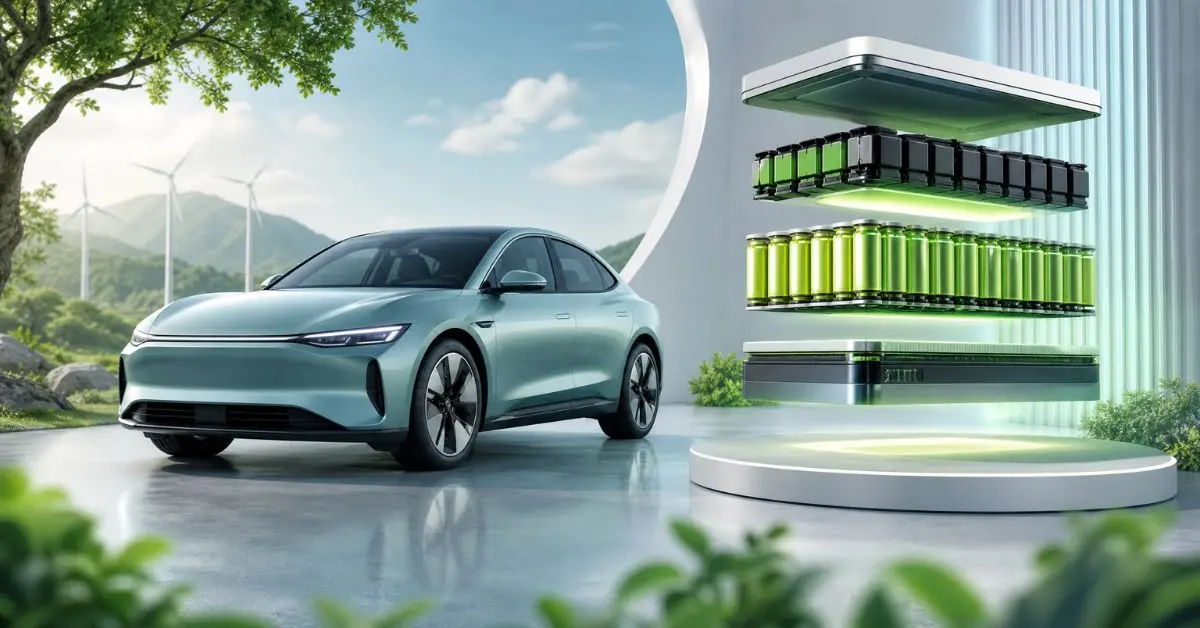
Most EV batteries today contain cobalt — but that’s changing fast. Lithium iron phosphate (LFP) batteries contain zero cobalt, and they now represent nearly half of all new EV batteries sold globally. The shift away from cobalt is one of the biggest strategic moves in the EV battery industry, driven by cost, supply chain ethics, and sustainability concerns. Cobalt is just one of many raw materials inside a pack — see what materials are inside an EV battery for the complete list.
Read about: cobalt in NMC vs LFP batteries
Which EV Batteries Contain Cobalt?
The short answer depends entirely on the battery chemistry:
Battery Chemistry | Contains Cobalt? | Typical Cobalt Content |
|---|---|---|
NMC (Nickel Manganese Cobalt) | Yes | NMC 532: ~20% | NMC 811: ~10% |
NCA (Nickel Cobalt Aluminum) | Yes | ~5–15% |
LFP (Lithium Iron Phosphate) | No — zero cobalt | 0% |
Sodium-ion | No | 0% |
A typical NMC mid-size EV battery contains approximately 14 kg of cobalt. As automakers shift to high-nickel NMC 811 formulations (80% nickel, 10% manganese, 10% cobalt), the cobalt content per kWh drops significantly. Tesla’s current batteries contain less than 5% cobalt by cathode weight.
Although automakers are reducing cobalt content, lithium remains an essential ingredient in nearly all modern EV batteries. Learn how much lithium is in an ev battery and how lithium demand compares with other battery materials.
Why Is Cobalt in EV Batteries Controversial?
Cobalt is a high-performance cathode stabilizer — but it comes with serious concerns:
- Supply concentration: About 70% of global cobalt comes from the Democratic Republic of Congo (DRC). This creates significant geopolitical supply chain risk — one conflict or policy change can disrupt supply for the entire EV industry.
- Human rights concerns: DRC cobalt mining has been linked to hazardous child labor and dangerous working conditions in artisanal mining operations. Many major EV makers have invested in supply chain auditing, but the elimination of cobalt removes the concern entirely.
- Price volatility: Cobalt prices have swung from $30,000 to over $90,000 per metric ton, making battery cost prediction difficult. In 2025, cobalt spot prices were approximately $30–40/kg.
- Environmental mining impact: Cobalt extraction generates significant environmental damage in mining regions, including deforestation and water contamination.
What Is a Cobalt-Free EV Battery?
Cobalt-free EV batteries use cathode materials that contain no cobalt. The main technologies:
LFP (Lithium Iron Phosphate)
The most commercially successful cobalt-free chemistry. LFP replaces cobalt with iron and phosphate in an olivine crystal structure. It offers lower energy density than NMC but dramatically superior safety, cycle life (2,000–5,000+ cycles), and cost. In 2024, LFP reached nearly 50% of the global EV battery market share — up from less than 10% in 2020.
EVs using LFP: Tesla Model 3 Standard Range, Tesla Model Y Standard Range, BYD entire lineup, Chevy Equinox EV base, MG4 Standard Range, and many others.
If you want a deeper look at the technologies, benefits, and real-world EVs using these chemistries, read our guide on what is a cobalt-free ev battery.
LMFP (Lithium Manganese Iron Phosphate)
An evolution of LFP that adds manganese to the olivine structure, boosting energy density by 10–20% while retaining cobalt-free status. BYD’s second-generation Blade Battery (2026) uses LMFP chemistry. CATL is also developing LMFP variants for mass production.
High-Manganese NMx (Emerging)
Cathodes using predominantly manganese with minimal or no cobalt. These “lithium-rich manganese” chemistries can achieve high energy density without cobalt dependence. CATL and others are developing these for deployment in 2026+.
Organic Cathode Materials (Research Stage)
MIT researchers developed a material called TAQ — based on small organic molecules instead of cobalt or nickel — that achieves comparable conductivity and storage capacity. This could eventually replace cobalt without requiring rare or ethically problematic mining.
Which EVs Are Already Cobalt-Free?
- All BYD electric vehicles (Atto 3, Seal, Han, Tang, Dolphin, Seagull)
- Tesla Model 3 Standard Range and Model Y Standard Range (LFP)
- Chevrolet Equinox EV (base trim — LFP)
- MG4 Standard Range
- Dacia Spring
- Volvo EX30 Standard Range
The Market Shift: From Cobalt to Cobalt-Free
In 2020, LFP batteries made up less than 10% of the EV market. By 2024, LFP accounted for nearly 50% of global capacity — driven by Chinese automakers and Tesla’s adoption. The IEA revised its long-term cobalt demand forecasts downward because of this trend. China uses LFP for approximately 75% of its domestic EV batteries.
The cobalt-free battery market was valued at over $1.2 billion in 2022 and is growing at approximately 14–18% annually through 2031.
Conclusion
EV batteries that contain cobalt — primarily NMC and NCA chemistries — are rapidly being complemented and replaced by cobalt-free alternatives, led by LFP. The shift is driven by supply ethics, cost reduction, and improvements in LFP energy density through innovations such as LMFP and Cell-to-Pack design. For buyers who want a cobalt-free EV today, options from BYD, Tesla’s standard-range trims, and a growing list of other manufacturers already deliver full performance without cobalt.
Frequently Asked Questions
Does an EV battery contain cobalt?
It depends on the chemistry. NMC and NCA batteries — used in most premium long-range EVs — do contain cobalt (5–20% of cathode by weight). LFP batteries contain zero cobalt. In 2024, LFP accounted for nearly half of the global EV battery market, meaning a large share of new EVs are already cobalt-free.
Why is cobalt a problem in EV batteries?
About 70% of global cobalt comes from the DRC, creating supply concentration risk. Cobalt mining in the DRC has been linked to hazardous child labor and environmental damage. Cobalt prices are highly volatile. These factors together make cobalt a problematic dependency for an industry scaling to hundreds of millions of vehicles.
What is a cobalt-free EV battery?
A cobalt-free EV battery uses a cathode material containing no cobalt. LFP is the dominant commercial option — replacing cobalt with iron and phosphate. LFP offers lower energy density than NMC but better safety, longer cycle life, and significantly lower cost. LMFP (adding manganese to LFP) is the next evolution, offering higher energy density while remaining cobalt-free.
Will all EVs eventually be cobalt-free?
Very likely. The industry trend is clear — LFP is replacing NMC in mainstream and budget EVs, and high-manganese cobalt-free chemistries are emerging for premium applications. NMC’s energy density advantage means it may remain for long-range flagship models through the 2020s, but cobalt content per kWh is falling steadily with each generation. By 2030, the majority of new EVs will likely use cobalt-free chemistry.
