
BMW i4 Battery: Complete Guide

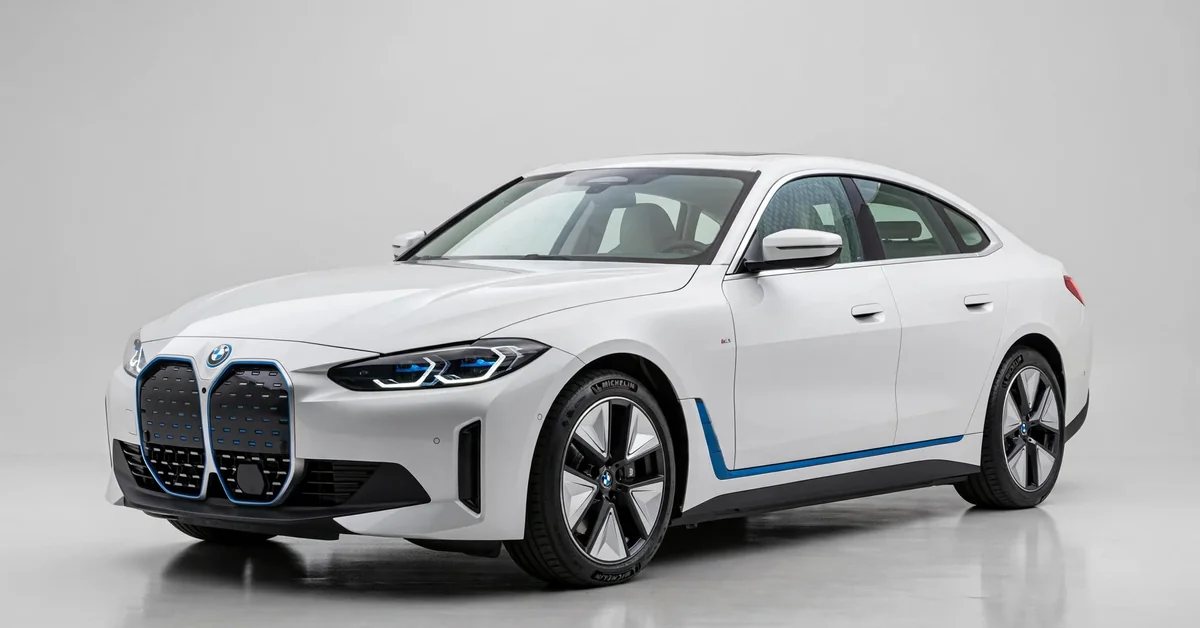
The BMW i4 battery uses an 83.9 kWh gross / 81.5 kWh usable NMC 811 lithium-ion pack — one of the most precisely engineered EV battery systems in the premium sedan segment. Built on BMW’s fifth-generation eDrive architecture, the i4 battery powers EPA ranges of 278 to 333 miles depending on trim and wheel size, accepts up to 200 kW DC fast charging for 10–80% in approximately 31 minutes, and has demonstrated strong real-world durability with owners reporting mid-90% SOH after 2–3 years and tens of thousands of miles. In 2026, the BMW i4 carries over its proven battery architecture while adding NACS charging compatibility for Tesla Supercharger access, sharing much of its underlying engineering with the larger BMW iX.
BMW’s next battery generation is already entering production in the US: the new Woodruff plant in South Carolina has begun building Gen6 batteries for the American-made iX5.
Quick answer
The BMW i4 uses a high-nickel NMC lithium-ion pack — never LFP. Most versions share one 83.9 kWh battery (81.5 kWh usable, 324 prismatic cells); the discontinued eDrive35 used a smaller 70.2 kWh pack (66 kWh usable). EPA range peaks at 333 miles (2026 eDrive40, 18-inch wheels), DC fast charging peaks at 200 kW, and BMW warrants the pack for 8 years/100,000 miles down to a 70% state-of-health floor. Independent AVILOO data shows a median 95.6% state of health at ~31,000 miles.
Key figures: Large pack 83.9 kWh gross / 81.5 usable · Small pack 70.2 / 66 · DC peak 200 kW (eDrive35: 180 kW) · 10–80% ≈ 31 min · Warranty 8 yr/100,000 mi, 70% floor
BMW i4 Battery: Full Specs by Variant
| Variant | Gross Capacity | Usable Capacity | Chemistry | EPA Range | Peak DC Rate | Drivetrain |
|---|---|---|---|---|---|---|
| eDrive35 Gran Coupe | 70.2 kWh | 66 kWh | NMC | ~276 miles | 180 kW | RWD |
| eDrive40 Gran Coupe | 83.9 kWh | 81.5 kWh | NMC 811 | ~333 miles | 200 kW | RWD |
| xDrive40 Gran Coupe | 83.9 kWh | 81.5 kWh | NMC 811 | 287 miles | 200 kW | AWD |
| M50 Gran Coupe | 83.9 kWh | 81.5 kWh | NMC 811 | ~270 miles | 200 kW | AWD |
| M60 Gran Coupe | 83.9 kWh | 81.5 kWh | NMC 811 | ~278 miles | 200 kW | AWD |
The US lineup has narrowed over time. The eDrive35 was sold for 2023–2025 and dropped for 2026, when the range is eDrive40, xDrive40 and the new M60, which replaces the M50 at the top. BMW has also confirmed 2026 is the i4’s final model year, with the Neue Klasse i3 sedan taking its place. Every US i4 uses the same NMC chemistry family — there is no LFP version of the i4.
Inside the BMW i4 Battery Pack
The i4’s 83.9 kWh pack contains 324 NMC 811 prismatic cells arranged in seven modules — four modules of 72 cells each and three modules of 12 cells each. The pack operates at a nominal 398.5V with a capacity of 210.6 Ah. NMC 811 chemistry (80% nickel, 10% manganese, 10% cobalt) delivers the high energy density that enables the i4 eDrive40’s 333-mile EPA range in the sporty Gran Coupe body — a form factor that sacrifices some aerodynamic efficiency for the 4-series fastback style.
The battery uses BMW’s fifth-generation eDrive thermal management — an active liquid cooling system with cooling plates integrated between cell modules. The heat pump is standard on all i4 models (not an optional add-on, as it was on earlier EVs), helping maintain battery and cabin temperature in cold weather without drawing heavily on the high-voltage pack. This is a meaningful real-world advantage: most i4 owners in cold climates report minimal cold-weather range loss compared to competitors without heat pumps.
BMW reserves approximately 2.4 kWh of the gross pack capacity as a buffer — about 2.9% of the pack — which is why the usable capacity measures 81.5 kWh rather than the full 83.9 kWh. This small margin keeps the true state of charge away from both fully empty and fully full, which reduces stress on the NMC cells and helps keep degradation slow. Think of the buffer as headroom that BMW keeps in reserve to protect the pack’s long-term health, not as capacity that is missing from the battery.
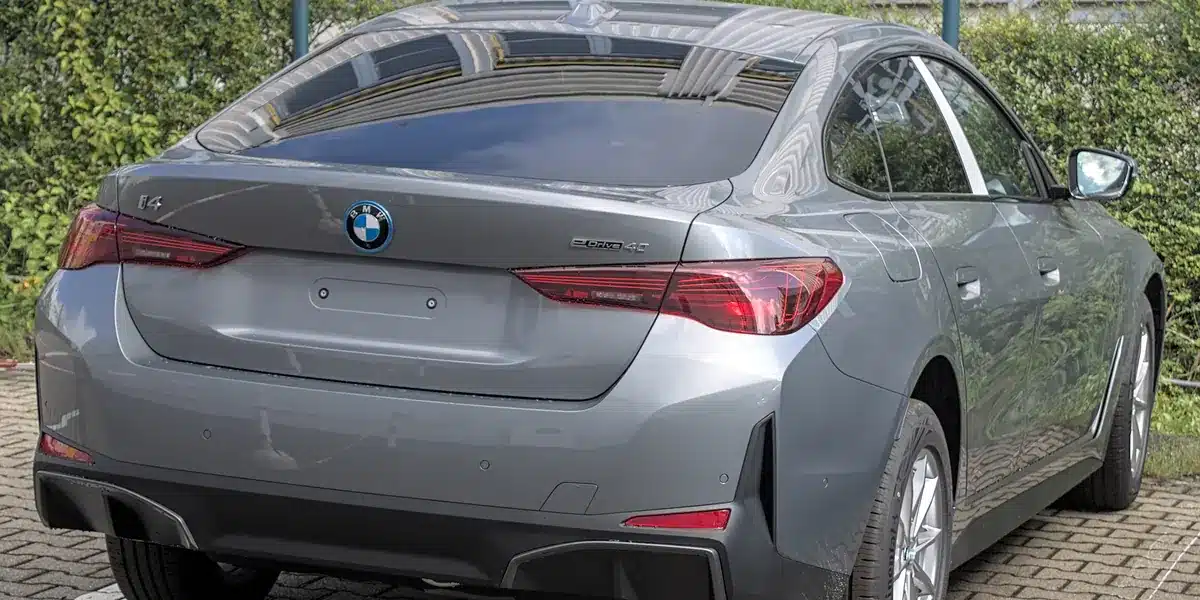
BMW buys its Gen5 cells from both Samsung SDI and CATL under long-term contracts and does not disclose which supplier’s cells are in a specific car. BMW also does not publish the exact cathode recipe; the pack is widely reported as NMC 811-class high-nickel chemistry.
BMW i4 Charging Guide
| Charging Method | Power | eDrive40 (83.9 kWh) | eDrive35 (70.2 kWh) |
|---|---|---|---|
| Level 1 (120V) | ~1.4 kW | ~65 hours full | ~54 hours full |
| Level 2 (240V, 11 kW) | 11 kW | ~8 hours 45 min full | ~7 hours full |
| DC Fast (100 kW) | 100 kW | ~48 min (10–80%) | ~40 min (10–80%) |
| DC Fast (200 kW peak) | 200 kW | ~31 min (10–80%) | ~32 min (10–80%) |
BMW quotes 88 to 108 miles of range added in 10 minutes for the large-pack cars on a powerful enough DC charger.
The i4’s 200 kW peak DC charging rate is competitive with but not quite at the level of the Hyundai Ioniq 6 (~235 kW at 800V). The i4’s 400V architecture limits its peak rate — the same physics that constrains the VW ID.4 and Ford Mustang Mach-E. For road-trip charging at Electrify America or IONNA stations (which offer 350 kW), the i4 accepts its full 200 kW peak, completing 10–80% in 31 minutes. BMW’s 2026 partnership with the IONNA charging network offers i4 owners a 20% discount on charging sessions through September 2026, with a continued 10% discount thereafter.
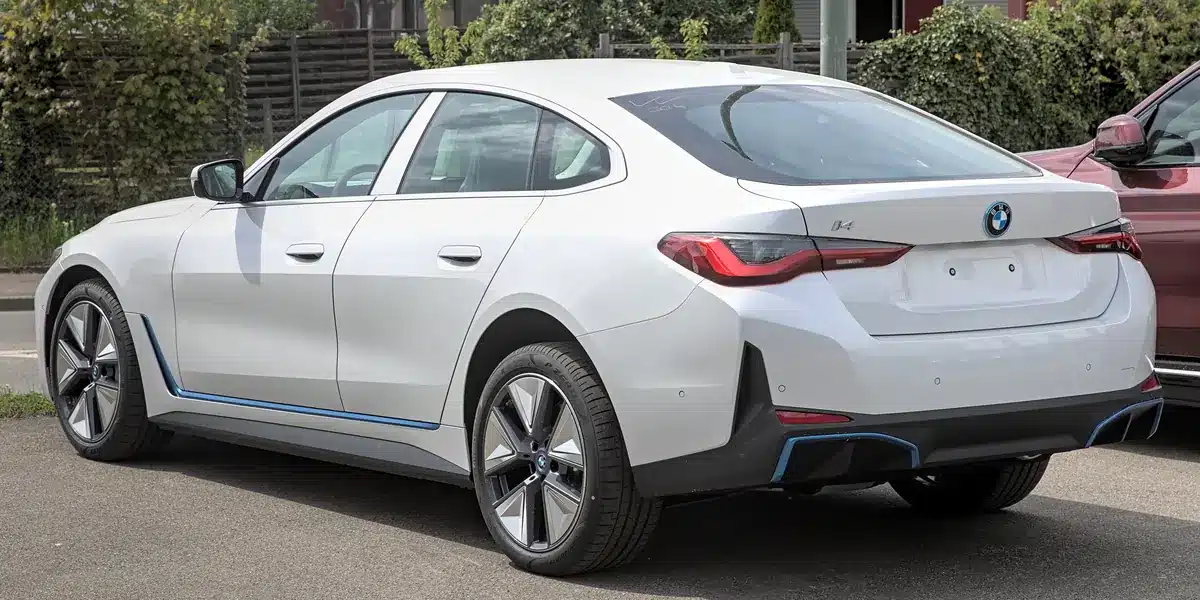
You can also precondition manually: the i4’s charging menu has a ‘Pre-condition battery’ option, so the pack can be warmed or cooled before a fast-charge stop even when the trip was not planned with the built-in navigation.
How Long Does a BMW i4 Battery Last?
For most owners, the honest answer is: longer than they will keep the car. A pack that still measures 93.6% state of health at about 93,000 miles is on track to stay above the 70% warranty floor well past 200,000 miles in typical use. BMW’s 8-year/100,000-mile warranty is a coverage floor, not the pack’s expected lifespan.
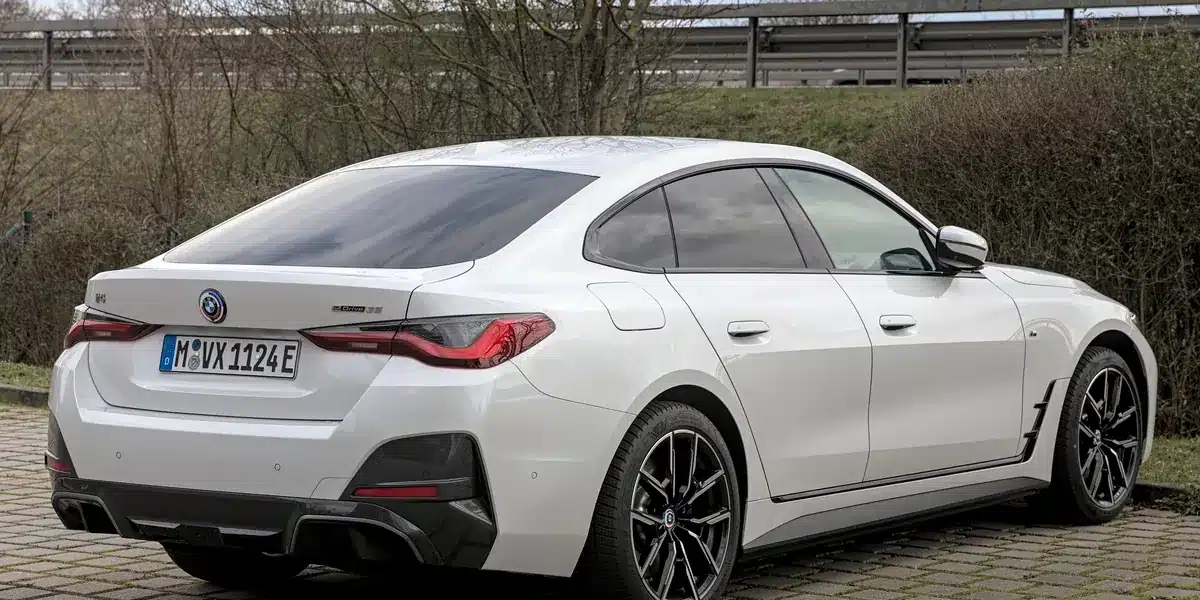
What ages an i4 battery most is not mileage alone. Calendar time, hot climates and long periods parked at 100% charge do more damage than highway miles, which is why the charging habits further down this page matter. Treated normally, the pack should outlast the car’s first two owners.
BMW i4 Battery Degradation: Real Owner Data
The best large-sample evidence comes from AVILOO, which has measured thousands of i4s on the road: median state of health is 95.6% at about 31,000 miles, 94.3% at about 62,000 miles and 93.6% at about 93,000 miles. That puts the i4 among the slowest-degrading EVs measured.
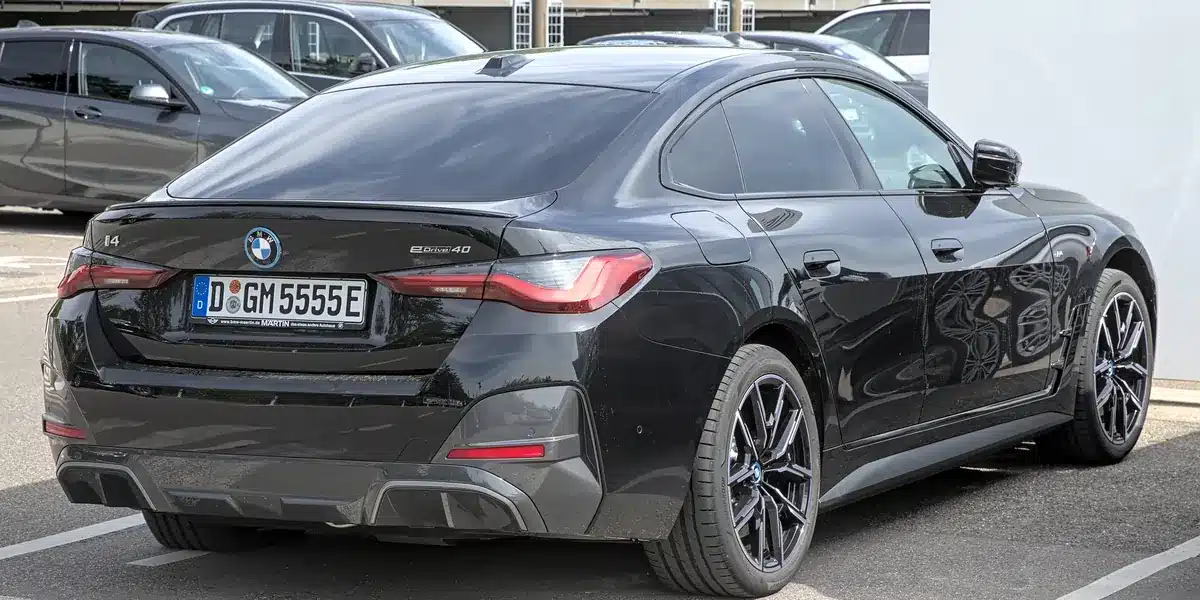
- Measured state of health: At AVILOO’s 31,000-mile median of 95.6%, the large pack still holds roughly 78 kWh of its original 81.5 kWh usable capacity. Even at about 93,000 miles, the median car keeps 93.6% — far above the 70% warranty floor.
- Checking battery health: There is no state-of-health readout in the car or in the My BMW app. Owners use a dealer ISTA battery test — BMW’s Battery Health Quick Report — or an independent AVILOO measurement to get a real number.
- Long-term projection: EVs with similar high-nickel NMC chemistry and active liquid cooling consistently cross 150,000–200,000 miles while staying above 70% capacity, and the i4’s measured medians point the same way. Calendar age, heat and long periods at high charge do more damage than miles alone.
- Fast charging impact: The i4 pack is engineered to accept up to 200 kW at low state of charge, tapering as the pack fills. Occasional DC fast charging on road trips causes minimal additional degradation versus Level 2 home charging, thanks to the pack’s thermal management.
BMW i4 Battery Warranty
BMW covers the i4’s high-voltage battery with an 8-year / 100,000-mile warranty against defects and capacity loss below 70% SOH. For 2026 model year BMWs, this is confirmed by BMW’s official warranty documentation. If the usable capacity of the 83.9 kWh pack falls below approximately 57 kWh usable (70% of original 81.5 kWh) within the coverage period, BMW will perform the appropriate repair or cell module replacement.
BMW’s remedy under the warranty is to restore the pack to at least 70% state of health, which can mean a module-level repair rather than a whole new pack. A dealer confirms the measurement with the ISTA diagnostic test before any work is approved.
Where does the 75% figure come from? BMW’s Certified Pre-Owned program for 2022–2025 certified EVs uses a 75% capacity threshold. New-car coverage is 70% — the 75% number belongs to BMW Certified cars, which is why articles so often mix the two up.
BMW i4 Battery Replacement Cost
BMW does not publish a US price for a complete i4 battery pack, and no owner should expect to pay for one inside the warranty period. Using the pack-price range of $150–$300 per kWh, a full new 83.9 kWh pack works out at roughly $12,500–$25,000 fitted — a five-figure sum, and a worst case rather than a typical bill.
The repair owners actually get is usually far cheaper. The i4 pack is built from 7 serviceable modules, so a single failed module can be replaced on its own, typically in the low thousands of dollars rather than the price of a whole pack. And if degradation takes the pack below 70% inside 8 years or 100,000 miles, the replacement is BMW’s bill, not yours.
See how pack prices compare across models in our EV battery replacement cost guide.
BMW i4 12-Volt Battery
Yes — like every EV, the i4 also has a conventional 12-volt battery, and it is an AGM (absorbed glass mat) battery, not a lithium one. It runs the locks, displays, lights and computers, and it is separate from the main drive pack.
BMW’s AGM batteries typically last about 3 to 6 years. Replacement usually happens at a dealer and runs to several hundred dollars, including labor and the battery registration the car requires. A tired 12-volt battery can cause warning messages or a no-start even when the main pack is fully charged.
BMW i4 vs Competitors: Battery Comparison
| Model | Battery | EPA Range (base) | Peak DC Rate | 10–80% Time |
|---|---|---|---|---|
| BMW i4 eDrive40 | 83.9 kWh NMC 811 | 333 miles | 200 kW | ~31 min |
| Hyundai Ioniq 6 RWD LR | 77.4 kWh NMC (800V) | 361 miles | ~235 kW | ~18 min |
| Tesla Model 3 LR RWD | ~82 kWh NCA | 363 miles | 250 kW (V4) | ~20 min |
| Polestar 2 LR RWD | 82 kWh NMC | ~320 miles | 205 kW | ~30 min |
| Audi Q4 e-tron 40 | 82 kWh NMC | 288 miles | 175 kW | ~28 min |
Full specs for the Polestar rival above are in our Polestar 2 battery guide.
Charging Habits That Protect the i4 Battery
- Set daily charge limit to 80%: The My BMW App and in-car settings allow scheduling to a specific charge percentage. Keeping NMC 811 at 80% daily rather than 100% meaningfully slows cathode degradation over years of use — the most impactful single habit for i4 battery longevity.
- Use departure timer for daily charging: The i4 supports departure timer scheduling — set a departure time and the car completes charging close to when you need it. This minimizes time spent at high SoC in warm conditions, reducing calendar aging rate.
- Navigate to DC fast chargers using the iDrive system: The i4’s battery conditioning activates automatically when you navigate to a fast charger using the built-in navigation (not Apple CarPlay or Android Auto). This ensures the pack arrives at optimal temperature for the fastest charging session.
- Avoid parking at 100% SoC in hot weather: NMC 811 experiences accelerated calendar aging when held at 100% state-of-charge in high ambient temperatures. Charge shortly before departure rather than leaving the car at full charge overnight in warm climates.
What type of battery does the BMW i4 use?
The i4 uses a high-nickel NMC lithium-ion battery with BMW’s Gen5 prismatic cells — 324 cells in the large pack. It is never an LFP battery. BMW buys the cells from Samsung SDI and CATL and does not publish the exact cathode recipe, though the pack is widely reported as NMC 811-class chemistry.
How big is the BMW i4 battery?
Most versions (eDrive40, xDrive40, M50 and M60) share an 83.9 kWh pack with 81.5 kWh usable. The discontinued eDrive35 used a smaller 70.2 kWh pack with 66 kWh usable. EPA range peaks at 333 miles in the eDrive40 on 18-inch wheels.
How long does a BMW i4 battery last?
Independent AVILOO measurements show a median state of health of 95.6% at about 31,000 miles and 93.6% at about 93,000 miles. At that rate the pack stays above the 70% warranty floor well past 200,000 miles for typical owners. Heat, calendar age and long periods at 100% charge age it faster than miles do.
What is the BMW i4 battery warranty?
BMW covers the pack for 8 years or 100,000 miles, with a 70% state-of-health floor: if capacity falls below 70%, BMW restores it to at least 70%, which can mean a module repair. The 75% figure sometimes quoted belongs to BMW’s Certified Pre-Owned program, not new-car coverage.
How do I check my BMW i4’s battery health?
There is no state-of-health readout in the car or the My BMW app. A dealer can run BMW’s ISTA battery test (the Battery Health Quick Report), or an independent AVILOO measurement gives the same answer outside the dealer network.
What kind of 12-volt battery does the BMW i4 have?
A conventional AGM battery — not lithium. It runs the locks, displays and computers, typically lasts about 3 to 6 years, and a dealer replacement runs to several hundred dollars including labor and registration.
Conclusion
The BMW i4 battery delivers a premium NMC 811 experience in a performance Gran Coupe package — 81.5 kWh usable capacity, 200 kW DC fast charging, standard heat pump, and real-world degradation data showing mid-90% SOH after 2–3 years of typical use. The i4 eDrive40’s 333-mile EPA range puts it among the longest-range premium sedans in the market. Buyers wanting BMW’s electric flagship sedan should also see our BMW i5 battery guide. The 8-year / 100,000-mile battery warranty with 70% capacity protection provides solid long-term ownership security.
