
Chevy Silverado EV Battery: Sizes, Range, Charging and Warranty

Sources: Chevrolet’s 2026 factory specifications, GM’s 2026–2027 US EV warranty booklets, fueleconomy.gov, EV Database, and instrumented tests by Edmunds, Car and Driver, InsideEVs and MotorTrend.
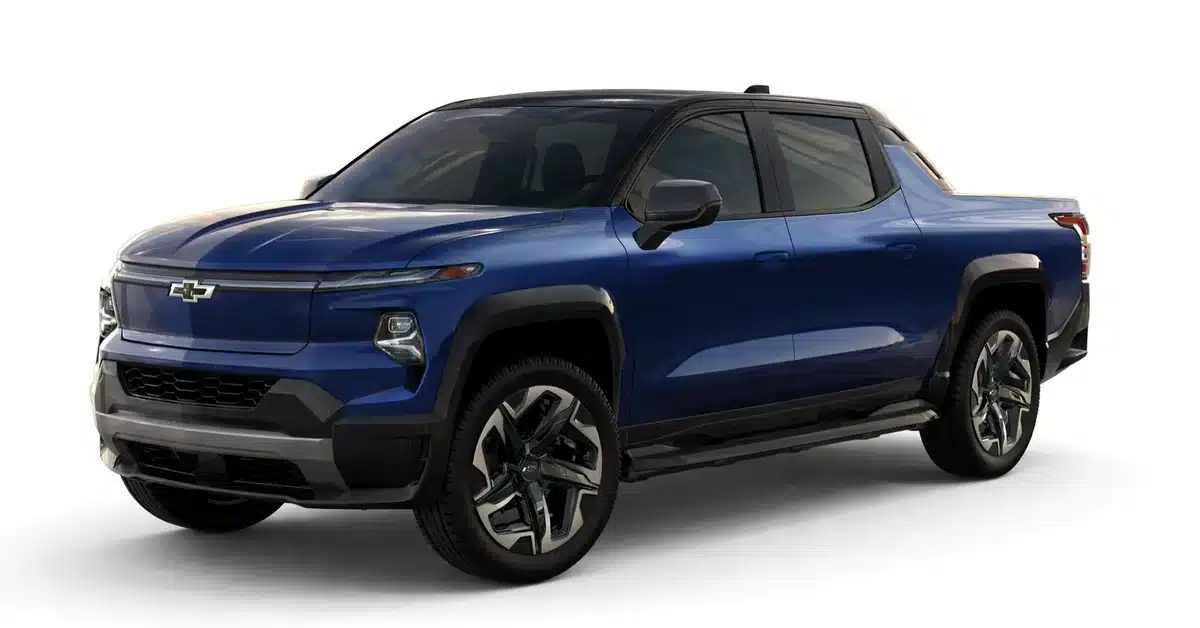
The Silverado EV is the battery-size truck. Its largest battery carries about 205 kWh of usable energy, roughly double what a standard electric car holds — and that explains almost everything about it: the range, the weight, the charging behaviour, the price. Chevrolet sells three sizes of the same Ultium battery — which one your truck has matters more than the trim badge.
Two questions bring most readers here: how big is the battery in each version, and what exactly does GM’s warranty promise? Both get straight answers below — the warranty section goes to GM’s own current booklet, because the figure most websites repeat for this truck is out of date.
Silverado EV Battery Sizes: The Three Ultium Packs
Three packs, one design: Chevrolet builds the Silverado EV battery in three sizes — about 119, 170 and 205 kWh usable — by stacking 14, 20 or 24 modules, and every trim is a combination of one of those packs with one of three trim levels.
A bigger pack is literally more of the same modules, which is why the range steps are so large. WT is the fleet trim, LT the mainstream truck, Trail Boss the off-road flagship.
Which trim gets which pack?
| Trim | Pack | Usable capacity | Range | Peak DC charging |
|---|---|---|---|---|
| Work Truck | Standard Range (14 modules) | ~119 kWh | 286 miles (EPA) | 220 kW |
| Work Truck | Extended Range (20 modules) | ~170 kWh | 424 miles (EPA) | 300 kW |
| Work Truck | Max Range (24 modules) | 205 kWh | 493 miles (EPA) | 350 kW |
| LT | Standard Range (14 modules) | ~119 kWh | 283 miles (EPA) | 220 kW |
| LT | Extended Range (20 modules) | ~170 kWh | 410 miles (EPA) | 300 kW |
| LT | Max Range (24 modules) | 205 kWh | 478 miles (GM-estimated) | 350 kW |
| Trail Boss | Extended Range (20 modules) | ~170 kWh | 410 miles (EPA) | 300 kW |
| Trail Boss | Max Range (24 modules) | 205 kWh | 478 miles (GM-estimated) | 350 kW |
One honest note: GM markets these packs by range and module count, not kilowatt-hours — 205 kWh is GM’s own figure; ~119 and ~170 kWh are the consistent database consensus.
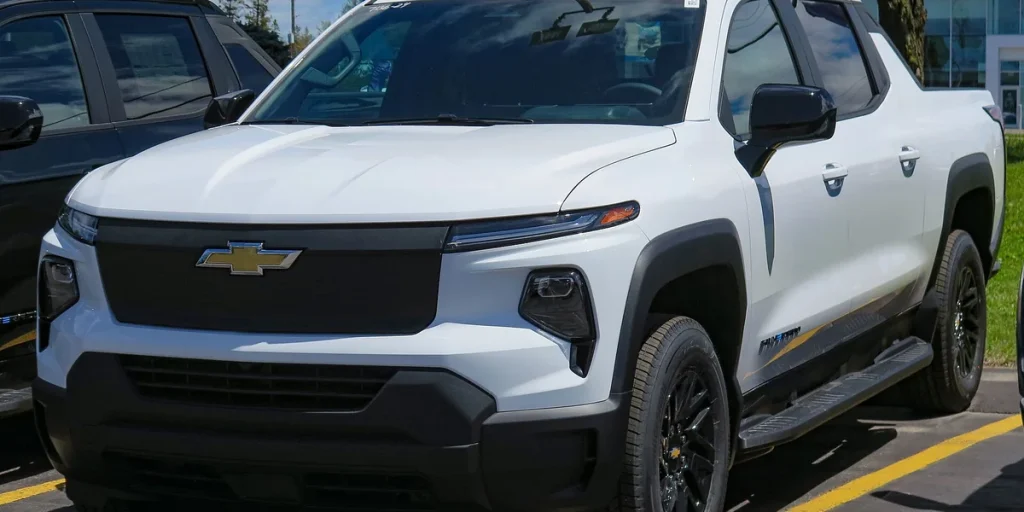
Standard vs Extended vs Max Range: which one to buy?
The Extended Range is the balanced buy for most people; Max Range earns its premium if you tow far or roam far; Standard Range suits trucks that come home to a charger every night.
The Standard-to-Extended step buys about 51 kWh and roughly 140 more miles; Extended-to-Max buys about 35 kWh, 65–85 more miles and the 350 kW charging peak — most valuable under a trailer, where a bigger pack loses the same penalty from a larger starting number. The trade-off is weight: the Max pack eats into payload, so if towing is occasional, the Extended does both jobs well enough.
Where the 478-mile figure comes from
The famous 478-mile number is GM’s estimate, not an EPA rating — the lineup’s highest EPA-certified range is actually higher: 493 miles, on the Max Range Work Truck.
The LT and Trail Boss Max Range trucks are heavy enough to be exempt from EPA testing, so GM publishes its own estimate of 478 miles for both — conservative next to the near-identical Work Truck Max, which the EPA certified at 493 miles. Older figures in reviews (440 for the 2024 RST, 460 for 2025) belong to a trim no longer in the lineup.
Real-world range: what testers actually recorded
In independent testing the big-pack trucks broadly deliver on their ratings — and the Work Truck Max beat its own EPA figure outright.
Edmunds’ standardised test took a Max Range Work Truck 539 miles on a charge, past its 493-mile EPA rating. Car and Driver’s 75-mph highway test returned 401 miles from an RST Max Range (rated 460); MotorTrend recorded 395 from a Trail Boss Max. Roughly 400 miles at 75 mph is the honest highway expectation.
Inside the Pack: NCMA Chemistry and the Split-Pack Design
The Silverado EV’s battery uses NCMA chemistry — nickel-rich pouch cells with a small amount of aluminium added — built in the US by Ultium Cells, the GM–LG Energy Solution joint venture.
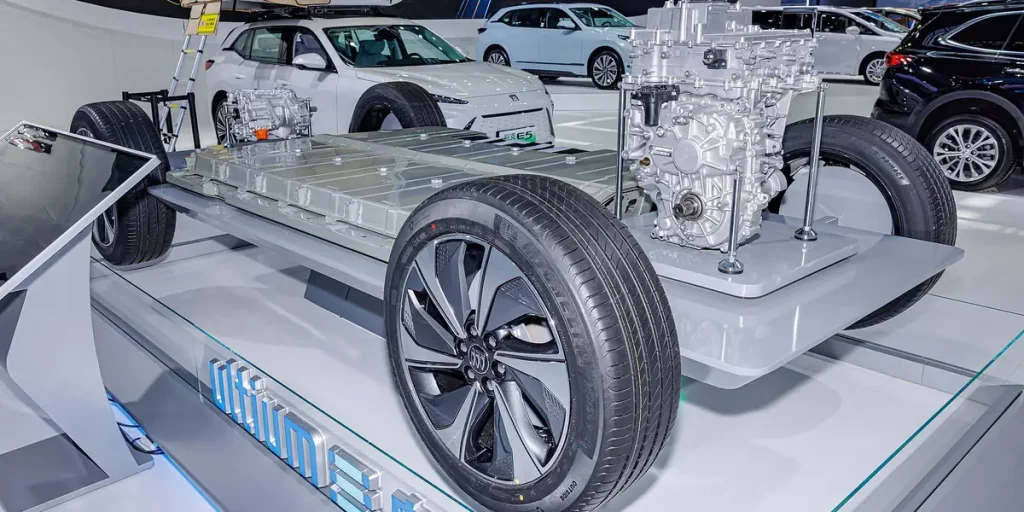
NCMA pouch cells — and who builds them
The cells are large-format pouches; the chemistry is a close relative of the NMC family, tuned one specific way — adding aluminium let GM raise the nickel content while cutting cobalt by roughly 70% versus the Bolt EV’s cells. Nickel brings the density that gets 205 kWh into a pickup floor at all, and the cells are US-built, at Ultium Cells plants in Ohio and Tennessee.
How the split pack works: ~400V to drive, ~800V to charge
The clever part: the 24-module Max Range battery is two stacked 12-module layers that run in parallel at about 400 volts for driving, then re-switch into series — about 800 volts — to fast-charge.
So the truck posts an 800V-class charging figure without an 800V drive system — the motors live in the proven 400V world; the battery becomes an 800V device only at the charger. The smaller packs scale the same idea, hence the 220 / 300 / 350 kW steps. (GM publishes usable capacity only; the Max pack’s nominal total calculates to about 213.7 kWh, so roughly 4% sits in reserve as a buffer.)
Silverado EV Battery Warranty: The Exact Terms
GM covers the Silverado EV’s propulsion battery and its internal components for 8 years or 100,000 miles, and the capacity guarantee in GM’s current US warranty booklet is 75% — if the pack falls below 75% of its original capacity inside the term, GM repairs or replaces it.
This is where most of the internet is wrong about this truck. Cross-brand tables and older articles put Chevrolet’s floor at 70%; some low-quality sites say 60%. GM’s own 2026 and 2027 US booklets — the documents that actually govern your truck — say 75%, a stronger promise than the one usually quoted.
The capacity promise in GM’s own booklet
The booklet’s test is simple: a certified dealer measures the battery, and if capacity has fallen below 75% of original inside the term, the battery is repaired or replaced under warranty. Two details matter. The remedy is “a battery appropriate for the age and mileage of the vehicle” — GM must restore the truck to the standard, but does not owe you a brand-new pack for a seven-year-old truck. And the floor sits a long way below normal wear: a pack must degrade unusually badly to claim, which is precisely what the promise is for.
For the wider picture of how every brand’s terms compare, see our EV battery warranty guide.
What’s covered, what isn’t, and how a claim is measured
Covered: the pack and its internal components — cells, modules and the hardware inside the case — against defects and against capacity loss below the 75% floor.
The measurement is not your dashboard estimate: a claim starts with a certified dealer’s test. Loss above the floor counts as normal wear; accident damage and misuse sit outside the coverage. (The rest of the truck: 3 years/36,000 miles bumper-to-bumper, 6 years/100,000 miles rust-through.)
Does the battery warranty transfer to a second owner?
Yes — GM’s battery coverage runs with the vehicle, from its original in-service date, to whoever owns it during the term.
That matters here more than most, because Work Trucks rack up miles fast — a two-year-old WT can already be deep into its 100,000-mile allowance. Buy used, and the checks that count are the in-service date and the odometer: what is left of the 8 years and 100,000 miles is what you get.
California rules: two standards, often confused
California has two separate battery rules, and they are routinely merged into one wrong claim — neither of them changes the 75% floor in GM’s own booklet, which already exceeds California’s warranty minimum.
- The ACC II warranty standard: for model-year 2026–2030 EVs certified for sale in California, the state requires manufacturers to warrant the battery against state of health falling below 70% for 8 years/100,000 miles (rising to a 75% requirement from 2031). GM’s 75% booklet floor already beats that minimum today.
- The ACC II durability standard: a separate design rule — EVs must be engineered to keep 70% of certification range over a 10-year/150,000-mile life, measured across a test group. It is not a warranty on your individual truck, despite often being quoted as “California guarantees your battery for 10 years/150,000 miles.” It does not.
Enforcement of the ACC II programme is itself disputed — Congress disapproved its federal waiver in June 2025 and the case is pending — so treat the California rules as background; GM’s booklet is the document you can actually rely on.
Charging: DC Speeds by Pack and Home Charging
Fast-charging speed depends on which pack you bought: 220 kW for the Standard, 300 kW for the Extended and 350 kW for the Max Range — and in instrumented tests the big trucks hold high power unusually well.

DC fast charging: 220 / 300 / 350 kW by pack, and measured 10–80% times
Peak numbers are ceilings, not cruise speeds — what matters is the session average, and that is where this truck is genuinely strong. Car and Driver measured a 198 kW average across a full 10–80% session, the fastest they had recorded at the time. InsideEVs’ test of an Extended Range truck also completed 10–80% in 40 minutes (Chevrolet quotes about the same), and MotorTrend added 133 miles in 15 minutes and 220 in 30 in a Trail Boss Max. GM’s claim — roughly 100 miles in about 10 minutes on the Max Range — is consistent with those tests.
Expect around 40 minutes for 10–80% on the larger packs — longer on the Standard pack, and longer everywhere on a cold battery. Trucks through 2026 use CCS1 with a GM Supercharger adapter; native NACS arrives for 2027.
Home charging: 11.5 kW standard, 19.2 kW optional — and what a full charge takes
Every Silverado EV charges at up to 11.5 kW at home as standard; the headline 19.2 kW rate needs the optional K2O high-voltage charging module — it is not fitted to every truck, whatever older spec tables claim.
Even at 19.2 kW, a Max Range pack needs roughly 10–12 hours from empty — at 11.5 kW, longer. In practice it rarely matters: a Max truck leaving at 80% after a normal night carries 300-plus miles. Wire for 19.2 kW only if your daily miles outrun what 11.5 kW restores overnight.
Towing Range: What a Trailer Really Does
Towing is where the big pack stops being a luxury and becomes the point — but be clear-eyed: a heavy trailer cuts range roughly in half, and the honest numbers come from tests, not brochures.
The test numbers
MotorTrend’s rule: towing cuts range roughly in half, so a Max Range truck towing heavy plans around 200 miles between charges. Tests land either side of that line — a 4WT towing 11,000 lb covered about 177 miles at roughly 0.7 miles per kWh, and a week-long test with a 5,000 lb trailer at 68–70 mph returned 1.0–1.2 miles per kWh, good for 150–170-mile legs.
Aerodynamics and speed cost more than weight does — a tall trailer at 70 mph hurts more than a heavier flat load at 55. Treat any single “towing range” figure as an approximation your trailer gets to vote on.
Ratings, for reference: properly equipped, the LT tows up to 12,500 lb, the WT and Trail Boss up to 10,000 lb — the figure on your truck’s door-jamb label is the one that governs.
Bidirectional Power: Truck Outlets Are Not V2H
The truck powers tools from its own outlets at 7.2 kW as standard — real vehicle-to-home backup is a different, additional system (GM Energy’s PowerShift), and the two are constantly confused.
Every Silverado EV provides up to 7.2 kW of split-phase power through its cab and bed outlets (four 120V sockets plus a 240V outlet); adding the GM Power Bar accessory and the optional K2O module raises offboard power to 10.2 kW — both conditions apply. GM’s booklet explicitly counts this use as normal covered use, so running tools off the truck does not endanger your warranty.
Proper V2H — the truck automatically powering your house in a blackout — needs the bidirectional PowerShift Charger ($1,999, also charges at up to 19.2 kW) plus the V2H Enablement Kit (around $5,600 at GM list; installed projects typically $9,000–$16,000), and discharges to the home at up to 9.6 kW. GM’s “up to 5 days” of home backup is a footnoted best case, but the maths is real — 205 kWh is an enormous home battery. If backup power is a buying reason, budget for the whole system, not just the truck.
Degradation: How the Pack Holds Up With Miles
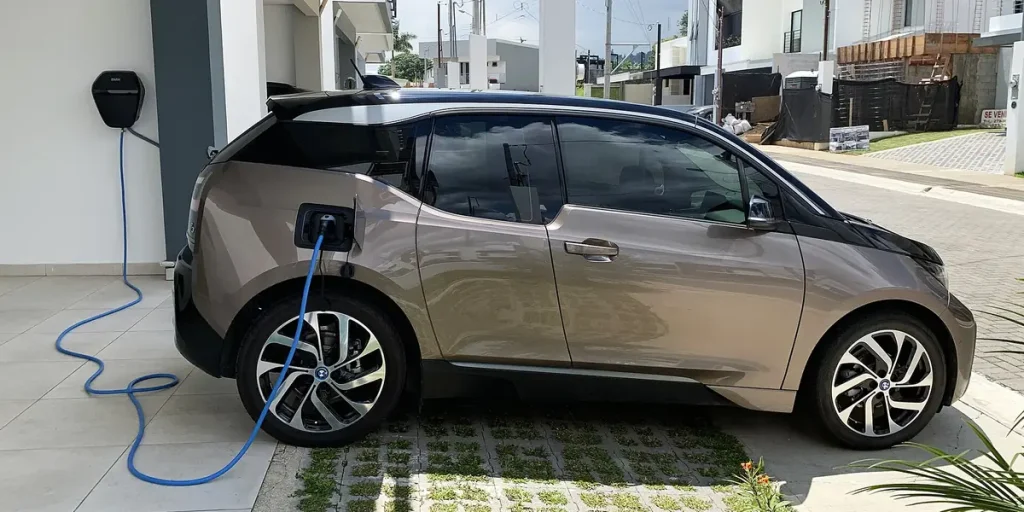
The honest answer first: no Silverado EV-specific degradation dataset exists yet — no fleet study, no Recurrent report, no published state-of-health survey for this truck. Anyone quoting you an exact degradation rate for this pack is inventing it.
The 90,000-mile Work Truck: what its owner reports
The best-documented case is a 2024 4WT that reached about 90,000 miles in roughly two years — some 45,000 miles a year with heavy trailer duty, worked hard enough to replace a diesel. Its owner reports no felt loss of range. That is encouraging and, strictly, an impression: he has never run a measured capacity test, so no state-of-health figure exists even for this truck. Ownership has not been fault-free — two warning-code episodes in September 2026, dealer found nothing — but the battery itself has simply done the work.
The clock matters for trucks like his: at 45,000 miles a year, the 100,000-mile limit arrives long before the 8 years. GM has also acted on pack defects at scale — a 2026 safety recall replaces the full pack on some 2026 trucks, and a customer programme gives some owners of remanufactured packs a second replacement free through November 2028, regardless of mileage.
What the data does not show yet
For context only — cross-industry data, not Silverado data: Geotab’s 2026 analysis of 22,700+ EVs found average degradation of about 2.3% of capacity per year, and Recurrent shows the average EV keeping about 97% of range at 3 years, 95% at 5. Until Silverado-specific data exists, the enforceable fact is the booklet’s 75% floor. For how degradation works, see our guide to EV battery degradation.
Silverado EV vs Hummer EV: Same Cells, More Miles
The Silverado EV and the GMC Hummer EV are built on the same Ultium platform with the same family of NCMA pouch cells — the Silverado simply spends its energy on efficiency instead of theatre, and goes much further per charge.
The Hummer’s biggest pack is a close relative of the Max Range battery — but fueleconomy.gov rates the Max Range Work Truck at 49 kWh per 100 miles, economy no Hummer EV variant approaches. If the Hummer tempts you, read our Hummer EV battery guide first.
Battery Replacement Cost: What Is Actually Known
GM publishes no retail price for a Silverado EV battery replacement, and no named dealer quote is on record — there is no authoritative figure to print.
What circulates instead are third-party estimates — roughly $15,000–$20,000 for an Extended pack from one specialist site, $15,000–$25,000 in broader modelling. Treat them all as modelled estimates, not prices anyone has been charged. Our own EV battery replacement cost guide puts the numbers in wider context.
Inside 8 years/100,000 miles, defects and sub-75% capacity are GM’s problem, not yours — and the pack is modular by design, with GM’s own remedy using new or refurbished components, so a failure rarely means a whole-pack invoice. Get a written dealer quote before budgeting around any estimate, including ours.
Frequently Asked Questions
What is the Silverado EV battery warranty — and is the capacity floor 70% or 75%?
8 years or 100,000 miles for the pack and its internal components, transferable to later owners. The capacity floor is 75%: GM’s current US booklets guarantee repair or replacement if a certified dealer measures capacity below 75% of original during the term. The 70% figure elsewhere comes from older cross-brand tables and California’s separate state minimum.
What battery sizes does the Silverado EV come in, and how far does each go?
Standard Range (~119 kWh usable; 283–286 miles EPA), Extended Range (~170 kWh; 410–424 miles) and Max Range (205 kWh; 493 miles EPA in the Work Truck, 478 GM-estimated in the LT and Trail Boss). The Work Truck and LT offer all three packs; the Trail Boss comes in Extended and Max only.
How long does a Silverado EV take to charge — and how far can it tow?
About 40 minutes from 10–80% for the larger packs in instrumented testing; a full home charge of the Max pack takes roughly 10–12 hours even on the optional 19.2 kW module. Towing: plan on roughly half the unladen range — about 177 miles measured at 11,000 lb, 150–170-mile legs with a 5,000 lb trailer.
Does powering my home from the truck void the battery warranty?
No. GM’s booklet explicitly covers normal use of the battery for vehicle-to-home backup, grid export and mobile power — named, covered use, not an exclusion.
Conclusion
The Silverado EV’s battery story is size with receipts: three pack options, the longest certified range of any electric truck, charging that holds up in tests — and a warranty whose real terms beat the internet’s version.
Take one number away: 75%, not 70% — the floor GM actually guarantees, for 8 years or 100,000 miles, transferable to the next owner. And one buying rule: match the pack to the work. The battery is the truck — choose it first, and the trim can follow.
