
Hyundai Ioniq 9 Battery: Complete Guide

Figures on this page come from Hyundai USA, fueleconomy.gov EPA ratings, NHTSA recall records and Edmunds’ instrumented range and charging tests. Where Hyundai does not publish a figure, this guide says so instead of estimating silently.
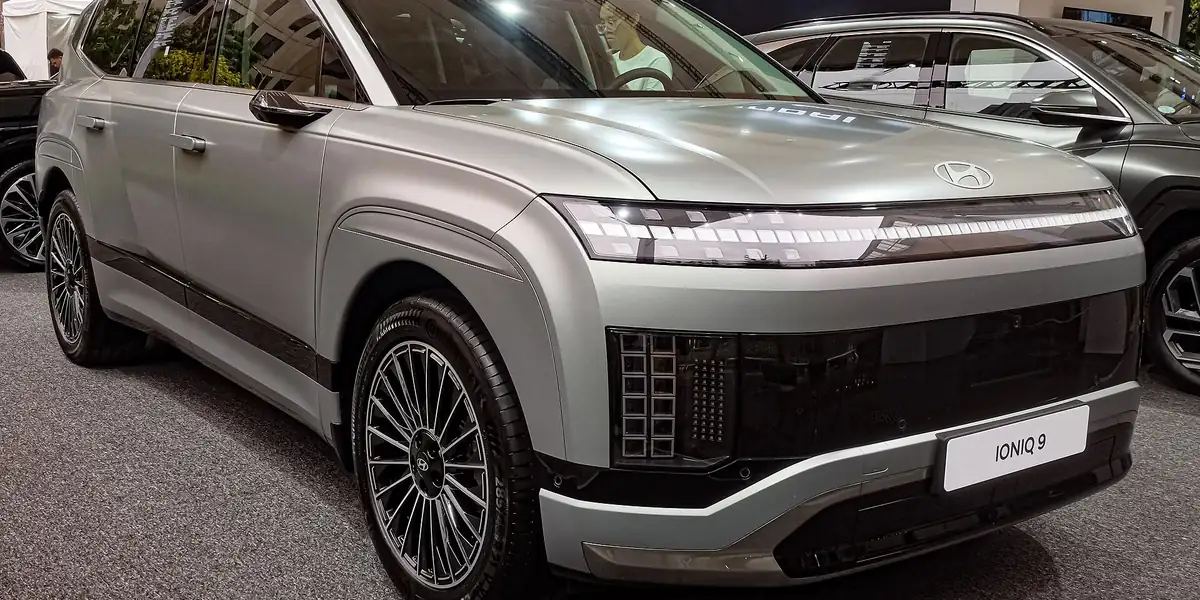
The Hyundai Ioniq 9 is Hyundai’s three-row flagship electric SUV, built in Georgia and sold in the US as a 2026 model. Every trim uses the same 110.3 kWh battery, so the choice between trims is about motors, equipment and range, not about which pack you get. That single-pack strategy makes this an easy car to research: one battery, one charging curve, one warranty.
What does need care is the charging story. The Ioniq 9 is an 800V car with a native Tesla-style NACS port, and it charges very differently on a high-voltage CCS charger than it does on a Tesla Supercharger. This guide covers the pack itself, both charging experiences, tested real-world range, the warranty, all three recalls, and what a replacement battery would cost.
Quick answer: Every Hyundai Ioniq 9 uses the same 110.3 kWh nickel-manganese-cobalt (NMC) battery on an 800V platform, with EPA range from 311 to 335 miles depending on trim. On a high-power CCS charger it charges from 10% to 80% in about 24 minutes, but on a Tesla Supercharger the same charge takes about 40 minutes, because the car’s 800V pack cannot use the charger’s full voltage. The battery warranty is 10 years or 100,000 miles with a 70% capacity floor, and it transfers to the next owner at the full term.
Key figures: 110.3 kWh (Hyundai publishes no usable figure) · EPA 311–335 miles · DC peak 237 kW on CCS · 10–80% in ~24 min (CCS) / ~40 min (Supercharger) · Warranty 10 yr / 100,000 mi / 70%
Hyundai Ioniq 9 Battery Specs by Trim
Every Ioniq 9 trim shares one 110.3 kWh pack; only the motors and EPA range change.
Which motors and range does each trim get?
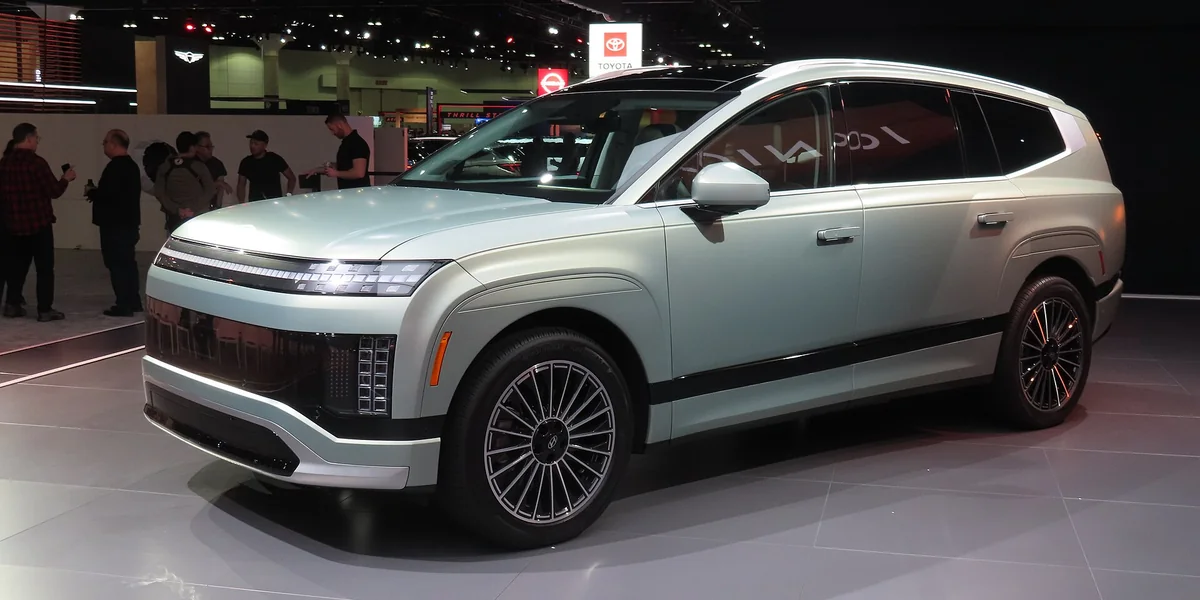
All Ioniq 9s are built at Hyundai’s Metaplant in Georgia on the E-GMP platform. The rear-wheel-drive S uses a single 215 hp motor, the SE and SEL add a front motor for 303 hp, and the Performance AWD trims reach 422 hp. Range tops out at 335 miles on the S and steps down as power and equipment rise.
Does Hyundai publish a usable capacity?
Hyundai does not publish a usable-capacity figure for this pack. Third-party databases estimate about 106 kWh usable, and this guide labels that number an estimate wherever it appears, because Hyundai has never confirmed it.
| Trim group | Battery | Drive | Power | EPA range | MPGe combined | MSRP |
|---|---|---|---|---|---|---|
| S | 110.3 kWh NMC | RWD | 215 hp | 335 miles | 92 | $58,955 |
| SE / SEL | 110.3 kWh NMC | AWD | 303 hp | 320 miles | 88 | $62,765–$66,320 |
| Performance AWD (Limited, Calligraphy, Calligraphy Design) | 110.3 kWh NMC | AWD | 422 hp | 311 miles | 85 | $71,250–$76,490 |
MSRP figures exclude the $1,600 destination charge. EPA figures are from fueleconomy.gov for the 2026 model year.
Inside the Ioniq 9 Battery
The pack uses high-nickel NCM pouch cells from SK On, Hyundai’s long-term E-GMP cell partner.
Which cells does the pack use?
Reporting from Korea’s ETNews, carried by the Korean Car Blog, identifies the cells as SK On’s NCM9 series, a chemistry with more than 90% nickel in the cathode. SK On also supplies the cells for the Ioniq 5 and Ioniq 6, and Hyundai and SK On are building a joint cell plant in Georgia whose packs will be assembled by Mobis, so the Ioniq 9’s supply chain is deliberately American-weighted.
What does Hyundai not publish about the pack?
Hyundai does not publish a cell count, a module count or a nominal voltage for this pack, and this guide does not fill those gaps with figures from other models. What Hyundai does publish is the architecture: an 800V system with active liquid thermal management and battery preconditioning, which is what allows the charging performance in the next section. Older drafts of this page carried a 697-volt figure; that number belongs to a different Hyundai model and has been removed.
Charging the Ioniq 9: CCS vs Supercharger
The same 10–80% charge takes about 24 minutes on a high-power CCS charger and about 40 minutes on a Tesla Supercharger.
Why is a Supercharger slower than CCS for this car?
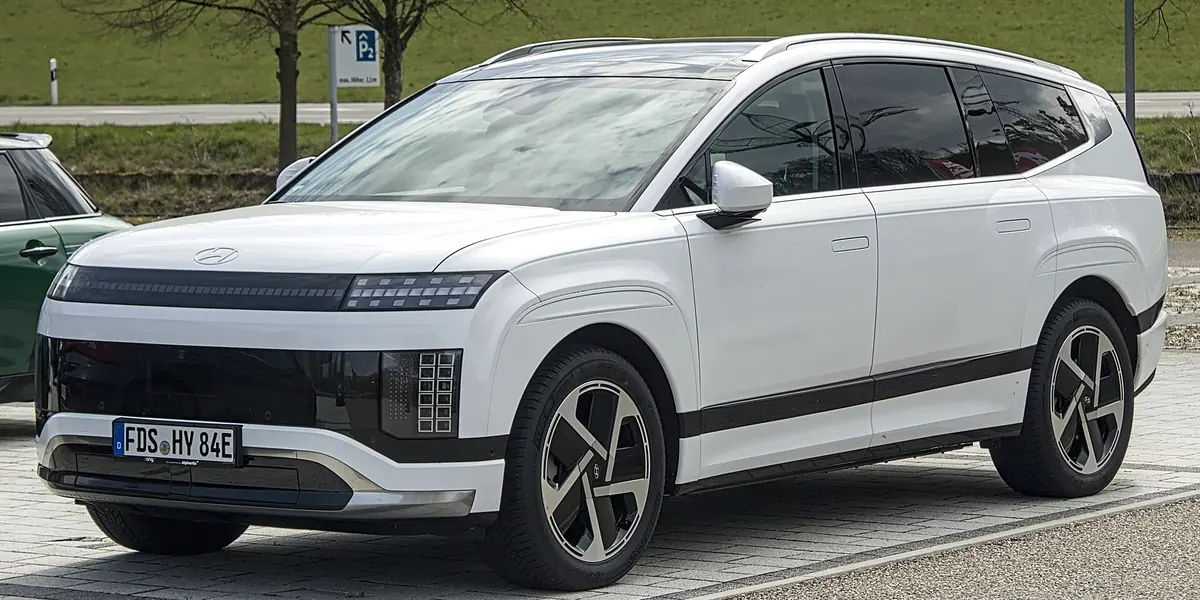
The Ioniq 9 has a native NACS port, so it plugs straight into a Tesla Supercharger with no adapter. The catch is voltage: the pack runs at roughly 800 volts and a V3 Supercharger delivers roughly 400, so the car’s on-board booster caps charging at about 126 kW and the 10–80% charge takes around 40 minutes. On an 800V CCS charger, reached with the adapter Hyundai supplies, the car peaks at 237 kW and completes the same charge in about 24 minutes, which is Hyundai’s own published figure.
What about charging at home?
At home, a full 10–100% charge on a 240V supply takes about 9 hours 40 minutes, so an overnight charge always covers a full battery. Battery preconditioning runs automatically when a fast charger is set as the navigation destination, and it can also be switched on manually in the EV settings or through the Bluelink app. A heat pump is standard across the range, which protects both range and charging speed in cold weather.
Real-World Range
In Edmunds’ instrumented test the Ioniq 9 beat its EPA rating by a wide margin, reaching 366 miles in SEL trim.
How far did Edmunds get?
Edmunds ran the all-wheel-drive SEL, rated at 320 miles by the EPA, to 366 miles on its standardised range route, about 14% better than the rating. The Calligraphy, rated at 311 miles, reached 349 miles in the same test. Results this far above the EPA figure are unusual and reflect the test’s mixed-speed route, but they do show the 110.3 kWh pack is not working hard in normal driving.
What should a road trip plan assume?
Highway driving at a steady 75 mph will return less than these figures, and cold weather will take its own share, as it does on every EV. Owners who need a planning number for a road trip should work from the EPA rating and treat anything above it as a bonus. The honest summary is that range is not this car’s weak point; charging-network choice, covered above, matters more to journey times.
V2L and Bidirectional Charging
Vehicle-to-load power is standard only on the Limited trims and up; it is not available on the S, SE or SEL.
Which trims have V2L, and how powerful is it?
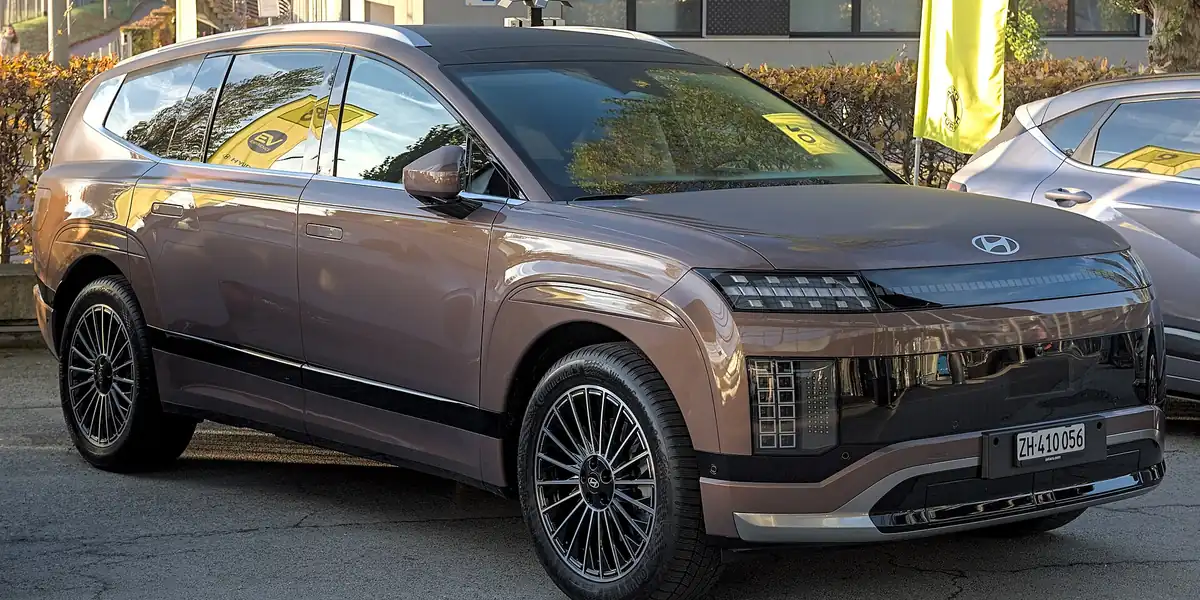
Hyundai USA’s own specification comparison is clear on this point: the cargo-area V2L outlet is standard on the Limited, Calligraphy and Calligraphy Design, and not available on the S, SE or SEL. US output is 120 volts at about 1.9 kW, enough for tools, camping equipment, a fridge or home essentials during an outage. Figures of 3.6 kW quoted in some coverage describe 230-volt markets, not US cars.
Is vehicle-to-home available?
Vehicle-to-home is a different story. The Ioniq 9’s hardware is ready for bidirectional home power, but Hyundai has not activated V2H in North America, and as of late 2026 there is no announced activation date. Hyundai has said it intends to expand the service in the US with this car first, likely with a compatible home unit, but buyers should not purchase an Ioniq 9 today counting on whole-home backup power.
How Long Does the Ioniq 9 Battery Last?
The car is too new for real degradation data, so the honest answer rests on the warranty floor and Hyundai’s own care guidance.
Is there real degradation data yet?
The Ioniq 9 only reached US buyers in 2026, which means no fleet study or owner dataset can yet say how this pack ages. Early owner reports of a capacity reading in the mid-90s after a few thousand miles describe the car’s own estimate settling in, not measured degradation, and a single dashboard figure on a new car is not a health verdict. What protects the owner is contractual: Hyundai covers the pack for 10 years or 100,000 miles and treats a fall below 70% of original capacity as a warranty defect.
What does Hyundai advise for battery care?
Hyundai’s manual guidance is practical rather than strict. It advises preferring AC charging and minimising DC fast charging, charging to 100% at least once a month if the battery has been run below 20%, charging every three months in storage, and keeping the charge above 10%. Its Battery Care display suggests holding between 50% and 80% when the car will be parked for a long period, and many owners adopt 80% as a daily ceiling on that basis; Hyundai does not print a single mandatory daily percentage for this car.
Readers comparing chemistries can see how this pack’s chemistry ages in our guide to how long EV batteries last.
Ioniq 9 Battery Replacement Cost
Hyundai has published no price for a complete Ioniq 9 pack, and no parts catalogue lists one, so any exact figure quoted elsewhere is invented.
Why is there no pack price?
For this guide we searched for the pack under the part numbers used in Hyundai’s own recall documents and found no catalogue price anywhere. That is normal for a current-model flagship pack: replacements today are handled case by case, almost always under warranty, and Hyundai does not sell the pack as a retail part with a public price. Round figures of $15,000–$20,000 that circulate for large EV packs generally are not Ioniq 9 prices and are not used here.
What does that mean for an owner?
The practical position for an owner is simple. A capacity failure inside 10 years or 100,000 miles is Hyundai’s bill, not yours, and the warranty transfers to the next owner at the full term, which also protects resale value. An out-of-warranty pack failure on a car this new would be negotiated with Hyundai directly, and goodwill support on a flagship model is common in the industry, though it is never guaranteed.
For the models where prices are published, our EV battery replacement cost guide tracks them brand by brand.
Ioniq 9 Battery Warranty
The battery is covered for 10 years or 100,000 miles, with repairs guaranteed to restore at least 70% of original capacity.
What does the battery warranty cover?
Hyundai’s America’s Best Warranty documentation and the 2026 owner’s handbook agree: if the pack’s capacity falls below 70% inside the term, Hyundai repairs or replaces it and the repair must bring capacity back to at least 70%. Unlike Hyundai’s powertrain warranty, which shrinks for second owners, the battery warranty transfers at the full 10-year, 100,000-mile term. That transferability is a genuine used-market advantage over most rivals.
What else is covered?
The rest of the cover is conventional: anti-perforation cover runs 7 years with unlimited miles, and the 12-volt battery is covered for 3 years or 36,000 miles. Owners should keep charge and service records, because a capacity claim involves a dealer measurement of the pack’s state of health. A claim is a measurement exercise, not an argument, and records make it a short one.
Ioniq 9 Recalls
Three recalls apply to the Ioniq 9 so far, and only one of them touches the high-voltage battery, on just six cars.
Which recall touches the battery?
Recall 26V-068 covers the high-voltage battery’s bus bar, which may not have been tightened correctly at the factory. The campaign totals 27 vehicles across Hyundai’s range, of which only six are Ioniq 9s built between April and September 2025; dealers inspect the connection and tighten or replace the battery system assembly as needed, and no incidents have been reported. Owners of cars in that build window should confirm their VIN with a dealer rather than assume they are affected.
What are the other two recalls?
The other two campaigns are not battery-related. Recall 26V-314 replaces rear suspension fasteners on 172 vehicles in total, including Ioniq 9s built between March and July 2025, with owner letters sent in July 2026. Recall 26V-588 is a software update for the second-row power seats’ anti-pinch system on 5,360 Limited-and-above cars, with letters due in November 2026. Notably, there is no ICCU charging-unit recall for the Ioniq 9; that campaign belongs to earlier E-GMP cars, not this one.
Owners can check any VIN free at NHTSA’s recall lookup.
The 12-Volt Battery
Like every E-GMP car, the Ioniq 9 carries a conventional 12-volt battery for its low-voltage systems, watched over by an automatic saver system.
How does Aux. Battery Saver+ work?
Hyundai’s Aux. Battery Saver+ system monitors the 12-volt battery and tops it up from the high-voltage pack automatically when the car is parked. Each top-up runs for about 20 minutes, and if the system has to activate ten times in a row it concludes the 12-volt battery itself is failing and stops, which is the owner’s signal to have it tested. Most “dead Ioniq 9” reports on any EV of this design end at this small battery, not the traction pack.
What is published about the 12-volt battery?
Hyundai does not publish a size or amp-hour rating for this car’s 12-volt battery, so this guide does not print one borrowed from the Ioniq 5. What is published is the cover: the 12-volt battery carries its own 3-year, 36,000-mile warranty. Owners who use accessories heavily with the car off, or who leave the car parked for weeks, are the ones who meet this battery first.
Ioniq 9 vs Kia EV9
The EV9 is the Ioniq 9’s closest relative and rival; the Hyundai’s edge is range and charging voltage, while both carry a 10-year battery warranty.
The EV9 offers two packs, 76.1 kWh and 99.8 kWh, against the Ioniq 9’s single 110.3 kWh unit, and its top EPA figure is 304 miles against the Hyundai’s 335. Both cars sit on E-GMP hardware and charge quickly, but the Ioniq 9’s larger pack and newer charging tuning give it the longer legs. Earlier versions of this comparison showed the EV9’s battery warranty as 8 years; that was wrong, and the table below corrects it.
| Hyundai Ioniq 9 | Kia EV9 | |
|---|---|---|
| Battery | 110.3 kWh NMC | 76.1 or 99.8 kWh NMC |
| Best EPA range | 335 miles | 304 miles |
| DC charging | 237 kW peak, ~24 min 10–80% (CCS) | ~24 min 10–80% (800V CCS) |
| Battery warranty | 10 yr / 100,000 mi / 70% floor | 10 yr / 100,000 mi / 70% floor |
| Starting MSRP | $58,955 | Lower entry price on the standard-range car |
Full detail on the Kia sits in our Kia EV9 battery guide.
Frequently Asked Questions
What battery does the Hyundai Ioniq 9 have?
Every US Ioniq 9 uses the same 110.3 kWh nickel-manganese-cobalt pack on an 800V platform, built in Georgia. Hyundai does not publish a usable-capacity figure; third-party estimates put it at about 106 kWh.
How long does the Ioniq 9 take to charge?
On a high-power 800V CCS charger it charges from 10% to 80% in about 24 minutes, peaking at 237 kW. On a Tesla Supercharger the same charge takes about 40 minutes because the car’s 800V pack is capped at roughly 126 kW on a 400V charger. A full charge at home on 240V takes about 9 hours 40 minutes.
What is the Ioniq 9’s real-world range?
Better than its rating in instrumented testing: Edmunds recorded 366 miles from the SEL against its 320-mile EPA rating, and 349 miles from the Calligraphy against 311. Steady high-speed highway driving and cold weather will return less.
Does the Ioniq 9 have V2L?
Only the Limited, Calligraphy and Calligraphy Design trims have the cargo V2L outlet as standard in the US, at about 1.9 kW; it is not available on the S, SE or SEL. Vehicle-to-home backup is not activated in North America yet.
How long is the Ioniq 9 battery warranty?
Ten years or 100,000 miles, with capacity guaranteed not to fall below 70% of original inside the term. The battery warranty transfers to the next owner at the full term.
Has the Ioniq 9 been recalled for its battery?
One battery-related campaign, 26V-068, covers a possibly loose high-voltage bus bar on just six Ioniq 9s, with a dealer inspection and fix. Two further recalls cover rear suspension fasteners and second-row seat software; neither involves the battery. There is no ICCU recall for this car.
How much does an Ioniq 9 battery replacement cost?
Hyundai publishes no price and no parts catalogue lists the pack, so there is no honest figure to quote yet. Inside the 10-year warranty a capacity failure is Hyundai’s cost; owners should be wary of exact prices quoted by sites that cannot name a source.
Conclusion
The Ioniq 9’s battery story is simple in the showroom and nuanced on the road. One large pack, strong EPA range, tested range that beats the rating, and a 10-year warranty that transfers in full make the ownership case easy. The one thing to learn before a road trip is the charging split: pick an 800V CCS charger when minutes matter, and expect a slower stop at a Supercharger.
