
Hyundai Ioniq 5 N Battery: Complete Guide

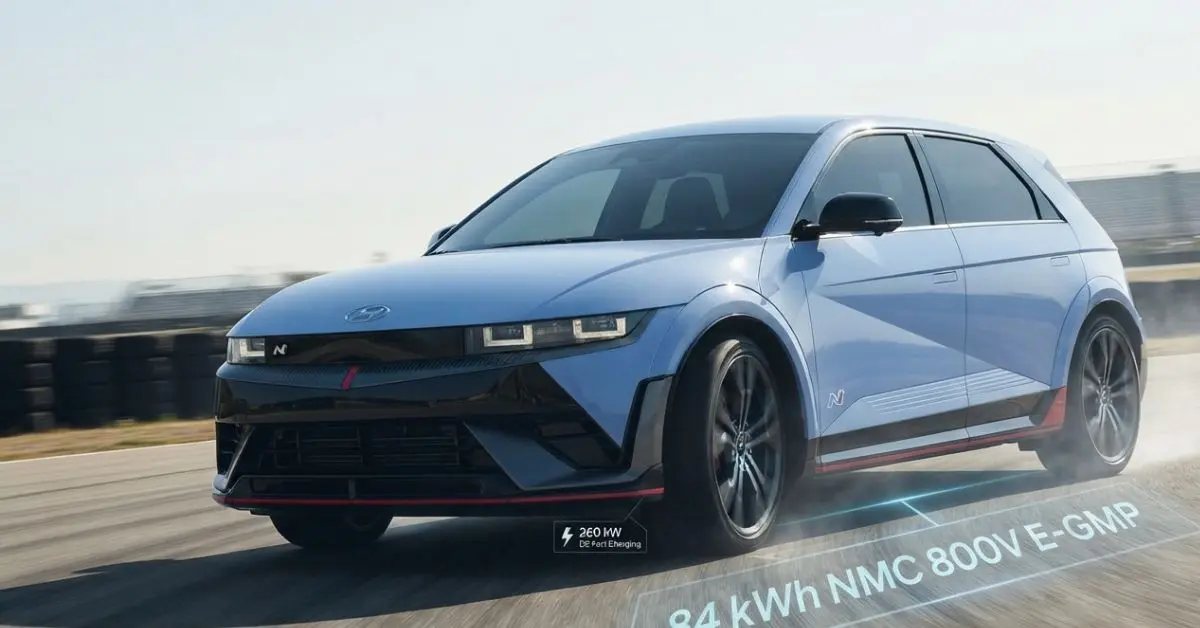
The Hyundai Ioniq 5 N battery is an 84 kWh NMC pack — the same size as the standard Ioniq 5 Long Range, but tuned differently. It sits on the 800V E-GMP platform, enabling 260 kW DC fast charging and 10–80% in approximately 18 minutes. In N Grin Boost mode, system power reaches 601 hp — enough for 0–60 mph in about 3.4 seconds. EPA range is approximately 221 miles — less than the standard Ioniq 5 due to the performance-tuned dual motors and wider body. Hyundai applies the same playbook to its sedan body style in the Ioniq 6 N battery, which shares this 84 kWh pack and Grin Boost system.
Hyundai Ioniq 5 N Battery: Full Specs
| Specification | Detail |
|---|---|
| Battery capacity | 84 kWh NMC |
| Architecture | 800V E-GMP |
| Drivetrain | Dual-motor AWD (permanent magnet) |
| Standard power | 478 hp (356 kW) |
| N Grin Boost power | 601 hp (448 kW) |
| Torque | 545 lb-ft (740 Nm) |
| 0–60 mph | ~3.4 seconds |
| Top speed | 161 mph (260 km/h) |
| EPA range | ~221 miles |
| WLTP range | ~310 miles (499 km) |
| Peak DC rate | 260 kW (800V) |
| 10–80% DC time | ~18 minutes |
| Level 2 AC | 11 kW |
| V2L capability | Yes (3.6 kW) |
| Starting price (U.S.) | ~$67,500 |
Why the N Uses the Same Battery as the Standard Ioniq 5
Hyundai chose to retain the standard 84 kWh pack for the N rather than fit a larger battery. The engineering rationale is weight — a larger pack would add mass directly counter to performance goals. Instead, Hyundai tuned the BMS and motor inverters to extract higher peak current. The result is 601 hp from the same cells, at the cost of approximately 95 miles of range vs the standard Long Range RWD’s 318 miles EPA.
The Ioniq 5 N body is 50 mm (2 inches) wider than the standard model. It sits 20 mm lower with revised suspension geometry and larger brake hardware. The wider track improves cornering stability at high speeds. These physical changes also increase aerodynamic drag slightly — another contributor to the shorter range vs the standard model.
N Grin Boost: 601 HP on Demand
N Grin Boost is Hyundai’s name for the temporary overboost function. It raises power from 478 hp to 601 hp for up to 10 seconds per activation. This requires the battery to be between approximately 15–95% state of charge. Repeated activations in succession are throttled to protect cell temperature. Most drivers find Grin Boost most useful for overtaking manoeuvres and track launch control.
N Performance Driving Modes
- N Grin Control: Customisable drive mode — adjust steering weight, regen intensity, suspension damping, and power delivery independently
- N Drift Optimizer: Applies torque vectoring to enable controlled oversteer — the first production EV with a dedicated drift mode tuned by Hyundai N engineers
- N Launch Control: Optimises traction and motor torque for maximum-acceleration standing starts — activates Grin Boost automatically at launch
- N Pedal: Single-pedal driving with one-foot stop-and-go — holds the car stationary without the brake, reducing driver fatigue on track day commutes
Battery Thermal Management: Track-Capable Design
The Ioniq 5 N’s battery thermal system is upgraded over the standard model for track use. Hyundai added larger coolant pathways and a more aggressive cooling strategy during sustained high-power operation. This allows multiple hard acceleration runs on track before battery thermal throttling occurs. Hyundai N engineers specifically tested the 5 N at the Nürburgring — a battery thermal stress test that few production EVs pass without throttling.
The battery also integrates with the N Race mode — which prioritises maximum performance by pre-cooling cells before a timed lap. The system monitors cell temperature in real time and alerts the driver when sustained peak power is about to be limited. This transparency makes track day planning straightforward. Unlike some performance EVs, the Ioniq 5 N gives clear warnings rather than silently reducing power mid-corner.
Charging the Ioniq 5 N
| Method | Power | Ioniq 5 N (84 kWh) |
|---|---|---|
| Level 1 (120V) | ~1.4 kW | ~65 hours full |
| Level 2 (11 kW) | 11 kW | ~8.5 hours full |
| DC Fast (800V, 260 kW) | 260 kW peak | ~18 min (10–80%) |
The 260 kW DC charging on the 800V system is class-leading for a performance EV. A stop of just 18 minutes adds approximately 185 miles of range. On track days where the car is used hard, a 20-minute charge between sessions can restore meaningful range. The native NACS port on 2025+ U.S. models provides direct Supercharger V4 access — V4 stations deliver 800V and can sustain close to 200 kW average power through the session.
Battery Warranty
Hyundai covers the Ioniq 5 N battery with its standard 10-year / 100,000-mile warranty against capacity loss below 70% of original. This warranty applies even if the car is used on track — confirming Hyundai’s confidence in the thermal management system. Annual degradation is approximately 1.5–2.5% per year under mixed road and track use. The 800V E-GMP platform’s conservatively managed cells support strong long-term health.
Ioniq 5 N vs Performance EV Rivals
| Model | Battery | EPA Range | Peak Power | 0–60 mph | Price |
|---|---|---|---|---|---|
| Hyundai Ioniq 5 N | 84 kWh NMC 800V | ~221 miles | 601 hp | ~3.4 sec | ~$67,500 |
| Kia EV6 GT | 84 kWh NMC 800V | ~206 miles | 577 hp | ~3.4 sec | ~$62,000 |
| Porsche Taycan (base) | 105 kWh NMC 800V | ~249 miles | 402 hp | ~5.1 sec | ~$99,000 |
| Tesla Model 3 Performance | ~82 kWh NCA/NMC | ~315 miles | 510 hp | ~2.9 sec | ~$54,990 |
Full specs for the closest rival above are in our dedicated Kia EV6 GT battery guide — the EV6 GT shares the same 84 kWh 800V pack with a different power tune.
Charging Tips for Ioniq 5 N Owners
- Precondition before track sessions: Use the N Race pre-cooling mode to lower cell temperature before hard driving — this extends the time before thermal limiting kicks in
- Charge between track sessions: An 18-minute DC charge can add 150+ miles during lunch breaks — plan track days near 150+ kW chargers for convenient top-ups
- Set daily charge to 80%: NMC benefits from an 80% daily limit when not tracking — the Hyundai app supports charge scheduling easily
- Use V2L for track day accessories: The 3.6 kW V2L output powers tyre warmers, compressors, and other equipment directly from the 84 kWh battery
Conclusion
The Hyundai Ioniq 5 N battery demonstrates that performance EVs don’t need to sacrifice charging speed for power. The 84 kWh 800V pack delivers 601 hp in Grin Boost, 18-minute fast charging, a dedicated drift mode, and a 10-year warranty — all at $67,500. The 221-mile EPA range is the honest trade-off for performance tuning from the same pack as the standard Ioniq 5. For buyers who want range alongside the E-GMP platform’s strengths, our Hyundai Ioniq 9 battery guide and Kia EV6 battery guide cover the more range-focused, family-friendly side of the same architecture.
