
Volvo EX30 Battery: Complete Guide


The Volvo EX30 battery comes in two different types. The base model uses a 51 kWh LFP (Lithium Iron Phosphate) pack. The Extended Range and Twin Motor Performance models use a larger 69 kWh NMC (Nickel Manganese Cobalt) pack.
This dual-chemistry approach changes how the cars perform. The LFP and NMC packs behave differently regarding charging habits, cold-weather driving, and long-term life.
In the US, every EX30 carries the 69 kWh battery and is EPA-rated at up to 275 miles (2025) or 261 miles (2026); on Europe’s WLTP cycle the same car is rated up to 296 miles. Other markets also get a smaller 51 kWh version, rated at about 214 miles WLTP. It runs on Geely’s SEA platform, which is also shared with the Zeekr X and Smart #1.
Quick answer
Every Volvo EX30 sold in the US uses the same battery: a 69 kWh NMC pack (about 64 kWh usable). The Single Motor is EPA-rated at 275 miles for 2025 and 261 miles for 2026; the Twin Motor at 265/253 miles. The smaller 51 kWh LFP battery exists only in other markets — it was never sold in America. Volvo is ending US EX30 sales after the 2026 model year, and certain 2025 cars are under a battery safety recall — those owners must cap charging at 70% until the free module replacement is done.
Key figures: US pack: 69 kWh NMC (64 usable) · LFP 51 kWh: non-US only · EPA range: 261–275 mi · DC peak: 153 kW (10–80% ~27 min) · Warranty: 8 yr / 100,000 mi
Volvo EX30 Battery: Full Specs by Variant
| Variant | Battery (Gross) | Battery (Usable) | Chemistry | EPA Range (US) / WLTP Range | Peak DC Rate | 0–60 mph |
|---|---|---|---|---|---|---|
| Single Motor | 51 kWh | 49 kWh | LFP | Not sold in the US / ~214 mi WLTP | 134 kW | ~5.4 sec |
| Single Motor Extended Range | 69 kWh | 64 kWh | NMC | 275 mi (2025) / 261 mi (2026) / up to 296 mi WLTP | 153 kW | 5.1 sec |
| Twin Motor Performance | 69 kWh | 64 kWh | NMC | 265 mi (2025) / 253 mi (2026) / up to 286 mi WLTP | 153 kW | 3.4 sec |
US cars come only with the 69 kWh NMC pack; the 51 kWh LFP Single Motor is sold in Europe and other markets and has no EPA rating.
LFP vs NMC: Why the EX30’s Two Batteries Are Different
The biggest difference between EX30 models is not the motor. It is the battery chemistry. Volvo uses LFP in the base model and NMC in the longer-range versions because each chemistry offers different advantages.
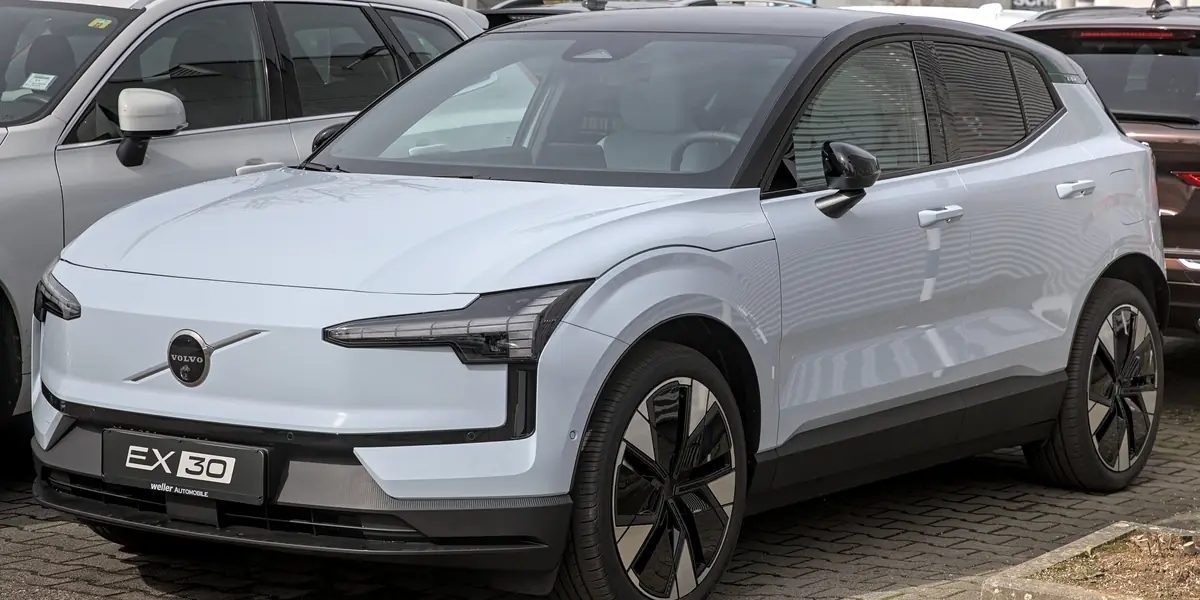
LFP Battery (51 kWh)
First, the US answer: this battery was never sold in America — every US EX30 has the 69 kWh NMC pack below. The 51 kWh LFP version is the standard Single Motor car sold in Europe and other markets.
The 51 kWh LFP battery is designed for drivers who mainly travel around town or have predictable daily trips.
Its main benefits include:
- Can be charged to 100% regularly without causing faster battery wear.
- Long cycle life, meaning it can handle more charging cycles over many years.
- Excellent thermal stability, making it one of the safest lithium-ion chemistries.
- Lower purchase cost.
The trade-off is lower energy density, which limits driving range to around 214 miles (EPA). LFP batteries also lose more performance in very cold weather than NMC batteries.
NMC Battery (69 kWh)
The 69 kWh NMC battery focuses on longer driving distances and stronger all-around performance.
Key advantages include:
- Higher energy density for more driving range.
- EPA-estimated range of up to 275 miles (2025) or 261 miles (2026) in the US — up to 296 miles on the European WLTP cycle
- Better range retention during cold weather.
- Standard heat pump for improved winter efficiency.
Unlike LFP, the NMC battery should normally be charged to 80–90% for daily driving. Charging to 100% is best saved for long trips.
Charging Habits Are Different
Understanding the correct charging routine helps maximize battery life.
- LFP battery: Charge to 100% regularly because full charges help the Battery Management System (BMS) keep the state of charge accurate.
- NMC battery: Keep daily charging between 80% and 90% to reduce long-term battery degradation.
Read more: LFP vs NMC batteries — how the two chemistries compare
Volvo EX30 Battery Platform and Construction
The EX30 is built on Geely’s Sustainable Experience Architecture (SEA) platform. It shares this modern EV platform with the Zeekr X and Smart #1, allowing Volvo to combine premium features with efficient battery packaging.
Both battery packs use a 400-volt electrical architecture with active liquid cooling. Liquid cooling keeps battery temperatures within the ideal operating range during charging, driving, and extreme weather.
The 69 kWh NMC models include a standard heat pump. Instead of using electric resistance heating, the heat pump warms the cabin more efficiently. This reduces energy use during winter and helps preserve driving range.
Another useful feature is battery preconditioning.
When you enter a DC fast charger into the navigation system, the battery automatically warms to its ideal charging temperature before arrival. This allows the battery to reach higher charging speeds sooner, especially in cold weather. The 51 kWh LFP model has more limited preconditioning capability.
Production originally began in Zhangjiakou, China. In 2025, Volvo expanded manufacturing to Ghent, Belgium, and Shah Alam, Malaysia, bringing production closer to major global markets.
Volvo has confirmed the EX30 will leave the US market after the 2026 model year — US order books closed in March 2026, and remaining dealer stock is all that is left. The car continues in Canada, Mexico and other markets, and US owners keep full warranty, parts and software support.
The battery sits flat under the cabin floor, between the axles — the skateboard layout of the SEA platform. That placement keeps the center of gravity low, protects the pack inside the car’s strongest structure, and leaves the cabin and cargo area uncompromised.
Important 2026 Volvo EX30 Battery Safety Recall
In early 2026, Volvo announced a high-voltage battery recall affecting certain 2024–2026 Single Motor Extended Range and Twin Motor Performance models equipped with the 69 kWh NMC battery.
The issue involved a rare condition that could allow the battery to overheat, increasing the risk of a high-energy fire.
As a temporary safety measure in some markets, Volvo instructed affected owners not to charge above 70% until the repair was completed.
If you are buying a used Volvo EX30, always check that any open battery recall has already been completed through a Volvo dealer or the NHTSA VIN lookup tool.
The 51 kWh LFP model was not affected by this specific recall.
In the US, the campaign runs under NHTSA recalls 26V001 and 26V103 and covers certain 2025-model-year cars — a small number of US vehicles, though the same cell defect affects about 40,000 EX30s worldwide. The affected cells were supplied by Shandong Geely Sunwoda and fitted to cars built through late October 2025. The fix is a free replacement of the affected battery modules, and dealers have begun the work; until your car is repaired, keep the charge limit at 70% and park outside where you can.
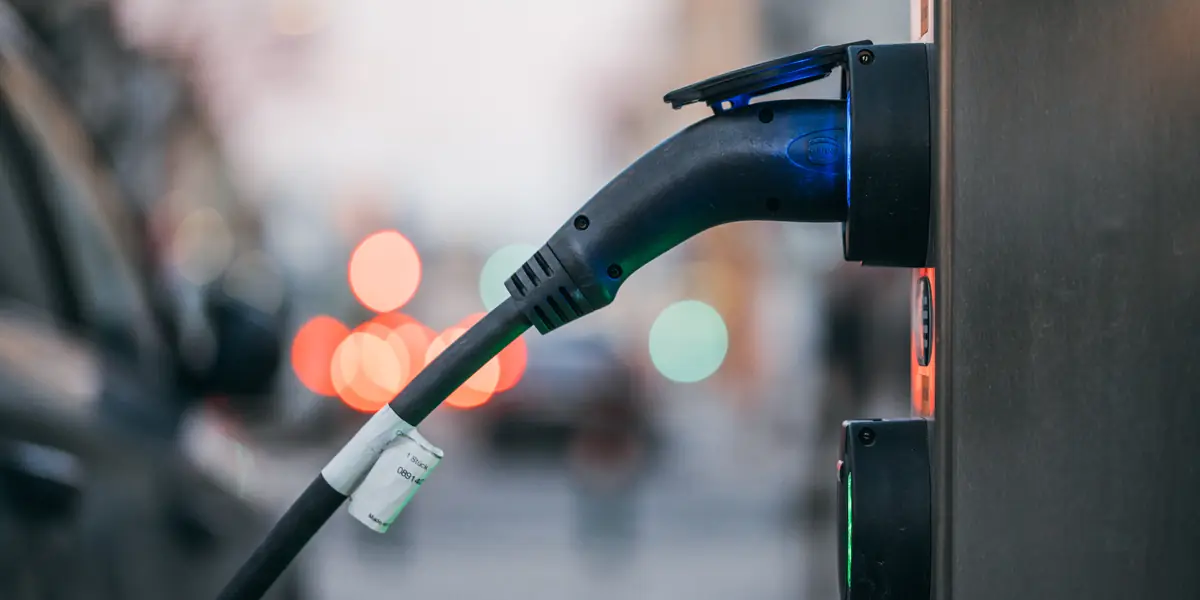
Volvo EX30 Charging Speeds
| Charging Method | Power | 51 kWh LFP | 69 kWh NMC |
|---|---|---|---|
| Level 1 (120V) | ~1.4 kW | ~40 hours full | ~54 hours full |
| Level 2 (240V, 7.4 kW) | 7.4 kW | ~9.5 hours full | ~11.5 hours full |
| Level 2 (240V, 11 kW) | 11 kW | ~6 hours full | ~7.5 hours full |
| DC Fast (134 kW LFP / 153 kW NMC) | 134–153 kW | ~26 min (10–80%) | ~28 min (10–80%) |
Volvo EX30 Battery Degradation Expectations
The EX30 is still a relatively new electric vehicle, so long-term real-world battery data is limited. However, its battery design and cooling system provide a good idea of what owners can expect.
The 69 kWh NMC battery is expected to lose around 10–15% of its original capacity after approximately 10 years when charged and maintained properly.
The 51 kWh LFP battery should experience even slower degradation because LFP chemistry generally supports more charging cycles than NMC.
Typical annual degradation is expected to be:
- NMC: Around 1.5–2% per year
- LFP: Slightly lower under normal driving conditions
One of the best ways to reduce battery wear is to limit frequent DC fast charging. Occasional fast charging is perfectly normal, but relying on it every day can increase long-term degradation.
Volvo EX30 Battery Warranty
Volvo backs the EX30 battery with an 8-year or 100,000-mile warranty.
If the battery capacity drops below 70% during the warranty period due to a manufacturing defect, Volvo will repair or replace the battery according to its warranty terms.
The vehicle warranty is separate from the battery warranty.
- United States: 4 years or 50,000 miles
- United Kingdom: 3 years or 60,000 miles, with extended warranty options available
This separate battery coverage provides long-term protection regardless of whether you choose the LFP or NMC version.
Charging Tips for Volvo EX30 Owners
- LFP base model: charge to 100% regularly: The 51 kWh LFP pack benefits from regular full charges, which help the battery management system accurately calibrate state-of-charge readings
- NMC Extended Range: limit to 80–90% daily: The 69 kWh NMC pack follows standard NMC practice — daily 80–90% charging preserves long-term capacity. Note any active recall charge limits.
- Use navigation to precondition for fast charging: The 69 kWh model preconditions the pack when routing to a charger — select the charging station as a destination for the fastest charging session
- Limit frequent DC fast charging: Volvo specifically recommends avoiding excessive rapid charging to maintain battery health across both chemistries
Volvo EX30 Battery Replacement Cost
The Volvo EX30 battery is designed to last for many years, so full battery replacement is expected to be uncommon. Most owners will never need a replacement during normal vehicle ownership.
While Volvo has not published official replacement pricing, industry estimates suggest a complete battery pack could cost between $12,000 and $20,000, depending on the battery size, labor costs, and local market.
In some cases, technicians may be able to repair or replace individual battery modules instead of installing an entirely new battery pack. This can significantly reduce repair costs if only part of the battery is damaged.
If your EX30 is still covered by the 8-year/100,000-mile battery warranty, battery defects or excessive capacity loss may be repaired or replaced by Volvo at no cost, provided the issue meets the warranty requirements.
Volvo EX30 in Ireland: Prices, Battery Types, Grants and Charging
In Ireland, the Volvo EX30 is sold with two battery types: a 51 kWh LFP battery in the Single Motor car, and a 69 kWh NMC battery in the Extended Range and Twin Motor Performance cars. Prices start at €38,555, the battery warranty runs for 8 years or 160,000 km, and the smaller LFP car is not covered by the battery recall that affects some 69 kWh cars built between September 2024 and October 2025.
| Version | Battery | WLTP range | Price in Ireland |
|---|---|---|---|
| Single Motor | 51 kWh LFP | 337 km | €38,555 |
| Single Motor Extended Range | 69 kWh NMC | Up to 476 km | €47,380 |
| Twin Motor Performance | 69 kWh NMC | Up to 450 km | €54,655 |
The prices above are Volvo Ireland’s listed prices, which already reflect the SEAI grant and VRT relief where they apply. Annual motor tax is €120, the lowest band. The entry Single Motor car pairs the 51 kWh LFP battery with a 337 km WLTP range, the Extended Range car stretches that to as much as 476 km on the larger 69 kWh NMC pack, and the Twin Motor Performance trades some range for all-wheel drive and much stronger performance.
Two supports bring those prices down, and one limit matters. The SEAI purchase grant is €3,500 for a private buyer of a new electric car, applied by the dealer at the point of sale, and VRT relief of up to €5,000 runs until the end of 2028, with a further €300 SEAI grant toward a home charger. Since July 2026, however, the purchase grant only applies when the car’s full price, including options and delivery, is €50,000 or less. That cap leaves out the Twin Motor Performance and high-spec Ultra builds, while the Single Motor and Extended Range cars qualify. The purchase grant itself is confirmed through the end of 2026.
The battery warranty in Ireland runs for 8 years or 160,000 km, whichever comes first, and it covers the pack if its capacity falls below 70% of the original figure inside that period. The warranty transfers to later owners, which matters in a market where many EX30s will change hands while still covered. In distance terms it is more generous than the same car’s cover in the United States, where the limit is 100,000 miles.
Charging at home is the cheapest way to run an EX30 in Ireland. On an overnight electricity rate of roughly 18c per kWh, filling the 51 kWh battery costs under €10. For public charging, ESB eCars runs Ireland’s largest network with around 1,600 chargers. From 2 November 2026 its pay-as-you-go prices are €0.70 per kWh for AC charging and €0.83 per kWh for fast DC charging, so a typical 10 to 80% fast charge of the 69 kWh car costs around €40. The paid Charge Smart plan (€6.99 a month) cuts overnight public charging to €0.52 per kWh on AC and €0.66 on DC, and fast chargers carry an overstay fee of €0.50 a minute after 45 minutes.
One recall matters to Irish buyers. Volvo’s campaign R10355 covers 69 kWh EX30s built between 6 September 2024 and 25 October 2025 whose battery cells can overheat, and the Road Safety Authority counts 442 affected cars in the Republic of Ireland. Volvo retailers inspect the battery modules and replace any that are faulty, free of charge. Until that check is done, owners are advised to limit the maximum charge to 70% and to park away from buildings. The 51 kWh LFP cars are not affected. Anyone buying a used 69 kWh EX30 can check the car’s VIN in Volvo’s recall lookup or with any Volvo retailer in Ireland.
The EX30 also carries a small 12V battery, an AGM H4 unit of 50 Ah that runs the locks, lights and electronics; only the main battery drives the car. A flat 12V battery can leave the car unresponsive even when the main pack is fully charged, and some owners have reported the 12V battery draining because the car’s telematics modules fail to switch off properly. Volvo designs the 12V battery to be replaced by an authorised workshop, so in Ireland that means a Volvo retailer.
Frequently Asked Questions
What size battery is in the Volvo EX30?
It depends on the market. Every US EX30 uses a 69 kWh battery (about 64 kWh usable). In Europe and other markets there is also a smaller 51 kWh battery (about 49 kWh usable) in the standard Single Motor car.
Is the Volvo EX30 battery LFP or NMC?
Both chemistries exist, but not in the same cars. The 69 kWh pack is NMC (nickel manganese cobalt) and powers the Single Motor Extended Range and Twin Motor — including every US car. The 51 kWh pack is LFP (lithium iron phosphate) and is sold only outside the US.
How far can the Volvo EX30 go on a charge?
In US EPA testing, the Single Motor Extended Range is rated at 275 miles for 2025 and 261 miles for 2026; the Twin Motor at 265 and 253 miles; the 2026 Cross Country at 227 miles. On Europe’s WLTP cycle the Single Motor Extended Range is rated up to 296 miles.
Does the Volvo EX30 have an 800-volt battery?
No. The EX30 uses a 400-volt-class architecture, which is why its DC fast-charging peak is 153 kW (10–80% in about 27 minutes) rather than the 240–350 kW of 800-volt cars.
How long does the Volvo EX30 battery last, and what warranty covers it?
Volvo warrants the pack for 8 years or 100,000 miles, with repair or replacement if capacity falls below 70% due to a defect. Expect roughly 1.5–2% capacity loss per year on the NMC pack in typical use (the LFP pack degrades slightly slower), so most packs stay healthy well past the warranty.
Does the Volvo EX30 have a separate 12V battery?
Yes. Like almost every EV, the EX30 also carries a small conventional 12-volt battery for lights, locks, screens and computers. If it runs flat, the car may not wake up even with a full main battery — it is a normal service item, separate from the high-voltage pack.
How does the EX30 battery compare with larger Volvo EVs?
It is Volvo’s smallest pack. The EX40 offers up to about 82 kWh and the flagship EX90 about 111 kWh, against the EX30’s 69 kWh (US) — which is also why the EX30 charges at a lower peak rate (153 kW) than its bigger siblings.
Conclusion
The Volvo EX30 battery offers a meaningful choice between two chemistries — LFP for simplicity, longevity, and daily 100% charging in the 51 kWh base, or NMC for maximum range (up to 275 miles EPA (261 for 2026)) and better cold-weather performance in the 69 kWh Extended Range. The dual-chemistry strategy lets buyers match the battery to their driving pattern. The 2026 battery safety recall on NMC-equipped models is an important check for used buyers — verify completion before purchase. With Volvo-grade safety engineering, a competitive 153 kW charging rate, and an 8-year battery warranty, the EX30 remains one of the most appealing small premium electric SUVs available, even as Volvo prepares a U.S.-specific replacement for 2027.
And if the EX30’s size is the only thing holding you back, Volvo’s next step up is the EX60 — our Volvo EX60 battery guide covers its battery sizes, range and charging.
