
Volvo EX90 Battery: Complete Guide

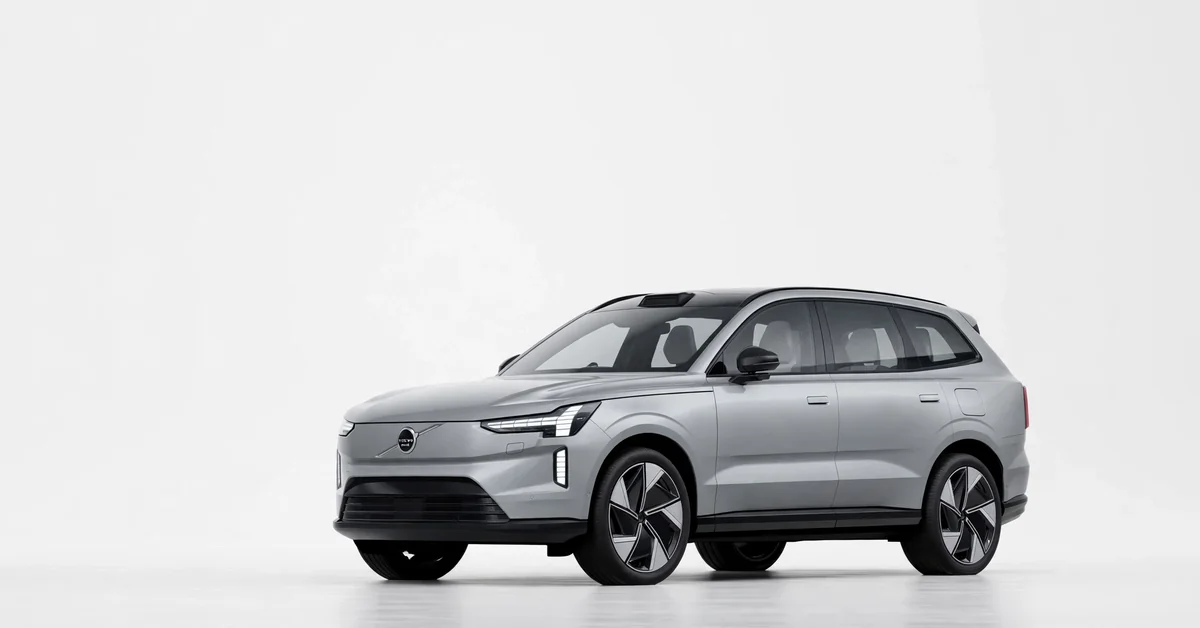
The Volvo EX90 battery comes in three sizes, and which one a car has depends on its model year and motors. Every 2025 EX90 uses a 111 kWh pack (107 kWh usable) on a 400-volt system. For 2026, Volvo switched the EX90 to an 800-volt system and split the range: the new Single Motor car carries a 92 kWh pack, while Twin Motor and Twin Motor Performance cars carry 106 kWh.
That generational change matters more than the raw numbers suggest. The 2025 car charges at up to 250 kW and is the only EX90 that can currently power a home in the United States, through a partner home-energy system. The 2026 cars charge much faster, at up to 350 kW, but start with a smaller entry model and, at the top, slightly less EPA range than the 2025 car. This guide covers both generations pack by pack: sizes, charging, real-world range, lifespan, warranty, replacement cost, recalls and the separate 12-volt battery.
If you already own a 2025 EX90, one section below is written for you first: Volvo is upgrading the core computer in every 2025 car free of charge at a dealer, and that upgrade is also what unlocks home backup power. It is covered in full under Recalls and the 2025 EX90 Software Story.
Specs and prices in this guide come from Volvo Car USA, Volvo’s US technical specifications, EPA ratings at fueleconomy.gov, Volvo’s warranty manual, NHTSA recall records and Volvo’s own US parts catalog.
Quick answer
The Volvo EX90 battery is 111 kWh (107 kWh usable) in the 2025 car, and 92 kWh in the 2026 Single Motor or 106 kWh in the 2026 Twin Motor cars. EPA range runs from 276 to 310 miles depending on year, motors and wheels, and the battery warranty is 8 years or 100,000 miles with a 70% capacity floor.
Key figures: 2025: 111 kWh, 400V, 250 kW DC, up to 310 miles EPA · 2026 Single Motor: 92 kWh, 800V, 350 kW DC, up to 291 miles EPA · 2026 Twin Motor: 106 kWh, 800V, 350 kW DC, up to 305 miles EPA · 10–80% charge: about 30 minutes (2025), about 22 minutes (2026) · From $76,695 (2026)
Volvo EX90 Battery Specs: 2025 vs 2026
The EX90 has used three battery sizes in two years: 111 kWh for 2025, then 92 and 106 kWh for 2026.
| Spec | 2025 EX90 Twin Motor | 2026 EX90 Single Motor | 2026 EX90 Twin Motor / Performance |
|---|---|---|---|
| Battery size | 111 kWh (107 kWh usable) | 92 kWh | 106 kWh |
| Architecture | 400V | 800V | 800V |
| Power | 402 hp / 510 hp (Performance) | 329 hp | 449 hp / 670 hp (Performance) |
| EPA range | Up to 310 miles (21-inch wheels); 300 miles on 20/22-inch | Up to 291 miles (21-inch); 276 miles on other wheels | Up to 305 miles (21-inch); 298 miles on other wheels |
| Peak DC charging | 250 kW | 350 kW | 350 kW |
| DC charge, 10–80% | About 30 minutes | About 22 minutes | About 22 minutes |
| AC charging | 11 kW; full charge about 10 hours | 11 kW; full charge about 10 hours | 11 kW; full charge about 11 hours |
| Seats | 6 or 7 | 6 or 7 | 6 or 7 |
| US price | From $79,995 | From $76,695 | From $79,995 |
| Bidirectional charging | Yes — V2H live in the US via dcbel Ara (see Charging) | Hardware-ready; US home-backup offer not yet live | Hardware-ready; US home-backup offer not yet live |
Volvo quotes one capacity figure per car, and for the 2025 car its technical specifications separate that into 111 kWh nominal and 107 kWh usable. For the 2026 cars, Volvo USA lists 92 and 106 kWh and does not publish a usable figure, so the table below shows the ratings exactly as Volvo states them rather than estimates. Chemistry follows the same pattern: the cells are supplied by CATL, and the pack is widely reported as a nickel-based (NMC) design, although Volvo’s own US documents describe it simply as lithium-ion.
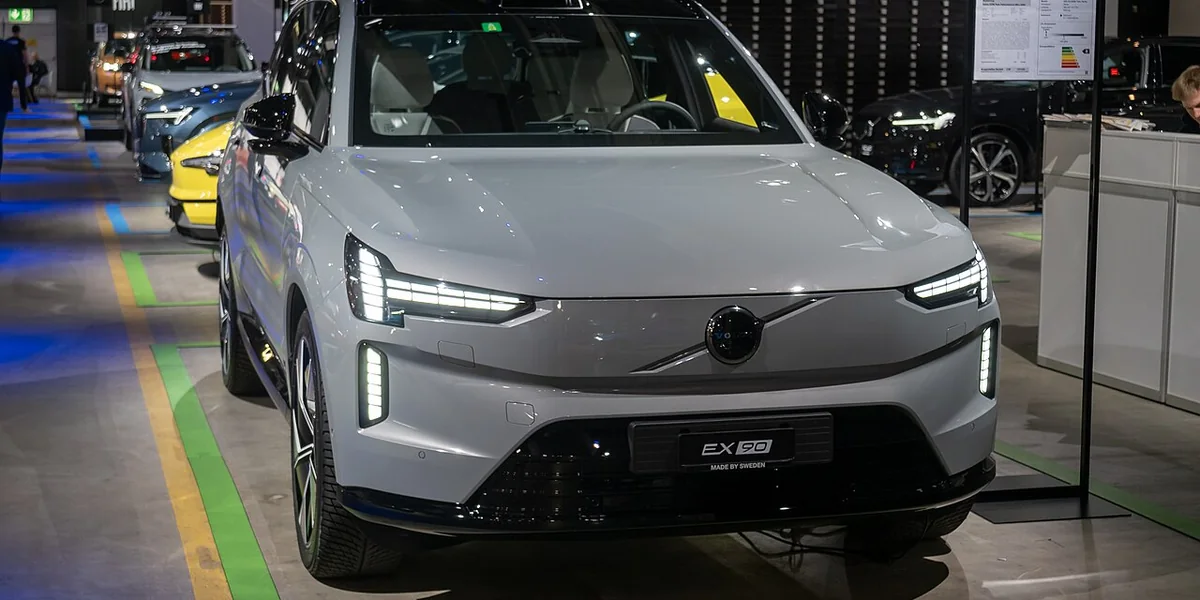
The 2025 EX90 Battery: 111 kWh, 400V
Every 2025 EX90 sold in the US has the same 111 kWh pack — Twin Motor or Performance, the battery does not change.
The 2025 EX90 launched in the United States with a single battery: 111 kWh nominal, 107 kWh usable, supplied by CATL and liquid-cooled. It sits on Volvo’s SPA2 platform, which the EX90 shares with the Polestar 3 — the two cars use closely related packs, and our Polestar 3 battery guide covers the sibling car’s version in full. First US deliveries began in September 2024, and every US car is built at Volvo’s plant in Ridgeville, South Carolina.
Range depends on wheels more than trim. On 21-inch wheels the 2025 EX90 is EPA-rated at 310 miles; on 20-inch or 22-inch wheels the rating is 300 miles. Power is 402 horsepower in the Twin Motor and 510 horsepower in the Twin Motor Performance. Prices started at $79,995 before destination.
The 400-volt system charges at up to 250 kW on a DC fast charger, taking the battery from 10% to 80% in about 30 minutes when the pack is preconditioned. Home charging runs through an 11 kW onboard charger, and Volvo’s own figures put a full charge at about 10 hours. The section below on charging covers how those headline rates hold up in independent testing.
The 2026 EX90 Battery: 800V and Two Pack Sizes
For 2026 the EX90 moved to 800 volts and gained a cheaper Single Motor version — the gain is charging speed, not range.
The 2026 EX90 keeps the same body and seats but replaces the electrical system underneath. A new Single Motor, rear-wheel-drive model opens the range with a 92 kWh pack, 329 horsepower and a starting price of $76,695 before the $1,395 destination charge. Twin Motor cars use a 106 kWh pack with 449 horsepower (from $79,995), and the Twin Motor Performance raises output to 670 horsepower. All 2026 cars run on an 800-volt architecture with new battery management software Volvo developed in-house.
Honest framing matters here: the 2026 Twin Motor’s best EPA rating, 305 miles, is slightly below the 2025 car’s 310, and the Single Motor is rated at up to 291 miles. What the new architecture buys is time at the charger. Peak DC charging rises from 250 kW to 350 kW, and the 10–80% charge drops from about 30 minutes to about 22. Volvo says the 2026 car can add up to 155 miles of range in about 10 minutes on a suitable charger — that is Volvo’s own claim, stated as the company states it.
The 2026 cars also received a new core computer built around NVIDIA processors. That computer matters to 2025 owners as much as to new buyers, because Volvo is fitting it to the earlier cars free — the details, and why the 800-volt hardware itself cannot be retrofitted, are in the Recalls and Software section below.
Inside the EX90 Battery: CATL Cells and Liquid Cooling
The EX90’s cells come from CATL, the pack is liquid-cooled, and Volvo builds the car around it in South Carolina.
Volvo’s US documents call the EX90’s battery ‘lithium-ion’ and name no cathode chemistry. The cell supplier is CATL, and the design is consistently reported across the industry as a nickel-based NMC pack — treat that as the reported consensus rather than a Volvo-published specification. That distinction matters because some guides state an exact chemistry as settled fact; Volvo has not published one for this car.
The pack is liquid-cooled and heated, which is what allows the EX90 to hold high charging rates and to precondition on the way to a fast charger. Cooling also underpins the warranty promise covered below: Volvo guarantees the pack against dropping below 70% of its original capacity inside 8 years or 100,000 miles. The 2025 car rides on the SPA2 platform shared with the Polestar 3, and the 2026 electrical rework changed the architecture and battery management software rather than the car’s structure.
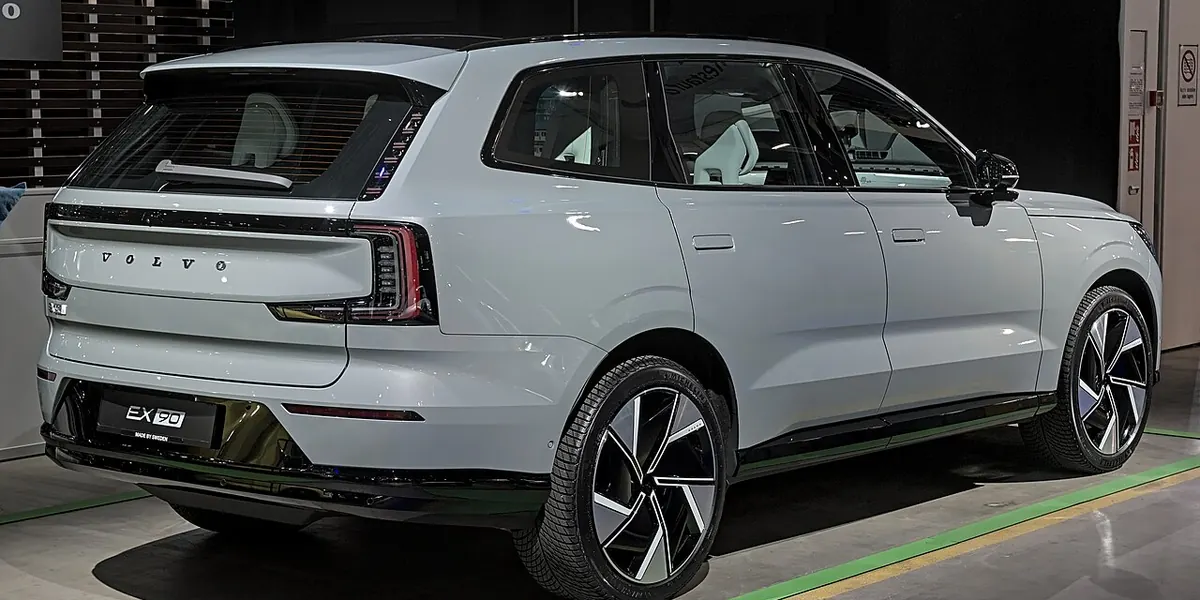
How Fast Does the Volvo EX90 Charge?
A 2026 EX90 charges from 10% to 80% in about 22 minutes at a 350 kW charger; the 2025 car needs about 30 minutes at 250 kW.
| Charging method | 2025 EX90 (111 kWh) | 2026 EX90 (92 / 106 kWh) |
|---|---|---|
| Level 2 home charging (11 kW) | Full charge in about 10 hours | Full charge in about 10 hours (92 kWh) or 11 hours (106 kWh) |
| DC fast charging, peak rate | 250 kW | 350 kW |
| DC fast charging, 10–80% | About 30 minutes | About 22 minutes |
| Range added in 10 minutes (DC) | Not officially stated | Up to 155 miles (Volvo’s claim) |
Volvo’s times assume a preconditioned battery, and the EX90 preconditions automatically when a fast charger is set as the destination in the car’s Google-based navigation. Arrive with a cold pack and the session will run slower, particularly in winter. Independent testing adds a second caution: in Edmunds’ charging test, a 2025 EX90 peaked at 201 kW rather than the advertised 250 kW and averaged 154 kW across the session. The 30-minute figure is achievable, but it is a best case, not a guarantee.
At home, every EX90 charges through an 11 kW onboard charger on a 240-volt circuit — a 48-amp wallbox is the setup that uses the car fully, refilling even the largest pack overnight. Most owners will charge to a daily limit rather than to full, which makes the overnight time academic; the daily-limit guidance is in the Charging Tips section below.
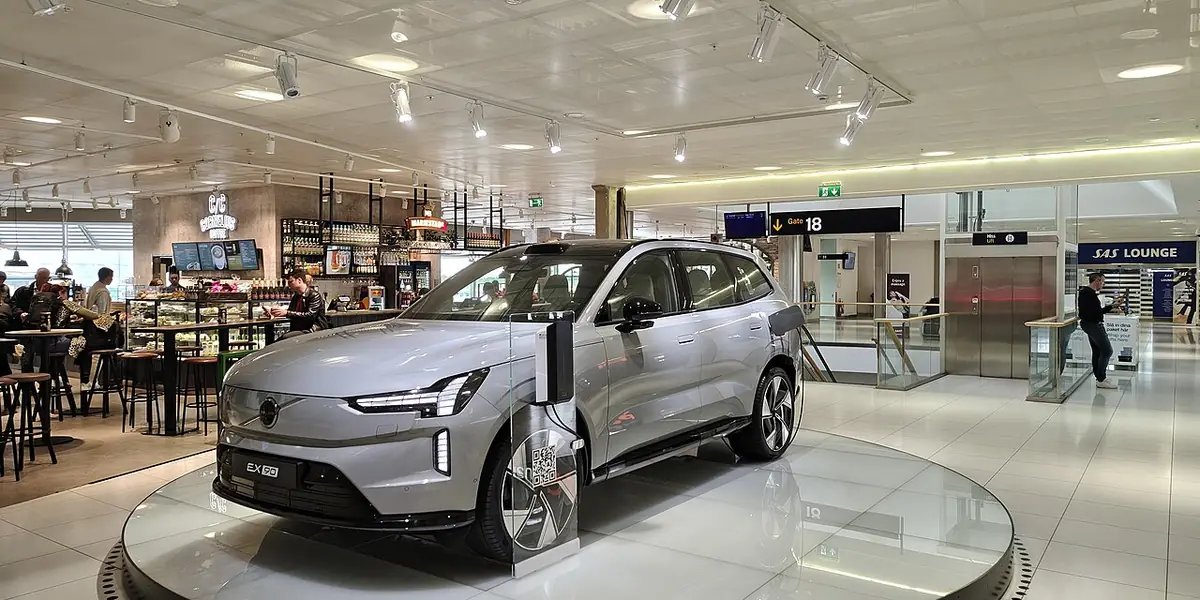
Bidirectional charging needs careful reading, because the EX90’s hardware story and its live US offer are two different things. Volvo announced in November 2025 that 2025 EX90 owners in the United States can power their homes through dcbel’s Ara Home Energy Station: the car sends DC power to the home system, which can keep a house running during an outage.
That offer is specific — it applies to the 2025, 400-volt car paired with the matching 400-volt Ara station, and the car must have the new core computer fitted. Volvo states the functionality cannot be guaranteed for future model years, and no equivalent US offer has been announced for the 800-volt 2026 cars yet. Keep a sensible reserve when running a home from the car — most owners leave at least a fifth of the pack untouched so the car stays usable — and treat home-backup as a 2025-car feature until Volvo says otherwise.
Real-World Range and Family Use
In Edmunds’ independent range test, the 2025 EX90 matched its 310-mile EPA rating exactly — a strong result for a seven-seat SUV.
Start with the official ladder. The 2025 car is rated at 310 miles on 21-inch wheels and 300 miles on 20- or 22-inch wheels. For 2026, the Single Motor is rated at up to 291 miles, the Twin Motor and Performance at up to 305, and the less efficient wheel choices cost roughly 7 to 15 miles on each version. Wheel size is the single easiest range decision a buyer controls.
Independent testing supports those figures rather than undermining them. Edmunds drove a 2025 EX90 Twin Motor to 310 miles in its standardised EV range test, matching the EPA number for its configuration. A 2026 Twin Motor Performance on larger wheels did better still against its own rating, covering 321 miles against a 305-mile EPA figure. No EX90 variant is efficient in absolute terms — EPA consumption runs from the high-30s to the low-40s in kWh per 100 miles — but the big pack means the range outcome is genuinely family-usable.
The 2026 EX90’s road-trip gain in one number: a 10–80% fast charge takes about 22 minutes instead of 30 — eight minutes saved at every stop, with no range penalty that matters next to the 2025 car’s 310-mile best.
What testing cannot give you is a fixed penalty for a full car, because there isn’t one. Seven occupants and luggage add weight and, on the roof, drag; towing adds far more — the 2025 car is rated to tow up to 4,850 lb and the 2026 Single Motor 3,307 lb, and any large trailer will cut range sharply, by an amount that depends on the trailer’s shape and the speed. Plan towing legs at well under the rated range and charge earlier than you would solo.
Winter works the same way: cold costs every EV range, preconditioning while plugged in is the correct counter, and the honest planning rule is to treat the EPA figure as a mild-weather number.
How Long Does the Volvo EX90 Battery Last?
There is no EX90-specific degradation dataset yet — the honest answer is fleet evidence plus a warranty floor of 70% at 8 years.
The EX90 has only been on US roads since late 2024, so nobody can quote measured degradation for this model, and any guide that gives an EX90-specific percentage per year is inventing it. What exists is fleet evidence across EVs generally. Geotab’s latest fleet study, covering more than 22,700 electric vehicles, puts average degradation at about 2.3% of capacity per year, which works out to roughly 81.6% of original capacity remaining at eight years. The same study found that cars relying heavily on high-power DC fast charging degraded faster, around 3.0% per year, while mainly AC-charged cars sat near 1.5% per year.
For an EX90 owner, the practical protections are already in the car. The usable capacity sits below the pack’s nominal figure, so the buffer absorbs some early loss before range changes become visible. Volvo also shows battery state of health in the centre display — status, charging power, temperature and health are all viewable — which makes checking a used car, or tracking your own, a two-minute job rather than a workshop visit. If health does fall below 70% of original capacity inside the warranty period, the warranty section below is the one that pays.
Volvo EX90 Battery Warranty
The EX90’s battery is covered for 8 years or 100,000 miles, and Volvo replaces it free if capacity falls below 70%.
Volvo’s fully electric warranty covers the EX90’s high-voltage battery for 8 years or 100,000 miles, whichever comes first. If the battery’s state of health drops below 70% of its original capacity inside that period, Volvo replaces it free of charge. Owners whose cars do not show state of health in the display can request a Battery State of Health Certificate from a Volvo workshop, also free — worth knowing before a used purchase, because it gives you a documented figure rather than a dashboard glance.
The rest of the electrical system follows Volvo’s standard cover: the 12-volt battery is covered for 4 years or 50,000 miles, and the battery warranty transfers to a new owner for its remaining term, which is part of why the used checks below start with the in-service date. Note what the warranty does not do: it does not promise a percentage above the 70% floor, and normal loss above that line is treated as wear, not a defect.
Volvo EX90 Battery Replacement Cost
A full EX90 pack replacement outside warranty is a five-figure job — but Volvo’s system is built to repair packs rather than replace them.
Start with the protection you already have: inside 8 years or 100,000 miles, a pack that falls below 70% health is replaced free under warranty, so a full-price replacement is a question for high-mileage or accident-damaged cars, not ordinary ownership. Volvo does not publish a US list price for a complete EX90 pack.
The anchors that do exist sit at the top of the market: Volvo’s US parts catalog lists the high-voltage Battery Assembly for the 2026 EX90 at $24,382.10, and a Volvo retailer in Toronto lists the complete pack for the earlier car at CAD 62,148.67 (about US$44,476 at the rate when checked) — both are parts listings before labour, and they differ by model year and market, so read them as evidence of scale, not as quotes.
Two things keep real-world costs below those anchors. Volvo runs regional Battery Centers, including one serving North America, whose job is to repair packs at module level instead of swapping the whole unit, and Volvo’s refurbished-parts program offers remanufactured packs at prices reported to run 50–75% below new. Accident damage is the other route in: collision repairs go through insurance, and the pack is inspected rather than automatically replaced. For how EX90 figures compare with other EVs, see our EV battery replacement cost guide.
Recalls and the 2025 EX90 Software Story
No EX90 recall touches the high-voltage battery — the recalls are small hardware campaigns, and the real 2025 story is software.
Three NHTSA recalls cover the EX90, none of them for the traction battery. Recall 24V-869 (November 2024) addressed second-row seat bolts on 11 cars. Recall 25V-071 (February 2025, Volvo campaign R10298) covered 2,061 cars for headlight shutters that could fail to open, fixed with software. Recall 25V-654 (filed October 2025, Volvo campaign R10342) covered 1,119 cars for a power-tailgate spindle nut. A larger braking-software recall that covered several other Volvo models in the same period did not include the EX90. Owners can check any individual car on the NHTSA recall site.
The software story deserves honesty, because it shapes used prices. The EX90’s launch was troubled: owners reported blank screens, phone-key failures and features that arrived late, and Volvo apologised publicly in September 2025 as updates (the car was on software 1.3.18 by then) worked through the backlog. The substantive fix is hardware as well as software — Volvo is upgrading every 2025 car to the new NVIDIA-based core computer free of charge at a dealer. That upgrade is also the key that unlocks the home-backup feature described in the Charging section. What cannot be upgraded is the 800-volt electrical architecture: that change is built into the 2026 car, not a retrofit.
The EX90’s 12-Volt Battery
Alongside the big pack, the EX90 runs an H5 AGM 12-volt battery (60 Ah, 680 A) that powers everything except propulsion.
Volvo’s own support documentation specifies the EX90’s low-voltage battery: an H5-size AGM unit, 12 volts, 60 amp-hours, with 680 amps of cold-start capacity, measuring 242 by 175 by 190 mm. It runs the car’s electronics, locks, lights and computers; the traction battery handles propulsion and tops the 12-volt up through the car’s DC-DC converter. Volvo describes the battery as maintenance-free and specifies workshop replacement — US dealer parts listings price the genuine battery (part 31652681) at about $288 against a $385.86 list price, and dealer specials including installation have been advertised around $375, with the workshop performing the factory-required diagnostics as part of the job.
Two practical points follow. First, a flat 12-volt battery can leave an EX90 unresponsive even with a full traction battery, so repeated 12-volt warnings are a fix-it-now item, not background noise. Second, online listings disagree about the details of this battery — fitment guides variously describe different sizes — so the specification above follows Volvo’s own support page, and the correct check for any individual car is its VIN at a Volvo retailer. Owners searching for the battery’s physical location will find Volvo does not publish one in its owner-facing material; treat any precise location claim with caution, and leave terminal work to an authorised workshop as Volvo instructs.
If you are comparing the smaller Volvo, our EX30 guide covers its 12-volt arrangement too.
Buying a Used Volvo EX90: Battery Checks
Used 2025 EX90s have fallen to roughly $48,000–$61,000 — the battery checks below are how you buy one well.
The price context first: a car that started at $79,995 new is already advertised used in the high-$40,000s to low-$60,000s, which makes the 2025 EX90 one of the more interesting used buys in its class — and makes the checks matter, because the discount reflects the software reputation as much as the hardware. Every check here is free or nearly so. Read the state of health in the centre display, or ask the selling dealer for the free Battery State of Health Certificate described in the Warranty section. Confirm the car’s in-service date so you know exactly how much of the 8-year, 100,000-mile battery warranty remains — it transfers to you.
Then work through the 2025-specific list. Ask whether the free core-computer upgrade has been done, and if not, factor the dealer visit in — you want it completed, because it underpins both stability fixes and home-backup eligibility. Check the three recalls in the section above are closed on that VIN. Ask about charging habits where records exist: a car that lived on home AC charging is the gentler history, per the fleet evidence in the Lifespan section. None of this requires a specialist inspection tool; it requires asking for documents the seller should already have.
Charging Tips for EX90 Owners
Three habits cover almost everything: charge to a daily limit, precondition before fast charging, and match the charger to your model year.
For daily driving, set a charge limit rather than filling the pack every night. Volvo’s own guidance recommends AC charging for everyday use, and a daily limit in the 80–90% region is the standard advice for a nickel-based pack — at 80%, a 2025 car still holds about 86 kWh of usable energy, more than most families use in a day. Filling to 100% makes sense before a long trip; leaving the car parked at 100% for days does not. For storage, Volvo’s manual guidance is to park the car at 40–60% if it will sit for more than a month, and to keep it plugged in if it will sit for more than three.
Before a fast charge, route to the charger through the car’s built-in navigation so the battery preconditions on the way — Volvo’s published charge times assume a preconditioned pack, and arriving cold is the most common reason a session disappoints. In winter, precondition the cabin while the car is still plugged in at home as well; energy spent warming the car from the wall is energy that stays in the pack for driving.
Match the plan to the car. A 2026 EX90 only shows its 350 kW advantage at a charger that can deliver it, so road-trip planning around high-power stations is worth real minutes — roughly eight per stop against the 2025 car. A 2025 car gains nothing from those stations beyond its 250 kW ceiling, but it holds the feature the 2026 cars are still waiting for in the US: home backup power through the dcbel system described above. And if you use that feature, keep the reserve habit from the Charging section — a fifth of the pack left untouched keeps the car a car first and a power source second.
Frequently Asked Questions
What size is the Volvo EX90 battery?
It depends on the model year. The 2025 EX90 uses a 111 kWh battery with 107 kWh usable. The 2026 Single Motor uses a 92 kWh battery, and the 2026 Twin Motor and Twin Motor Performance use 106 kWh. All figures are Volvo’s published ratings for the US cars.
How long does the Volvo EX90 battery last?
There is no EX90-specific degradation study yet — the car has only been on sale since late 2024. Fleet research across more than 22,700 EVs (Geotab) averages about 2.3% capacity loss per year, and the EX90’s warranty guarantees at least 70% of original capacity for 8 years or 100,000 miles. You can read the car’s own state of health in its centre display at any time.
What does the EX90 battery warranty cover?
Volvo covers the high-voltage battery for 8 years or 100,000 miles, with free replacement if its state of health falls below 70% of original capacity. The 12-volt battery is covered separately for 4 years or 50,000 miles. The battery warranty transfers to a new owner for the remainder of its term.
How much does it cost to replace a Volvo EX90 battery?
Volvo does not publish a US list price for a complete pack. Its US parts catalog lists the 2026 car’s high-voltage Battery Assembly at $24,382.10 before labour, and Volvo’s system is designed around repairing packs at module level through its Battery Centers, with refurbished packs reported at 50–75% below new prices. Inside the warranty period, a qualifying pack is replaced free.
Does the Volvo EX90 have a 12-volt battery?
Yes. Alongside the traction battery, the EX90 has an H5 AGM 12-volt battery (60 Ah, 680 A) that powers the car’s electronics, locks and computers. Volvo specifies workshop replacement; US dealer listings price the genuine part at about $288, and dealer specials including installation have run around $375.
Can the EX90 charge at Tesla Superchargers?
The EX90 uses a CCS charging port, so it cannot plug into a Tesla Supercharger directly. It needs an approved NACS-to-CCS adapter for Supercharger access — if you are buying, confirm the adapter situation for your specific car and model year with Volvo before relying on Tesla stations for a trip. At CCS fast chargers the car charges natively, at up to 250 kW (2025) or 350 kW (2026).
Conclusion
The EX90’s battery story is two cars: a 400-volt pioneer with home backup power, and an 800-volt successor that charges in 22 minutes.
The 2025 EX90 pairs a 111 kWh pack with 310 miles of EPA range and, uniquely for now, a live US vehicle-to-home offer — bought with a software launch its owners had to be patient with, and substantially answered by Volvo’s free computer upgrade. The 2026 car answers the charging criticism directly: 800 volts, 350 kW, a 22-minute 10–80% charge, and a cheaper Single Motor entry point, at the cost of a few miles of headline range. For a seven-seat family SUV, either generation’s battery is covered for 8 years and 100,000 miles with a 70% floor, and the honest unknowns — long-term degradation on this specific model — are the kind that only time, not speculation, will settle.
