
Audi Q8 e-tron Battery: Complete Guide

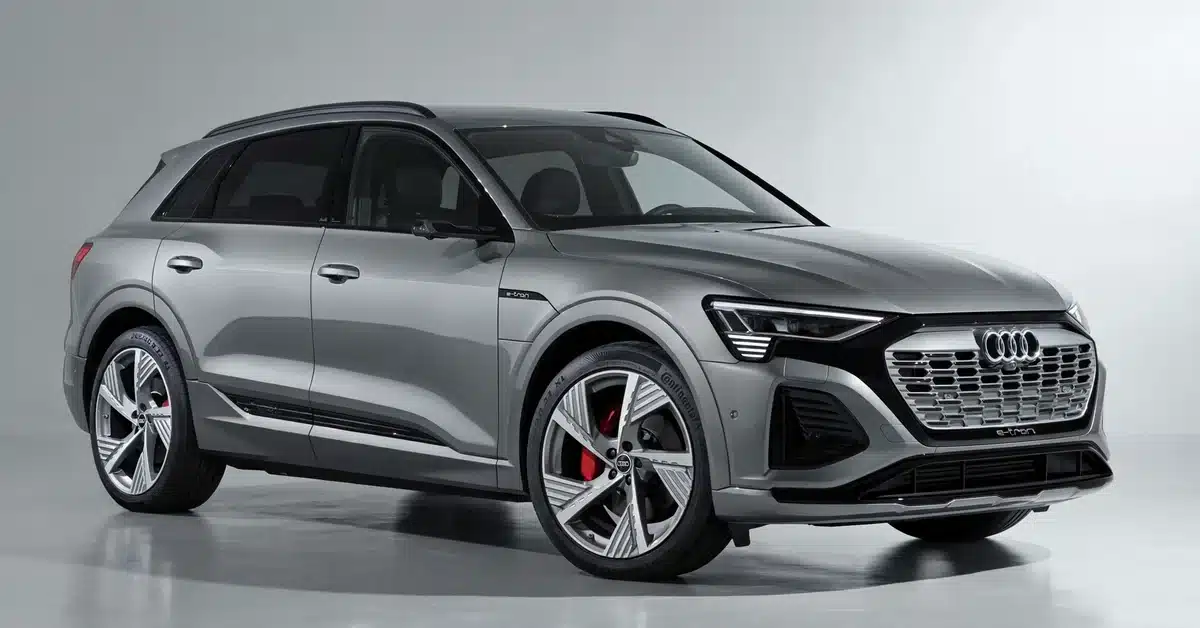
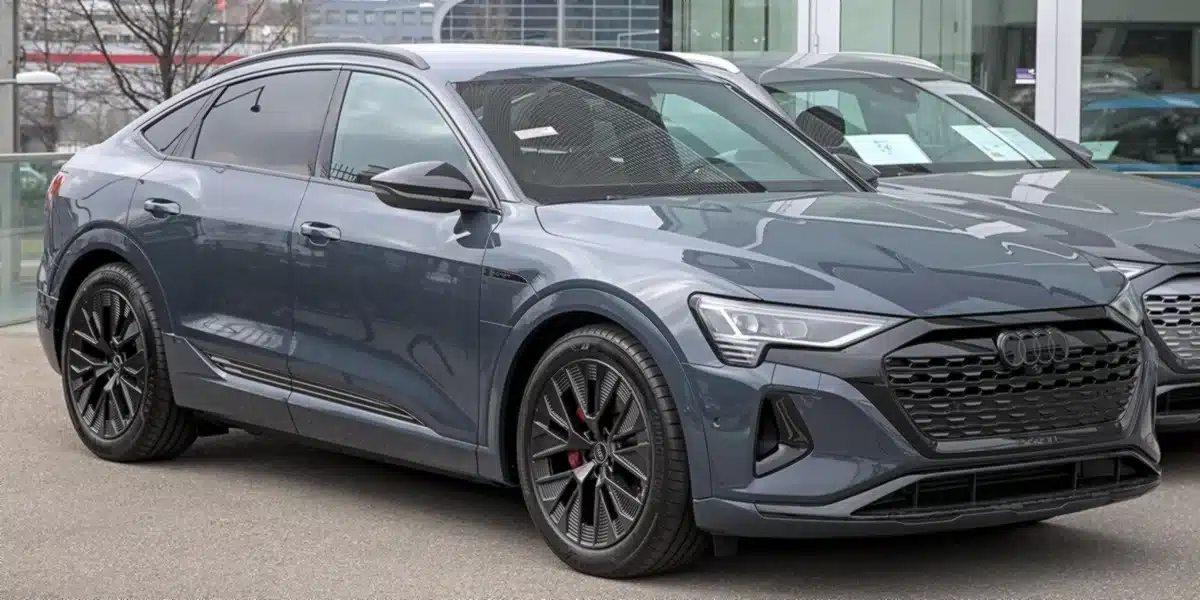
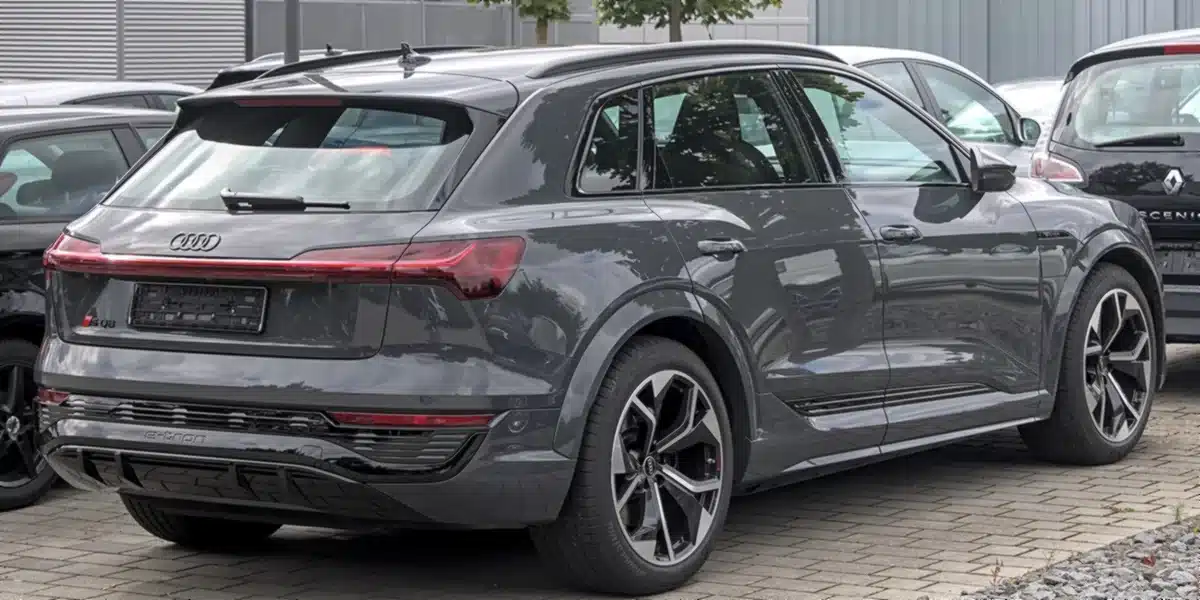
Every Audi Q8 e-tron sold in the United States carries the same battery: a 114 kWh pack (106 kWh usable) under the floor, good for up to 300 miles of EPA range in Sportback form and 170 kW DC fast charging. America got only two versions — the Q8 55 e-tron and the three-motor SQ8 e-tron — for the 2024 and 2025 model years, and production ended in February 2025 when Audi closed the Brussels plant that built them. Every Q8 e-tron on sale today is therefore a used car, which makes the battery the whole ballgame: what it is, how long it lasts, what the warranty really promises, and what a replacement would cost.
Two batteries live in this car. The 12-volt battery under the hood runs the electronics and wakes the car up; the high-voltage pack under the floor does the driving. This guide covers both — the big pack first, then the 12-volt battery near the end.
Updated November 2026 · Figures from EPA ratings, NHTSA filings and Audi’s own specifications.
Quick answer
Every US Q8 e-tron (2024–2025) uses one battery: 114 kWh gross, 106 kWh usable, NMC prismatic cells. The Q8 55 SUV is EPA-rated at 285 miles, the Sportback at up to 300 miles, and the SQ8 at 253 miles on 20-inch wheels. DC fast charging peaks at 170 kW, 10–80% in about 31 minutes. The battery warranty is 8 years / 100,000 miles.
Key figures: 114 kWh gross · 106 kWh usable · 285–300 miles EPA (55) · 170 kW DC · ~31 min 10–80% · 8 yr / 100,000 mi warranty
Audi Q8 e-tron Battery: Full Specs
In the US there are only two versions, and both use the same 114 kWh battery — the differences are motors, power and range, not the pack.
| Version | Battery (Gross) | Battery (Usable) | Power | EPA Range | Peak DC Rate |
|---|---|---|---|---|---|
| Q8 55 e-tron (SUV) | 114 kWh | 106 kWh | 402 hp | 285 miles | 170 kW |
| Q8 55 e-tron Sportback | 114 kWh | 106 kWh | 402 hp | 296–300 miles | 170 kW |
| SQ8 e-tron (SUV & Sportback) | 114 kWh | 106 kWh | 496 hp | 253 miles (20″ wheels); 218 miles (21–22″ wheels) | 170 kW |
Europe also sold a smaller Q8 50 e-tron (95 kWh gross / 89 usable, 150 kW charging). It was never sold in the United States and has no EPA rating — if a listing or another guide shows it as an American model, it is mixing up the two markets.
Inside the Q8 e-tron Battery: 36 Modules, 432 Prismatic Cells
The pack holds 432 prismatic NMC cells in 36 modules at 396 volts — and unlike the original e-tron, every Q8 e-tron cell comes from Samsung SDI.
The Q8 e-tron uses NMC prismatic cells from Samsung SDI — flat, rectangular cells with their own aluminium shell, arranged in modules. (The original e-tron launched in 2019 on LG pouch cells and switched to Samsung SDI prismatic cells in January 2021; the Q8 e-tron uses the prismatic design throughout.) The 114 kWh pack contains 36 modules × 12 cells each = 432 cells total. Within each module, cells are arranged in a 4 parallel, 3 series (4p3s) configuration — four cells in parallel per group, three groups in series per module. Each module operates at approximately 11V, so 36 modules in series gives the pack’s 396V nominal voltage — a standard 400V-class architecture.
Audi’s prismatic cell choice (shared with the original e-tron quattro) differs from the pouch cells in the Ioniq 5/EV6 or the cylindrical cells in Tesla. Prismatic cells’ rigid aluminum shells provide better mechanical protection and make individual module replacement more straightforward. Each module weighs approximately 13 kg — and each can be replaced individually at an authorised Audi service centre if a cell failure occurs, avoiding full-pack replacement.
The pack uses four interconnected cooling circuits — one each for motors, power electronics, charger, and battery. The battery circuit maintains the pack between 25–35°C for optimal performance. A standard heat pump recaptures waste heat from the motors to heat the cabin, improving cold-weather efficiency and reducing the energy drawn from the high-voltage battery for heating.
Q8 e-tron Charging Speeds
The Q8 e-tron charges at up to 170 kW DC and holds that speed unusually well — about 31 minutes from 10% to 80%.
| Charging Method | Power | Time (106 kWh pack) |
|---|---|---|
| Level 1 (120V) | ~1.4 kW | ~75 hours full |
| Level 2 (240V) | 11 kW | ~11 hours full |
| Level 2 (240V, optional charger) | 22 kW | ~6 hours full |
| DC Fast Charging | 170 kW | ~31 min (10–80%) |
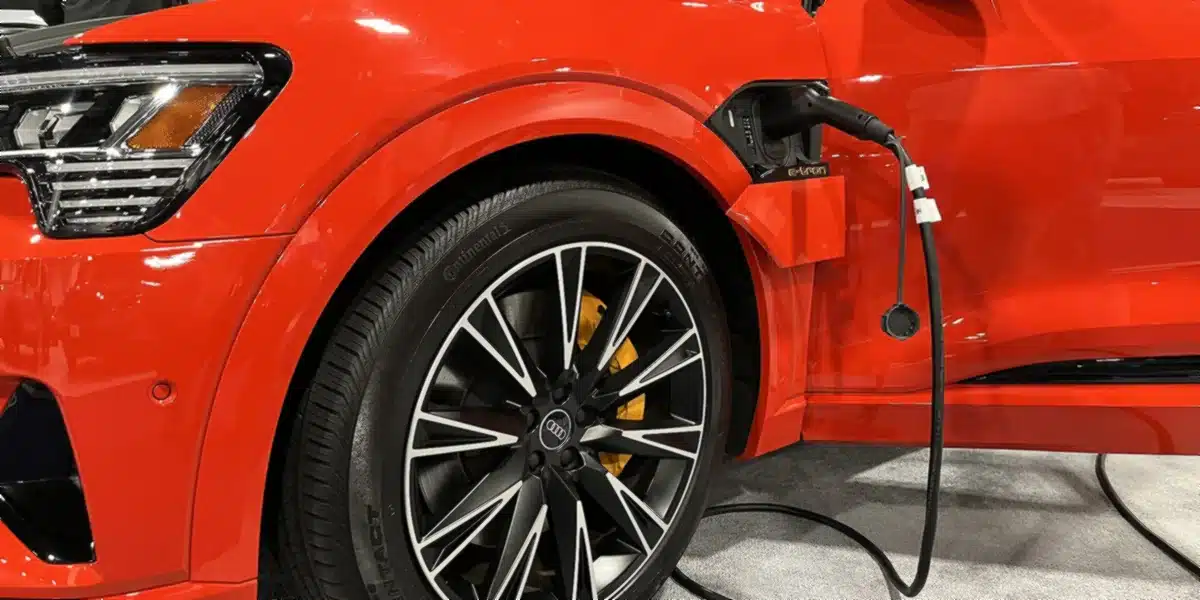
The Q8 e-tron’s charging curve was notably flat — maintaining high charging power all the way to around 80% SoC, rather than tapering sharply at 50–60% as many competitors do. Audi specifically highlighted this charging curve characteristic at the Q8 e-tron’s 2022 launch. In 10 minutes at a 150+ kW DC charger, the Q8 e-tron can add roughly 76 miles of range. The optional 22 kW onboard AC charger is a meaningful upgrade for home charging speed, cutting a full charge from about 11 hours to approximately 6 hours.
Before a planned fast-charging stop, the e-tron route planner can precondition the battery — set the DC charger as the navigation destination and the car warms or cools the pack on the way, so it can take the full 170 kW on arrival. US launch cars also included two years of free Electrify America DC charging sessions.
Q8 e-tron Real-World Range: Managing Expectations
Expect roughly 240–265 miles in mixed driving — independent tests land close to the EPA figures, and wheel size is the single biggest variable.
The Q8 e-tron has a notable gap between official and real-world range. The large, heavy luxury SUV body produces significant aerodynamic drag, and real-world efficiency is typically 2.2–2.8 miles per kWh — well below the official figures:
- Highway at 70–75 mph, mild weather: 210–240 miles real-world range (Q8 55 / 106 kWh)
- Mixed city/highway: 240–265 miles in mild conditions
- Cold weather (below 0°C): 170–210 miles — the large pack size provides more absolute buffer despite percentage losses
- EPA rated range: 285–300 miles — achievable only in optimal conditions, gentle speeds, mild weather
Independent testing agrees with those bands. DrivingElectric measured the Q8 55 e-tron at 2.4–2.5 miles per kWh — 254–265 miles from the 106 kWh pack — and MotorTrend recorded about 239 miles on a mixed highway trip.
Wheel choice alone can cost 35 miles of range: the SQ8 e-tron is EPA-rated at 253 miles on 20-inch wheels — and just 218 miles on 21- or 22-inch wheels, on the identical battery.
Buying a Used Audi Q8 e-tron in 2026: Battery Checklist
Every Q8 e-tron is a used car now — and two things set its price: remaining battery warranty and how steeply it has already depreciated.
With Q8 e-tron production ending in February 2025, all available cars are now used. When evaluating a used Q8 e-tron battery:
- Check NHTSA for open recalls: The Q8 e-tron had several software and electronics recalls — confirm all are closed for the specific VIN
- Request an Audi battery health check: Any Audi dealer can run the ODIS diagnostics system showing actual pack capacity and SOH percentage
- Buy a 2024–2025 car: US Q8 e-trons are 2024–2025 models with the full 114 kWh battery. Cars badged simply “Audi e-tron” (2019–2023 in the US) are the pre-facelift model with a smaller ~86 kWh usable pack and slower charging — a different car, usually priced lower
- Verify DC charging history: Cars used primarily on Level 2 home charging will show less degradation than those relying heavily on DC fast charging
Why are they so cheap? Production ended on February 28, 2025, when Audi closed the Brussels factory, and discontinued luxury EVs fall fast. Consumer Reports lists used 2024 Q8 e-trons at roughly $28,800–$47,975 retail — against $74,400 when new. That depreciation is exactly why a checked car with warranty left is such a strong buy. One limit to know: there is no factory battery upgrade — the 114 kWh pack the car came with is the pack it keeps, so buy on the health of the pack in front of you.
Audi Q8 e-tron Battery Warranty
The US battery warranty runs 8 years or 100,000 miles from the car’s first in-service date — so a 2024 car is covered into about 2032.
The warranty covers defects and excessive capacity loss. One nuance worth knowing: Audi’s international warranty terms put the capacity floor at 70% of the original net energy content, judged by an energy-content measurement at an Audi dealer — but Audi of America’s own public US material states the 8-year / 100,000-mile term without naming a percentage. In practice a US claim is decided by the dealer’s measured health check, so the practical advice is the same either way: get the ODIS health figure in writing before you buy, and again if range drops sharply during the warranty.
For used buyers, count coverage from the original in-service date, not the model year: a Q8 e-tron first sold in early 2024 carries battery coverage to roughly early 2032 or 100,000 miles, whichever comes first. Cars that fast-charge daily and live in hot climates age fastest, which is why the health check matters more than the odometer alone.
Q8 e-tron Degradation: What to Expect
There is no Q8-specific degradation dataset yet — the honest picture comes from fleet-wide EV data and the pack’s own built-in buffer.
Treat any exact per-year percentage for this model with suspicion, including ones printed here before: no large measured study of Q8 e-tron packs exists. The best fleet evidence, Geotab’s January 2026 analysis of more than 22,700 EVs, puts modern liquid-cooled packs at about 2.3% capacity loss per year on average, with cars that fast-charge heavily on high-power DC aging closer to 3.0% per year and home-charged cars nearer 1.5%.
The big pack softens what loss there is. Audi holds back about 8 kWh between the 114 kWh gross and 106 kWh usable figures, and even at 90% health the pack still offers roughly 95 kWh of usable capacity — more than many new EVs carry in total. An Audi dealer can read the pack’s actual state of health with the ODIS diagnostic system; there is no owner-facing health readout in the car.
Signs a pack — or its 12-volt partner — needs attention:
- Range that drops suddenly rather than gradually, or a charge ceiling the car will not pass
- DC charging that stays slow even on a warm battery at a high-power charger
- Warning messages about the high-voltage system, or repeated 12-volt failures (a dying 12-volt battery can mimic bigger faults)
Audi Q8 e-tron Battery Replacement Cost
Audi does not publish a fitted replacement price — dealer parts listings put the high-voltage battery itself at roughly $27,000 before labor.
Genuine Audi parts catalogs price the Q8 e-tron’s high-voltage battery at about $26,968–$27,253 as a part. A fitted replacement adds labor, coolant and calibration on top, and prices vary by dealer — treat any single fixed quote with caution. In practice almost no owner pays it: the 8-year / 100,000-mile battery warranty covers the 2024–2025 cars into the early 2030s, and failures inside warranty are Audi’s bill.
Outside warranty, the pack’s design helps: its 36 modules can be replaced individually at an Audi service center, so a single weak module is a module repair, not a whole-pack purchase. For a full out-of-warranty pack, our guide to EV battery replacement cost breaks down how part, labor and core charges add up across brands.
Recalls to Check
One recall touches every Q8 e-tron owner who charges at home: the compact charging cable supplied with the car can overheat.
Under NHTSA recall 23V-842 (Audi campaigns 93U6/93U8), the 220V/240V compact charging system cable fitted to 2019–2024 e-tron models, including the Q8 e-tron, can overheat when plugged into an overloaded or poor-quality home outlet. Audi’s remedy is a free replacement cable with a built-in temperature sensor; until it is fitted, the interim advice is not to use the original cable. The recall followed 615 warranty claims, with no fires or injuries reported. Before buying any used Q8 e-tron, run its VIN on the NHTSA recalls site and confirm this and any software recalls are closed.
The 12-Volt Battery
Like every EV, the Q8 e-tron also runs a conventional 12-volt battery — and when it dies, the car will not wake up, even with a full main pack.
US parts catalogs list the Q8 e-tron’s 12-volt battery as a Group H6 AGM unit of about 70 Ah and 760 CCA, at roughly $270 for the part (Batteries Plus lists it at $269.99). Expect about 3–5 years of life. Symptoms of a failing one are familiar: warning lights, electronics glitches, or a car that will not start despite a charged main battery. Confirm the exact fitment by VIN before ordering, and budget for a dealer or specialist visit if the replacement needs registration with the car’s systems.
Frequently Asked Questions
How much does an Audi Q8 e-tron battery replacement cost?
Audi publishes no fitted price. Dealer parts listings price the high-voltage battery itself at about $27,000 before labor, so a full out-of-warranty replacement at a dealer runs well into five figures. Most owners never pay it: the 8-year / 100,000-mile warranty covers these cars into the early 2030s, and single failed modules can be replaced on their own for far less.
How long does an Audi Q8 e-tron battery last?
The pack is designed to outlast the warranty comfortably. Fleet data across more than 22,700 EVs (Geotab, January 2026) averages about 2.3% capacity loss per year for modern liquid-cooled packs, and the Q8 e-tron’s 8 kWh gross-to-usable buffer hides early loss. Expect the car to remain perfectly usable well past 150,000 miles; an Audi dealer can read its exact state of health with ODIS.
Why was the Q8 e-tron discontinued?
Production ended on February 28, 2025, when Audi closed the Brussels plant that built the Q8 e-tron as part of a wider cost and restructuring program. The model itself was not cancelled for battery problems — the same 114 kWh pack continues to be supported with parts, service and warranty coverage.
What is the battery warranty on an Audi Q8 e-tron?
In the US, 8 years or 100,000 miles from the car’s first in-service date, covering defects and excessive capacity loss. Audi’s international terms name a 70% capacity floor measured by a dealer energy-content test; Audi of America does not publish a percentage, so US claims rest on the dealer’s measured health check. A 2024 car is covered into about 2032.
What size is the Audi Q8 e-tron battery?
114 kWh gross, 106 kWh usable — one of the largest packs in its class — with 432 prismatic NMC cells in 36 modules at 396 volts. Every US version (Q8 55 and SQ8, SUV and Sportback) uses this same pack. The smaller 95 kWh Q8 50 was Europe-only.
Should I charge my Q8 e-tron to 100%?
Audi allows charging to 100% and recommends about 80% for everyday driving to slow ageing, charging fully when you need the range for a trip. The pack’s built-in buffer means even a shown 100% is not the cells’ absolute limit. For a car that sits unused, storing it near half charge is kindest.
Conclusion
One pack, two body styles, no weak version: in the US the Q8 e-tron’s battery story is simple — buy on health and remaining warranty.
The Audi Q8 e-tron battery is a proven, well-engineered NMC prismatic pack — 106 kWh usable in the 55 and SQ8, with individually replaceable modules, a flat charging curve maintaining 170 kW to 80%, and Audi’s sophisticated four-circuit thermal management. Its discontinuation in February 2025 makes it exclusively a used-market purchase in 2026 — and a compelling one. Depreciation on early luxury EVs has been steep, making a 2024–2025 Q8 e-tron with remaining battery warranty and proven durability one of the more interesting large luxury electric SUV values on the used market. Verify battery health via ODIS diagnostics and confirm all open recalls are closed before purchase.
