
Citroën ë-C3 Battery: Complete Guide

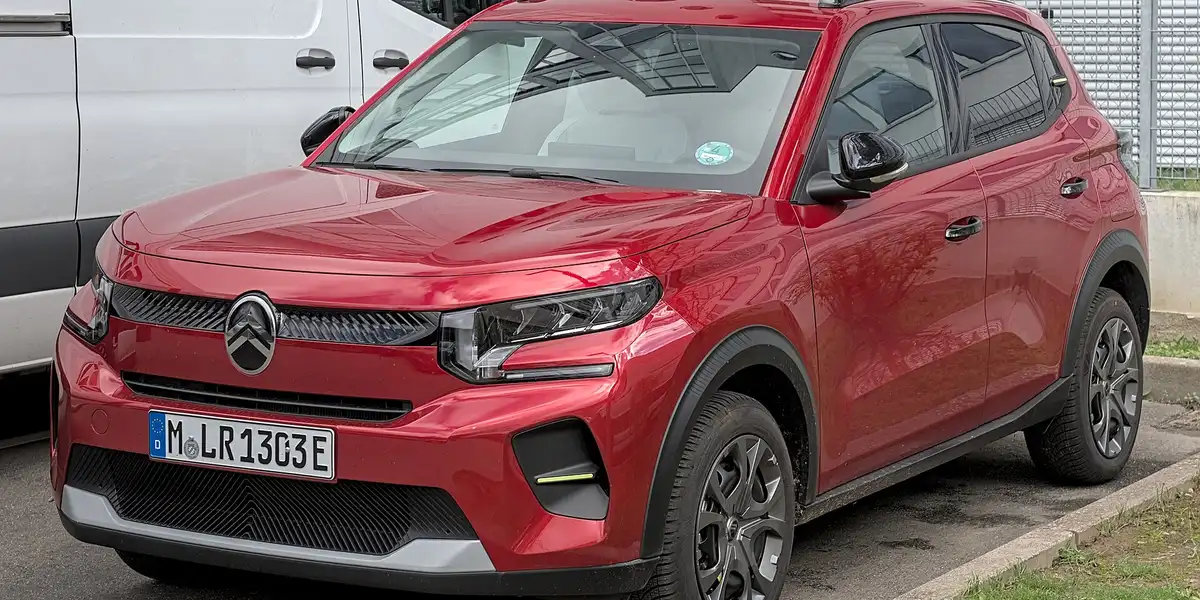
Researched from Citroën UK’s price and specification guide, EV Database, ADAC test data and manufacturer statements, November 2026.
The Citroën ë-C3 uses a lithium iron phosphate (LFP) battery in two sizes: a 30 kWh Urban Range pack (130 miles WLTP, from £18,495 after the UK grant) and a 44 kWh Standard Range pack (up to 202 miles WLTP). The 44 kWh car’s cells are confirmed to come from SVOLT. Citroën claims a 20–80% charge in 26 minutes at up to 100 kW, but independent testing measured 10–80% in about 36 minutes. Two watch-outs: there is no heat pump on any version, and the small battery’s DC fast charging is a £440 option in the UK, not standard.
Citroën ë-C3 Battery Specs at a Glance
Both packs are LFP, both feed the same 83 kW motor, and almost everything that matters — range, charging, price — comes down to which one you pick.
| Urban Range | Standard Range | |
|---|---|---|
| Battery (nominal) | 30 kWh LFP | 44 kWh LFP |
| Usable capacity | about 29.8 kWh | 43.8 kWh |
| WLTP range | 130 miles | 201–202 miles |
| DC fast charging | 30 kW — £440 option in the UK | 100 kW (claimed) |
| AC charging | 7.4 kW standard, 11 kW option | 7.4 kW standard, 11 kW option |
| 0–62 mph | 11.6 seconds | 10.4 seconds (claimed) |
| Top speed | 78 mph | 82 mph |
| Weight (EU unladen) | 1,413 kg | 1,491 kg |
| UK price | £19,995 (£18,495 with grant) | from £22,715 (£21,215 with grant) |
The table hides one detail worth knowing before the rest of this guide: the two cars are not the same product with different ranges. The Urban Range is a city car that can leave town if you plan around it. The Standard Range is a small family car that happens to be cheap. Citroën prices and equips them that way, and the battery sections below follow the same split.
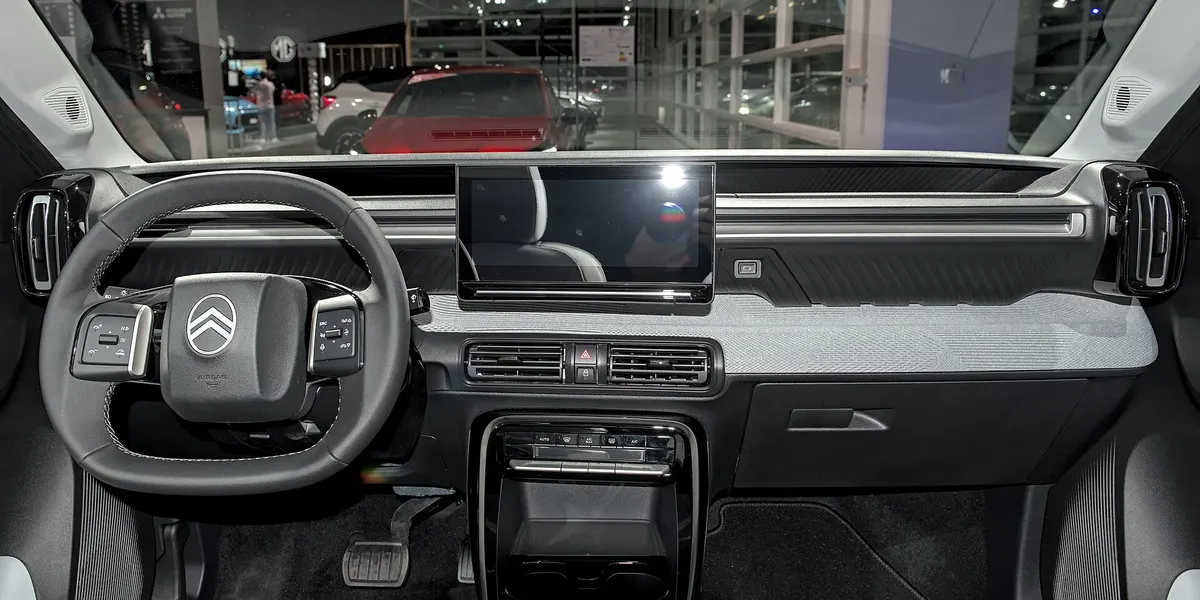
What the two packs cost in the UK
The Urban Range comes in one trim, Plus, at £19,995 on the road, which drops to £18,495 once the £1,500 Electric Car Grant is applied. The Standard Range starts at £22,715 (£21,215 with the grant) in Collection trim and rises to £23,815 (£22,315) for the Max. Those are Citroën UK’s June 2026 production prices, and they make the ë-C3 the cheapest proper electric car on sale in Britain — which is exactly the job the battery was designed to do.
What Battery Does the Citroën ë-C3 Use — and Who Makes the Cells?
Both ë-C3 packs are lithium iron phosphate (LFP) with prismatic cells in a 400-volt pack — and for the 44 kWh car, the cell supplier is a matter of public record: SVOLT.
LFP is the cheap, durable end of lithium-ion. It gives up some energy density against the nickel-based chemistries in most European EVs, and in return it costs less, tolerates being charged full, and lasts. On a car whose entire reason to exist is its price, that trade is not a compromise — it is the point. If you want the chemistry itself explained, our guide to what LFP battery chemistry is covers how it differs from NMC.
The 44 kWh pack: SVOLT, confirmed
SVOLT, the battery maker spun out of Great Wall Motor, confirmed in January 2024 that it is the official LFP cell supplier for the ë-C3’s 44 kWh battery, and industry coverage was still describing that supply as current in October 2026. The same SVOLT supply covers the other cars on Stellantis’s Smart Car platform — the Fiat Grande Panda, the ë-C3 Aircross and the Vauxhall Frontera Electric. So the 44 kWh ë-C3’s battery is not a mystery part: it is a named cell from a named supplier, shared across four models.
The 30 kWh pack: BYD, reported but not confirmed
The small pack’s supplier is a different kind of story. In February 2025 the French magazine L’Argus reported that Stellantis would use BYD LFP cells for the cheaper short-range versions of the ë-C3 and Grande Panda, targeting a price under €20,000. The car that eventually appeared — 30 kWh, 212 km WLTP, launched for 2026 — matches that report closely. But neither Citroën, Stellantis nor BYD has ever confirmed it publicly. Treat the BYD link as well-sourced reporting, not established fact, and be wary of any site that states it flatly.
Why Citroën chose LFP
Three reasons, all traceable to the price tag. LFP cells are cheaper per kilowatt-hour than nickel-based cells, which is how a European-built EV reaches £18,495. LFP also shrugs off the full charges that a small-battery car demands constantly — an owner of a 130-mile car cannot baby it at 80%. And LFP’s thermal stability suits a car with no battery preconditioning and a simple cooling brief. The cost is weight and bulk for a given capacity, which is why the ë-C3’s range tops out where it does.
How Far Does the Citroën ë-C3 Really Go?
The 44 kWh car’s official figure is 201–202 miles WLTP; the most careful independent test, by Germany’s ADAC, measured 158 miles — plan around the tested number, not the brochure.
ADAC’s Ecotest put the 44 kWh car at 19.9 kWh per 100 km, noticeably thirstier than its 16.7 WLTP rating, which works out to 255 km (158 miles) of tested range against a 322 km claim. British press tests land in the same territory: Autocar recorded 175 miles in everyday use and 122 miles on a 70 mph touring run, Auto Express managed the equivalent of about 153 miles on a motorway-heavy route, and CarGurus saw more than 174 miles in warm weather at over 4.0 mi/kWh. EV Database’s scenario estimates — 180 miles combined in mild weather — sit right in that band.
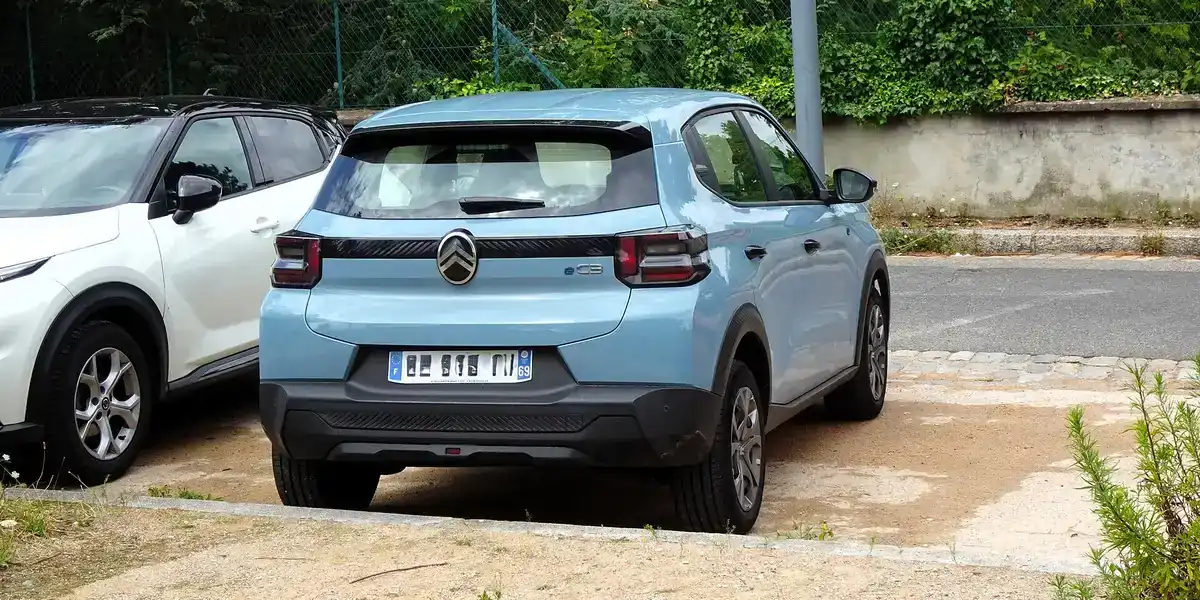
What the 44 kWh car really does
In mixed real driving, expect 150–180 miles. At a steady motorway pace, expect 120–155 miles depending on weather and speed. That is honest range for the class and the money — a Renault 5 goes further on a similar battery, but it costs more and uses a different chemistry to do it. The ë-C3’s problem is not the size of its battery; it is that the car uses its electricity less efficiently than the best small EVs, which ADAC’s consumption figure shows plainly.
What the 30 kWh car really does
Citroën headlines the Urban Range with a city figure of up to 186 miles on the WLTP city cycle, against 130 miles combined. Real testing is more modest: Autocar measured 4.5 mi/kWh in town driving, which is about 135 miles, and 3.5 mi/kWh on the motorway, which is roughly 105 miles. Read those two numbers together and the car’s purpose is clear — it is a genuinely good city car whose battery is simply too small for relaxed long-distance work.
How Fast Does the Citroën ë-C3 Charge?
The 44 kWh car claims 100 kW and a 26-minute charge; measured testing says the peak is lower, the average is about 62 kW, and a 10–80% charge takes roughly half an hour to 36 minutes.
Start with what the headline numbers actually mean. Citroën’s 26 minutes is a 20–80% figure, not the 10–80% window most testers use. ADAC measured a peak of 88.2 kW, an average of 61.1 kW and 36 minutes for 10–80%. EV Database’s figures are a touch kinder — 97 kW maximum, 62 kW average, 31 minutes — but both agree on the shape of the truth: this is a car that charges at about 60 kW in practice, briefly flirting with higher numbers when the battery is warm and empty.
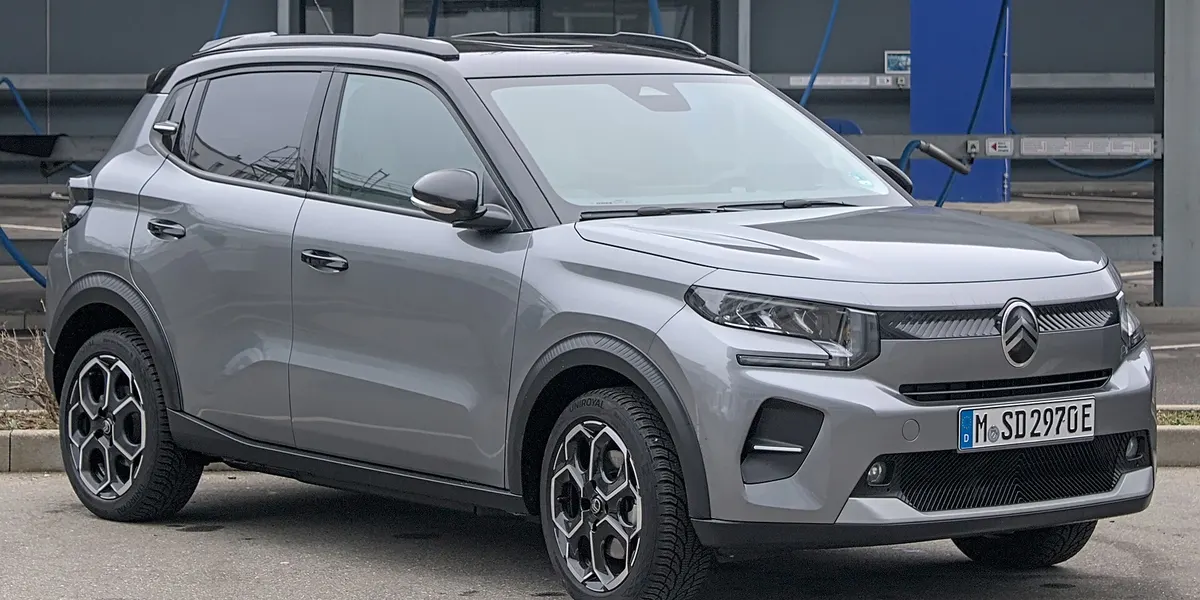
The 44 kWh car: claim versus measurement
None of this makes the ë-C3 a bad rapid-charger — 31 to 36 minutes for a usable top-up is workable, and it matches the Grande Panda on the same hardware. It does mean you should ignore the 100 kW sticker when planning a journey. One genuine limitation sits behind the numbers: the ë-C3 has no battery preconditioning on either pack, so a cold battery on a winter morning will charge slower still, because the car cannot warm it on the way to the charger. Our explainer on EV battery preconditioning covers what that feature does on cars that have it.
The 30 kWh car: fast charging costs extra
Here is the single most important buying fact in this guide. In the UK, the Urban Range does not come with rapid charging as standard. The CCS socket and a modest 30 kW DC capability are a £440 option; without it, the car charges only on AC, at up to 7.4 kW. Even with the option ticked, a 20–80% charge takes around 36–40 minutes, because 30 kW is slow by modern standards. If there is any chance the small-battery car will ever need a public rapid charger, the £440 is not optional in any meaningful sense — and a used buyer should check whether the first owner paid it.
Home charging
Both packs charge at 7.4 kW on a single-phase home wallbox as standard, with an 11 kW three-phase on-board charger as an option where three-phase power exists. A full charge takes about 7 hours for the 44 kWh car at 7.4 kW, or about 4 hours 45 minutes at 11 kW; the 30 kWh car needs roughly 4 hours 45 minutes at 7.4 kW and about 3 hours 15 minutes at 11 kW. For a car that comes home every night, the standard set-up is all either battery ever needs.
How Much Does the Citroën ë-C3’s Battery Weigh?
Citroën does not publish the weight of either ë-C3 battery pack — any site quoting an exact pack weight for this car is guessing.
It is a fair question, and it deserves a straight answer rather than an invented number. What is published is the weight of the whole car: 1,413 kg EU unladen for the 30 kWh version and 1,491 kg for the 44 kWh version. The difference between the two cars is about 78 kg, and most of that gap is the bigger battery — the two cars share their body, motor and equipment — but it is a whole-car difference, not a certified pack weight, and it should not be quoted as one.
What about the 12-volt battery?
Like every EV, the ë-C3 also carries a small 12-volt battery for lights, locks, screens and waking the car up; the high-voltage pack tops it up as needed. Citroën does not publish a detailed public specification for it, and the fitment data sold by battery retailers for older petrol C3s does not apply to this car. If the 12-volt side of EVs is new to you, our explainer on whether EVs have a 12-volt battery covers how the system works.
The Missing Heat Pump: The ë-C3’s Winter Weakness
No ë-C3, on either battery, offers a heat pump — not as standard and not as an option — so winter heating comes straight out of the range figure.
Cabin heat in the ë-C3 is resistive, drawn from the traction battery, and there is no battery preconditioning to soften the blow. Put those together with an LFP pack — a chemistry that dislikes cold more than most — and winter is where this car’s numbers move the most. EV Database estimates the 44 kWh car’s combined range falling from about 180 miles in mild weather to about 130 miles at −10 °C with the heating on, a drop of roughly 28%. The 30 kWh car falls from about 125 miles to about 90 on the same basis.
How much range disappears in winter?
Owner reports from the mechanically identical ë-C3 Aircross point the same way: real winter range of 150–180 km against a 300 km WLTP figure, with owners describing drops of 30–40% in the coldest weeks. ADAC adds a quieter warning from the other direction — its charging test was a summer test, and it notes the result may be worse in winter. None of this is a defect; it is the physics of a cheap LFP car without thermal equipment. But a buyer in a cold climate should budget for it honestly, because a 130-mile car that becomes a 90-mile car in January is a different ownership proposition.
Charging Habits and Battery Life
Citroën’s own guidance for its LFP batteries is a full charge at least once a week — not the “charge to 100% every day” advice often pasted onto this car.
The weekly full charge exists for calibration: an LFP battery’s voltage curve is so flat that the battery management system needs regular full charges to know exactly how much energy it holds, and Stellantis’s LFP owner guidance says a dashboard message will prompt you after about 932 miles (1,500 km) without one. Daily charging to 100% does an LFP pack far less harm than it would a nickel-based one, and with a 130-mile car you may need it — but the manufacturer’s actual instruction is weekly, and the distinction matters for anyone repeating the daily claim as gospel.
The same guidance covers storage: if the car will sit unused for several weeks, leave it between 20% and 40% rather than full or empty. Beyond that, the honest summary of LFP ownership is that the chemistry is the forgiving kind — it is built for high cycle counts and shrugs off the deep, frequent cycling a small-battery car demands. That is the real reason it is in this car, and it is also why Citroën can warranty it the way the next section describes.
Citroën ë-C3 Battery Warranty
The ë-C3’s traction battery is covered for 8 years or 100,000 miles in the UK — 8 years or 160,000 km in the EU — with capacity guaranteed at 70%.
- UK battery warranty: 8 years / 100,000 miles, capacity maintained at 70% or better
- EU battery warranty: 8 years / 160,000 km, capacity maintained at 70% or better
- UK vehicle warranty: 3 years / 60,000 miles
- Citroën We Care (UK): for cars with a warranty start from June 2025, key powertrain components — motor, on-board charger, transmission — can be covered to 8 years / 100,000 miles, activated by keeping the car serviced on Citroën’s schedule
That battery warranty is the strongest quiet argument for the ë-C3. Cars costing twice as much offer the same 8-year, 70% promise, and on a budget EV the warranty is what turns a cheap battery from a gamble into a known quantity. A used buyer should check the car’s service history either way: the We Care extension in particular depends on the servicing having been done on schedule.
Citroën ë-C3 vs Its Sister Cars and Rivals
The ë-C3’s closest competitors are its own relatives — the Grande Panda shares its battery outright — while the Renault 5 and Dacia Spring attack it from opposite directions.
| Car | Battery | WLTP range | DC charging | Heat pump |
|---|---|---|---|---|
| Citroën ë-C3 Standard Range | 44 kWh LFP | 201–202 miles | 100 kW claimed | No |
| Fiat Grande Panda Electric | 44 kWh LFP | 199 miles | 100 kW claimed | No |
| Citroën ë-C3 Aircross | 44 kWh LFP (54 kWh version also offered) | up to 190 miles (249 for the 54) | 100 kW | No |
| Renault 5 E-Tech 40 kWh | 40 kWh usable, NMC | 194 miles | 80 kW | Yes, standard |
| Dacia Spring | 24.3 kWh LFP | 140 miles | 40 kW | No |
Same battery, different badge: the sister cars
The Fiat Grande Panda Electric uses the identical 44 kWh SVOLT LFP pack, the same 100 kW claim and the same measured reality, wrapped in a more upright body with a built-in retractable charging cable on AC versions; a 54 kWh version has been announced for some markets. The ë-C3 Aircross stretches the same hardware into a small SUV and already offers that 54 kWh pack, rated at up to 249 miles WLTP. The Vauxhall Frontera Electric is the same running gear again under a British badge. Choosing between them is about body style and price, not batteries — the battery story in all four is this one.
The two rivals that matter
The Renault 5 E-Tech is the ë-C3’s opposite: a 40 kWh usable NMC pack, a standard heat pump, battery preconditioning and 11 kW AC charging as standard. It goes a similar distance, copes with winter far better, and costs more — it is what the ë-C3’s compromises buy you out of. The Dacia Spring attacks from below: a 24.3 kWh LFP pack, 140 miles WLTP and 40 kW charging for less money again, with a second-generation Spring already revealed offering 250 km WLTP. The ë-C3 sits deliberately between them — more car than the Spring, less money than the Renault.
Frequently Asked Questions
Is the Citroën ë-C3 battery LFP or NMC?
It is LFP — lithium iron phosphate — in both sizes. No NMC version of the European ë-C3 exists. The 30 kWh Urban Range and the 44 kWh Standard Range differ in capacity and supplier arrangements, not in chemistry.
Who makes the ë-C3’s battery cells?
For the 44 kWh pack, SVOLT — the supplier confirmed it publicly in January 2024, and the same supply covers the Grande Panda, ë-C3 Aircross and Frontera. For the 30 kWh pack, French magazine L’Argus has reported BYD as the cell supplier; that has never been officially confirmed by Citroën, Stellantis or BYD.
What is the difference between the 30 kWh and 44 kWh ë-C3?
Capacity, range, charging and price. The 30 kWh car offers 130 miles WLTP, DC charging only as a £440 option in the UK (30 kW), and a £19,995 starting price. The 44 kWh car offers up to 202 miles, standard 100 kW DC charging, and prices from £22,715. Both are LFP, both use the same 83 kW motor, and both lack a heat pump.
What is the ë-C3’s usable battery capacity?
About 43.8 kWh of the 44 kWh pack is usable, a figure ADAC’s data agrees with; the 30 kWh pack offers about 29.8 kWh usable. The gap between nominal and usable is the buffer the battery management system keeps in hand to protect the pack.
How much does the ë-C3’s battery weigh?
Citroën does not publish a pack weight for either battery. The whole car weighs 1,413 kg (30 kWh) or 1,491 kg (44 kWh) in EU unladen trim, so the bigger-battery car carries about 78 kg more overall — but that is a whole-car difference, not a certified battery weight.
How long is the ë-C3’s battery warranty?
Eight years or 100,000 miles in the UK (8 years or 160,000 km in the EU), with the battery guaranteed to retain at least 70% of its capacity over that period.
Should I charge the ë-C3 to 100% every day?
You can — LFP tolerates it — but Citroën’s own LFP guidance asks for a full charge at least once a week, mainly so the battery management system can calibrate itself against the chemistry’s flat voltage curve. Daily 100% charging is a habit some owners adopt with a small battery, not a manufacturer instruction.
Is the European ë-C3 the same car as India’s eC3?
No. India’s eC3 is a different vehicle on a different platform with a 29.2 kWh battery and Indian ARAI range figures. This guide covers only the European Smart Car ë-C3 built in Slovakia; specifications and range figures do not transfer between the two cars.
Conclusion
The ë-C3’s battery is a cost-engineering exercise that mostly works: honest LFP hardware, a confirmed SVOLT supply on the big pack, and an 8-year warranty — priced against compromises you should walk in with your eyes open.
Those compromises are specific, not vague. There is no heat pump, so winter takes roughly a quarter to a third of the range. The 100 kW charging claim describes a peak the car visits rather than a speed it holds. And the cheapest version’s rapid charging is a paid option that any sensible first owner should tick — and any used buyer should verify.
Forgive those, and what remains is the cheapest properly warranted electric car in Europe, with a battery chemistry chosen to be charged hard and often. For city and suburban work, that trade is the right one — just make sure the version you buy is the one your driving actually needs.
