
VW ID.3 Battery: Complete Guide

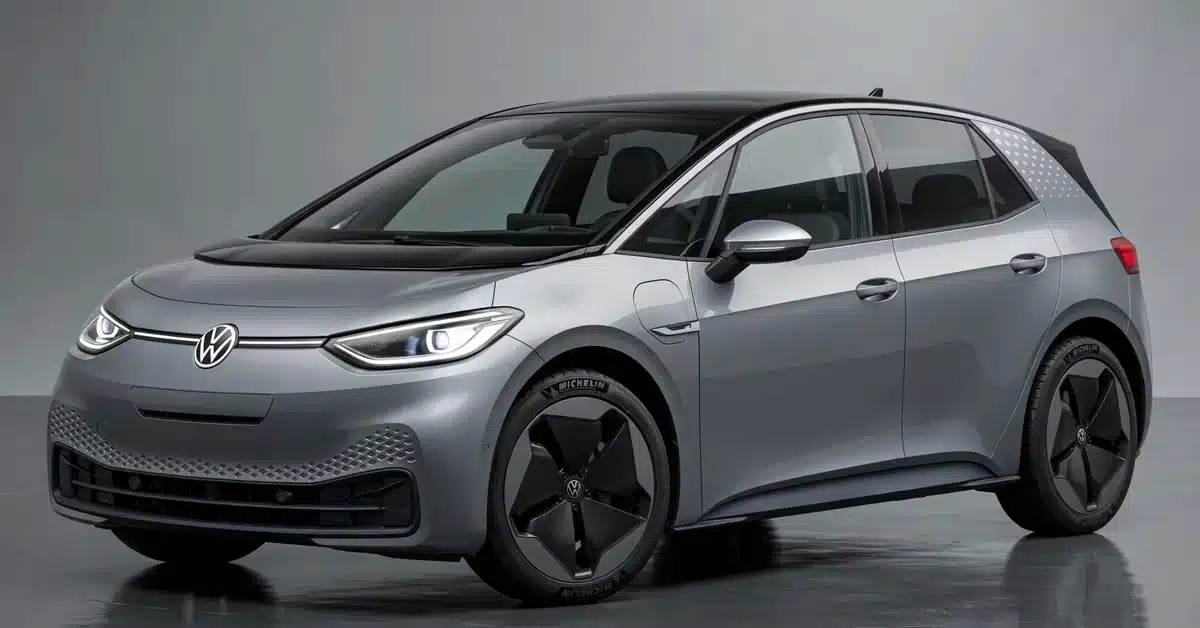
Few electric cars have carried as many different batteries as the Volkswagen ID.3. The 2020 original came with 45, 58 or 77 kWh; later cars added 52 and 59 kWh versions and a 79 kWh flagship; and the 2026 ID.3 Neo rewrote the range again with 50, 58 and 79 kWh packs — the two smaller ones switching to LFP chemistry. Told as one list, those numbers contradict each other. Told by generation, they make sense.
This guide separates the generations, because almost every wrong figure published about this car comes from mixing them. The ID.3 was never sold in the United States or Australia, so all ranges are WLTP and prices are UK and European, with the market named on each figure.
Facts checked against Volkswagen newsroom releases and UK price lists, EV Database, ADAC’s long-term test reporting, Germany’s KBA recall records and Euro NCAP.
Quick answer
Every European ID.3 before the Neo uses an NMC pack of LG Energy Solution pouch cells: 45, 58 or 77 kWh usable originally, later 52, 59 and 79 kWh. The 2026 Neo’s 50 and 58 kWh packs are LFP; its 79 kWh pack keeps the flagship role and 183 kW charging. ADAC’s 170,000 km endurance test ended at 91% battery health. The battery warranty is 8 years or 160,000 km at a 70% floor, and VW publishes no replacement pack price.
Key figures: original packs 45/58/77 kWh usable (48/62/82 gross) · Neo 50/58 (LFP) + 79 kWh · DC peak 50 kW (2020 Pure) to 185 kW (GTX/MY26) · AC 7.2 kW (Pure) / 11 kW · Euro NCAP 5 stars (2020)
VW ID.3 Battery Sizes: Every Generation
Which battery an ID.3 has depends entirely on when it was built — this table is the map.
| Generation | Usable / gross (kWh) | Chemistry | DC peak | WLTP range |
|---|---|---|---|---|
| Original Pure (2020–) | 45 / 48 | NMC | 50 kW (later 110) | 330 km |
| Original Pro (2020–) | 58 / 62 | NMC | 100 kW (120 from 2023) | 420–426 km |
| Original Pro S (2020–) | 77 / 82 | NMC | 125 kW (170 from 2023; 175 from May 2024) | 550 km (559 from May 2024) |
| Pure (MY24–26) | 52 / 55 | NMC | 145 kW | 388 km |
| Pro (MY24–26) | 59 / 63 | NMC | 165 kW | 434 km |
| GTX / Pro S (MY26) | 79 / 84 | NMC | 185 kW | up to 604 km |
| Neo (2026–) | 50 / 55 | LFP | 105 kW | 417 km |
| Neo (2026–) | 58 / — | LFP | 105 kW | 494 km |
| Neo (2026–) | 79 / — | NMC-class | 183 kW | 630 km |
Under every pre-Neo pack sits the same cell story: pouch cells from LG Energy Solution — its LGX E78 cell, an NCM 712 formulation — assembled into modules on the MEB platform at 400 volts with liquid cooling. Claims that the European ID.3 uses prismatic cells are wrong; prismatic is Volkswagen’s future unified-cell direction, not what this car was built with. For the group-wide picture, see our guide to the battery chemistry Volkswagen uses.
One pack question causes endless confusion: the ID.3’s 77 kWh Pro S and the ID.4’s 77 kWh car use the same MEB battery system family — same usable capacity, same cell type — in different bodies. The figures are interchangeable; the cars are not.
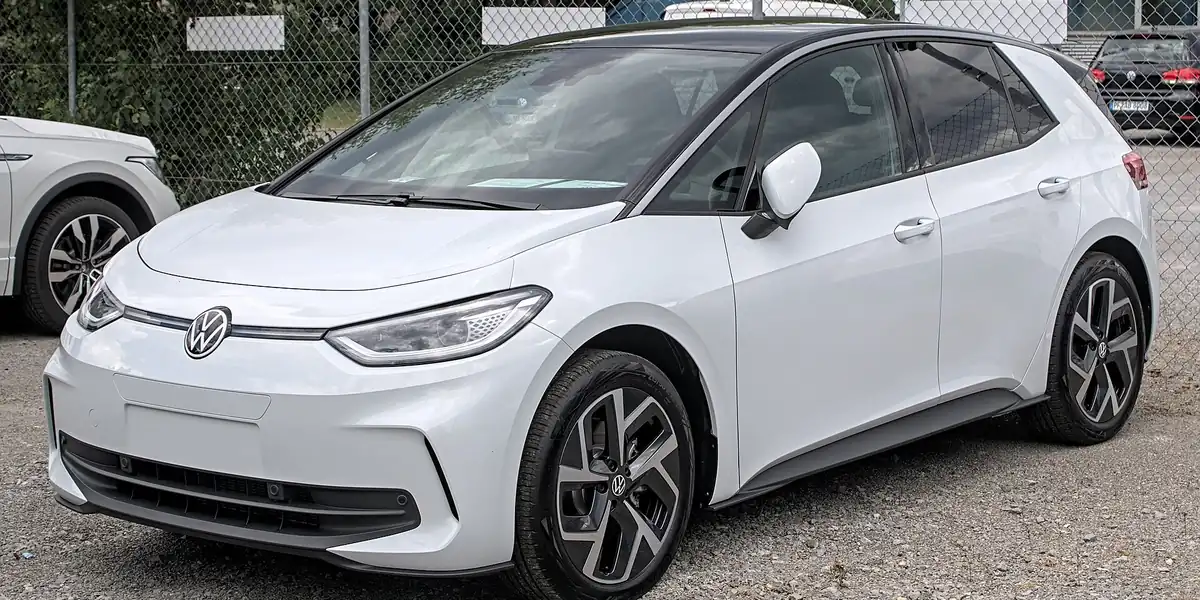
The ID.3 Generations, Explained
From the 2020 launch cars to the 79 kWh flagship, each step changed the battery offering in one specific way.
What happened at launch and the facelift?
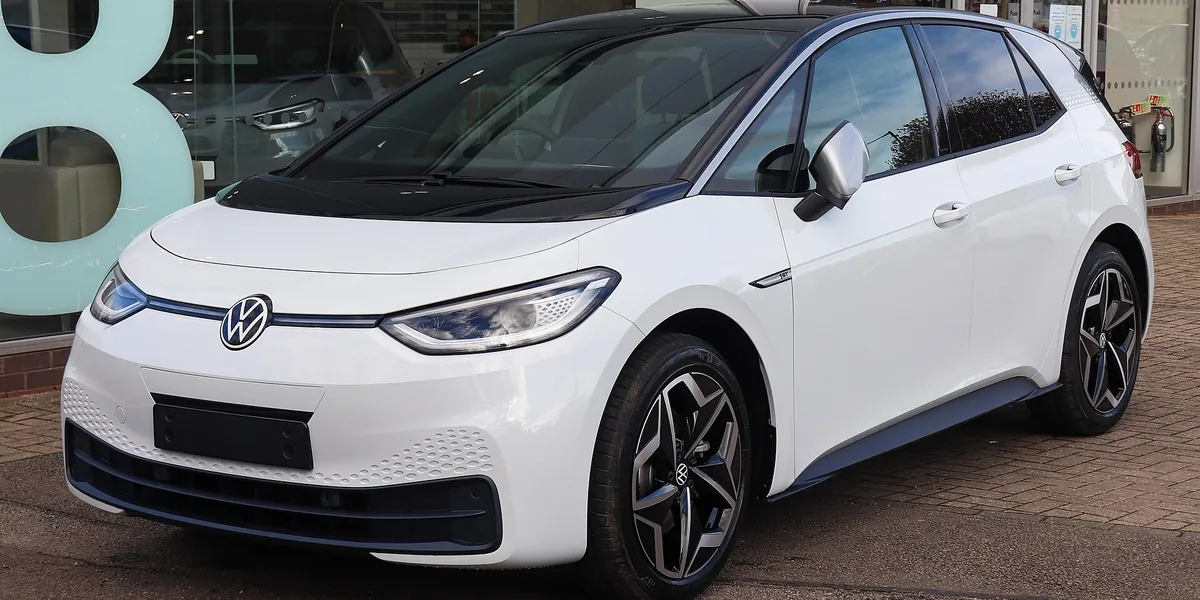
Volkswagen revealed the ID.3 in September 2019 and opened UK orders in October 2020: the 1ST Edition at £38,880, series Life (58 kWh) from £29,990 including the then grant, and the Pro S Tour at £39,290. Motors were 110 kW (Pure), 107 or 150 kW (Pro) and 150 kW (Pro S). The March 2023 facelift kept the three packs and raised charging — 120 kW for the Pro, 170 kW for the Pro S — and a May 2024 upgrade took the Pro S to 175 kW, a 559 km WLTP range and, for the first time on this car, navigation-linked battery preconditioning.
What did the GTX and the 2024 model year change?
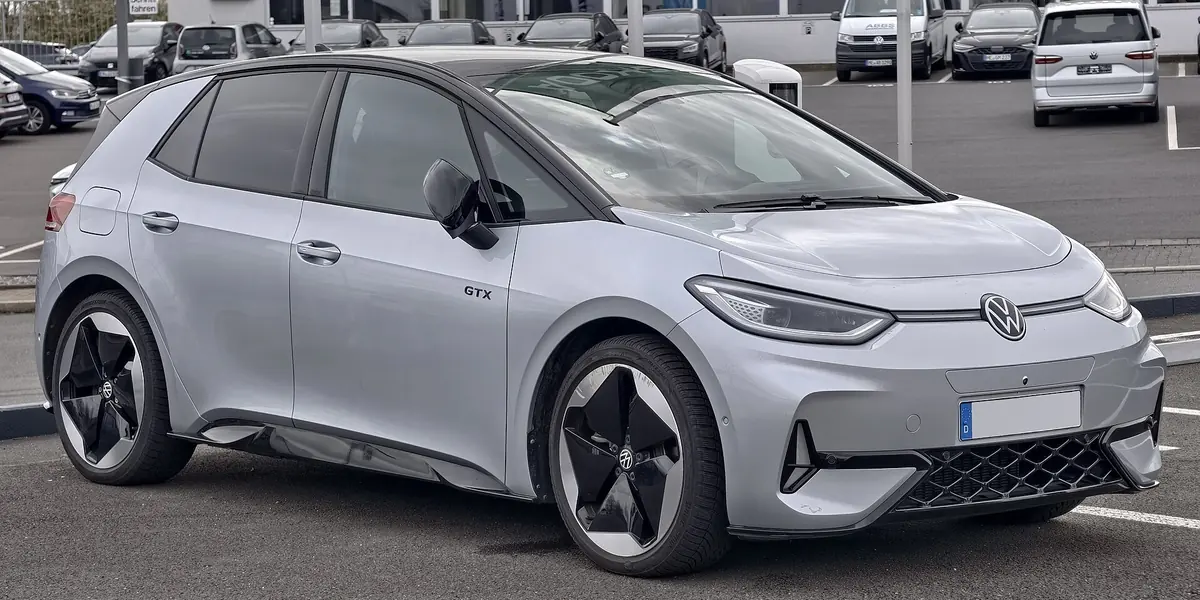
The GTX arrived in 2024 with the new 79 kWh pack: 210 kW in the GTX and 240 kW in the GTX Performance — both rear-wheel drive, despite frequent “AWD” labelling — with 185 kW charging and up to 604 km of WLTP range. A smaller change matters to used buyers: from model year 2024 the entry Pure became a 52 kWh car (125 kW motor, 145 kW charging) and the Pro grew to 59 kWh with 165 kW charging, so a “2023 vs 2024” ID.3 can differ in battery as well as trim.
The ID.3 Neo: LFP Arrives
The Neo is a new generation, not a trim: its two smaller packs are LFP, it charges differently, and it adds vehicle-to-load for the first time.
What batteries does the Neo use?
Volkswagen premiered the ID.3 Neo on 15 April 2026 on the updated MEB+ platform. Its 50 and 58 kWh packs use LFP chemistry — a first for the ID.3, aimed at cost and longevity at the entry level — while the 79 kWh car keeps the flagship role with up to 630 km of WLTP range. The small packs charge at 105 kW and the 79 kWh car at 183 kW, with 10–80% quoted at roughly 26–29 minutes. One question the launch left open: Volkswagen does not officially name the Neo’s cell supplier, and this guide does not guess one — claims naming a supplier for these packs go beyond what VW has published.
What does the Neo cost — and what is vehicle-to-load?
UK Neo orders opened on 13 August 2026 from £33,080 on the road (£31,580 after the £1,500 Electric Car Grant), with the 58 kWh Life at £35,495 and the 79 kWh Life at £36,995; first UK cars were expected from October 2026. The Neo also brings proper vehicle-to-load — up to 3.6 kW through an optional adapter. The older 77 kWh cars offer something narrower instead: vehicle-to-home bidirectional charging (from December 2023, only with a HagerEnergy S10 home station and ID. Software 3.5 or later), and no V2L at all.
VW ID.3 Charging Speeds by Era
Charging is where the generations differ most — a 2020 Pure and a 2026 Neo are barely the same car at a rapid charger.
How fast does each generation charge on DC?
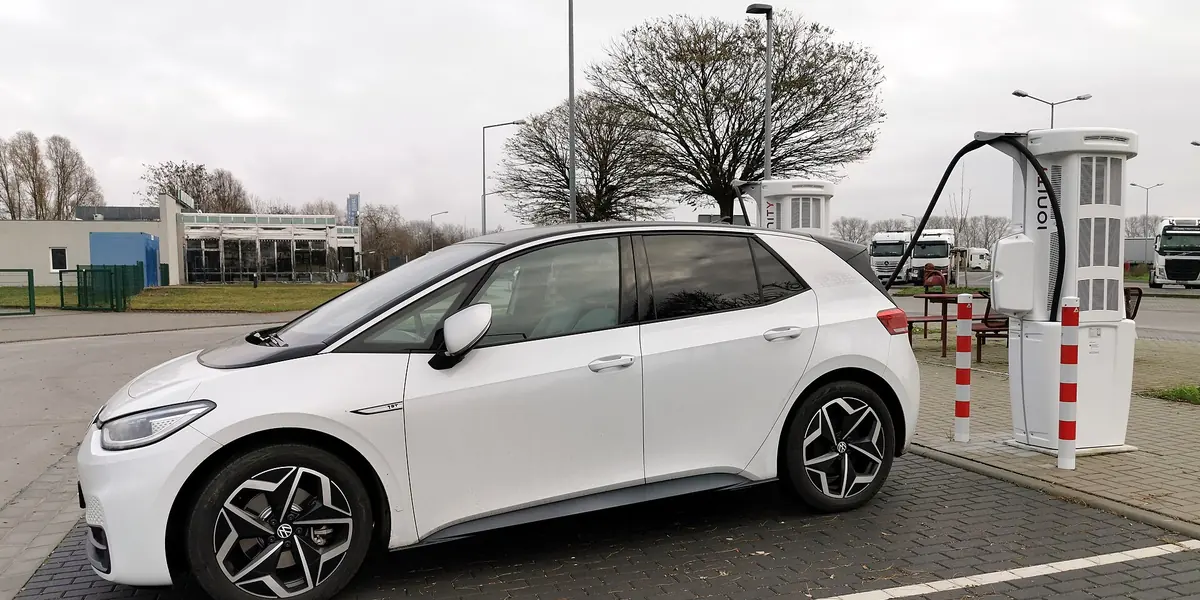
DC peaks climbed steadily: 50/100/125 kW at launch (the 77 kWh car later reached 135 kW via the ID. Software 3.0 update), 120/170 kW after the facelift, 175 kW on the May 2024 Pro S, 185 kW on the GTX and MY26 Pro S, and 105/183 kW on the Neo. EV Database’s modelled 10–80% sessions show what that means in averages: about 31–34 minutes at 75–82 kW average for the 58 kWh cars, 24–25 minutes at ~105–110 kW for the 59, and 26 minutes at ~130–135 kW for the 79 kWh GTX Performance; its Neo 79 estimate is around 30 minutes at ~115 kW average.
What about AC charging, preconditioning and the heat pump?
On AC, the split is by pack: Pure cars (45 and 52 kWh) charge at 7.2 kW only, while 58 kWh and larger cars take 11 kW three-phase (a full charge in about 6 hours 15 minutes for the 58). Preconditioning splits by build date, not by wish: cars on ID. Software 2.x/3.x have no charger preconditioning, cars built before late 2023 cannot take Software 4.0/5.0 at all, and factory navigation-linked preconditioning exists on the GTX, the May-2024 Pro S and the Neo. The heat pump was a paid option on the original car (about €1,250 in Germany); on the Neo it remains an option in Germany (from €1,090) but is standard on UK Style trims.
VW ID.3 Real-World Range
Expect roughly 350 km from a 58 kWh car and 450–475 km from the big packs in mixed use — less in winter, as Green NCAP’s test showed early on.
What do the estimates and Green NCAP say?
EV Database’s estimates (its own modelling, labelled as such) put the 58 kWh Pro at about 350 km combined (400 in mild weather, 295 in cold) and the 77 kWh Pro S at 450–465 km depending on year, rising to 475 for the 79 kWh MY26 car and about 490 for the Neo 79. Green NCAP’s February 2021 test of a 58 kWh car measured 20 kWh/100 km average consumption and a 296 km test range against the 418 km catalogue figure — with a −7 °C worst case of 38.3 kWh/100 km, the heating draw being the car’s known winter weakness.
What about the 387-mile claim?
One famous figure needs correcting. A long-term Fleet News test of a Pro S is often quoted as achieving 387 miles; the car’s display indicated 387 miles at a full charge, while the test itself averaged 4.0 mi/kWh — about 308 miles by their own maths. Indicated range is a prediction, not a measurement, and the 387 figure should never be quoted as an achieved range.
VW ID.3 Degradation: The ADAC 170,000 km Test
This car owns the best public degradation dataset of any EV — and it is reassuring: 91% health after four years of deliberately harsh use.
What did ADAC’s test find?
ADAC ran an ID.3 Pro S Tour (77 kWh) from May 2021 for over 160,000 km — about 170,000 km by the test’s end — measuring state of health repeatedly with AVILOO’s test equipment. The ladder: 96% at 21,800 km, holding around 96% to roughly 70,000 km; about 94–95% at 84,300 km; 91% at about 145,800 km, and still 91% at the end. Loss is front-loaded, not linear — which is why any flat “percent per year” figure misleads.
How hard was the test car used?
The use was not gentle: roughly 40% of charging was on DC rapid chargers, the car was frequently charged to 100% and repeatedly left standing full for days. Its measured maximum range fell from 438 km when new to 425 km at the end — 13 km lost across the whole test. An independent datapoint rhymes with it: a KVD battery certificate (February 2026) recorded a 58 kWh ID.3 at 90% health after 75,560 km. For how replacements are priced when a pack does fail, see our guide to what an EV battery replacement costs.
Buying Used: Checking an ID.3’s Battery Health
Volkswagen runs no official used-battery certificate for the ID.3 — the market standard is an independent test, and the ADAC curve tells you what score to expect.
How do you check battery health?
Health certificates from independent testers (AVILOO and KVD are the common names) are how used ID.3s are actually sold with evidence: a diagnostic session produces a state-of-health percentage. Judged against the ADAC ladder, a cared-for car at 75,000 km sitting around 90–95% is normal, and even high-mileage cars with heavy rapid-charging histories have held 91% at 170,000 km. A reading far below the curve for its mileage is the thing to negotiate on — or walk away from.
What about the 12-volt battery?
The other used-car check is the 12-volt battery. Early ID.3s suffered well-documented 12V failures, and Volkswagen’s ID. Software 2.4 workshop campaign (2022) fitted a new, more cycle-resistant 12V battery free of charge — worth confirming on a 2020–2022 car. The 12V unit itself is a 50 Ah EFB battery (H4 case, 550 A), an ordinary consumable, separate from the traction battery’s warranty.
VW ID.3 Prices
The Neo undercuts the facelift car it replaces — and the original launched cheaper than both, grant included.
UK timeline: 2020 launch from £29,990 (Life 58 kWh, grant included) with the 1ST Edition at £38,880; facelift cars from £37,115 in April 2023 (Pro S from £42,870; later lists showed the Pro S at £43,185); GTX from £46,225 in 2024. The Neo reset the ladder in August 2026: £33,080 for the 50 kWh car before the £1,500 grant, £35,495 for the 58 and £36,995 for the 79 — German Neo prices start at €33,995. The used market is where most ID.3s now change hands, which is why the health-check section above matters more than any list price.
VW ID.3 Battery Replacement Cost
Volkswagen publishes no official price for an ID.3 battery pack — in any market, for any generation.
What exists is context, labelled by class: the pack is modular, and repairs are normally done at module level rather than by whole-pack replacement; independent guides put a fitted whole pack in a broad $10,000–$15,000 class and a single module around €1,450 — estimates from secondary sources, not Volkswagen prices. The warranty covers the realistic risk window (below), and the ADAC evidence says outright failure is rare.
VW ID.3 Battery Warranty and the 2026 Recall
The warranty is a clean 8 years, 160,000 km and 70% — and the car’s one serious battery story is the October 2026 recall, told here in full.
What is the battery warranty?
Every ID.3 battery carries Volkswagen’s 8-year / 160,000 km capacity warranty (100,000 miles in UK phrasing), guaranteeing at least 70% of original net capacity.
What is the 2026 recall?
In October 2026 Germany’s KBA recorded a major battery recall: codes 93MF (62,927 cars built July 2022–June 2025) and 93MV (5,050 cars), plus 93W4 for 4,691 Cupra Borns — 72,668 vehicles across the ID.3, ID.4, ID.7 and ID. Buzz ranges. The defect: out-of-specification cells that can pose a fire risk when fast-charged above 80%. The interim measure was an over-the-air 80% charge cap on affected cars — the “5,000 UK cars limited to 80%” headlines of early November 2026 — with a module-level remedy and battery-monitoring software due in Q1 2027.
The KBA recorded no injuries or damage. Škoda models are not affected, and the separate US recall 26V-630 concerns the ID.4 — a different action on a different continent, not this one.
VW ID.3 Safety Ratings
Five stars from Euro NCAP in 2020, with scores that still read well: 87% adult occupant, 89% child, 71% vulnerable road users, 88% safety assist.
A “99% safety assist” figure circulates for this car — it is wrong; the published score is 88%. Green NCAP also assessed the ID.3 in 2021 and awarded 5 Green Stars — an environmental rating, not a crash rating, kept in its own category here as elsewhere on this site.
The Cupra Born and the Bigger ID. Cars
The ID.3’s twin wears a Cupra badge, its bigger brothers share its packs, and none of their figures should be swapped carelessly.
The Cupra Born is the ID.3’s sister car — same MEB platform and the same battery generations, with its own styling, tuning and (in the recall above) its own KBA code; our Cupra Born battery guide covers it directly. The ID.4 and ID.5 use the same 58/77 kWh-class MEB packs in SUV bodies; the ID.7 adds an 86 kWh pack the ID.3 never had. China’s ID.3 is a different build again, with local suppliers and specifications that do not transfer to European cars.
Frequently Asked Questions
What battery sizes does the VW ID.3 have?
By generation: 45, 58 and 77 kWh usable originally (48, 62 and 82 gross); 52 and 59 kWh versions from model year 2024; 79 kWh for the GTX and MY26 Pro S; and 50, 58 and 79 kWh on the 2026 Neo. The year matters more than the badge.
Is the VW ID.3 Neo’s battery LFP?
The Neo’s 50 and 58 kWh packs are LFP — a first for the ID.3. The 79 kWh Neo keeps the flagship NMC-class role. Volkswagen does not officially name the Neo’s cell supplier.
How is the Neo different from the original ID.3?
Different platform generation (MEB+), LFP small packs, 105 kW charging on the small packs and 183 kW on the 79, vehicle-to-load for the first time, and longer WLTP ranges (417/494/630 km). The original cars are all NMC, charge at 50–185 kW depending on era, and offer vehicle-to-home only on the 77 kWh pack with specific home hardware.
How long does a VW ID.3 battery last?
ADAC’s endurance test is the benchmark: a Pro S measured 91% state of health after about 170,000 km and four years, despite ~40% rapid charging and frequent full charges. The warranty floor is 70% at 8 years or 160,000 km.
How long does a VW ID.3 take to charge?
10–80% takes roughly 24–34 minutes depending on generation: about 31–34 minutes for the 58 kWh cars, 24–25 for the 59, 26 for the 79 kWh GTX-era cars, and 26–29 minutes quoted for the Neo. On AC, allow about 6 hours 15 minutes for a 58 kWh car at 11 kW; Pure cars charge at 7.2 kW and take longer.
Does my ID.3 have battery preconditioning?
Only if it is a GTX, a May-2024-or-later Pro S, or a Neo. Cars on ID. Software 2.x/3.x have none, and pre-late-2023 cars cannot be updated to the software generations that include it.
Does the VW ID.3 have a heat pump?
It was an option, not standard equipment, on the original car (about €1,250 in Germany). On the Neo it is standard on UK Style trims and an option (from €1,090) in Germany — check the individual car.
How much does a VW ID.3 battery replacement cost?
Volkswagen publishes no official price. Independent guides put a fitted pack in a broad $10,000–$15,000 class, with module-level repair around €1,450 per module — secondary estimates, not VW prices. Most failures inside 8 years/160,000 km are warranty matters.
What is the VW ID.3 battery warranty?
Eight years or 160,000 km (100,000 miles in the UK), guaranteeing at least 70% of original net capacity.
Can an ID.3 battery be upgraded to a bigger one?
No factory upgrade or retrofit exists — the pack a car was built with is the pack it keeps. The questions behind most “upgrade” searches are answered by the generations table: later cars simply shipped with different packs.
Conclusion
The ID.3’s battery story is three stories — a sound NMC original, a faster-charging flagship era, and an LFP reset — and the car deserves a guide that keeps them apart.
Its degradation record is the best-documented in the industry and genuinely reassuring; its charging depends entirely on build year; and its one serious recall is now a matter of public record with a remedy dated. Read by generation, everything about this battery makes sense.
