
VW ID. Buzz Battery: Complete Guide

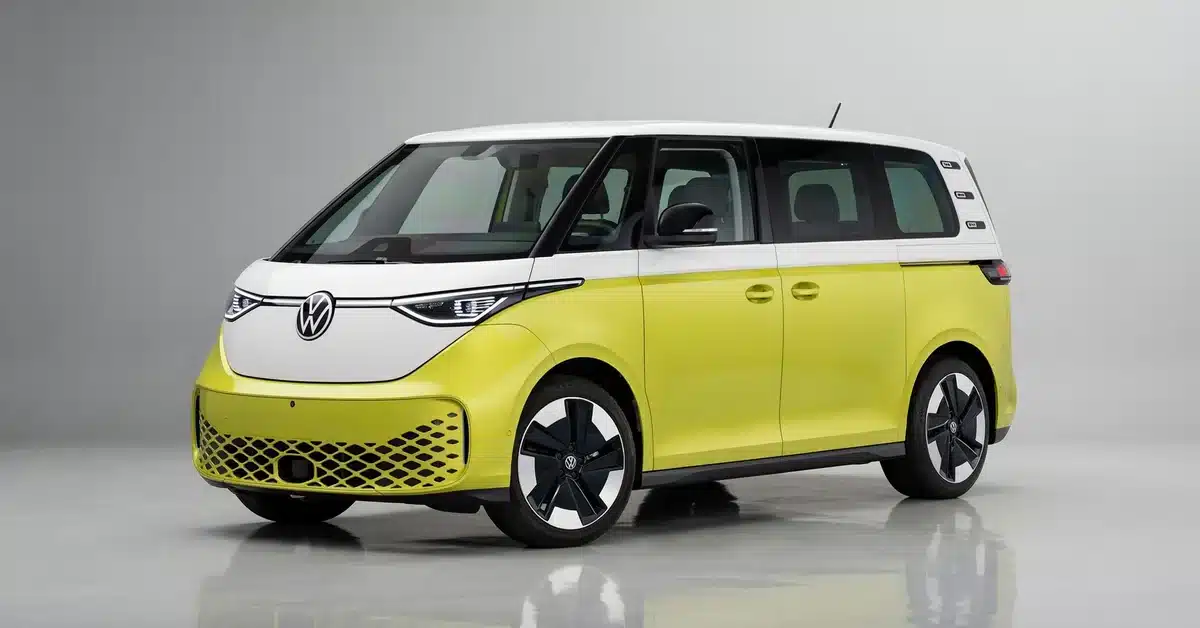
The Volkswagen ID. Buzz battery is a 91 kWh lithium-ion NMC pack on the MEB platform — the same architecture as the ID.4 and ID.3. It powers the electric revival of VW’s iconic Microbus, delivering 231–234 miles of EPA range in the U.S. long-wheelbase version. DC fast charging peaks at 170–200 kW, completing 10–80% in approximately 30 minutes. VW skipped the 2026 U.S. model year — the 2025 ID. Buzz is the current reference model, with a 2027 return expected.
VW ID. Buzz Battery: Full Specs (2025 U.S. Long-Wheelbase)
| Variant | Battery | Drivetrain | EPA Range | Power | Peak DC Rate | 0–60 mph |
|---|---|---|---|---|---|---|
| Pro S (RWD) | 91 kWh NMC | RWD | 234 miles | 282 hp | 170–200 kW | ~7.5 sec |
| Pro S Plus (RWD) | 91 kWh NMC | RWD | 234 miles | 282 hp | 170–200 kW | ~7.5 sec |
| Pro S Plus 4MOTION (AWD) | 91 kWh NMC | AWD | 231 miles | 335 hp | 170–200 kW | ~6.0 sec |
| 1st Edition (AWD) | 91 kWh NMC | AWD | 231 miles | 335 hp | 170–200 kW | ~6.0 sec |
Inside the ID. Buzz Battery
The ID. Buzz shares its MEB platform and 91 kWh battery with the VW ID.4 Pro S. NMC prismatic cells are liquid-cooled in the familiar MEB architecture. The pack sits in the floor, enabling a flat interior that supports the flexible seating configuration. Three rows of seating are available in all U.S. LWB models.
The MEB battery at 91 kWh is the largest available in the current VW MEB lineup — larger even than the 86 kWh pack offered on the flagship VW ID.7 sedan. It’s slightly larger than the 79 kWh ID.3 Pro S pack. The additional capacity partially compensates for the ID. Buzz’s heavier, taller, and less aerodynamic body. Despite this, EPA range at 231–234 miles is the main criticism compared to the VW ID.4’s 291 miles from a similar pack.
Range: Why 231–234 Miles Is Less Than the ID.4
The ID. Buzz’s shorter EPA range vs the ID.4 comes down to one factor: aerodynamics. The Microbus-inspired upright body creates significantly more drag than the sloping ID.4 profile. VW’s own data confirms the boxy shape costs real efficiency at speed. At low city speeds, the efficiency gap narrows — urban driving is where the ID. Buzz performs best relative to its rating.
- City driving: Approximately 220–240 miles in urban conditions with frequent stops and regeneration
- Mixed driving: Approximately 190–210 miles in mixed highway and city use
- Highway at 70 mph: Approximately 175–200 miles — the tall body creates significant drag at speed
- Cold weather: Approximately 150–185 miles with active heating, heat pump reduces this loss somewhat
ID. Buzz Charging Speeds
| Charging Method | Power | 91 kWh ID. Buzz |
|---|---|---|
| Level 1 (120V) | ~1.4 kW | ~65 hours full |
| Level 2 (240V, 11 kW) | 11 kW | ~9.5 hours full |
| DC Fast (170–200 kW peak) | 170–200 kW | ~30 min (10–80%) |
The 170–200 kW DC peak rate is competitive for the MEB platform. It’s a clear improvement over the older 135 kW max on early MEB vehicles. VW gained Supercharger access in November 2025 via a CCS-to-NACS adapter arrangement. A 2027 model with native NACS is expected to simplify Supercharger access.
ID. Buzz vs Competitors: Electric Van/MPV Battery Comparison
| Model | Battery | EPA Range | DC Rate | Seating |
|---|---|---|---|---|
| VW ID. Buzz (U.S. LWB) | 91 kWh NMC | 231–234 miles | 170–200 kW | 7 passengers |
| Hyundai Ioniq 9 | 110.3 kWh NMC | 311–335 miles | 233–257 kW | 6–7 passengers |
| Kia EV9 | 99.8 kWh NMC | 304 miles | 210 kW | 6–7 passengers |
| Rivian R1S | 108.5 kWh NMC (Large) | ~321 miles | 220 kW | 7 passengers |
Full specs for the two SUV rivals above are in our Hyundai Ioniq 9 and Rivian R1S battery guides.
Battery Warranty
VW covers the ID. Buzz battery with an 8-year / 100,000-mile warranty guaranteeing 70% capacity retention. This is standard MEB platform warranty coverage. Degradation expectations are similar to other MEB vehicles — approximately 1.5–2.5% per year. The 91 kWh pack’s larger size means a 10% loss still leaves approximately 82 kWh accessible.
2027 Return: What to Expect
VW skipped the 2026 U.S. model year for the ID. Buzz deliberately. The 2027 return is expected with a native NACS charging port for direct Supercharger access. Longer range and faster charging are the two most requested improvements from 2025 owners. VW’s CEO has confirmed the 2027 model will address range as a priority.
Charging Tips for VW ID. Buzz Owners
- Set daily charge limit to 80%: NMC benefits from an 80% daily cap — 80% of 91 kWh provides ~73 kWh, well over a typical daily driving need
- Use the Electrify America 500 kWh credit: All 2025 U.S. models came with 500 kWh of complimentary fast charging on Electrify America’s network — use this first for road trips
- Plan motorway range carefully: The ID. Buzz’s aerodynamic drag makes highway range 15–20% less than EPA estimates at 70+ mph — always add a buffer when planning stops
- Get the NACS adapter: Volkswagen-approved NACS adapters now allow Supercharger access — unlocking Tesla’s network dramatically expands road-trip options
Conclusion
The VW ID. Buzz battery delivers 91 kWh of NMC energy in a uniquely charming three-row electric van. The 231–234 miles of EPA range is the honest cost of the boxy Microbus body in a world of sleeker aerodynamic rivals. DC charging at 170–200 kW is competitive, completing 10–80% in 30 minutes. For buyers who want VW’s iconic design and flexible family seating, the ID. Buzz battery is perfectly adequate — understanding that highway range requires more trip planning than similarly-priced three-row SUV rivals with the same battery.
