
Mercedes EQA Battery: Size, Chemistry, Charging and Warranty

Researched from EV Database variant data, Germany’s KBA recall records and electrive’s recall reporting, the NHTSA Part 573 filings for the shared 243-series pack family, Generational battery-health certificates, and the used-buyer research of Auto Express and EV Guide UK.
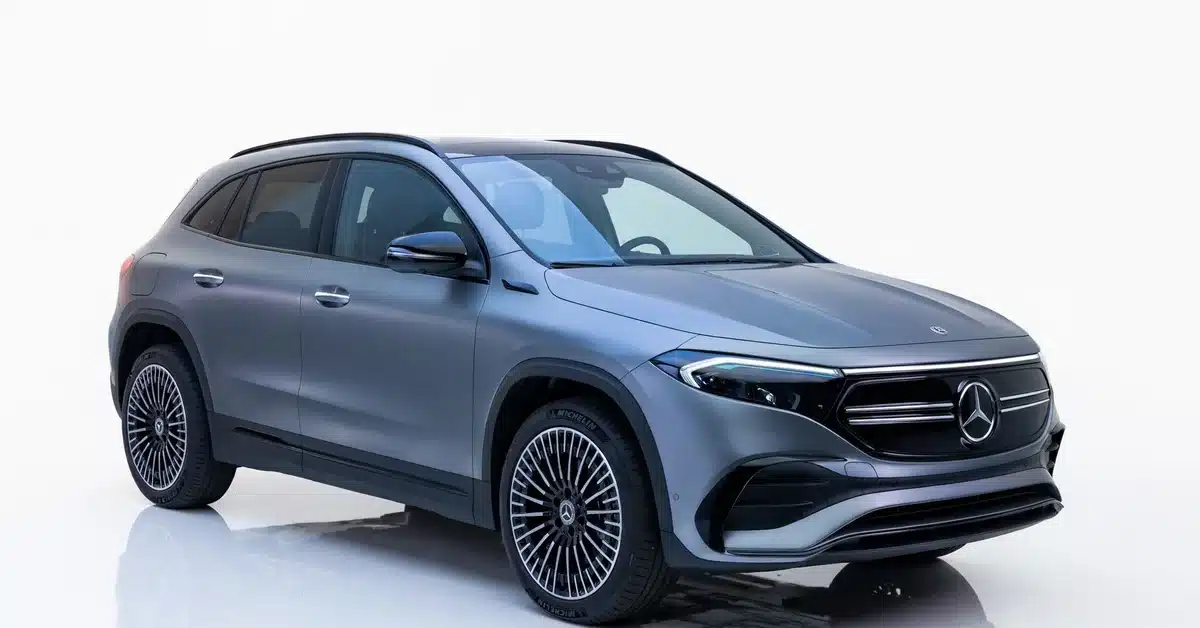
The EQA is the battery-electric version of the GLA — model code H243, built on the MFA2 platform, on sale in the UK and Europe from spring 2021. It was never sold in the United States, which is why American recall lists and warranty booklets never mention it. Four versions were offered — EQA 250, 250+, 300 4MATIC and 350 4MATIC — but only two battery packs between them, and most of the confusion around this car starts with people mixing those two packs up.
In 2026 the EQA is a used buy: 2021 cars ask around £18,000, with the cheapest advertised from about £14,590. At that money the battery is the whole decision — which pack the car has, who made its cells, and whether it sits inside the fire-risk recall that ends with Mercedes fitting a complete new pack free. One scope note before we start: this guide covers the traction battery under the floor, not the small 12-volt battery every EQA also carries.
Every EQA runs one of two NMC packs: 66.5 kWh usable in the EQA 250, 300 4MATIC and 350 4MATIC, or 70.5 kWh usable in the EQA 250+ only. The cells in both packs come from Farasis Energy, and no EQA has ever used LFP.
• Pack sizes: 66.5 kWh usable (69.7 kWh gross) or 70.5 kWh usable (73.9 kWh gross, 250+ only)
• Cell supplier: Farasis Energy for both packs — no source names LG or anyone else
• Charging: 100 kW DC claimed, 11 kW AC, preconditioning via navigation on facelift cars
• Warranty: 8 years/100,000 miles (UK) or 8 years/160,000 km (Europe), 70% capacity floor
• Recall: cars built February 2021–July 2024 get a free replacement pack (KBA 16136R) — charge to 80% until yours is done
Which Battery Does Each EQA Have?
Two packs cover the whole range — 66.5 kWh usable for the 250, 300 and 350, and 70.5 kWh usable for the 250+ alone — and the 350 does not have the big battery, whatever some listings claim.
That last point is worth stating plainly, because it is the most repeated error in EQA adverts and spec pages: the powerful 350 4MATIC feels like it should carry the bigger pack, but it never did. Only the front-wheel-drive 250+ got it. The table below is the split to trust, with gross capacity alongside usable — the gap between the two figures is where sloppy spec pages invent a third, imaginary battery.
| Variant | Battery, usable | Battery, gross | Chemistry | Recall status |
|---|---|---|---|---|
| EQA 250 | 66.5 kWh | 69.7 kWh | NMC (Farasis cells) | Check VIN — software recall in Europe; China-built cars get new packs |
| EQA 250+ | 70.5 kWh | 73.9 kWh | NMC (Farasis cells) | Free pack replacement (KBA 16136R) if built Feb 2021–Jul 2024 |
| EQA 300 4MATIC | 66.5 kWh | 69.7 kWh | NMC (Farasis cells) | Check VIN — software recall in Europe; China-built cars get new packs |
| EQA 350 4MATIC | 66.5 kWh | 69.7 kWh | NMC (Farasis cells) | Check VIN — software recall in Europe; China-built cars get new packs |
Pack figures: EV Database. Recall detail is in the Recalls section below.
EQA 250, 300 and 350 — the 66.5 kWh pack
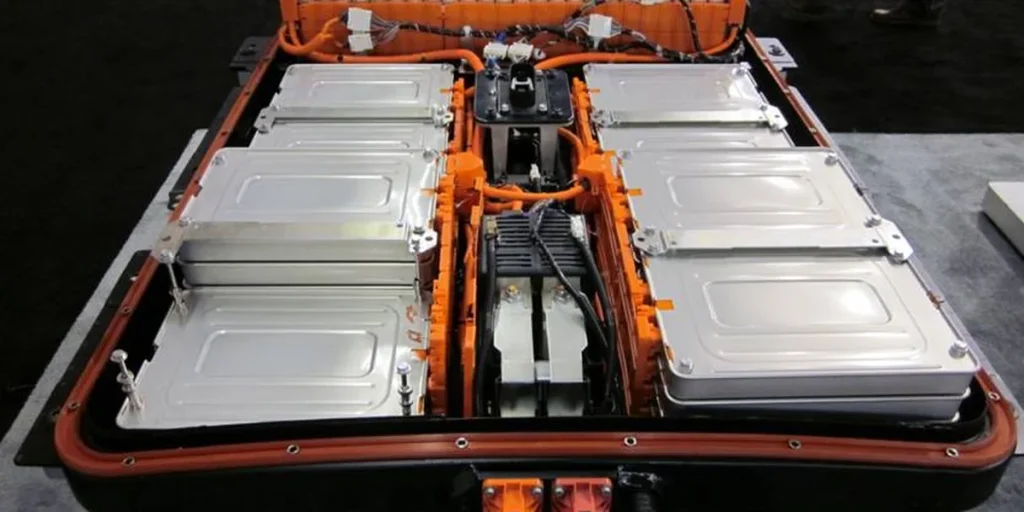
The standard pack is 66.5 kWh usable from 69.7 kWh gross, built from 300 cells in a 100s3p arrangement at about 367 volts.
Usable capacity is roughly 95% of the gross figure, which is a normal, healthy buffer for a pack of this era. The 250 drives the front wheels with a 140 kW (188 hp) motor; the 300 and 350 add a rear motor for all-wheel drive, at 168 kW (225 hp) and 215 kW (288 hp). Same battery in all three — the AWD cars simply spend it faster, which shows up in the range figures further down.
EQA 250+ — the 70.5 kWh pack
The 250+ pairs the bigger 73.9 kWh gross / 70.5 kWh usable pack with the efficient single-motor layout, which is why it out-ranges everything else in the range.
It keeps the same 140 kW front motor as the plain 250, so the extra capacity costs nothing in performance. The trade-off is weight: the 250+ weighs just over two tonnes — about 2,030 kg kerb — despite being the smallest Mercedes EV of its generation. Used, the 250+ is the version to hunt for, with one condition: check its recall status first, because this is the pack at the centre of the fire-risk campaign covered below.
When did the packs change?
The 250+ and its 70.5 kWh pack joined the range in 2022, and the August 2023 facelift changed no battery hardware at all.
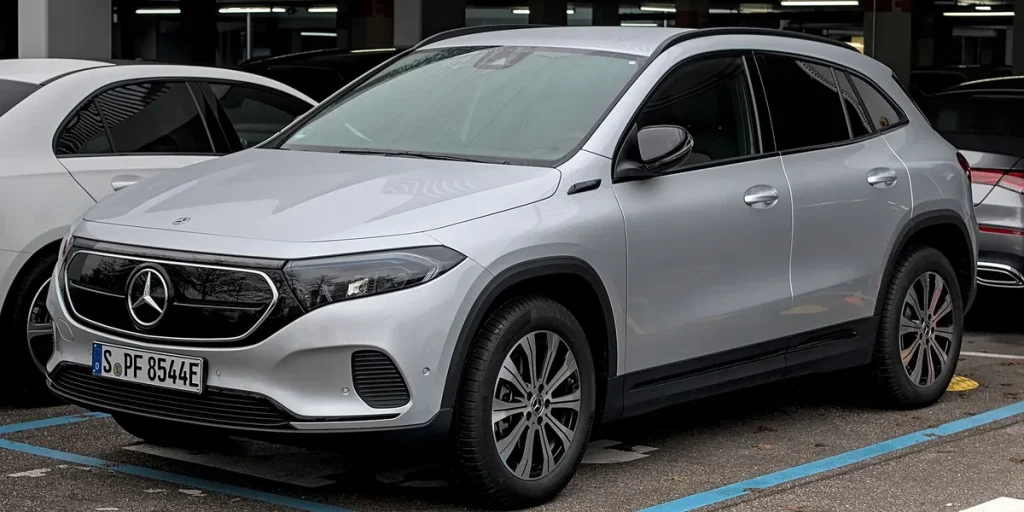
What the facelift did change was efficiency: aerodynamic work and low-rolling-resistance tyres lifted the 250’s WLTP rating to up to 528 km and the 250+’s by 20 km to 560 km, and Plug & Charge arrived for more convenient public charging. So a 2024 car is not carrying a newer battery than a 2022 car — it is the same pack in a slightly slipperier car. Judge a used EQA by its pack and its build date, not by whether it wears the facelift grille.
What Type of Battery Is It — NMC or LFP, and Who Makes the Cells?
Both EQA packs are NMC — nickel manganese cobalt — and the cells in both come from Farasis Energy. There is no LFP EQA, and no credible source names any second supplier.
This is the question this page is asked most, in at least four languages: is it NMC or LFP, is it Farasis, is it LG? The LG guess seems to come from other Mercedes models that do use Korean cells, but for the EQA it is an assumption, not a fitment — nothing in the recall filings, the Chinese regulator’s documents or the spec databases supports it.
Why the supplier matters became clear in Korea, where the competition authority fined Mercedes-Benz Korea about 11.2 billion won (roughly $7.6 million) in March 2026 because sales material for the EQE and EQS implied CATL cells while the cars used Farasis. Those were different models, not the EQA — but it is exactly why this page names the EQA’s supplier with its evidence attached.
The 70.5 kWh pack — Farasis Energy cells (confirmed)
Germany’s KBA recall entry names Farasis Energy (Ganzhou) as the cell supplier for the 70.5 kWh pack in the 250+ variants of the EQA and EQB.
That is about as primary as sourcing gets: the supplier is named in the recall record itself, reported by electrive in February 2026. The relationship was no secret at the time — Daimler took a stake of about 3% in Farasis in 2020, on top of a supply agreement signed in 2018. Farasis specialises in high-nickel NCM pouch cells, which fits the pack’s NMC chemistry; Mercedes does not publish the exact nickel ratio, so any source quoting you a precise recipe for this pack is going beyond the evidence.
The 66.5 kWh pack — the same Farasis family
The platform’s pack carries Mercedes’ internal designation EB330, and its supplier of record in the regulatory filings is again Farasis Energy.
The US recall filings for the platform name Farasis as the EB330’s cell supplier, and the population of those filings includes the 66.5 kWh all-wheel-drive variants built on the same pack family. The EQA side corroborates it: China’s SAMR recall covers Beijing-Benz-built EQAs — 66.5 kWh cars — for the same internal-short-circuit defect found in the Farasis packs, with full pack replacement as the remedy. Two regulators, two continents, one supplier. If a seller tells you a 66.5 kWh car has LG cells, ask for the document. There isn’t one.
Is any EQA fitted with an LFP battery?
No. Every EQA variant, in every model year and every market, uses an NMC pack.
LFP arrived in Mercedes’ smaller EVs only in concept talk and in other model lines; the EQA finished its run on NMC. If LFP’s longer cycle life and full-charge tolerance are what you want, this is simply not that car — judge the EQA on what its NMC pack actually does, which the lifespan evidence below covers.
Is the EQA battery modular?
The pack is a 100s3p cell arrangement mounted flat in the underbody — but Mercedes does not publish a module count, and in practice it is serviced as a whole pack.
Owners ask this because modular packs suggest cheaper, partial repairs. The honest answer for the EQA is that the construction data published stops at the cell arrangement, and Mercedes’ own behaviour tells the rest of the story: when these packs have a cell-level problem, the remedy is complete pack replacement — about eight hours of labour — not a module swap. Budget and judge the car on that basis.
Charging Speeds, Times and Preconditioning
Charging is the EQA’s weak point: Mercedes claims 100 kW DC on every variant, with about 32–35 minutes for a 10–80% charge, and 11 kW AC at home.
DC fast charging — 100 kW claimed, brief peaks above it
The official peak is 100 kW on all four variants; the 102–112 kW figures in charge-curve data are brief measured peaks, not the spec.
| Variant | Mercedes claim (peak, 10–80%) | Measured peak | Typical 10–80% average |
|---|---|---|---|
| EQA 250 | 100 kW, 32 min | ~112 kW (estimated) | ~100 kW |
| EQA 250+ | 100 kW, 35 min | 102–112 kW | 82–90 kW |
Claimed figures: EV Database (Mercedes-Benz claimed specifications). Measured figures: EV Database and EVKX charge-curve data — estimates, not certification values.
The distinction matters because older versions of this page printed “112 kW” as if it were the brochure number. It isn’t. Plan road trips around the claim, not the peak: the 250+ does its best work between about 4% and 66% charge, so two shorter stops beat one long one. The CCS charge port sits on the right-rear flank.
AC charging — 11 kW on every EQA
Every EQA, from the first 2021 car to the last, has an 11 kW three-phase onboard charger — home charging is this car’s natural rhythm.
On 11 kW, a full charge takes about 7 hours 15 minutes for the 66.5 kWh cars and about 7 hours 45 minutes for the 250+. On a 7.4 kW single-phase home supply those stretch to roughly 10 hours 45 minutes and 11 hours 15 minutes. Either way: plugged in when you get home, full when you leave. If your driving fits that pattern, the mediocre DC speed barely matters.
Plug & Charge and battery preconditioning
Yes to both: the battery preconditions automatically when you navigate to a charger, and facelift cars add Plug & Charge — you plug in and billing starts by itself.
EV Database lists preconditioning as automatic via the built-in navigation, which is the feature that decides whether you actually see anything near 100 kW on a cold day, or watch a cold pack trickle. Plug & Charge (ISO 15118-2) arrived with the 2023 facelift, including at more than 2,400 Ionity stations in Europe. Keep the two kinds of preconditioning separate in your head: warming the cabin from the Mercedes app is comfort; warming the battery via the navigation is charging speed.
Charging on a recall-capped car
If your car is waiting for its recall pack replacement, the rules change: charge to no more than 80%, and expect slower charging and less usable range until the new pack is fitted.
The interim software update Mercedes applied in 2025 significantly reduced both usable energy and charging performance on affected cars — that cut is a big part of why the software fix ended up in court. It is temporary by design, and the replacement pack restores the car’s full figures. The next sections give the full recall story; the charging point for now is simple: a capped car charging slowly is following instructions, not failing.
- Set the charger as the navigation destination before a DC stop, so preconditioning has time to work.
- Charge to 80% for daily use — kinder to the pack, and mandatory until recall cars get their new battery.
- Home-charge overnight whenever you can; at 7.4–11 kW the car is full by morning.
- On a 250+, stop earlier rather than later — its fastest window is roughly 4–66%.
Range — WLTP, Real World and Winter
On paper the facelift 250+ is a 560 km (348-mile) car; in the real world it is a roughly 260-mile car, and winter at motorway speed can take it close to 200.
Keep the eras separate, because the range rose without the battery changing. Before the facelift, the 250 rated up to about 429 km at launch and the 250+ up to 540 km. After the 2023 facelift the figures are: 250 up to 528 km, 250+ between 496 and 560 km, and the 300/350 between 411 and 459 km. In UK terms, EV Guide UK quotes up to 263 miles for the 250, up to 345 miles for the 250+, and up to 264 miles for the all-wheel-drive cars.
Real-world range
EV Database estimates real range at about 245 miles for the 250 and 260 miles for the 250+, with the usual wide spread by weather and speed.
For the 250+, its condition table runs from 385 miles of gentle mild-weather city driving down to 185 miles on a cold highway at −10 °C with the heating on; combined figures are about 300 miles mild and 215 miles cold. EV Guide UK’s owner-based estimates tell the same story in British terms: a 2021 EQA 250 manages about 200 miles in summer, 176 across the year and 148 in winter, while a 2023 250+ returns roughly 273, 240 and 202 miles on the same cycle. Owners report 3.5–4.5 mi/kWh in mild weather, which is respectable for a tall, heavy crossover.
Winter range
Bjørn Nyland’s test of an EQA 350 4MATIC at 2 °C returned 321 km (200 miles) at a steady 90 km/h and 228 km (142 miles) at 120 km/h.
His earlier test of the front-wheel-drive 250 in milder 11–13 °C weather gave 390 km at 90 km/h and 271 km at 120 km/h — so temperature and the second motor each take their cut, and the front-wheel-drive car holds roughly a fifth more range in the cold. One correction to older versions of this page: the EQA is not a no-heat-pump car. A heat pump was offered and is listed as standard equipment on UK facelift cars; fitment varies by market and year, and because it materially changes winter consumption, check the individual car before you buy.
How Long Does the EQA Battery Last?
The honest answer is evidence-so-far, not a promise: individual health checks on 2021–22 cars show 94–97% state of health, and no large public degradation dataset for this model exists.
That absence matters, so I will not paper over it: there is no EQA equivalent of the big fleet studies that track thousands of cars. What does exist is a set of dealer battery-health certificates from the Generational scheme, all for 66.5 kWh cars. A 2022 EQA 250 with 30,832 miles tested at 96% state of health in November 2025; a 2022 EQA 350 with 31,861 miles tested at 97% in March 2026; and a low-mileage 2021 EQA 350 — just 8,184 miles — tested at 94%, which shows the spread between individual cars is real. Three certificates are anecdotes, not a fleet average, and they are presented as exactly that.
97% battery health at 31,861 miles — the state of health recorded for a 2022 EQA 350 on a Generational dealer health certificate (March 2026). One car, one test — encouraging evidence, not a fleet statistic.
The framing for lifespan is the warranty horizon: Mercedes stands behind the pack for eight years (next section), and the oldest EQAs date only from 2021, so no EQA has yet lived a full pack life. Judge a used car with a health certificate of its own, not with a percentage someone else’s car achieved.
Battery Warranty
The EQA’s battery warranty is 8 years or 100,000 miles in the UK and 8 years or 160,000 km in Europe, with a 70% capacity floor — and there is no US warranty, because the car was never sold there.
The two terms are the same cover expressed by market; older versions of this page printed the UK figure alone, which undersold European cars. Fall below 70% of original capacity inside the term and the battery is repaired or replaced under warranty. Mercedes publishes no amp-hour version of that floor for the EQA, so treat any source quoting one as borrowing from a different model’s booklet. For perspective, Mercedes reserves its longer battery cover for the bigger EQ lines — our Mercedes EQE SUV battery guide covers one of those cars — while the EQA, as the entry-level EQ, sits in the 8-year group everywhere it was sold.
Recalls — the Farasis Fire-Risk Campaigns
This is the biggest battery story in the EQA’s life: early Farasis cells can develop an internal short circuit at high charge, and the fix has escalated from a software update to Mercedes replacing complete battery packs, free, on tens of thousands of cars.
The chronology in Mercedes’ own filings starts in China, where the first thermal incidents were seen. On 24 January 2025 the company decided on a worldwide safety recall, judging the risk might not be limited to China, and production changes at the supplier after 31 July 2024 are stated to have ended the condition in new packs. What happened next differed sharply by region.
Europe — software first, then full pack replacement
Europe began with a software update and an 80% charge limit; when thermal events kept occurring, Germany’s KBA escalated the campaign in February 2026 to complete pack replacement — reference 16136R, covering 51,729 cars worldwide.
The 2025 remedy was a battery-management software update, with owners told to charge to no more than 80% and park outdoors. In the UK that campaign appears as DVSA recall R/2025/106, covering 5,803 EQAs built between September 2021 and July 2024. The update significantly reduced usable capacity and charging performance, and owners sued over it.
Then the software fix failed on its own terms. Mercedes received reports of further thermal events from May 2025 — including on cars that had already been updated. So the replacement campaign that followed covers 243-series cars built from 20 February 2021 to 30 July 2024 (4,677 of them in Germany), and electrive’s reporting ties the faulty packs specifically to the 70.5 kWh units in the 250+ variants. European replacements were not expected to begin until the fourth quarter of 2026, each takes about eight hours of labour, and the completion deadline has been extended to 1 March 2028.
German courts have since gone further. Regional courts in Stuttgart and Frankfurt (Oder) ruled in 2026 that the suspicion of increased fire risk is itself a defect — in one case a dealer had to take back a used EQA 250+ and refund €20,170.45. Neither court case involved a car that had actually caught fire.
China — pack replacement from the start
China’s regulator skipped the software stage: Beijing-Benz cars were recalled for full battery replacement from March 2025, and the campaign has since grown to 19,481 locally built EQA and EQB vehicles.
The first SAMR recall, on 28 March 2025, covered 12,308 cars. A February 2026 expansion took the total to 19,481 vehicles built between 1 April 2021 and 12 March 2024, with replacements running from 25 June 2026. For the rewrite of this car’s history, the contrast is the point: the same defect, the same supplier, but the remedy Europe resisted for a year was China’s starting position.
What affected owners should do now
Only a VIN check settles whether your car is in the campaign — everything else is inference from build dates.
- Check the VIN with a Mercedes dealer or your national recall database; the affected window is builds from February 2021 to July 2024.
- Keep the 80% charge cap and park outdoors, away from structures, until the pack is replaced.
- Expect a wait: the European replacement programme runs into 2028, so a car still on its original pack is normal, not neglected.
- Buying used? Ask for the recall status in writing — a car with the new pack already fitted has the newest battery in the model range.
Why the US recalls name the EQB, not the EQA
American recall searches surface only the EQB because the EQA was never sold in the US — the US campaign chain (25V050, then 25V894, then 26V073 with full pack replacement on 11,895 cars) covers the sibling alone.
The defect, the supplier and the pack family are the same; only the badge on the US sales charts differs. If you are researching from the US because you own the boxier car, our Mercedes EQB battery guide covers the American campaigns, the US warranty booklet and its amp-hour capacity floor in full. EQA owners should work from the European and Chinese campaigns above — the US documents are useful background on the shared pack, but your remedy runs through your own market’s recall.
What Does a Replacement EQA Battery Cost?
There is no published price: Mercedes does not quote the EQA’s traction battery publicly, and no dealer or parts-catalogue figure exists that an honest guide can print.
I checked for an official price the way I always do for this section, and it is not there. So the truthful answer is that an out-of-warranty pack costs whatever a dealer quotes on the day — and that for most owners reading this page in 2026, the question is academic.
The dominant replacement story for this car is £0 or €0: tens of thousands of packs are being replaced free under the recall campaigns above, and the 8-year warranty stands behind capacity failure for everyone else. Treat any exact figure circulating in videos or estimate roundups as modelling, not a quote, and judge a used EQA on recall status, a health certificate and remaining warranty instead of a hypothetical pack price.
EQA vs EQB — Same Packs, Different Car
The EQA and EQB share both packs, the same cell supplier and the same recall family; the choice between them is body shape and seats, not battery.
The EQB is the boxier car, with an optional third row the five-seat EQA never offered. It is also heavier, so on identical packs the EQA is the more efficient of the two — the one to pick if range per charge matters more than seats. The sharpest divergence is geographic: the EQB was sold in the United States, which is why it carries the NHTSA campaigns and a US warranty booklet with an amp-hour capacity floor, while the EQA has neither. Same EB330 pack family underneath; different paperwork on top.
Frequently Asked Questions
The short answers: NMC in every car, Farasis in both packs, only the 250+ has the big battery, and recall cars are getting new packs free.
Is the Mercedes EQA battery NMC or LFP?
NMC — nickel manganese cobalt — in every variant and every model year. No EQA has ever been built with an LFP battery, in any market.
Which EQA has the 70.5 kWh battery?
Only the EQA 250+. The 250, 300 4MATIC and 350 4MATIC all use the 66.5 kWh usable pack (69.7 kWh gross); the 250+ uses 70.5 kWh usable (73.9 kWh gross). Listings that give the 350 the big battery are wrong.
Who makes the EQA’s battery cells — is it LG?
Farasis Energy (Ganzhou) makes the cells for both packs: confirmed for the 70.5 kWh pack in Germany’s KBA recall record, and named as the platform pack’s supplier in the regulatory filings that cover the 66.5 kWh cars. No source names LG for any EQA.
Is my EQA affected by the battery recall?
If it was built between February 2021 and July 2024, it may be — only a VIN check with a dealer or national recall database settles it. Until an affected car receives its replacement pack, charge to no more than 80% and park outdoors.
How long does the EQA battery last?
Mercedes warrants it for 8 years (100,000 miles in the UK, 160,000 km in Europe) down to a 70% capacity floor. Real health checks on 2021–22 cars have recorded 94–97% state of health, but there is no large fleet dataset for the model, and no EQA is older than 2021 — so the honest answer is that the early evidence is good and the full lifespan is still being written.
Does the EQA precondition its battery for fast charging?
Yes — set a charger as the navigation destination and the car conditions the pack on the way, which is how you get close to the claimed 100 kW in cold weather. Facelift cars also support Plug & Charge, so charging starts automatically when you plug in at a compatible station.
Conclusion
Judge any EQA by three things: which of the two packs it has, who made the cells — Farasis, in both — and whether its recall work is done.
The EQA’s battery story turned out to be more eventful than its quiet spec sheet suggested. The packs themselves are holding up well on the evidence available, the warranty is a fair eight years with a real capacity floor, and the worst news in the car’s history resolves into a free new battery for the cars affected. Its genuine weaknesses are charging speed and a range that asks you to plan in winter.
The sweet spot of the range is a 250+ with a health certificate and its recall status in writing — the biggest pack, the best range, and, once the replacement is fitted, the newest battery of any EQA on the road. Get the pack, the supplier and the paperwork right, and it is a lot of electric Mercedes for used money.
