
VW ID.2 / ID. Polo Battery: Complete Guide

Facts checked against Volkswagen newsroom releases (April–May 2026), German and UK price lists, EV Database listings and RAC’s UK homologation figures.
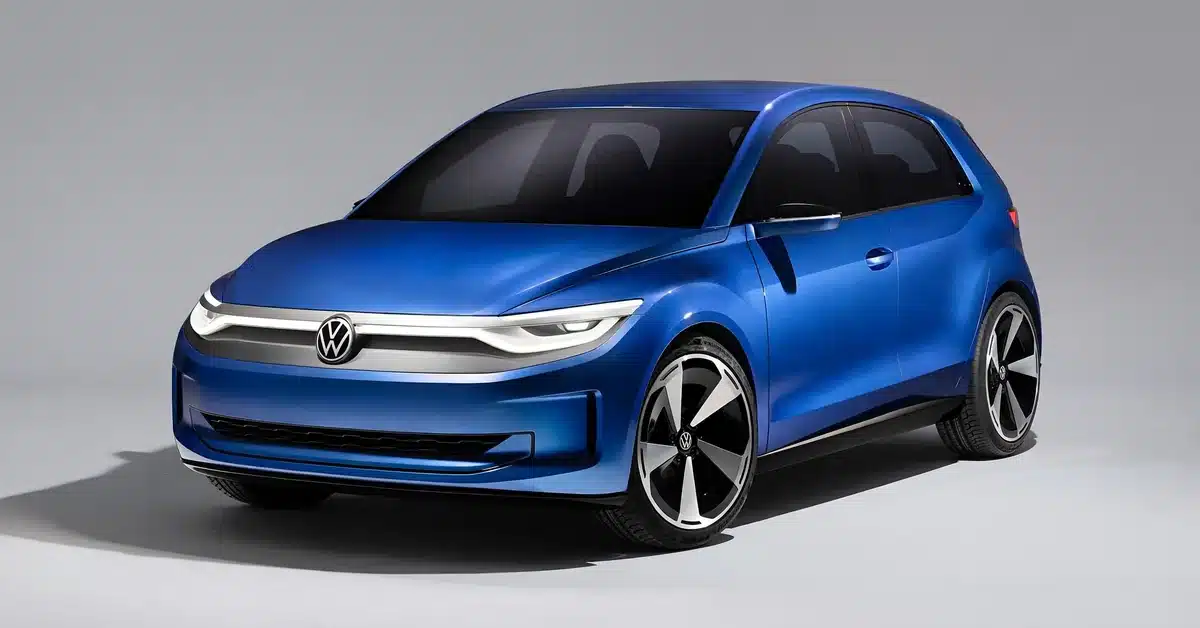
The ID. Polo is the car that brings the electric Polo-class hatchback down to a €24,995 entry price — and its battery story is two stories. The entry car carries a 37 kWh LFP pack; the bigger car a 52 kWh NMC pack; both are built from Volkswagen’s new unified cell. This guide covers the production car only: every figure below was confirmed at the April 2026 premiere or in the price lists that followed.
It matters because the internet is full of this car’s earlier drafts. The 2023 ID.2all concept promised a 20-minute charge that production did not keep; pre-production reporting promised 125 kW charging that also did not survive. Those figures are fenced into a history passage at the end, where they belong. The car is built in Spain for Europe, and Volkswagen has announced no US launch.
Key figures: 37 kWh LFP / 52 kWh NMC (net) · DC 90 kW (~23 min) / 105 kW (~24 min), 10–80% · AC 11 kW · from €24,995 (DE) / £23,945 (UK) · German Car of the Year 2027
VW ID. Polo Battery Sizes and Specs
Two packs, two chemistries, one cell — the production range is smaller and clearer than the rumours were.
| Version | Battery (net) | Chemistry | Motor | DC peak · 10–80% | WLTP range |
|---|---|---|---|---|---|
| ID. Polo 37 | 37 kWh | LFP | 85 kW (116 PS) | 90 kW · ~23 min | up to 334 km |
| ID. Polo 37 | 37 kWh | LFP | 99 kW (135 PS) | 90 kW · ~23 min | up to 334 km |
| ID. Polo 52 | 52 kWh | NMC | 155 kW (211 PS) | 105 kW · ~24 min | 416–454 km |
| ID. Polo GTI | 52 kWh | NMC | 166 kW (226 PS) | 105 kW · ~24 min | up to 424 km (provisional) |
Volkswagen quotes net capacities: 37 and 52 kWh. EV Database’s listings add its own nominal/usable split — 38.5 nominal / 37.5 usable for the small pack, 56.0 / 51.7 for the large — quoted here as that site’s listing data, not merged with VW’s figures. All versions are front-wheel drive on a 400-volt architecture, with 0–100 km/h in 10.6, 9.5 and 7.1 seconds across the three power levels.
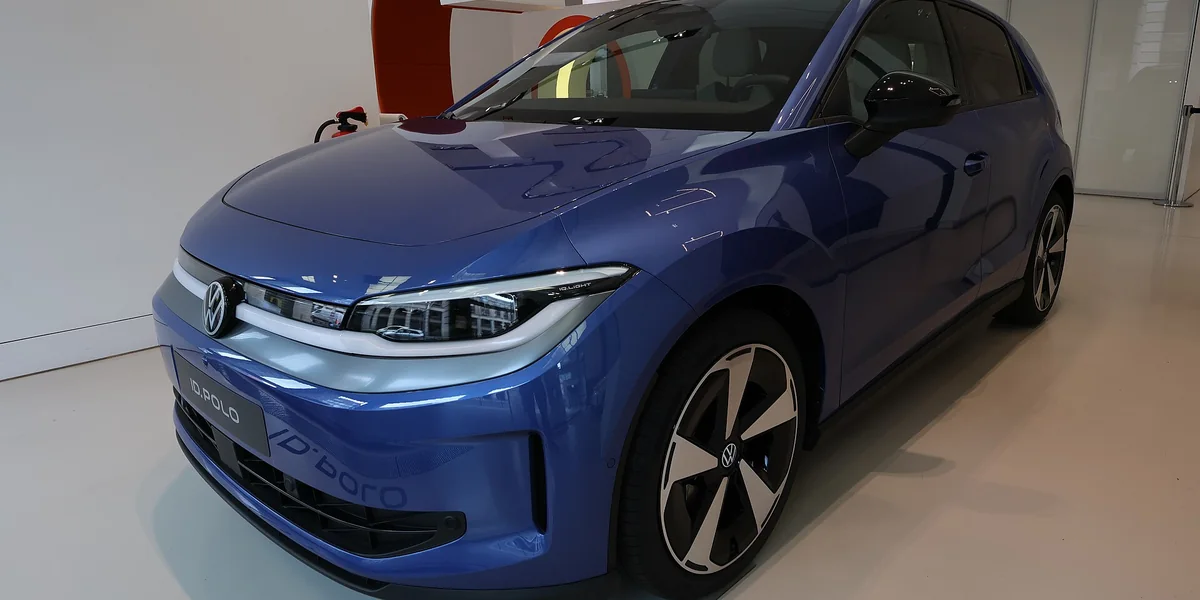
Quick view: Two packs, two chemistries — 37 kWh LFP (90 kW charging, up to 334 km) and 52 kWh NMC (105 kW charging, up to 454 km); all front-wheel drive on a 400-volt architecture.
From ID.2 to ID. Polo: How This Car Arrived
The name changed in September 2025, the car premiered in April 2026, and it went on sale in stages — the order of those dates explains every confusing figure attached to it.
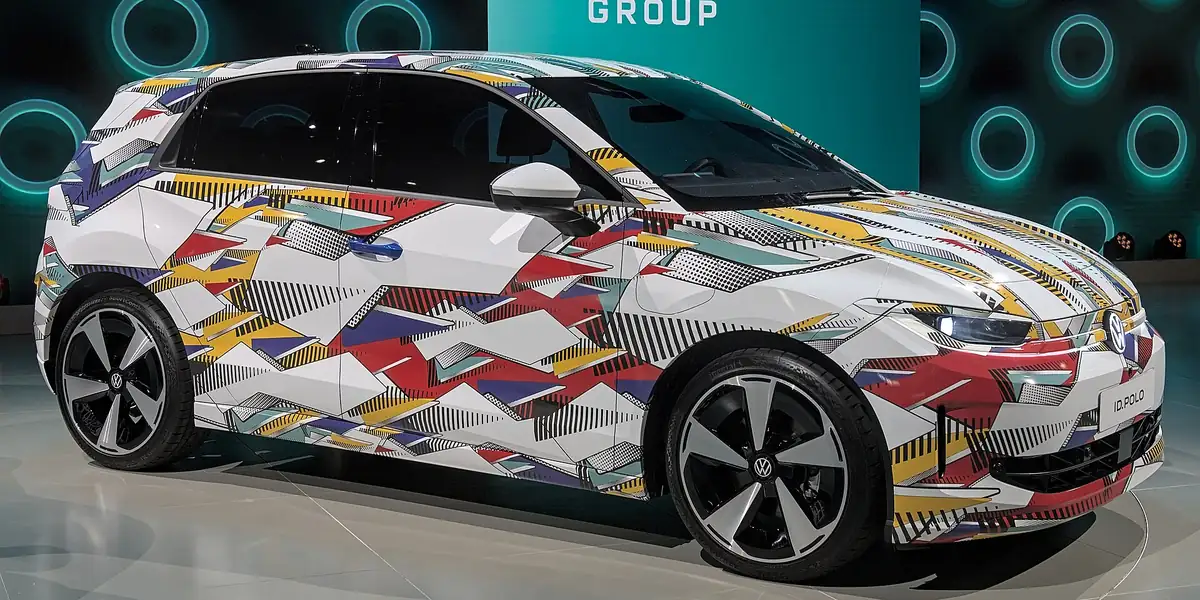
Volkswagen showed the ID.2all concept in March 2023 (its claims are fenced at the end of this guide). On 3 September 2025, in the Polo’s 50th-anniversary year, VW announced the production car would be called ID. Polo — part of a strategy of giving ID. models the names of established bestsellers — and showed camouflaged ID. Polo and ID. Polo GTI cars at the Munich IAA. The production world premiere followed on 29 April 2026, on the platform officially named MEB+ (“MEB Entry” was the concept-stage name).
When did the car go on sale?
The sale itself came in stages. German pre-sales opened at the end of April 2026 with only the 155 kW Life at €33,795; the €24,995 entry car became orderable later (reported mid-July 2026, the month VW also announced the 37 kWh version’s availability). First German customer deliveries began in September 2026; UK order books opened on 30 July 2026 with Launch Editions, UK customer cars follow from November 2026, and in November the car was named German Car of the Year 2027.
The Unified Cell: Where the ID. Polo’s Battery Comes From
Both packs are cell-to-pack batteries built at Martorell in Spain from the Group’s unified cell — and the supply story has two halves.
The battery systems are assembled at SEAT & CUPRA’s Martorell plant, where the ID. Polo itself is built (series production from June 2026). The cells are the Volkswagen Group’s unified cell: the first production cells came from PowerCo’s Salzgitter gigafactory, commissioned on 17 December 2025 — starting with the NMC cell, the LFP unified cell following.
PowerCo is expected to cover only around half of the Group’s unified-cell demand; external suppliers produce the rest (Gotion is already reported making unified-format cells). Volkswagen has not published a per-car supplier split, so no honest source can tell you which factory made the cells in a specific ID. Polo. The Valencia (Sagunto) gigafactory is a later source, not the launch supply. For the group-wide picture, see our guide to the battery chemistry Volkswagen uses.
Quick view: The packs are assembled at Martorell in Spain; the cells are VW’s unified cell — first production at PowerCo Salzgitter, with external suppliers covering about half of demand; no per-car supplier split is published.
LFP or NMC: Which ID. Polo Battery Should You Choose?
The most-asked question about this car has a real answer: the 37 kWh LFP car is the value pick with the tougher chemistry; the 52 kWh NMC car is the one to buy for distance.
LFP is the more cycle-tolerant, thermally steadier chemistry and it costs less to make — which is how the 37 kWh car reaches €24,995. Its trade-offs are weight and energy density: 334 km of WLTP range and 90 kW charging against the NMC car’s 454 km and 105 kW. If your driving is urban and suburban with home charging, the LFP car’s numbers are not a compromise in practice; if you regularly run motorway distances, the 52 kWh car’s extra 120 km and faster charging are worth its premium. It is the same cross-shop most buyers make against the Renault 5 E-Tech, whose range splits its two packs the same way.
Can the LFP car charge to 100% daily?
One circulating claim needs care: that the LFP car can be charged to 100% daily “without degradation concern” is not something Volkswagen has published for this car. LFP chemistry tolerates full charges better than NMC as a general property; the specific guidance for this pack will come from VW’s own documentation as the fleet ages.
VW ID. Polo Charging
Production charging is 90 kW on the 37 and 105 kW on the 52 and GTI — good for the class, and not the 125 kW the pre-production coverage promised.
Volkswagen’s production figures (29 April 2026) are a 10–80% charge in about 23 minutes for the 37 kWh car and about 24 minutes for the 52 kWh car and the GTI. On AC, both packs charge at 11 kW. Navigation-linked battery preconditioning is fitted, which is what lets a small-battery car hold its quoted times in winter; a heat pump is available as an option rather than standard equipment. Vehicle-to-load is supported at 3.6 kW through a Type 2 adapter; vehicle-to-home and vehicle-to-grid are announced for the platform, not available at launch.
VW ID. Polo Range: Homologated and Estimated
The homologated figures are 334 km for the 37 and up to 454 km for the 52 — and the honest real-world numbers are estimates, because the fleet is weeks old.
German price-list homologation (August 2026): the 37 kWh car up to 334 km; the 52 kWh car 416–454 km by trim. UK homologated figures (RAC, October 2026): 200 miles for the 85 kW car, 206 for the 99 kW, and 281 miles for the 52. EV Database’s modelled real-world estimates — its own modelling, labelled as such — are around 245 km for the 37 and 340 km for the 52. No verified measured range test of a production car had been published at the time of writing; the first owner data will replace estimates through 2027.
What changed from the reveal figures?
Reveal-stage numbers need one note: at the April premiere VW labelled its ranges (up to 329 km and up to 454 km) a “provisional forecast”, and reveal-week coverage quoted slower 0–100 times than the homologated 10.6/9.5/7.1 seconds. The price-list figures above supersede them.
The ID. Polo GTI
The GTI is a real production car with the 52 kWh pack and 166 kW — revealed in May 2026, on sale from autumn 2026, at just under €39,000 announced.
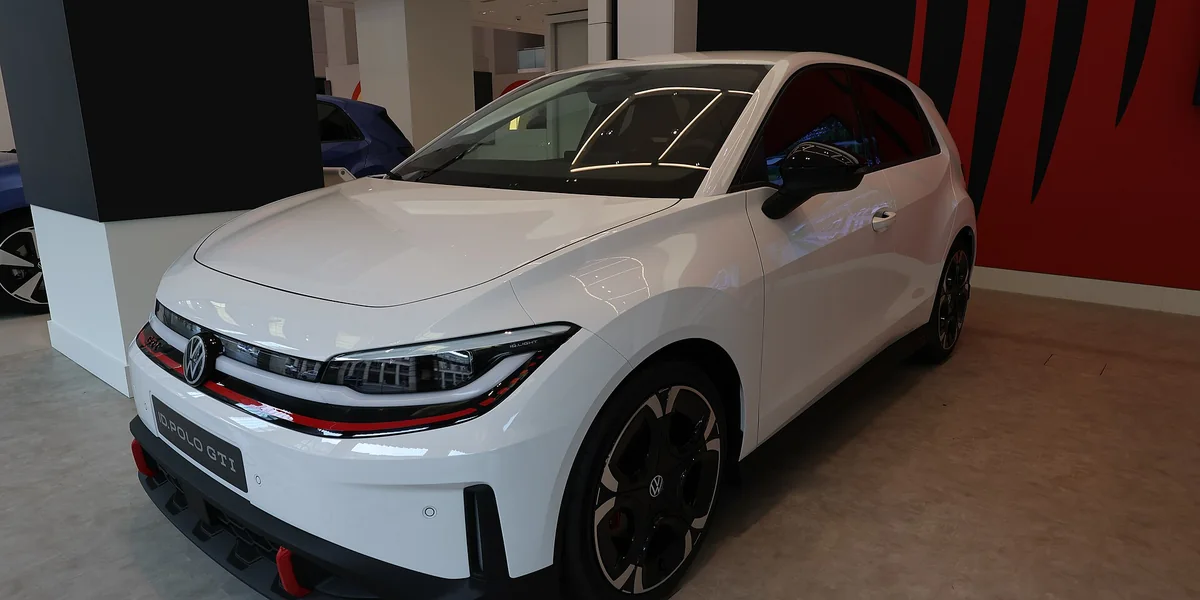
Volkswagen premiered the ID. Polo GTI on 15 May 2026 as a near-production car: 166 kW (226 PS) and 290 Nm through the front wheels, 0–100 km/h in 6.8 seconds, a 175 km/h top speed, and a provisional range of up to 424 km on the 52 kWh NMC pack (later pre-sale reporting put it at up to 431 km and a 190 km/h top speed — reported figures, not VW-confirmed). Announced pricing was just under €39,000; German pre-sales were reported open in October 2026 from €39,995, with deliveries running into 2027. No UK GTI price has been announced.
VW ID. Polo Prices
The €25,000 promise was kept — almost to the euro — but the cheap car was not the first one you could buy.
Germany: entry Trend (37 kWh) at €24,995 — matching the concept’s sub-€25,000 target almost exactly — but launch pre-sales in April 2026 opened with the 155 kW Life at €33,795, and the entry car became orderable months later. The GTI was announced at just under €39,000 and reported at €39,995 at pre-sale. UK: Launch Editions from £25,555 (July 2026); series Life (37 kWh) from £23,945 list, £22,445 including the £1,500 Electric Car Grant (September 2026); the 52 kWh Life from £26,830 including the grant (RAC, October 2026). Prices printed elsewhere of €23,000, €27,000 or €30,000 for these versions do not exist in any market checked.
Degradation and the Battery Warranty
Nobody knows yet how an ID. Polo battery ages — and this guide will not pretend otherwise. What is known is the warranty floor and the chemistry context.
The first customer cars were delivered in September 2026, so no degradation dataset exists for this battery. What owners hold contractually is Volkswagen’s battery warranty: 8 years or 160,000 km, guaranteeing at least 70% of original net capacity — the ID. family standard, confirmed for this car. The chemistry context is the site-standard one: LFP packs (the 37) are built for cycle life, NMC packs (the 52) for energy density, and both chemistries in this programme carry the same warranty floor. Expect the first independent health data through 2027 as the fleet accumulates miles.
VW ID. Polo Battery Replacement Cost
No replacement price exists for this car — Volkswagen has published no pack price, no module price and no repair tariff for it.
That is the complete answer as of November 2026, and any figure quoted elsewhere for an “ID. Polo battery price” is not a Volkswagen price. Two structural notes are all that can be said honestly: the pack is a cell-to-pack design (there are no swappable modules in the older MEB sense), and Volkswagen has published no repairability statement for this battery — claims about repair costs imported from other cell-to-pack cars describe different constructions and do not transfer.
VW ID. Polo Safety Rating
Euro NCAP has not tested the ID. Polo, and it has no star rating.
Two nearby ratings must not be borrowed: the petrol Polo’s rating belongs to a different car, and the Cupra Raval’s five stars (2026) belong to the Raval. When Euro NCAP tests this car, this section will carry its own scores.
The Siblings, and the Concept’s Numbers
The ID. Polo is one of three cars on this battery programme — and its own concept is the fourth set of figures to keep apart.
Its Martorell sibling is the Cupra Raval — revealed first (Barcelona, March 2026), sharing the two packs with its own figures and prices; our Cupra Raval battery guide covers it directly. The Škoda Epiq (built at Pamplona) quotes gross capacities (38.5/55 kWh) for the same family and caps its entry car’s charging at 50 kW — a sibling-only figure that shows why pack figures never copy across brands. The ID.3 Neo makes the same LFP-at-the-entry move in the class above; its numbers belong to that car.
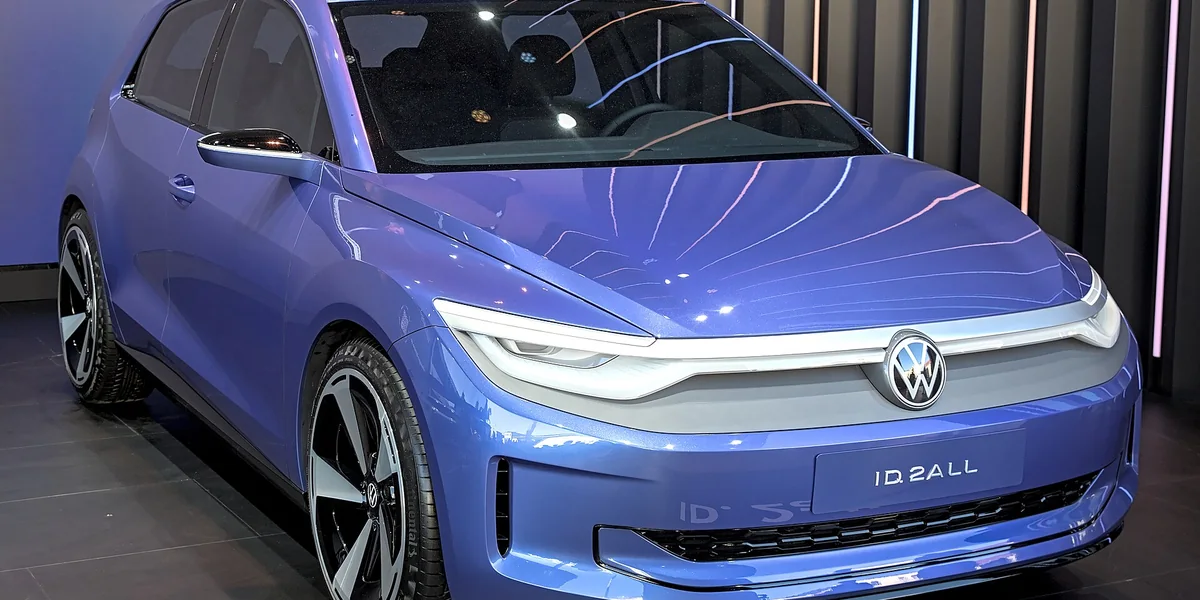
What about the 2023 concept?
Finally, the concept itself: the ID.2all of March 2023 claimed 166 kW, up to 450 km WLTP, a ~20-minute 10–80% charge and a sub-€25,000 target, on a platform then called MEB Entry. Production kept the price target almost exactly and matched the power figure in the GTI — but the 20-minute charge became 23–24 minutes at lower peak power, and Volkswagen never published a battery capacity for the concept. Any “ID. Polo” figure dated 2023 is a concept claim, not a specification.
Frequently Asked Questions
What battery does the VW ID. Polo have?
Two production packs, both quoted net: a 37 kWh LFP battery (85 or 99 kW motors) and a 52 kWh NMC battery (155 kW motor, 166 kW in the GTI). Both are built from VW’s prismatic unified cell in a cell-to-pack design.
Which ID. Polo battery is LFP?
The 37 kWh entry battery is LFP (lithium iron phosphate). The 52 kWh battery is NMC. That split — LFP at the entry, NMC for range — is the same pattern as the ID.3 Neo in the class above.
What is the net capacity of the ID. Polo battery?
37 kWh and 52 kWh are Volkswagen’s net figures. EV Database lists nominal/usable splits of 38.5/37.5 kWh and 56.0/51.7 kWh respectively — a different accounting of the same packs, quoted by that site.
Who makes the ID. Polo’s battery cells?
The cells are the VW Group’s unified cell. PowerCo’s Salzgitter plant produced the first unified cells from December 2025 (NMC first, LFP following), and external suppliers cover roughly half of unified-cell demand. VW has not published a per-car supplier split; the battery systems are assembled at Martorell in Spain.
How long does the ID. Polo take to charge?
About 23 minutes (37 kWh, 90 kW peak) or 24 minutes (52 kWh, 105 kW peak) for a 10–80% DC charge, per Volkswagen’s production figures. AC charging is 11 kW on both packs.
What is the VW ID. Polo’s range?
Homologated WLTP: up to 334 km for the 37 kWh car and 416–454 km for the 52 kWh car (UK homologated: 200/206/281 miles). EV Database estimates real-world range at about 245 km and 340 km respectively.
What is the battery warranty on the VW ID. Polo?
Eight years or 160,000 km, guaranteeing at least 70% of original net capacity — Volkswagen’s ID. family standard, confirmed for this car.
How much does an ID. Polo battery cost to replace?
Volkswagen has published no replacement price — no pack price, module price or repair tariff exists for this car yet. Figures quoted elsewhere are not Volkswagen prices.
Can the ID. Polo battery be upgraded?
No. There is no factory upgrade or retrofit between the 37 and 52 kWh packs; the battery a car is built with is the battery it keeps.
Is the VW ID. Polo coming to the USA?
Volkswagen has announced no US launch. The ID. Polo is built at Martorell in Spain for European markets.
Conclusion
The ID. Polo’s battery is a study in promises kept and promises revised: the €25,000 price survived almost to the euro, the 20-minute charge did not.
What production delivered is arguably better than the concept’s pitch — a genuinely cheap LFP car, a 454 km NMC car, one standardised cell under both, and an 8-year warranty over everything. Judge the car by the April 2026 premiere and the price lists, and every figure in this guide is the one Volkswagen itself stands behind.
