
Skoda Epiq Battery: LFP or NMC, Sizes, Charging and Prices

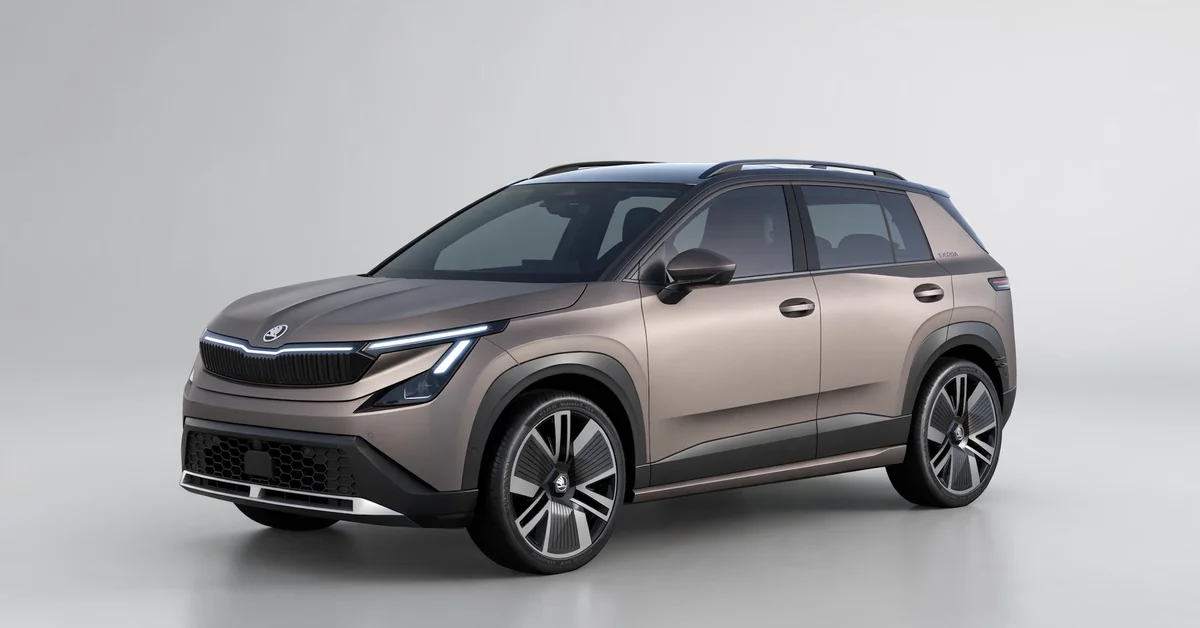
Researched from Skoda’s production technical data sheet (September 2026), Skoda UK’s price list and FAQ, EV Database and first-drive tests by Autocar and CompleteCar, November 2026.
The Skoda Epiq is the Czech brand’s smallest, cheapest electric car — and the first thing to know about its battery is that most of the internet is quoting the wrong one. Skoda published preliminary figures in February 2026, then changed several of them when the production car was finalised that September: the big battery’s fast-charging peak fell from a headline 133 kW to 105 kW, and the mid version’s 10–80% charge quickened from 28 minutes to 23. Pages written from the February data — including the old version of this one — carry the old numbers still.
What did not change is the split that defines the car: the Epiq 35 and 40 use a 38.5 kWh LFP battery, the Epiq 55 a 55 kWh NMC battery, both built from the Volkswagen Group’s shared “Unified Cell.” This guide works from Skoda’s production data throughout: the two packs, their real range and charging, an honest grading of the car’s much-advertised bidirectional charging, and what the car actually costs and when you can actually have one.
The Epiq comes with one of two batteries: a 38.5 kWh (37 usable) LFP pack in the Epiq 35 and 40, or a 55 kWh (about 52 usable) NMC pack in the Epiq 55 — Skoda’s production figures, September 2026.
• Range (WLTP): 310 km (193 miles) for the LFP cars; 441 km (274 miles) for the Epiq 55
• Charging: up to 105 kW DC on the 55 (not the 133 kW quoted from early data); 10–80% in 23–33 minutes depending on version
• Battery warranty: Skoda’s standard 8 years / 160,000 km, with capacity guaranteed not to fall below 70% of usable
• Prices: from £24,950 in the UK (Epiq 40) and €25,900 in Germany (Epiq 35); UK deliveries begin in early 2027
The Two Batteries: LFP Below, NMC Above
Every Epiq carries one of two packs, and the choice is made by the badge: 35 and 40 mean a 38.5 kWh gross / 37 kWh usable LFP battery; 55 means a 55 kWh gross / 51.7 kWh usable NMC battery. Skoda confirmed the split itself — lithium iron phosphate for the affordable cars, nickel manganese cobalt for the long-range one — because the two chemistries do different jobs: LFP keeps the entry cars cheap and long-lived, NMC packs more energy into the same space for the flagship. Both packs are assembled from the Group’s prismatic Unified Cell, one standard format filled with either chemistry.
| Version | Battery gross / usable | Chemistry | Power | WLTP range | 0–100 km/h |
|---|---|---|---|---|---|
| Epiq 35 | 38.5 / 37 kWh | LFP | 85 kW (114 hp) | 310 km | 11.0 s |
| Epiq 40 | 38.5 / 37 kWh | LFP | 99 kW (133 hp) | 310 km | 9.8 s |
| Epiq 55 | 55 / 51.7 kWh | NMC | 155 kW (208 hp) | 441 km | 7.1 s |
A note on the numbers themselves, because databases muddy them: EV Database lists the LFP pack’s usable capacity as 37.5 kWh and the NMC pack’s nominal size as 56 kWh — both are that site’s estimates. Skoda’s own documents, February and September alike, say 38.5/37 and 55/51.7 (its September papers round the big pack’s usable figure to 52). Where a manufacturer’s own technical sheet exists, this page follows it.
Who makes the cells?
The honest answer stops one level up from the car. The Unified Cell was developed by PowerCo, the Volkswagen Group’s battery company, which began series production at Salzgitter in Germany in December 2025 — NMC cells first, with LFP production to follow from its Valencia plant. Gotion High-Tech is the programme’s one confirmed outside supplier, building Unified Cells in China from late 2025. Which factory’s cells sit inside any individual Epiq is not published, and no source names an Epiq-specific supplier — be wary of any page that claims one.
Range: What 310 and 441 km Mean on the Road
The official WLTP figures are 310 km for both LFP cars and 441 km for the Epiq 55 — and the early evidence says the big car gets respectably close to its number in mixed driving. Autocar’s extended test of the 55 averaged 4.1 miles per kWh, which works out at roughly 215 miles (about 345 km) of real range against the 274-mile claim. CompleteCar and CarExpert measured 13.5 kWh/100 km on a drive that included sustained Autobahn running at 130 km/h and beyond — marginally better than Skoda’s own 13.7 WLTP consumption figure.
EV Database’s estimates sketch the spread to expect: for the 55, roughly 320 km overall, from about 225 km on a cold highway to 485 km in mild city driving; for the Epiq 40, around 145 miles (233 km) real range. One option matters more to those winter numbers than any other: the heat pump is an optional extra on this car, not standard equipment — on an LFP car especially, it is the box worth ticking.
Charging: Production Numbers, Not the Preview Ones
The production Epiq charges at up to 50 kW (35), 90 kW (40) or 105 kW (55) on DC, taking 33, 23 and 24 minutes respectively for a 10–80% charge — and the widely-quoted 133 kW figure for the 55 was Skoda’s February preliminary number, superseded before the car went on sale. No instrumented third-party charging test of a production Epiq exists yet, so those times are Skoda’s claims; EV Database’s own estimate for the 55 (a 95 kW average across 10–80%) is consistent with them. At home, every version charges at 11 kW AC: roughly four hours for a full charge in the LFP cars, about five and a half in the 55.
| Version | DC peak | DC 10–80% | AC |
|---|---|---|---|
| Epiq 35 | 50 kW | 33 minutes | 11 kW |
| Epiq 40 | 90 kW | 23 minutes | 11 kW |
| Epiq 55 | 105 kW | 24 minutes | 11 kW |
The 40 is the quiet sweet spot in that table: the same battery as the 35, but nearly twice the charging speed — the difference between a coffee stop and a lunch stop on a long day. Skoda has published no Epiq-specific guidance about charging the LFP cars to 100%; LFP chemistry generally tolerates full charges better than NMC, but that is chemistry, not a Skoda instruction, and the distinction matters when a warranty is involved.
Bidirectional Charging: V2L Yes, V2H With One Wallbox, V2G Not Yet
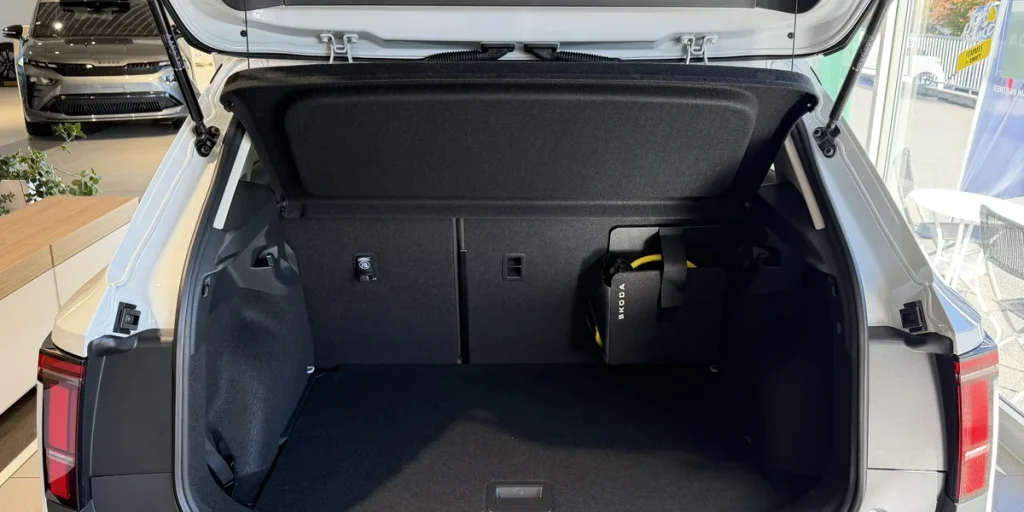
The Epiq is genuinely bidirectional — but the three letters hide three different answers, and only the first is simple. Vehicle-to-load (V2L) works today: plug Skoda’s adapter into the charge port and the car will run external devices at up to 3.6 kW AC — e-bikes, tools, appliances. The adapter costs extra.
Vehicle-to-home (V2H) works too, but through exactly one certified device at the time of writing: the AmbiCHARGE Home, an 11 kW DC bidirectional wallbox by Ambibox, named in Skoda’s own launch materials. Vehicle-to-grid (V2G) — selling energy back to the grid — is not a working feature on this car: the hardware is prepared for it, and Skoda talks about grid integration as a longer-term step, but there is no certified V2G wallbox or tariff for the Epiq today. Pages that list “V2L/V2H/V2G” as if all three were ticked options are ahead of the car.
This is also the answer to the replacement-interval question that brings some readers here: there is no battery replacement interval on an Epiq. The pack is warranted for eight years (next section), not scheduled for swapping — bidirectional use does not change that.
Warranty: Eight Years and a 70% Floor
Skoda has published no Epiq-specific battery warranty, so the car sits under Skoda’s standard electric-car terms: the high-voltage battery is covered against defects for 8 years or 160,000 km (100,000 miles in the UK), and Skoda guarantees its total capacity will not fall below 70% of the original usable capacity within the same period. That capacity floor is the part several launch articles omit — it converts the warranty from a breakdown policy into a degradation promise. For context, the car around the battery carries far shorter cover (three years / 60,000 miles in the UK), which makes the battery term the one that matters for a used buyer a few years from now.
Practicality and the MEB+ Platform
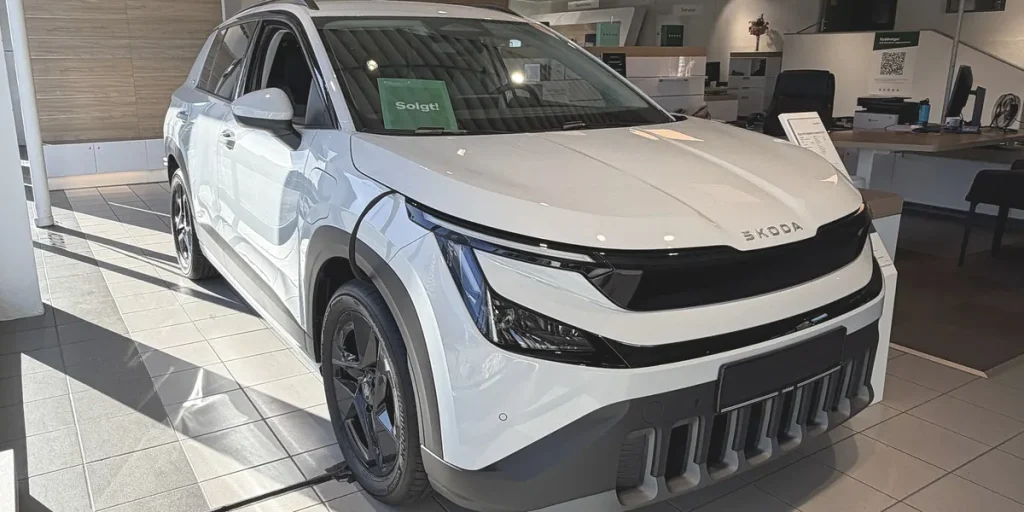
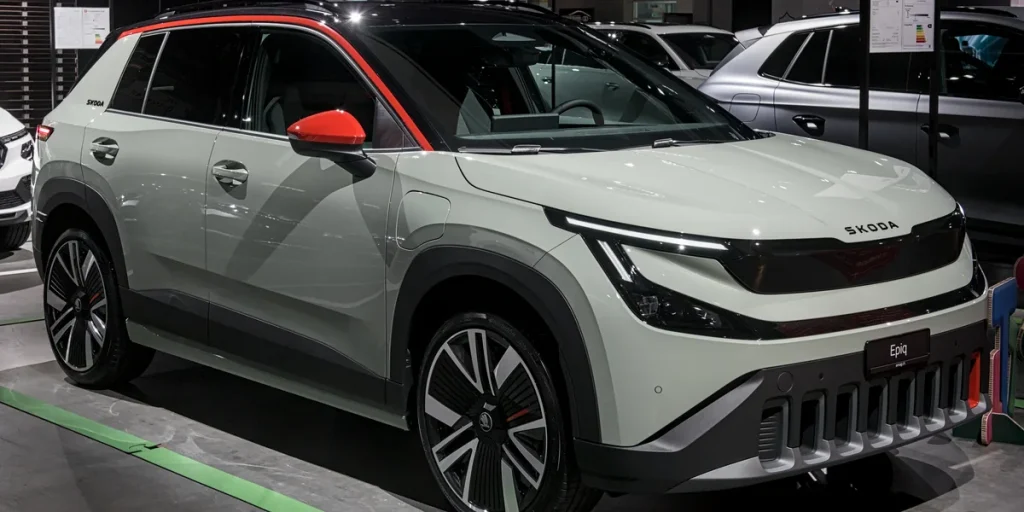
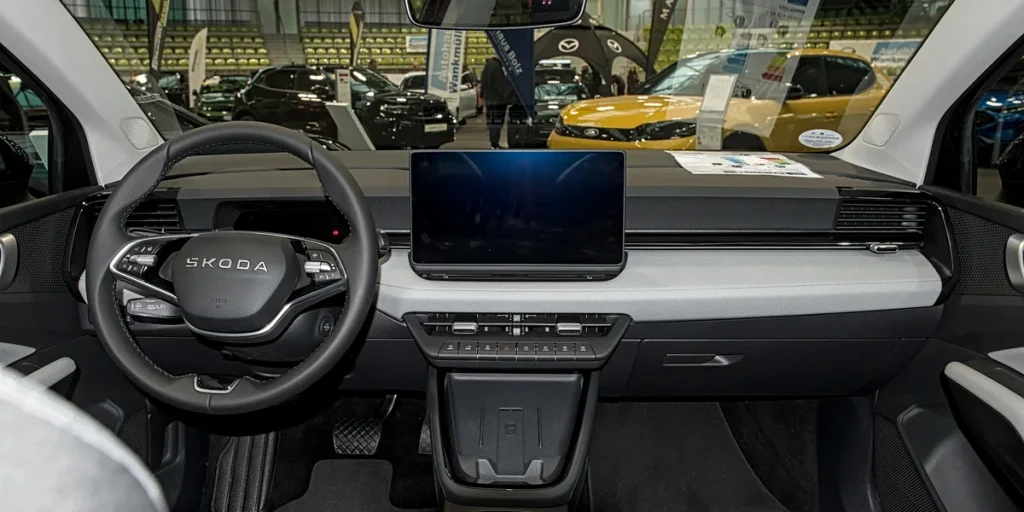
The Epiq is Skoda’s first car on the Volkswagen Group’s front-wheel-drive MEB+ platform — and the first Skoda ever built in Spain, at the Volkswagen Navarra plant in Pamplona, where production began in June 2026. Its platform siblings are the Volkswagen ID. Polo and ID. Cross and the CUPRA Raval; Pamplona builds the Epiq and ID. Cross, while the Polo and Raval come from Martorell — a distinction early coverage (and the old version of this page) blurred.
At 4,171 mm long the Epiq is a small car, which makes its 475-litre boot — 1,345 litres with the seats folded — the practical headline; a 25-litre frunk exists on the spec sheet but arrives, in Skoda’s own footnote, “later in production,” so launch cars do not have it. Towing is unusually willing for the class: 750 kg for the LFP cars, 1,200 kg braked for the 55.
Prices and When You Can Actually Buy One
The Epiq premiered on 19 May 2026 in Zurich and went on sale in stages — and the rollout, not the reveal, is where the honest dates live. In the UK, order books opened in July 2026 for the three Epiq 55 models only (SE L £27,700, Edition £30,450, First Edition £31,450) — all three eligible for the £1,500 Electric Car Grant — with the Epiq 40 (SE L £24,950, Edition £27,700) following in the autumn. There is no Epiq 35 in the UK range at all.
Skoda UK’s own FAQ sets customer deliveries of all models in early 2027; mainland Europe moved faster, with deliveries beginning in autumn 2026. In Germany the ladder starts lower: €25,900 (35), €27,900 (40), €32,100 (55), though there too the 55 came first and the 35 only became orderable in October 2026. A Sportline trim joined the range in October 2026. Australia is confirmed — for 2027, with local prices still unannounced.
The family context is worth a line: the Epiq’s two batteries are shared across the Group’s whole electric urban car family, so its closest relatives — the Volkswagen ID. Polo and the Raval — carry the same LFP/NMC split under different badges and prices. And for readers weighing the chemistry itself rather than the car, our LFP battery chemistry explainer covers what that split means over a car’s life.

Frequently Asked Questions
What battery does the Skoda Epiq have?
Two, depending on the version: the Epiq 35 and 40 use a 38.5 kWh gross (37 kWh usable) LFP battery; the Epiq 55 uses a 55 kWh gross (51.7 kWh usable) NMC battery. Both are built from the Volkswagen Group’s Unified Cell.
Is the Epiq’s battery LFP or NMC?
Both — split by version. LFP (lithium iron phosphate) in the 35 and 40; NMC (nickel manganese cobalt) in the 55. That split is Skoda’s confirmed production specification, not a market-by-market variation.
How far does the Epiq go on a charge?
Officially 310 km WLTP for the LFP cars and 441 km for the Epiq 55. In mixed real-world testing the 55 has returned about 215 miles (roughly 345 km); EV Database estimates around 320 km overall for the 55 and about 145 miles for the 40.
How fast does the Epiq charge?
On DC: up to 50 kW (35), 90 kW (40) or 105 kW (55), with 10–80% taking 33, 23 and 24 minutes (Skoda’s production figures). The 133 kW figure still circulating comes from Skoda’s February 2026 preliminary data. AC charging is 11 kW on every version.
Does the Skoda Epiq have V2G?
Not yet. The car offers V2L today (up to 3.6 kW via an extra-cost adapter) and V2H through one certified DC wallbox (the AmbiCHARGE Home 11 kW). V2G is prepared in the hardware but has no certified wallbox or tariff — it is a future step, not a current feature.
What warranty does the Epiq battery have?
Skoda’s standard EV terms: 8 years or 160,000 km (100,000 miles in the UK) against defects, with capacity guaranteed not to fall below 70% of the original usable capacity in the same period. There is no Epiq-specific warranty and no scheduled battery replacement interval.
When can I buy an Epiq, and what does it cost?
UK orders opened in July 2026 (55 models) and autumn 2026 (40); UK deliveries begin in early 2027. Prices run from £24,950 (40 SE L) to £31,450 (First Edition 55), before the £1,500 Electric Car Grant on the 55s. Germany starts at €25,900 for the Epiq 35, which is not sold in the UK.
Who makes the Epiq’s battery cells?
The packs use the Volkswagen Group’s Unified Cell, developed by PowerCo. PowerCo builds cells at Salzgitter (NMC first, from December 2025), and Gotion is the programme’s confirmed outside supplier. No source names a supplier for the Epiq specifically.
Conclusion
The Epiq makes its battery choice the whole point of the car: cheap, durable LFP for the versions most people will buy, denser NMC for the one that needs the range — and a set of production figures that quietly corrected the preview numbers most of the internet still quotes. Read any Epiq page, this one included, against Skoda’s September 2026 production data; expect V2L today, V2H with the right wallbox, and V2G later; and if you are buying in the UK, expect the car itself in early 2027. For a £25,000 electric Skoda, the battery underneath it is — unusually — the most honest part of the proposition.
