
How Are EV Batteries Recycled? Complete Guide

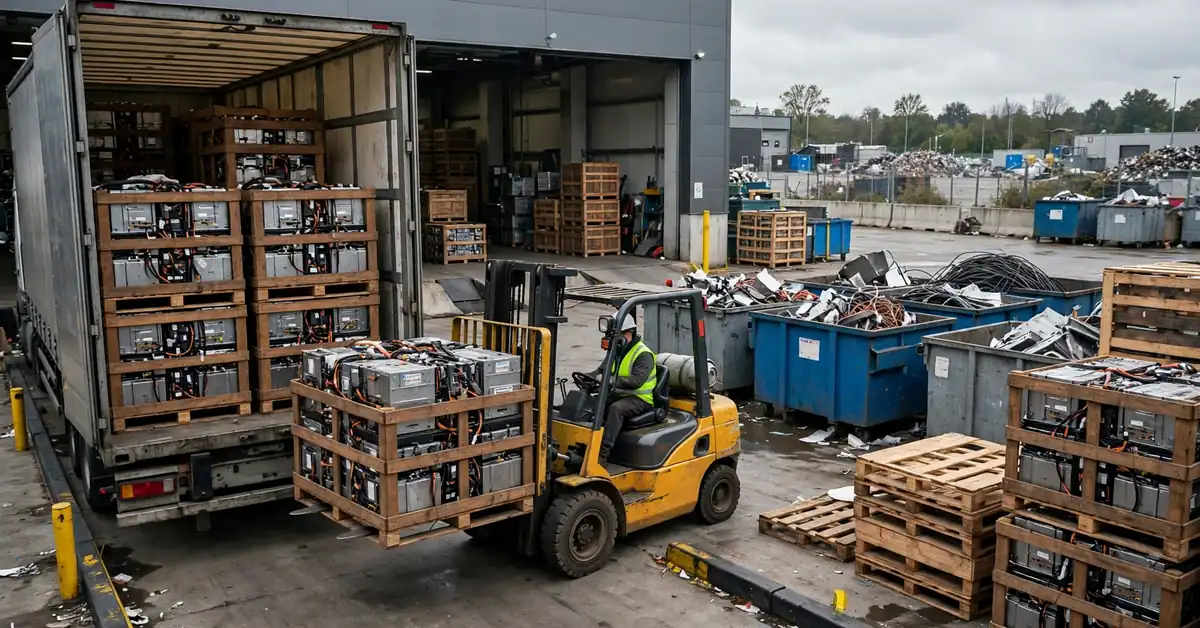
How are EV batteries recycled? The process runs through collection, discharge, dismantling, shredding, and material recovery. Recyclers pull out lithium, cobalt, nickel, and graphite for reuse. This guide walks through each step, where to drop off a battery, and what happens if a battery skips recycling entirely.
How Are EV Batteries Recycled, Step by Step?
EV battery recycling follows a set path, no matter which recycler handles it. Each stage exists to separate valuable materials from waste safely.
- Collection – Batteries arrive from dealerships, repair shops, or car dismantlers after a vehicle reaches end of life.
- Sorting and inspection – Recyclers check the battery’s chemistry, condition, and whether it still holds usable charge.
- Discharge – Technicians drain remaining electricity to prevent fires during handling and shredding.
- Disassembly – The pack is broken into modules, then into individual cells.
- Shredding – Cells are shredded into a mix of metals, plastics, and a fine powder called black mass.
- Material recovery – Hydrometallurgical, pyrometallurgical, or direct recycling methods extract lithium, cobalt, nickel, and graphite.
- Refining – Recovered metals are purified to battery-grade quality for reuse in new cells.
Each recycler may weight these steps differently. Hydrometallurgical processing currently recovers the highest share of usable materials.
What Happens to EV Batteries at End of Life?
A battery reaches end of life when it can no longer power a vehicle efficiently, usually below 70-80% of its original capacity. It doesn’t go straight to a landfill or shredder.
Most batteries follow one of three paths:
- Second-life use – Repurposed for home or grid energy storage before recycling.
- Direct recycling – Sent straight to a recycling facility for material recovery.
- Manufacturer take-back – Returned to the automaker through a dedicated program.
Batteries with remaining capacity are more likely to get a second life first. Only once they’re truly spent does full recycling begin.
How to Recycle Your Own EV Battery
If you’re replacing your EV’s battery, you’re not responsible for figuring out recycling alone. The system is built to handle this for you.
Here’s what typically happens:
- Your dealership or repair shop removes the old battery during replacement.
- The battery is packaged to prevent short circuits during transport.
- It’s shipped to a certified recycling or repurposing facility.
- You receive documentation confirming proper disposal, if requested.
You generally can’t just recycle an EV battery yourself at a curbside bin. It requires certified handling due to its size, voltage, and fire risk.
Where Can You Drop Off an EV Battery for Recycling?
Drop-off options depend on your location and the battery’s condition. A few reliable starting points exist for most EV owners.
| Option | Best For |
|---|---|
| Dealership or service center | Batteries removed during repair or replacement |
| Automaker take-back program | End-of-life batteries covered under manufacturer policy |
| Certified recycler (e.g., Redwood Materials, Li-Cycle) | Batteries without dealership involvement |
| Local hazardous waste facility | Small battery components, not full packs |
Full EV battery packs are too large and hazardous for standard e-waste drop-off bins. Always confirm with the facility before transporting one yourself.
Will EV Manufacturers Take Back Old Batteries?
Yes, most major automakers now offer some form of battery take-back program. These programs vary in scope and availability by region.
Manufacturer programs typically:
- Accept batteries removed under warranty or recall repairs
- Partner with third-party recyclers to handle processing
- Cover transportation logistics for dealership-collected batteries
- Track battery materials for regulatory compliance reporting
Coverage isn’t universal yet. Availability depends on the automaker, country, and sometimes the state you live in.
Is It Illegal to Throw Away an EV Battery?
Yes, in most cases. The EPA classifies lithium-ion batteries, including EV packs, as hazardous waste once discarded. Tossing one in regular trash violates federal and state waste regulations.
This isn’t just a technicality. Damaged or crushed lithium-ion batteries can spark fires in waste collection trucks and facilities. Several documented waste-facility fires have been traced back to improperly discarded lithium batteries.
Proper disposal channels exist specifically to prevent this risk while recovering valuable materials.
Can You Sell a Used EV Battery for Recycling?
Yes, in many cases you can sell a used EV battery instead of simply handing it over for free. Value depends heavily on chemistry, condition, and current material prices.
Some recyclers and platforms, including manufacturer-run marketplaces, connect sellers directly with buyers interested in reuse or material recovery. Batteries with strong remaining capacity often sell for more, since they’re valuable for second-life applications before recycling.
What Is Battery Pre-Processing Before Recycling?
Pre-processing covers everything that happens before a battery is shredded or chemically treated. It’s a critical safety and preparation stage.
Key pre-processing steps include:
- Full discharge to eliminate stored electrical energy
- Removal of the outer casing and control electronics
- Disassembly into modules, then individual cells
- Sorting by battery chemistry, since NMC and LFP require different processing
Skipping proper pre-processing significantly raises fire risk during the more intensive recycling stages that follow.
How Long Does It Take to Recycle an EV Battery?
The full process, from collection to refined material output, typically takes several weeks. Timing varies by facility, battery condition, and recycling method used.
Discharge and disassembly can take a few hours to a few days per battery. Chemical processing stages, especially hydrometallurgical treatment, add more time since materials move through multiple purification steps before reaching battery-grade quality.
The Bottom Line on How EV Batteries Are Recycled
How are EV batteries recycled comes down to a structured process: collection, discharge, disassembly, shredding, and material recovery. Manufacturer programs and certified recyclers handle most of the heavy lifting for owners. Skipping proper recycling isn’t just wasteful, it’s often illegal due to fire and environmental risk. Understanding this process helps explain why recycling matters as EV adoption keeps growing.
Frequently Asked Questions
Do all EV batteries go through the same recycling process?
No, chemistry affects the process significantly. LFP batteries often go through direct recycling, while NMC and NCA packs more commonly use hydrometallurgical methods.
What happens to a battery that’s too damaged to recycle safely?
Severely damaged batteries are handled with extra safety protocols, often discharged and stabilized before any disassembly. Facilities equipped for damaged, defective, or recalled (DDR) units manage this specialized process.
Can I recycle a hybrid car battery the same way as an EV battery?
Hybrid batteries follow a similar collection and recycling path, though they’re often smaller and use different chemistry, such as nickel-metal hydride. Many recyclers handle both battery types.
Is EV battery recycling mandatory in the United States?
Requirements vary by state, but disposal as regular trash is generally prohibited due to hazardous waste classification. Some states, including California, have specific mandates for battery collection and recycling.
