
The Environmental Impact of EV Battery Recycling

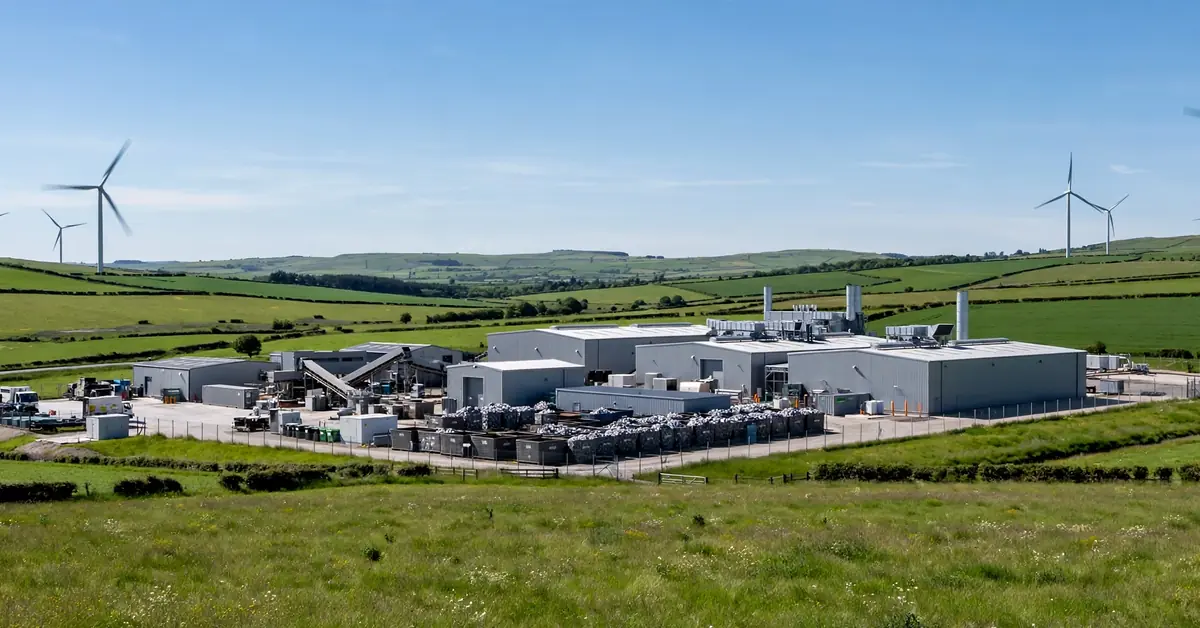
The environmental impact of EV battery recycling is largely positive, cutting emissions by 58-81% compared to mining new materials. Recycling also reduces water use by up to 88%. This guide covers what happens when batteries aren’t recycled, the real carbon footprint of recycling, and how it stacks up against alternatives like solar panel recycling.
What Is the Environmental Impact of EV Battery Recycling?
EV battery recycling reduces the need for new mining, which is one of the most environmentally damaging steps in battery production. Nearly 40-60% of an EV’s total emissions come from battery manufacturing alone.
Recycling directly cuts into that footprint. A Stanford study found that recycled battery metals produce less than half the greenhouse gas emissions of newly mined and refined metals, while using about one-fourth of the water and energy.
Key environmental benefits include:
- Greenhouse gas emissions cut by 58-81% compared to mining virgin materials
- Water use reduced by 72-88% versus traditional mining and refining
- Less land disturbance and habitat destruction from reduced mining demand
- Lower risk of soil and water contamination from properly handled hazardous materials
These benefits scale with better recycling infrastructure, meaning the environmental case gets stronger as more facilities come online.
Are EV Batteries Bad for the Environment if Not Recycled?
Yes, unrecycled batteries create real environmental risks. Landfilled lithium-ion batteries can leach toxic materials into soil and groundwater over time.
There’s also a hidden cost: every battery that isn’t recycled represents materials that must instead be freshly mined. Mining for lithium, cobalt, and nickel carries its own environmental and social costs, including habitat disruption and, in some regions, problematic labor practices.
Globally, only about 5% of all batteries are currently recycled. That gap represents a significant amount of avoidable environmental impact still happening today.
What Is the Carbon Footprint of Recycling an EV Battery?
Recycling a battery still uses energy and resources, but far less than mining and refining new materials. Research shows recycling 1 kg of lithium-ion battery material can reduce carbon emissions by 2.7 to 4.6 kg of CO2 equivalent.
The carbon footprint of recycling varies by method:
| Recycling Method | Relative Carbon Footprint |
|---|---|
| Direct recycling | Lowest impact overall |
| Hydrometallurgy | Moderate, about 24% lower than pyrometallurgy for NMC |
| Pyrometallurgy | Highest impact due to high-heat energy demand |
Location matters too. A recycling plant powered by coal-heavy electricity sees a smaller climate benefit than one running on renewable energy.
How Much Energy Does It Take to Recycle an EV Battery?
Recycling uses roughly one-fourth the energy needed to mine and refine the same materials from scratch. That gap is the main reason recycling comes out ahead environmentally, even though it isn’t energy-free.
Energy demand varies significantly by method:
- Pyrometallurgy needs the most energy, running furnaces at 1,200-1,600°C to smelt battery materials
- Hydrometallurgy uses far less heat, typically under 100°C, relying on chemical leaching instead
- Direct recycling uses the least energy of the three, since it skips both heat and heavy chemical processing
Some newer recycling technologies are also reclaiming energy during the process itself, using discharge energy from spent cells to help power extraction steps. This can reduce a facility’s net energy draw significantly compared to older recycling setups.
Is EV Battery Recycling Truly Sustainable?
Mostly yes, though it’s not a perfect solution on its own. Recycling significantly reduces environmental harm compared to mining, but it still requires energy, chemicals, and infrastructure.
A few factors determine how sustainable recycling actually is in practice:
- The recycling method used (direct recycling has the smallest footprint)
- The electricity source powering the recycling facility
- How efficiently materials are collected and transported to recyclers
- Whether recovered materials actually get reused in new battery production
True sustainability depends on treating recycling as one part of a bigger system, alongside second-life reuse and cleaner mining practices, not a silver bullet by itself.
How Does EV Battery Recycling Reduce Mining Demand?
Every kilogram of lithium, cobalt, or nickel recovered from an old battery is one less kilogram that needs to come from the ground. This directly reduces pressure on mining operations.
The scale of this impact is growing quickly. Recycled battery metals could meet 20-30% of global lithium, nickel, and cobalt demand by 2050, according to International Energy Agency projections.
This matters most for materials with problematic supply chains. Roughly 70% of global cobalt comes from the Democratic Republic of Congo, where mining has raised serious human rights concerns. Recycling offers a path to reduce that specific dependency over time.
What Is Urban Mining of EV Battery Materials?
Urban mining refers to recovering valuable materials from existing products, like old batteries, instead of extracting them from the earth. EV battery recycling is one of the clearest examples of this concept in action.
The idea reframes waste as a resource. A retired battery pack isn’t trash, it’s a concentrated source of lithium, cobalt, nickel, copper, and graphite waiting to be recovered.
Urban mining offers real advantages over traditional mining:
- Materials are already refined once, reducing processing needs
- No new land disturbance or habitat loss required
- Shorter supply chains, since recycling facilities can be built closer to demand
- Reduced exposure to geopolitical risk tied to mining-heavy regions
As EV adoption grows, urban mining is expected to become a larger share of the overall materials supply chain.
How Does EV Battery Recycling Compare to Solar Panel Recycling?
Both face similar challenges, but EV battery recycling is currently further ahead in terms of infrastructure and economic incentive. Batteries contain higher-value materials like cobalt and nickel, which make recycling more profitable.
Solar panels, by contrast, contain lower-value materials like glass, aluminum, and small amounts of silver and silicon. This makes solar panel recycling less economically attractive without stronger policy support.
| Factor | EV Batteries | Solar Panels |
|---|---|---|
| Material value | High (cobalt, nickel, lithium) | Lower (mostly glass and aluminum) |
| Recycling infrastructure | Growing rapidly | Still early-stage in most regions |
| Regulatory pressure | Strong (EU Battery Regulation, state mandates) | Emerging, less standardized |
| Hazard classification | Hazardous waste in most regions | Generally non-hazardous |
Both industries face the same core challenge: building enough infrastructure to handle a wave of end-of-life products expected over the next two decades.
The Bottom Line on the Environmental Impact of EV Battery Recycling
The environmental impact of EV battery recycling is clearly positive when compared to mining new materials. Emissions drop by more than half, water use falls dramatically, and pressure on mining-heavy regions eases. It’s not a perfect system yet, since energy source and recycling method both affect the real-world benefit. But as infrastructure scales up, recycling is becoming one of the most effective tools for making EVs genuinely cleaner over their full lifecycle.
Frequently Asked Questions
Does EV battery recycling completely eliminate the need for mining?
No, not yet. Recycling reduces mining demand significantly, but current supply of retired batteries can’t fully replace newly mined materials as EV adoption keeps growing.
Which recycling method is best for the environment?
Direct recycling currently has the lowest environmental impact, followed by hydrometallurgy. Pyrometallurgy has the highest footprint due to its high energy and heat requirements.
How much of an EV battery’s emissions come from manufacturing versus driving?
Manufacturing, especially battery production, accounts for roughly 40-60% of an EV’s total lifecycle emissions. These upfront emissions are typically offset within the first 1-2 years of driving through cleaner operation.
Why is only 5% of the world’s batteries currently recycled?
Cost, limited collection infrastructure, and the fact that most EV batteries haven’t reached end of life yet all contribute to this low rate. Regulatory mandates and improving technology are expected to raise this significantly over the next decade.
