
Best Smart Home EV Chargers With WiFi and App Control

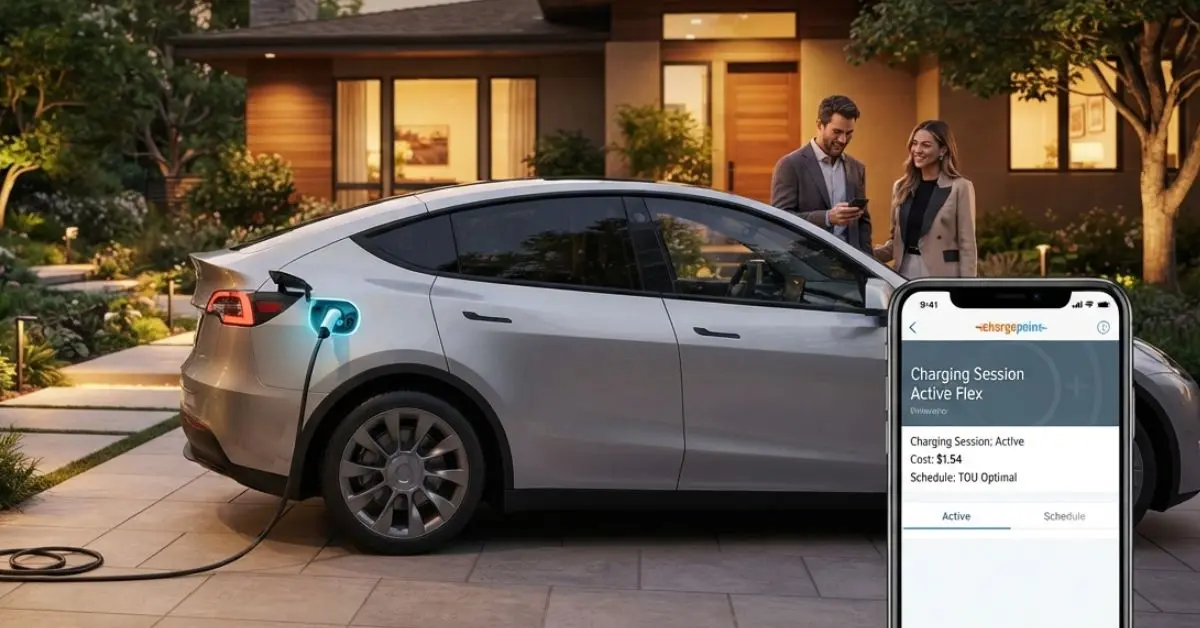
Prices and specifications in this guide come from the manufacturers’ own US stores and product pages, checked for this update. Where a widely repeated figure could not be confirmed on the maker’s own page, it is not printed.
The best smart home EV charger for most US homes in 2026 is the Emporia Pro ($599): it is the only charger in this guide that bundles a whole-home energy monitor in the box, so its load management can slow charging down instead of tripping your panel — the feature that can save a $1,000+ panel upgrade. On a budget, the Grizzl-E Classic Connect ($299.99) adds WiFi, scheduling and cost tracking for the same price as its non-smart twin. The fastest option is a tie at 50 amps: the ChargePoint Home Flex ($549) and the Autel MaxiCharger AC Elite Home ($599).
Key figures: Smart chargers compared: 7 · Prices: $299.99–$699.99 · Fastest home charging: 50 A / 12 kW · Every pick: WiFi + app control
What makes an EV charger “smart”?
A smart charger is a Level 2 charger with a network connection — WiFi, and in a few cases cellular or ethernet — that lets an app control and record every charging session.
A plain (“dumb”) charger does one job: it delivers power safely. Everything beyond that is the smart layer.
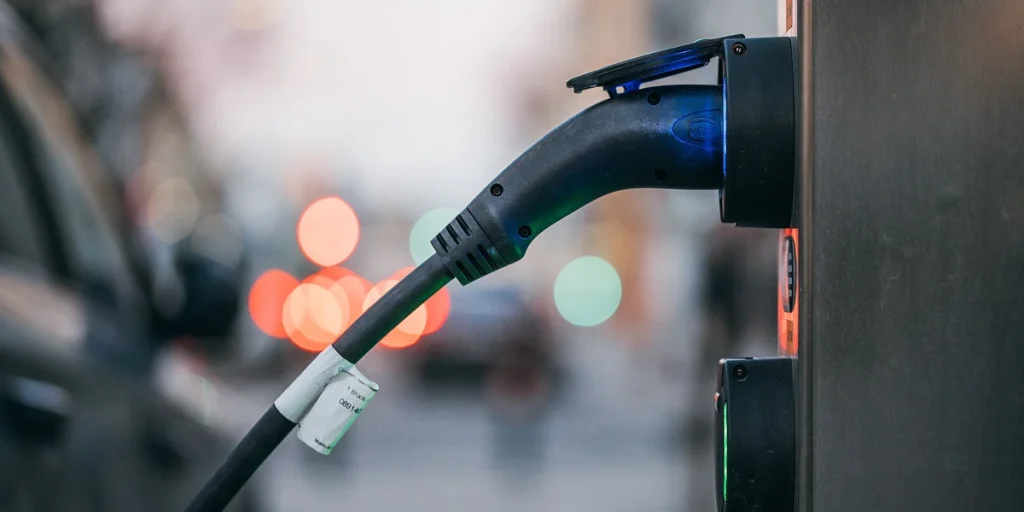
- Scheduling — set the car to charge after midnight, or sync the charger to your utility’s off-peak hours automatically
- Energy tracking — every session logged in kWh and dollars, so you know what driving electric really costs you
- Remote control — start, stop or check a session from the couch, or from another state
- Load management — the charger watches your panel and slows down before it can overload it (only some models; see below)
- Access control and updates — lock the charger to your cars, and receive new features over the air
One reason “smart” matters beyond convenience: money from your utility. Many US utility rebate and incentive programmes require the charger to be networked and ENERGY STAR certified — a dumb charger can be ineligible for money a smart one collects.
The best smart chargers at a glance
Seven chargers, all verified on the makers’ US stores in November 2026 — the right pick depends on your panel, your connector and your budget.
| Charger | Price | Max power | Connector | Install | Load management |
|---|---|---|---|---|---|
| Emporia Pro | $599 | 48 A / 11.5 kW | J1772 or NACS | Plug-in or hardwired | Yes — Vue monitor included |
| ChargePoint Home Flex | $549 | 50 A / 12 kW | J1772 or NACS | Plug-in or hardwired | No — app amperage control |
| Tesla Universal Wall Connector | $660 | 48 A / 11.5 kW | NACS + J1772 adapter | Hardwired only | Yes — power sharing |
| Autel MaxiCharger AC Elite Home | $599 | 50 A / 12 kW | J1772 only | Plug-in or hardwired | Not stated by Autel |
| Wallbox Pulsar Plus | $699.99 | 48 A / 11.5 kW | J1772 or NACS | Plug-in or hardwired | Yes — needs $299 meter |
| Grizzl-E Classic Connect | $299.99 | 40 A / 10 kW | J1772 or NACS | Plug-in | No |
| Emporia Classic | $449 | 48 A / 11.5 kW | J1772 or NACS | Plug-in or hardwired | No |
Prices are the makers’ own US list prices at the time of checking and they move with sales — the Grizzl-E’s $299.99, for example, is a sale price against a $349.99 list. What does not move is the hardware story under each price, which is what the next section goes through.
The chargers in detail, pick by pick
Start with the two questions that narrow this list fastest: does your panel have spare capacity, and does your car take a J1772 or a NACS plug?
Emporia Pro — the best pick for most homes
The Emporia Pro is a 48-amp charger ($599) with a 25-foot cable, sold with a J1772 or a NACS connector and wired either as a NEMA 14-50 plug-in (up to 40 amps) or hardwired (the full 48). Its app covers scheduling, automatic syncing to your utility’s cheap hours, and a clear record of what each charge cost.
What lifts it above its own cheaper sibling is PowerSmart: a Vue 3 whole-home energy monitor is bundled in the box, and the charger reads your home’s real-time load and throttles itself so the panel is never overloaded. On a 100-amp service, that is often the difference between charging at full speed tonight and paying an electrician for a panel upgrade first.
https://shop.emporiaenergy.com/products/emporia-pro-ev-charger
Emporia Classic — the same charger, minus the brain for your panel
The Classic ($449) is the Pro’s hardware without the Vue monitor: same 48 amps, same 25-foot cable, same app scheduling and rate syncing. Emporia’s own comparison is blunt — no dynamic load management, no home energy monitoring, no solar integration.
If your panel already has comfortable spare capacity, the Classic gives you the smart features most people actually use for $150 less. If your panel is the constraint, the $150 saving is the expensive option.
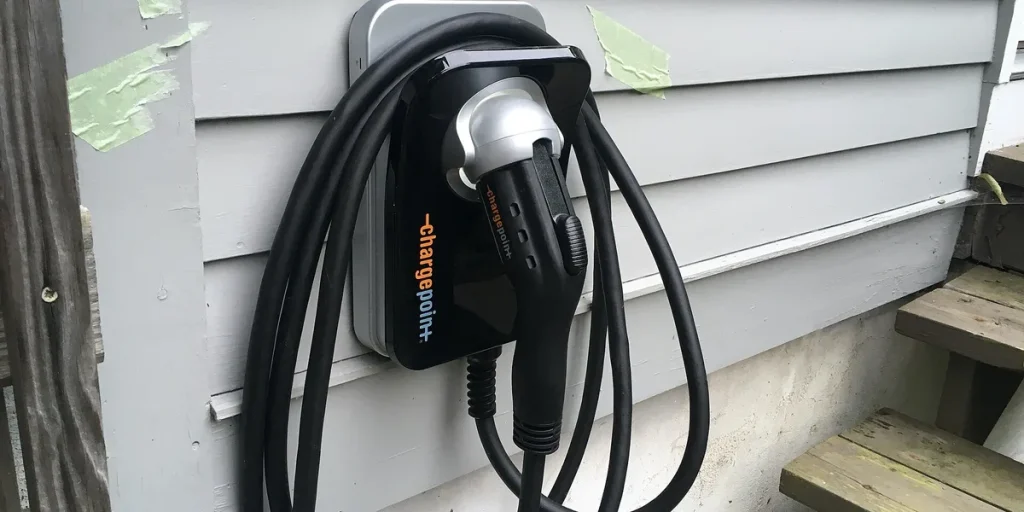
ChargePoint Home Flex — the fastest, with the widest network behind it
The Home Flex ($549) is the jointly fastest charger here: up to 50 amps and 12 kW hardwired, on circuits from 20 to 80 amps, with the delivered amperage adjustable inside the app. It comes with a J1772 or NACS connector, a 23-foot cable, and plug-in versions (NEMA 6-50 or 14-50) that deliver up to 40 amps.
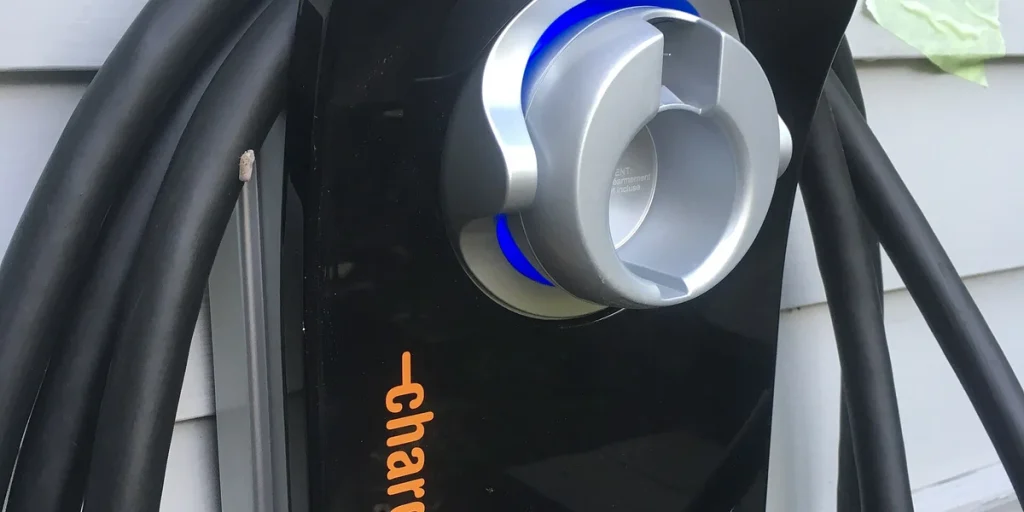
ChargePoint’s other advantage is invisible in a spec table: the same app runs your home charger and the company’s large public network, so home and road charging live in one place with one account. It is ENERGY STAR certified and UL listed, with a 3-year warranty.
https://store.chargepoint.com/product/home-flex-hardwired
Tesla Universal Wall Connector — for homes with a Tesla and another EV
The Universal Wall Connector ($660) is a 48-amp hardwired charger whose handle carries both connectors: NACS natively, with an integrated J1772 adapter for every other EV. That makes it the cleanest single answer for a two-brand garage, and its power sharing lets two units split one circuit.
Two honest cautions. Tesla’s standard Wall Connector ($585 at checking) is the same 48-amp hardware with a NACS-only handle — and older $420 prices still circulating in search results are out of date against Tesla’s own store. Tesla’s shop has also been limiting Wall Connector purchases to signed-in Tesla owners while supplies are limited, so non-Tesla households should check they can actually buy one before planning around it.
https://shop.tesla.com/product/universal-wall-connector
Autel MaxiCharger AC Elite Home — 50 amps, J1772 only
Autel’s home flagship matches the Home Flex on output — 50 amps, 12 kW in the hardwired version at $599 — with a 25-foot cable, an app (MaxiCharge) covering remote start/stop, scheduling and monitoring, and an unusually honest extra: battery health and status tracking. It is ENERGY STAR certified in a NEMA 4 enclosure.
The limitation is the connector: the home models are J1772 only, with no NACS version shown. For a NACS car you would be charging through an adapter every night, which is exactly the daily friction a home charger exists to remove.
https://autelenergy.us/products/maxicharger-ac-hardwired-wallbox-with-side-holster
Wallbox Pulsar Plus — compact, capable, and the priciest here
The Pulsar Plus ($699.99 in Wallbox’s own shop for both the 40-amp plug-in and the 48-amp hardwired versions) is the small, tidy wall unit of the group, with WiFi and Bluetooth, app scheduling and energy monitoring, and a J1772 or NACS connector on a 25-foot cable.
Its smart extras are à la carte: dynamic load management and solar charging need Wallbox’s Power Meter accessory at $299, which pushes a fully equipped Pulsar Plus close to $1,000 before installation. The hardware is good; just price the whole system, not the box.
https://shop.wallbox.com/products/pulsar-plus
Grizzl-E Classic Connect — the budget smart charger
United Chargers’ Connect line puts the Grizzl-E’s famously rugged metal enclosure (NEMA Type 4, rated to −30 °C) on WiFi: the Classic Connect is 40 amps and 10 kW, plug-in on a NEMA 14-50, with a 25-foot cable and an app for scheduling, monitoring and cost tracking. At $299.99 on sale, it currently costs no more than the non-smart Classic beside it.
What you give up is the top end: no 48-amp option and no load management. For a single EV on a healthy panel, there is nothing in this guide that makes the extra $150–$360 an easy sell over it.
https://grizzl-e.com/us/products/grizzl-e-classic-connect
Which smart features are actually worth paying for?
Three of the features on the box change what charging costs you; the rest are nice to have.
Scheduling and off-peak sync — the one everyone uses
Charging at 6 pm can cost two or three times the per-kWh price of charging at 1 am on a time-of-use plan. A charger that syncs itself to your utility’s rate table — Emporia and ChargePoint both do this — removes the nightly mental arithmetic. We go deeper on the timing side in our guide to the best time of day to charge an EV at home.
Dynamic load management — the one that saves a panel upgrade
Load management watches the whole house and pauses or slows charging when the oven, dryer and air conditioning peak together. It is the feature to pay for if your home has a 100-amp panel: Emporia builds it around the included Vue monitor, Wallbox sells it as a $299 meter, and Tesla handles it as power sharing between units. Sharing one circuit between two cars is its own setup — see our guide to charging two EVs on one home charger.
Energy tracking — the one that ends the guessing
A session log in kWh and dollars is how you find out what a mile really costs you, and it is the record a utility or employer programme wants when money is claimed back. Every charger in this guide tracks energy in its app; Emporia’s Pro goes furthest by monitoring the whole home, not just the car. That log pairs with our page on how charging an EV affects your electric bill to give you the full cost picture.
Do you need a WiFi charger at all?
For a detached house with cheap flat-rate power and one EV, honestly, maybe not — a dumb charger and the car’s own timer will do the job.
The case for smart rests on three triggers: a time-of-use electricity plan (scheduling pays for the upgrade by itself), a small electrical panel (load management), or a utility rebate that requires a networked, ENERGY STAR certified charger — in which case the “smart” premium can be partly or fully refunded. If none of the three applies to you, the Grizzl-E’s non-smart Classic at the same sale price is a perfectly rational buy.
Already own a JuiceBox? Read this before you shop
JuiceBox’s maker, Enel X Way, shut down its North American business in October 2024 and discontinued the app — JuiceBox is no longer sold or supported in the US, so it is deliberately not a pick in this guide.
If you own one: the unit still charges — the power delivery never depended on the app. What you lost is app control; settings such as maximum output now run through a third-party app (VoltiE), scheduling falls back to your car’s built-in timer, and the deadline for warranty claims has passed. A JuiceBox on your wall is a reason to plan a replacement, not an emergency.
Installation — the part that decides which charger you can run
Every charger in this guide is Level 2 on a 240-volt circuit, and the circuit — not the charger — sets your real charging speed.
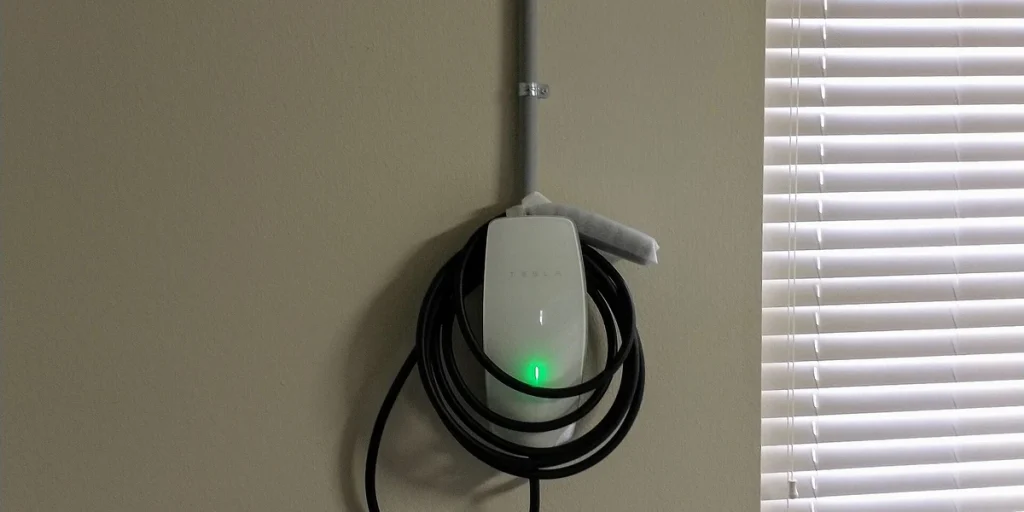
A 48-amp charger needs a 60-amp circuit; a plug-in on a NEMA 14-50 outlet is capped at 40 amps by code, which is why the same charger shows two speeds. Above 40 amps, plan on hardwiring by a licensed electrician. A straightforward dedicated-circuit install typically runs $800–$2,000 depending on panel distance and capacity — and on a full 100-amp panel, load management (above) is usually the cheaper path than a service upgrade.
What a smart home charger really costs
The charger is the smaller bill: budget the unit, the circuit, and any accessory the smart features need.
- Charger: $299.99–$699.99 from the verified list above
- Installation: typically $800–$2,000 for a dedicated 240 V circuit (panel upgrades cost more)
- Accessories that change the maths: Wallbox Power Meter $299 for load management; Emporia includes its monitor in the Pro’s box
- Money back: utility rebates for networked ENERGY STAR chargers can offset a real share of the total — check your utility before you buy, not after
Frequently asked questions
What does a smart EV charger do?
It connects a Level 2 home charger to your WiFi so an app can schedule charging for cheap hours, start and stop sessions remotely, and log every session’s energy and cost. Some models add load management, which slows charging automatically to protect a small electrical panel.
How much does a smart EV charger cost?
Verified US prices in this guide run from $299.99 (Grizzl-E Classic Connect, on sale) to $699.99 (Wallbox Pulsar Plus), with most picks between $449 and $660. Installation of a dedicated 240-volt circuit typically adds $800–$2,000.
Can you leave a smart charger plugged in all the time?
Yes. The charger and the car’s battery management system handle the session; the car stops drawing power when it reaches the charge limit you set. Scheduling exists to choose WHEN that power flows, not because leaving the car plugged in harms it.
What is the fastest home EV charger?
The fastest home units in this guide deliver 50 amps (12 kW) — the ChargePoint Home Flex and the Autel MaxiCharger AC Elite Home. In practice 48 amps is the common ceiling, adding roughly 35–44 miles of range per hour depending on the car.
Do I need load management?
Only if your electrical panel is close to its limit — typically a 100-amp service with electric cooking, drying and air conditioning. Load management lets a 48-amp charger share the house safely instead of forcing a panel upgrade; if your panel has spare capacity, skip it and save the money.
Will a smart charger work with solar panels?
Some will: the Emporia Pro can prioritise surplus solar through its Vue monitor, and the Wallbox Pulsar Plus offers solar charging with its Power Meter accessory. If solar matching matters to you, those two are the picks in this guide built for it.
Conclusion
The smart-charger question in 2026 is not whether to buy one — at $299.99, WiFi now costs nothing extra — it is whether your panel needs the load-management brain.
Buy the Emporia Pro if it does, the Grizzl-E Classic Connect if it does not, and the ChargePoint Home Flex if you want the fastest charge and one app for home and road. And if a JuiceBox is what is hanging on your wall today, you now know exactly where you stand — and what its replacement should be.
