
BMW i3 Battery: Generations, Life, Replacement Cost and REx

Researched from BMW Group material, fueleconomy.gov, EV Database, Recurrent and Geotab fleet data, PushEVs cell data and NHTSA recall records.
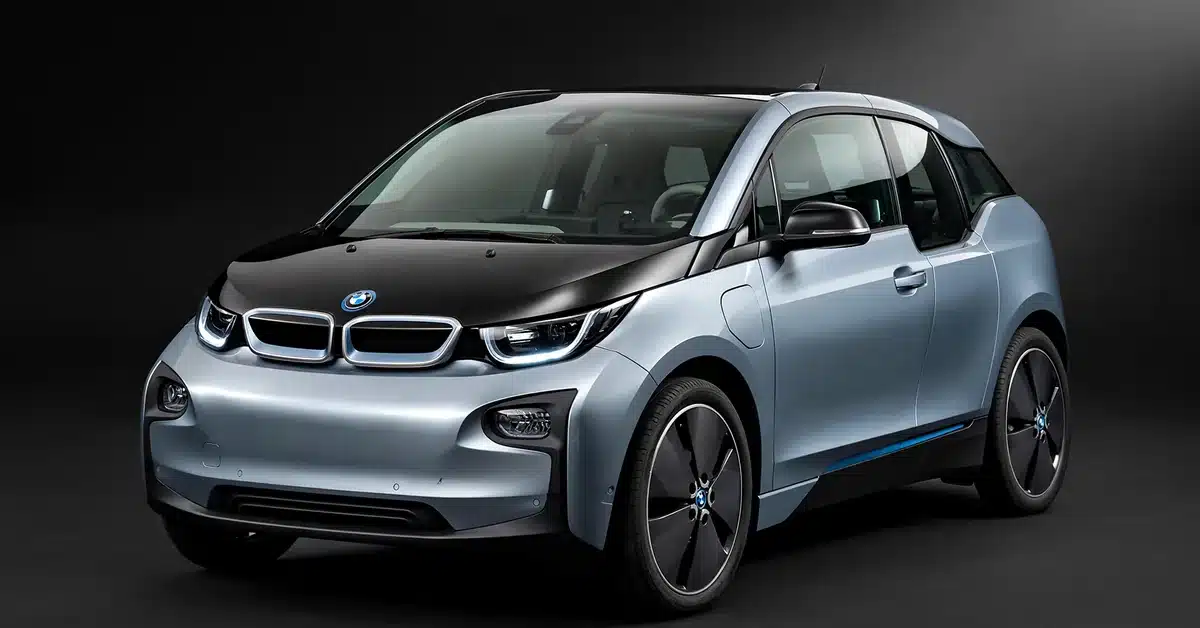
The BMW i3 this guide covers is the I01 hatchback sold in the US from 2014 to 2021 — not the new electric 3 Series sedan BMW is reviving the i3 name for. Every question this car now attracts is a used-car question about the battery.
The US i3 came with three Samsung SDI packs: 60 Ah (18.8 kWh usable, 81 miles EPA), 94 Ah (27.2 kWh usable, 114 miles) and 120 Ah (37.9 kWh usable, 153 miles). Recurrent’s fleet data puts the average i3 at ~92% of original range after 3 years, ~89% after 5 years. If a pack fails out of warranty, Recurrent’s range runs from ~$2,500 (used) to ~$16,000 (new).
Which BMW i3 battery does the car have? The three generations
Every US i3 runs one of three packs — 60 Ah, 94 Ah or 120 Ah — and the pack matters more than the trim, the colour or the options list.
BMW sizes these batteries in amp-hours rather than the kilowatt-hours most makers quote. What you are actually buying is 18.8, 27.2 or 37.9 kWh of usable capacity.
| Pack | US model years | Gross kWh | Usable kWh | EPA range (BEV) | EPA total range (REx) |
|---|---|---|---|---|---|
| 60 Ah | 2014–2016 | 21.6 | 18.8 | 81 miles | 150 miles |
| 94 Ah | 2017–2018 | 33.2 | 27.2 | 114 miles | 180 miles |
| 120 Ah | 2019–2021 | 42.2 | 37.9 | 153 miles | 200 miles |
(BMW quotes 21.6 kWh gross for the 60 Ah pack; most databases round it to 22.0 kWh. Usable figures decide real range.)
The 60 Ah cars (2014–2016): the original 22 kWh i3
The first i3s carry the smallest pack: 21.6 kWh gross, 18.8 kWh usable, and an EPA rating of 81 miles.
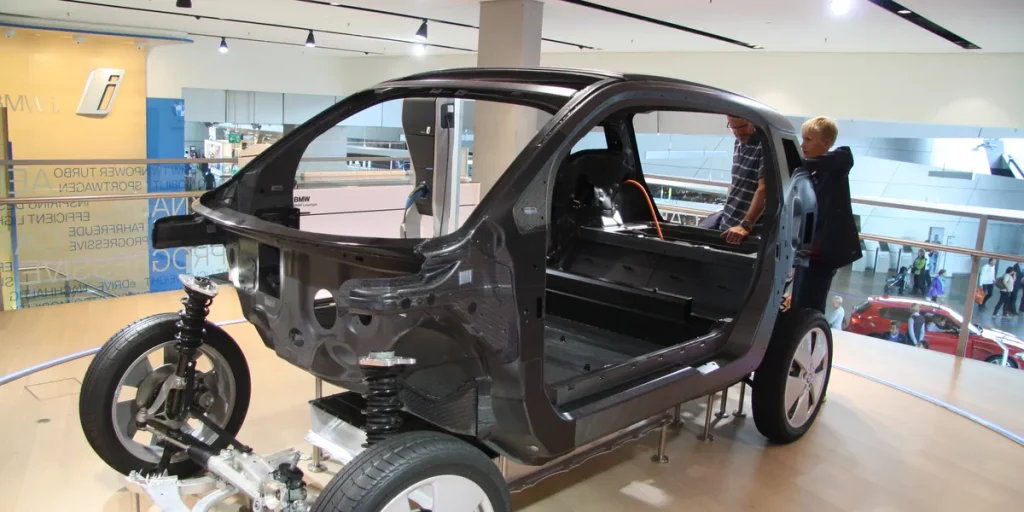
That was respectable in 2014, and the car itself was radical — a carbon-fibre passenger cell on an aluminium chassis, EPA-rated at 124 MPGe. As a used buy in 2026, though, this is a short-range city car with a decade-old battery.
Buy one with your eyes open and it can be the cheapest way into an i3 — just check the car’s own capacity reading first.
The 94 Ah cars (2017–2018): half as much again
The 2017 update lifted usable capacity from 18.8 to 27.2 kWh and EPA range from 81 to 114 miles, in a pack the same physical size.
BMW achieved that with a denser Samsung SDI cell, not a bigger box, so the 94 Ah car drives like the original with the range anxiety turned down. REx versions: 97 miles electric, 180 total.
For most used buyers this is the value pick: modern range for a commute, priced below the 120 Ah cars.
The 120 Ah cars (2019–2021): the one to buy
The final battery is the biggest by far — 42.2 kWh gross, 37.9 kWh usable, 153 miles EPA — and it is the version I would buy.
The jump from 114 to 153 miles changes what the car is for: a genuine only car for most households, with the REx version’s 200-mile total covering the odd long trip. These are also the youngest packs.
The catch is price — good 120 Ah cars hold their money because buyers have worked this out. If the budget stretches, stretch.
Does the i3s get a different battery?
No — the i3s uses exactly the same packs as the standard car, first the 94 Ah and then the 120 Ah.
The i3s arrived for 2018 with more power (184 hp against 170 hp) and sportier suspension. BMW never made an i3s-specific battery, so a seller asking a premium “for the bigger s battery” is inventing it.
What’s inside the pack? Cells, modules and cooling
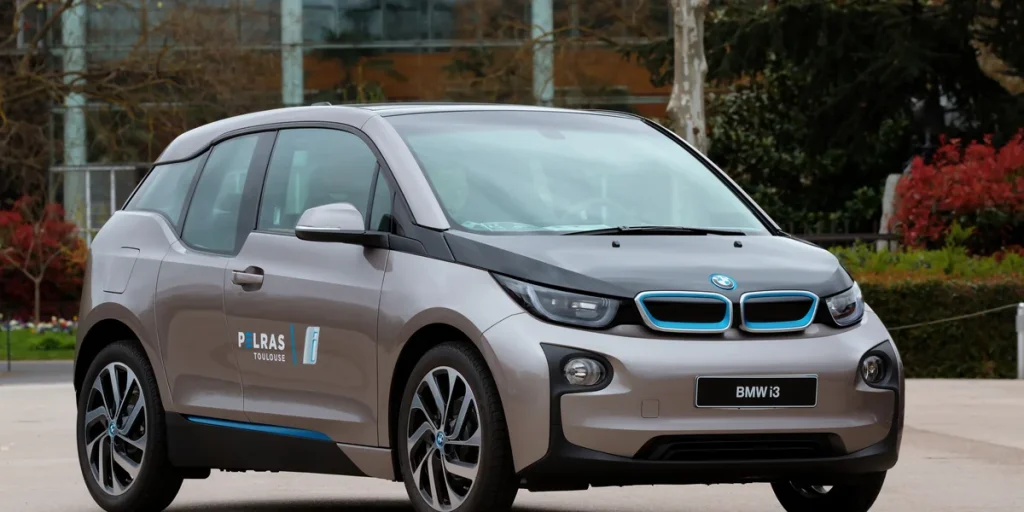
Every i3 pack is built from Samsung SDI prismatic cells — NCM chemistry, refrigerant-cooled, and arranged as a single string of 96 cells.
That architecture explains both the i3’s strengths and its one structural weakness: high-quality cells and clever cooling on one side, but no parallel strings — one tired cell drags the whole pack down.
Samsung SDI cells: NCM 111, then NCM 622
The 94 Ah generation runs NCM 111 chemistry (often written NMC 333), and the 120 Ah cells moved to the denser NCM 622.
Samsung SDI’s documented 94 Ah cell is a 3.7 V prismatic unit rated for 3,200 cycles at 80% depth of discharge to 80% remaining capacity — part of why these packs last.
96 cells, 8 modules, one string
The pack is 96 cells in series at roughly 350–355 V, grouped as 8 modules of 12 cells each.
Remember the number eight: because the pack splits into modules, a specialist can replace failed modules instead of the whole battery — the key fact in the replacement-cost section below.
Why the refrigerant cooling matters
The i3’s pack is cooled by the air-conditioning refrigerant circuit running through a plate beneath it — not by air, and not by a separate water loop.
Active cooling is the structural reason the i3 ages at roughly half the rate of the air-cooled Nissan Leaf in Geotab’s data — heat kills lithium cells, and the i3 refuses to let its pack cook.
How long does a BMW i3 battery last?
Fleet data says most i3 batteries lose roughly 2% a year — about 92% of original range at 3 years, 89% at 5 years, and around 80% by 100,000 miles.
This is where the i3 earns its reputation: two independent fleet datasets point the same way. Treat the averages as a benchmark, not a promise — the spread underneath them is wide.
What the fleet data shows
Recurrent’s owner fleet puts the i3 at ~92% of rated range after 3 years and ~89% after 5 years; Geotab’s fleet data averages ~13.5% capacity loss over 6.5 years.
Recurrent also tracks early cars to high mileage — 2014 and 2017 cars around 80% of original capacity at roughly 100,000 miles — against roughly 4.2% a year for the air-cooled Leaf in Geotab’s study.
Why two cars the same age can differ by 10 points
Averages hide the spread: one 2015 i3 in a Silver Power Systems study had already lost ~19% at just 33,000 miles.
Heat history, charging habits and storage move individual cars a long way from the fleet curve: a garaged 94 Ah car can test in the low 90s today, a heat-soaked early car in the low 80s. Neither seller will say which you are looking at.
Real range today, by generation
Apply the fleet curve to the EPA figures and a typical 120 Ah car still shows roughly 135–140 miles; a 100,000-mile 60 Ah car is a ~65-mile car.
Those are estimates from the averages, not measurements of your car. Recurrent’s seasonal data adds the rest: ~72% of rated range at 32 °F — winter loss on this car is weather, not degradation.
The REx range extender: what used buyers need to know
The REx is a 647 cc scooter-derived twin that generates electricity only — it never drives the wheels, and on US cars it comes with two restrictions European cars never had.
Plenty of listings barely mention BEV or REx, yet it changes the range figures, the maintenance list and even the warranty.
How the REx works: a generator, not a second engine
BMW’s W20 engine — a 647 cc water-cooled twin built by Kymco from the C 650 GT scooter unit, detuned to 34 hp — spins a generator and nothing else.
It wakes up automatically when the battery falls to roughly 6% charge and holds the pack around that level. It is a safety net, not a cruise mode: at sustained motorway speeds it cannot generate as fast as the motor consumes, so charge keeps slipping. It also adds roughly 300 lb.
Why US cars got a smaller tank and no hold mode
California’s rules made the US REx a “BEVx”: for 2014–2016 the usable fuel tank was software-limited to 1.9 gallons and drivers got no hold mode.
CARB would only classify the car as a range-extended battery-electric vehicle if petrol range did not exceed electric range. So US cars carried a physical 2.4-gallon tank the software let them use only 1.9 gallons of, and where Europeans could switch the REx on from 75% charge, US cars engaged it only at ~6%.
Many owners have coded both restrictions away — but a dealer service visit can wipe the coding, and modified settings raise warranty questions.
REx checks before you buy
Confirm the unit actually starts, runs smoothly and holds the charge — and ask about engine mounts and fuel age.
REx cars generate a disproportionate share of i3 complaints, centred on engine mounts, so any vibration history deserves a straight answer. If the seller cannot demonstrate it running, price the car as a BEV.
How fast does the i3 charge?
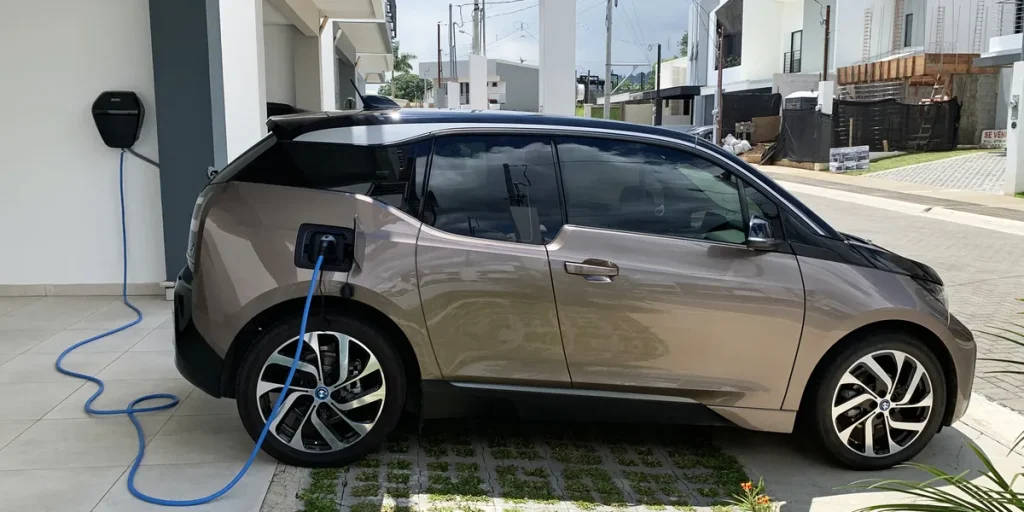
Every US i3 charges at up to 7.4 kW on AC and about 50 kW on a CCS DC fast charger — modest numbers, softened by the fact that the batteries are small.
The fair comparison is minutes, not kilowatts: a 50 kW charger filling a 27 kWh battery is a short stop, and a full AC charge is an overnight non-event.
AC charging: 7.4 kW in the US
US cars carry a 7.4 kW single-phase onboard charger, good for a full 94 Ah charge in about 3 hours 40 minutes.
The 11 kW figure in many spec tables belongs to European three-phase cars (a 120 Ah pack in ~3.2 hours on an 11 kW wallbox). A US listing quoting 11 kW has copied a European spec sheet.
DC fast charging: 50 kW CCS, and the early-car trap
DC charging peaks at roughly 50 kW (EV Database measures 49 kW peak, 46 kW average between 10–80% on the 94 Ah).
BMW quoted about 30 minutes from empty to 80% on the 60 Ah car, and 42 minutes for the 120 Ah; EV Database’s 10–80% figure for the 94 Ah is about 26 minutes. There is no navigation-linked preconditioning, so a cold pack charges slower. North American cars use Type 1 for AC and CCS Combo 1 for DC — and on a 2014–2015 car, physically verify the CCS port: DC charging was not fitted to every early car.
Charge times at a glance
| Pack | DC peak | DC charge time | AC full charge (US, 7.4 kW) |
|---|---|---|---|
| 60 Ah | ~50 kW | ~30 min to 80% (BMW) | ~3 hours |
| 94 Ah | ~50 kW | ~26 min, 10–80% (EV Database) | ~3 h 40 min |
| 120 Ah | ~50 kW | 42 min to 80% (BMW) | ~5 hours |
(60 Ah and 120 Ah AC times are scaled from usable capacity at 7.4 kW; the 94 Ah figure is the quoted one.)
What does a BMW i3 battery replacement cost?
Recurrent’s research puts the honest range at about $2,500 for a used pack to about $16,000 for a new pack through BMW — and the smart money usually lands in between, on module repair.
This is the question that frightens i3 owners most, and the internet answers it badly — unsourced quotes circulate with nothing behind them. BMW publishes no list price, so here is the realistic ladder, cheapest first.
A new pack through BMW
A new pack sourced through BMW tops Recurrent’s range at about $16,000; 2023-era reporting put dealer replacement at roughly $16,000–$18,000 including labour.
That is real money on a car worth a fraction of it, which is why dealer replacement is the last resort. If a quote lands far above that band, get written quotes elsewhere.
Used and refurbished packs
Used original packs are advertised from about $2,500, with remanufactured packs in the mid-thousands; independent labour typically adds roughly $800–$2,000.
The catch is condition: a used pack is a lottery ticket unless its health is verified first. Verified, the arithmetic can work beautifully — a $2,500 pack in a $5,000 i3 is a rational repair; a $16,000 dealer pack is not.
Module-level repair: the cheaper middle path
Because the pack splits into 8 modules, a specialist can replace only the failed ones — aftermarket modules change hands at roughly $1,700–$1,800 each.
For most real failures this is the answer: one or two tired modules cause most pack problems (remember the single series string), so a module repair at an independent specialist undercuts a full swap.
Can you upgrade to a bigger battery?
BMW itself offered a factory upgrade once — but North America said no, so the only upgrade route in the US today is a third-party pack.
With the 94 Ah launch in May 2016, BMW Group offered 60 Ah owners a dealer retrofit to the bigger pack in select markets. BMW of North America and BMW UK both declined — no US factory path.
The documented option now is aftermarket: MTG’s 154 Ah / 54 kWh module set on CATL cells, with a reflashed BMS — $5,800 before shipping and installation, maker-claimed 3-year warranty (InsideEVs, April 2025).
BMW i3 battery warranty: what is still covered in 2026?
The standard US battery warranty is 8 years/100,000 miles with a 70% capacity floor — but REx cars registered in CARB states carry 10 years/150,000 miles, and that changes the maths for 2017–2019 cars.
Most sellers will tell you the warranty is long gone, and for the oldest cars they are right. The exceptions hinge on two things sellers rarely check: the in-service date and the state of registration.
The standard terms: 8 years, 100,000 miles, 70% floor
BMW covered the i3’s battery for 8 years or 100,000 miles, and a pack testing below 70% of its original capacity inside that term qualifies for remedy.
That 70% floor is also the federal baseline for EVs of the era, and it is a low bar — a healthy i3 should be nowhere near it (~89% at 5 years on the fleet average). One catch: above the floor, owners report a diagnostic fee (~$175–$350).
CARB-state REx cars: 10 years/150,000 miles
i3 REx models registered in California and the other CARB states carry a 10-year/150,000-mile battery-capacity warranty under the California emissions warranty.
This follows from the REx’s status as a California TZEV: a 2018 REx that lived in California can be covered years after an identical Texas BEV is on its own.
Warranty status by model year, today
As of late 2026: 60 Ah cars are out on time alone; 94 Ah cars are expired or in their final months; 120 Ah federal coverage runs into 2027–2029.
CARB-state REx cars stretch further — 94 Ah cars to about 2027–28, 120 Ah cars to 2029–2031. These are calculations from the terms: coverage runs from the in-service date, so verify it with BMW before paying a premium.
Known battery-related issues and recalls to check
Most “battery faults” on a used i3 are not the traction battery at all — they are the 12V battery, the A/C compressor, or a recall the car may never have had done.
This is the section that saves you the most money: the i3’s scariest dashboard warnings are usually its cheapest problems.
The 12V battery: the most common false alarm
The small 12V auxiliary battery ages out at roughly four years and, when weak, produces failure-to-start, charging faults and the dreaded “drivetrain malfunction” warning.
That warning mimics a traction-battery failure so convincingly that owners have been quoted for high-voltage work on cars that needed a $150–$250 12V battery.
The A/C compressor also cools your battery
Compressor failure shows up repeatedly in owner-survey data, is more common in hot climates, and on this car it takes the pack cooling with it.
Dealer replacement has been reported at $1,500–$2,500, and because the refrigerant circuit cools the battery, a weak compressor is a longevity problem too — confirm the air conditioning blows cold on a test drive.
The recalls that matter for the battery
Three high-voltage recalls are the ones to check by VIN: 19V-310/19V-599, 22V-683, and the 2025 shutdown recall.
The first covers an electric-motor-electronics board fault on certain 2018–2019 cars that could cut high-voltage power, remedied by a free module replacement. The second, 22V-683, is the most battery-serious: certain 2019–2021 cars built between November 2018 and May 2021 received out-of-spec cells with a short-circuit risk, fixed by replacing the affected modules. The 2025 recall addressed a false isolation fault that could shut the system down.
Buying a used BMW i3 in 2026: the battery checklist
Settle the specific car’s battery with evidence, not model-year folklore — this list takes an afternoon and decides whether the car is cheap or just priced cheap.
- Get the car’s actual capacity reading — a BMW dealer ISTA health report, or a Recurrent report. Module spread matters, not just the headline percentage.
- Benchmark against the fleet curve: ~92% at 3 years, ~89% at 5 years is normal; near the 70% floor on a younger car is a red flag.
- Check the 12V battery’s age first — it explains most “dead i3” stories.
- Run the VIN through NHTSA, especially recall 22V-683 (2019–2021 cars).
- On REx cars, watch the engine start, run and hold charge; ask about mounts and fuel age.
- On 2014–2015 cars, physically confirm the CCS DC port exists.
- Check the warranty position: in-service date; CARB-state REx cars carry 10-year cover.
- Budget for the tyres: the narrow 155/70R19 fitment has limited US availability.
BMW i3 vs Tesla Model 3: the used-buy question
They answer different questions: the i3 is a carbon-fibre city hatch with 81–153 miles of range; the Model 3 is a steel sedan with roughly double the range and a far larger fast-charging and parts ecosystem.
Cross-shopped at similar money, the Model 3 wins on range, charging network and support, and it is not close. The i3’s counters are price, size, efficiency — up to 124 MPGe — and character.
Frequently Asked Questions
How long does a 2016 BMW i3 battery last?
A 2016 car carries the 60 Ah pack, and the fleet evidence is reassuring: about 92% of original range after 3 years, 89% after 5 years (Recurrent), early cars around 80% at 100,000 miles. Individual cars vary, though — the real answer is the car’s own health report.
What does a BMW i3 battery replacement cost?
Recurrent’s research range runs from about $2,500 for a used pack to about $16,000 for a new pack through BMW; dealer fitting was reported around $16,000–$18,000 in 2023-era reporting. Most owners never buy a whole pack — the 8-module design allows module repair. BMW publishes no list price.
Is the BMW i3 battery NMC or LFP?
NMC — nickel manganese cobalt oxide, in Samsung SDI prismatic cells: NCM 111 in the 94 Ah generation, NCM 622 in the 120 Ah. No i3 was ever built with an LFP battery.
Can you upgrade a 60 Ah i3 to a bigger battery?
Not through BMW in the US: the official 60-to-94 Ah retrofit ran in select markets from May 2016, but BMW of North America declined to participate. The documented route today is third-party — MTG’s 154 Ah / 54 kWh CATL set at $5,800.
Does the range extender drive the wheels?
No — the 647 cc Kymco-built twin drives only a generator; the wheels are always turned by the electric motor. It switches on at ~6% charge and holds the pack near that level.
Is a BMW i3 still under battery warranty in 2026?
It depends on model year and state. Standard cover is 8 years/100,000 miles, so 2014–2018 cars are expired or nearly so, while 120 Ah cars (2019–2021) can run into 2027–2029. CARB-state REx cars carry 10 years/150,000 miles.
Conclusion
The i3’s battery is the reason to buy the car, not the reason to fear it — provided you buy the right generation and check the specific pack.
Prioritise the 120 Ah cars, treat the 94 Ah as the value pick, and buy a 60 Ah only at a city-car price. These packs age at ~2% a year; the checklist confirms your car.
