
Can You Charge a US EV in Europe?

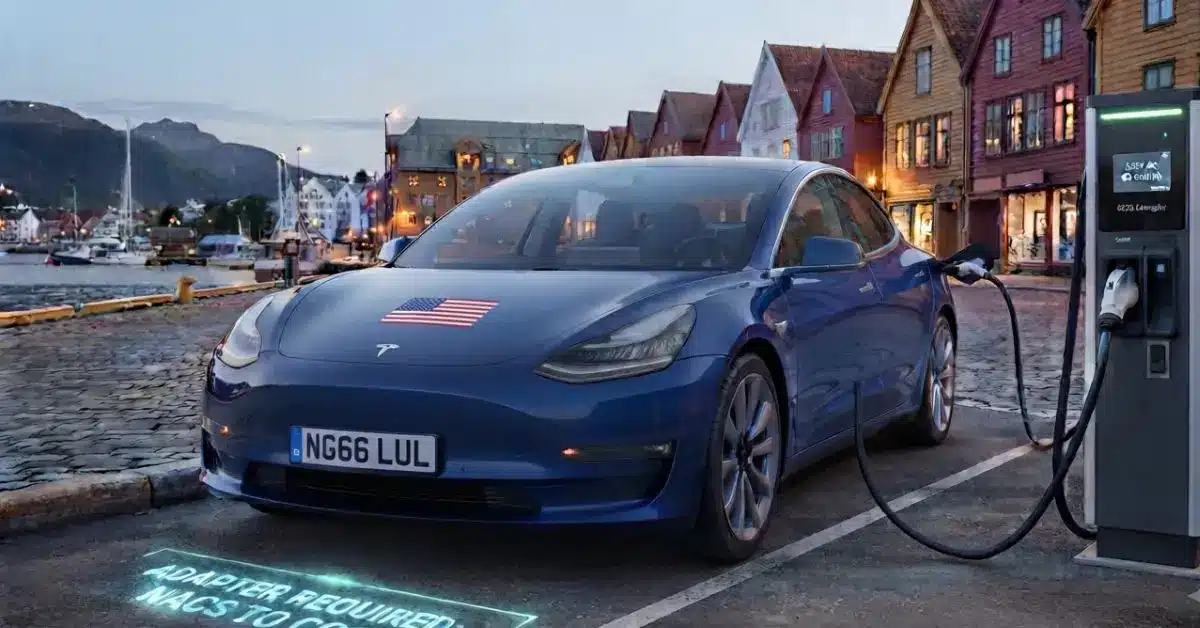
Bringing your U.S. EV to Europe? The charging system is different, but you can still charge without major problems.
You can charge a U.S. electric vehicle (EV) in Europe, but you need special adapters. U.S. cars use NACS or CCS1 connectors, while Europe uses CCS2 and Type 2 plugs. These connectors do not fit together without an adapter.
European charging stations also use different power settings for AC charging. They provide 230V/50Hz, while the U.S. uses 120/240V/60Hz. Using the right adapters and understanding how European charging works lets you charge your EV confidently throughout Europe.
Connector Compatibility: U.S. EV in Europe
| U.S. EV Type | U.S. AC Connector | U.S. DC Connector | European AC Needed | European DC Needed | Adapter Required |
|---|---|---|---|---|---|
| 2024+ NACS EV (Tesla, Ford, GM, etc.) | NACS AC | NACS DC | Type 2 (IEC 62196) | CCS2 | NACS → CCS2/Type 2 adapter |
| 2013–2023 CCS1 EV | J1772 | CCS1 | Type 2 | CCS2 | J1772 → Type 2; CCS1 → CCS2 |
| Tesla (pre-NACS, EU versions) | Type 2 native | CCS2 native | Compatible | Compatible | No adapter needed (EU model) |
Using NACS Electric Vehicles in Europe
If you plan to bring a North American Charging Standard (NACS) electric vehicle to Europe, you will typically need two specific adapters. You need a NACS-to-Type-2 adapter for standard AC charging and a NACS-to-CCS2 adapter for DC fast charging.
These adapters are rarely available at car rental counters or dealerships in Europe. Buy them before your trip. Many companies make these adapters, but verify that the one you choose works with your specific car model.
While some companies have announced universal NACS-to-CCS2 adapters, availability varies. Check for current options from reliable manufacturers before you travel to ensure you can charge your vehicle while abroad.
Using CCS1 EV in Europe
If your U.S. electric vehicle (EV) has a CCS1 charging port, you will need two different adapters to charge in Europe. Use a J1772-to-Type 2 adapter for AC charging at European stations. For DC fast charging, use a CCS1-to-CCS2 adapter, as almost all European public fast chargers use the CCS2 connector.
U.S. CCS1 vehicles cannot plug directly into European stations because the connectors have different physical shapes. You must use an adapter for both AC and DC charging even though the charging systems are compatible. Most CCS1-to-CCS2 adapters work for high-power DC charging, but your actual charging speed depends on your vehicle, the adapter, and the station.
Before you travel, confirm that your EV manufacturer allows the use of CCS2 adapters. Buy your adapters from a trusted company before you leave. It is often hard to find these specific adapters once you arrive in Europe, especially outside of big cities.
Understanding U.S. vs. European AC Power
European homes use 230V electricity at 50Hz. U.S. homes use 120V or 240V at 60Hz. This difference matters most for Level 1 charging, which uses a standard wall outlet. Most U.S. electric vehicles accept AC power between 85V and 265V. Because of this, you can charge most U.S. electric vehicles in Europe using a simple adapter.
Always check your owner’s manual before you try this. You will need a special adapter plug to fit a European socket, like the Type F Schuko. For public charging, U.S. cars can use European Type 2 stations if you have the right connector adapter. These stations provide 11-22 kW of power.
Practical Tips for Charging a U.S. EV in Europe
Buy Your Adapters Before You Travel
Source adapters before departure: NACS-to-CCS2 and NACS-to-Type-2 adapters are difficult to source in Europe — purchase from your EV manufacturer or a verified third party before you travel.
Install European Charging Apps
Download Chargemap and ABRP Europe. These apps cover European charging networks comprehensively, including IONITY, Fastned, Shell Recharge Europe, and Tesla European Superchargers.
Use Tesla Superchargers When Available
Tesla operates 2,000+ European Supercharger stations, accessible to NACS vehicles via the Tesla app and to European CCS2 vehicles at V4 stations. A confirmed NACS-to-CCS2 adapter will access European Tesla Superchargers.
Plan for Higher Charging Costs
European charging costs are higher. IONITY charges approximately €0.60–€0.69/kWh, while Shell Recharge Europe charges approximately €0.50–€0.65/kWh. These rates are significantly more expensive than U.S. Supercharger rates, so budget accordingly.
Check Your Manufacturer’s Charging Guidance
Each manufacturer has specific guidance for using its vehicles outside the home market. Review the international charging section in your owner’s manual before your trip.
Conclusion
You can charge a U.S. electric vehicle (EV) in Europe if you have the right adapters. You must buy NACS-to-CCS2 or NACS-to-Type-2 adapters before you travel.
European charging networks are large and easy to find. IONITY provides 350-kW fast-charging stations along all major motorways. However, charging costs are higher than in the U.S. You should budget €0.50–€0.70 per kWh for DC fast charging.
If you plan to drive a U.S. EV in Europe, follow three steps to prepare. Confirm your adapters, set up your charging apps, and check your manufacturer’s guidance before you leave.
FAQs
Can I use a U.S. Tesla Supercharger adapter in Europe?
No. Europe uses different charging connectors, so you need a compatible NACS-to-CCS2 or Type 2 adapter designed for European charging stations.
Can I charge a U.S. EV from a European household outlet?
Yes. Most U.S. EVs can accept 230V/50Hz power through their onboard charger, but you need the correct plug adapter and should confirm compatibility in your owner’s manual.
Is charging an EV in Europe more expensive than in the U.S.?
Yes. Public DC fast charging in Europe often costs €0.50–€0.70 per kWh, which is generally higher than typical U.S. fast-charging rates.
