
Volvo EC40 Battery: Complete Guide

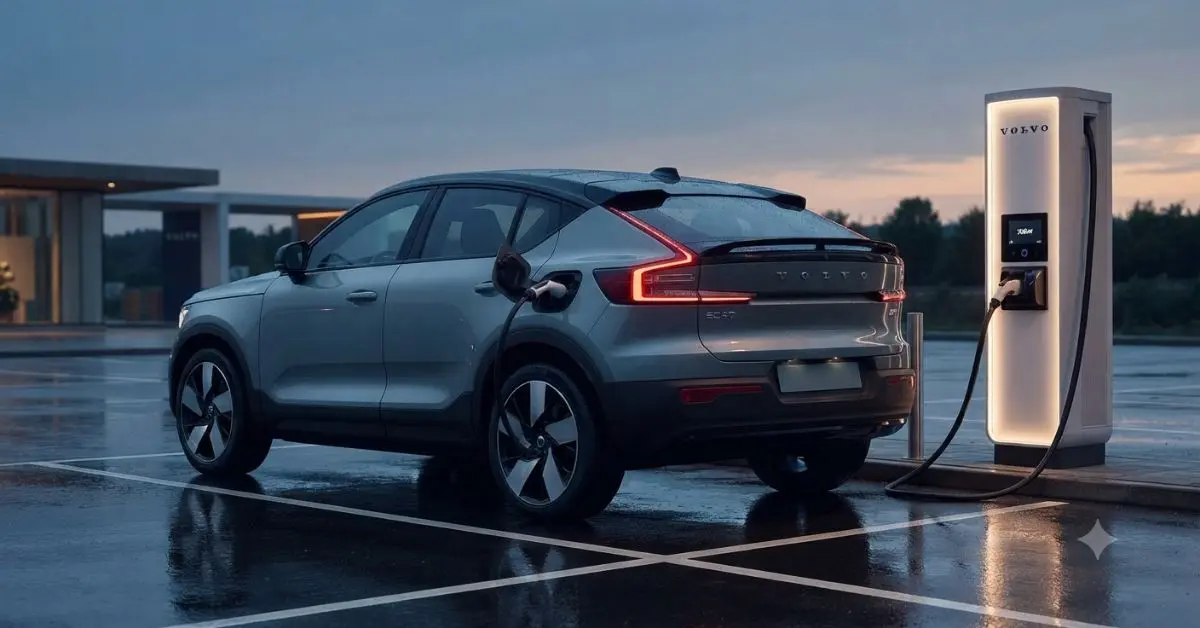
The Volvo EC40 (renamed from the C40 Recharge in 2024) uses NMC lithium-ion battery chemistry. It comes in two sizes: a 69 kWh Standard Range and an 82 kWh Extended Range. The 82 kWh battery has 79 kWh of usable energy. The EC40 is a sleek coupe-SUV that shares its parts with the boxier EX40. Because it has a sloping roof, it is about 4% more efficient on the motorway.
The 82 kWh Extended Range Single Motor offers up to 354 miles of range using the WLTP standard. The Twin Motor Performance model charges at speeds up to 205 kW DC. This is one of the fastest charging rates for any compact Volvo EV. The car shares its CMA platform with the Polestar 3. This guide explains the EC40 and C40 Recharge battery specs, shows how the two models differ, and covers the real-world range you can expect.
Volvo EC40 / C40 Recharge Battery: Full Specs
| Variant | Battery (Gross) | Battery (Usable) | WLTP Range | Motor Output | Peak DC Rate |
|---|---|---|---|---|---|
| Single Motor (Standard) | 69 kWh | ~66 kWh | ~300 miles | 175 kW (238 hp) | 135 kW |
| Single Motor Extended Range | 82 kWh | 79 kWh | 354 miles | 185 kW (252 hp) | 135–155 kW |
| Twin Motor AWD | 82 kWh | 79 kWh | ~330 miles | 300 kW (408 hp) | 155 kW |
| Twin Motor Performance AWD | 82 kWh | 79 kWh | ~315 miles | 315 kW (428 hp) | 205 kW |
EC40 vs EX40: Same Battery, Different Body
The Volvo EC40 (formerly called the C40 Recharge) uses the same battery, platform, and electrical system as the Volvo EX40 (formerly the XC40 Recharge). Both cars use NMC battery cells from the same maker and feature identical thermal management systems, which control the battery’s temperature. The main difference is the body shape. The EC40 features a sloping roofline that helps the car cut through the air more easily, especially at highway speeds where wind resistance uses up the most energy.
Volvo states that the EC40 is about 4% more efficient on highways than the boxier EX40. This improvement gives drivers about 10–15 extra miles of range on the highway using the exact same battery. This efficiency is the main reason to pick the EC40 over the EX40. However, you should know that the sloping roof design slightly lowers the amount of headroom for passengers sitting in the back.
Inside the EC40 Battery
The EC40 uses NMC (Nickel Manganese Cobalt) lithium-ion batteries. These batteries run on a 400-volt system, which it shares with the Polestar 2 because both cars use the same CMA platform. An active liquid system keeps the batteries at the best temperature. The battery pack has 82 kWh of total energy and 79 kWh of usable energy. This creates a small 3.6% buffer, which means drivers get to use more of the battery’s total power compared to many other electric cars. Every EC40 comes with an 11 kW AC charger for home use.
The Twin Motor Performance model features a 205 kW fast-charging rate. This is faster than the standard Twin Motor, which charges at 155 kW, and the Single Motor, which charges between 135 and 155 kW. This faster rate allows the car to charge from 10% to 80% in 28 minutes instead of 33 minutes. You will not notice this difference during daily home charging. However, it helps you save time during long road trips.
EC40 Charging Speeds
| Charging Method | Power | 82 kWh (SM Extended Range) | 82 kWh (TM Performance) |
|---|---|---|---|
| Level 1 (120V) | ~1.4 kW | ~60 hours full | ~60 hours full |
| Level 2 (240V, 11 kW) | 11 kW | ~8 hours full | ~8 hours full |
| DC Fast (peak rate) | 135–205 kW | ~33 min (10–80%) | ~28 min (10–80%) |
EC40 Real-World Range
- Single Motor Extended Range (82 kWh) — mixed driving: Approximately 270–310 miles real-world in mild weather at moderate speeds (3.5–3.7 miles/kWh efficiency)
- Single Motor Extended Range — motorway at 70 mph: Approximately 240–270 miles
- Twin Motor AWD (82 kWh): Approximately 240–280 miles mixed, lower motorway
- Cold weather: 20–25% reduction from mild weather figures — Active liquid cooling helps but NMC does lose performance in the cold
EC40 Battery Warranty and Degradation
Volvo covers the EC40 battery with an 8-year / 100,000-mile warranty against defects and capacity loss below 70% of original. The EC40/C40 Recharge has been in production since 2021 — giving it a meaningful real-world track record. Owner data from the earlier C40 Recharge models shows:
- Annual degradation rate: Approximately 1.5–2.5% per year for NMC under active liquid cooling
- 2021–2022 models at 3–4 years: Most owners report 88–95% SOH in mixed climates — consistent with modest, manageable degradation
- Key habits: Set daily charge limit to 80–90%; use built-in navigation to precondition for DC charging sessions
EC40 vs Competitors
| Model | Battery (Usable) | WLTP Range | Peak DC Rate |
|---|---|---|---|
| Volvo EC40 SM Extended Range | 79 kWh NMC | 354 miles | 135–155 kW |
| Audi Q4 Sportback e-tron 45 | 77 kWh NMC | ~330 miles | 175 kW |
| Tesla Model Y Long Range | ~82 kWh NCA/NMC | ~330 miles | 250 kW |
| Kia EV6 Long Range RWD | ~80 kWh NMC (800V) | ~361 miles EPA | 258 kW |
| Skoda Enyaq Coupe 85 | 77 kWh NMC | ~340 miles | 135 kW |
Charging Tips for Volvo EC40 Owners
- Set daily charge limit to 80–90%: NMC chemistry benefits from limiting daily charging. Volvo’s app allows scheduling — set to 80% for everyday use.
- Route to DC chargers via Volvo navigation: Battery preconditioning activates through the built-in Google navigation — always route to fast chargers through the car’s navigation for fastest sessions.
- Performance Pack on Twin Motor: The Performance software pack available on Twin Motor models adds power and improves throttle response — but also increases energy consumption slightly.
Conclusion
The Volvo EC40 uses an 82 kWh battery (79 kWh usable) to offer a stylish coupe-SUV design. This shape helps the car move through the air more easily than the boxier EX40. You can drive up to 354 miles on one charge based on WLTP testing standards. If you want a different car built on the same platform, read our guide on the Polestar 3 battery.
This car uses a 400V electrical system. This system charges more slowly than 800V rivals like the Kia EV6 or Genesis GV70. However, the EC40 remains a great choice for a premium electric car. It features Volvo’s famous safety, a helpful Google-based screen system, and clean Scandinavian design. You also get peace of mind with an 8-year battery warranty.
