
Polestar 4 Battery: Complete Guide

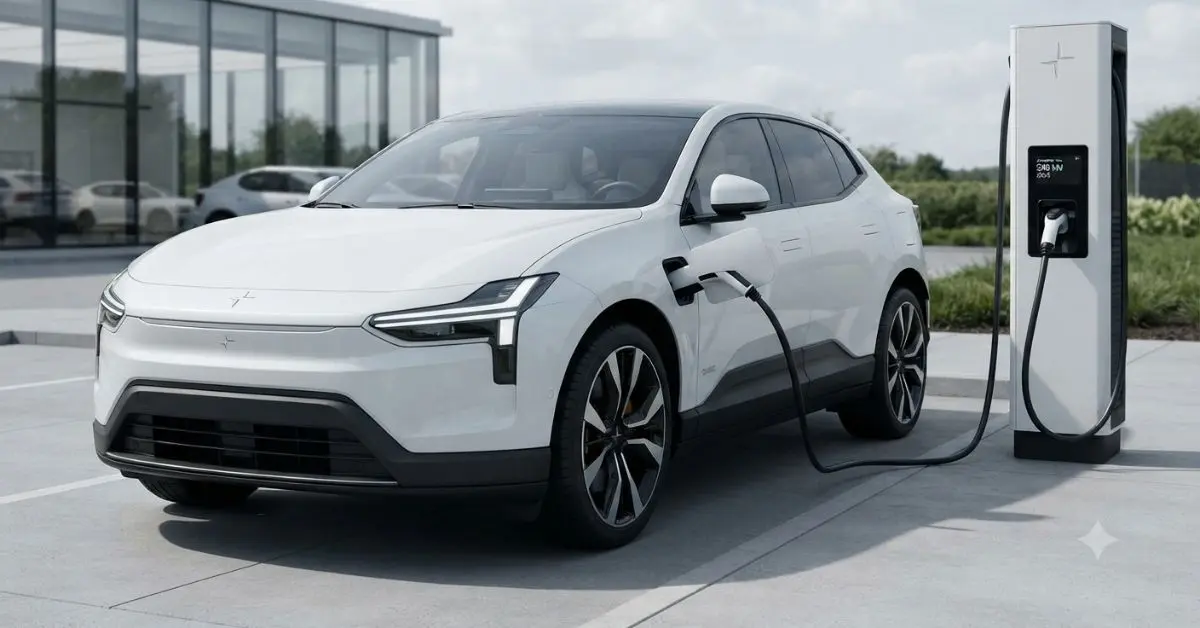
The Polestar 4 uses a 100 kWh lithium-ion battery. This battery provides 94 kWh of usable power. The car is built on Geely’s SEA platform. This is a 400V architecture, which is a system for how the car uses electricity. Several other Chinese electric vehicles, including the Polestar 5, use this same platform.
The Single Motor Rear-Wheel Drive (RWD) version offers 310 miles of range according to EPA tests. This model is the most efficient choice. Every version of the car can charge at speeds up to 200 kW. These chargers can fill the battery from 10% to 80% in about 30 minutes.
Polestar 4 Battery: Full Specs by Variant
| Variant | Battery | Usable | EPA Range | Power | DC Peak |
|---|---|---|---|---|---|
| Long Range Single Motor (RWD) | 100 kWh | 94 kWh | 310 miles | 200 kW (272 hp) | 200 kW |
| Long Range Dual Motor (AWD) | 100 kWh | 94 kWh | 280 miles | 400 kW (544 hp) | 200 kW |
| Dual Motor Performance Pack | 100 kWh | 94 kWh | 255 miles | 400 kW (544 hp) | 200 kW |
Platform and Pack Design
The Polestar 4 operates on Geely’s Sustainable Experience Architecture (SEA). This 400V-class platform limits peak DC charging to 200 kW. An active liquid cooling system keeps battery cells near 25°C to maintain steady performance.
The battery offers 94 kWh of usable energy from a 100 kWh total. This small buffer provides more driving range. A built-in heat pump boosts efficiency in cold weather. Additionally, the dual-motor AWD model turns off the front motor during easy cruising to save power.
The Polestar 4 features a unique design without a rear window. A rear-facing camera sends video to the mirror display instead. This choice creates a longer roof and extra headroom for rear passengers. The car earned a five-star Euro NCAP safety rating in 2025.
Polestar 4 Charging Speeds
Charging Method | Power | Time (Full or 10–80%) | Range Added |
|---|---|---|---|
Level 1 (120V) | ~1.4 kW | ~70+ hours full | — |
Level 2 (240V, 11 kW standard) | 11 kW | ~10–11 hours full | — |
Level 2 (240V, 22 kW optional) | 22 kW | ~5.5 hours full | — |
DC Fast (200 kW peak) | 200 kW | ~30 min (10–80%) | ~217 miles (SM RWD) in 30 min |
The 200 kW peak DC charging rate offers solid performance, though it falls behind competitors at this price point. For comparison, the Porsche Macan Electric hits 270 kW, while the Genesis GV60 reaches 250 kW. You will see an average power of 140 kW during a full 10–80% charging session. Expect real-world stops to take about 30 minutes at a fast charger.
The optional 22 kW AC charger cuts home charging times nearly in half, provided your home has a three-phase power supply. The standard 11 kW charger handles most household and public charging needs. Both options charge the battery pack overnight from a moderate state.
Real-World Range Performance
- Single Motor, mild weather at 70 mph: Approximately 260–300 miles real-world from 94 kWh usable
- Dual Motor, mixed driving: Around 240–270 miles — the front motor adds weight and drag
- Cold weather (below 0°C): Approximately 20–25% reduction; heat pump limits losses significantly
- Long-term test data (Auto Express): Dual Motor owners report approximately 3.5 miles/kWh, giving ~310 miles from a full charge
2026 Model Updates
The 2026 Polestar 4 now costs $10,000 less, with a starting price of $46,400 in the U.S. The Single Motor model also offers a slightly better range, increasing from 300 to 310 miles. While the car still uses a CCS1 charging port instead of the native NACS plug, Polestar includes an adapter so drivers can use over 20,000 Tesla Supercharger locations.
This price drop makes the Polestar 4 a strong choice among premium coupe-SUVs. It costs much less than the Porsche Macan Electric and the Audi Q6 e-tron Sportback. While the range and charging speeds are competitive, the car still lacks a built-in NACS port. This remains the biggest inconvenience for people who take long road trips in the U.S.
Battery Warranty
Polestar covers the Polestar 4 battery for 8 years or 160,000 km (approximately 100,000 miles). The warranty activates if the battery falls below 70% of original capacity. This coverage is standard across all trims and is non-transferable in some markets. An 8-year warranty is typical for this segment, though Hyundai and Genesis offer 10 years on comparable models.
Degradation Expectations
- Annual degradation rate: Approximately 1.5–2% per year, consistent with NMC under liquid cooling
- Cycle depth advantage: Most drivers use 30–50% of the 94 kWh pack daily — low cycle depth slows degradation
- Heat pump benefit: Reduces cold-weather battery heating demand, lowering thermal stress on cells
- Recommended daily limit: Charge to 90% for NMC longevity; reserve 100% for long trips needing maximum range
Polestar 4 vs Competitors: Battery Comparison
| Model | Battery (Usable) | EPA Range | Peak DC Rate | Starting Price |
|---|---|---|---|---|
| Polestar 4 LR Single Motor | 94 kWh | 310 miles | 200 kW | ~$46,400 |
| Porsche Macan Electric (base) | 95 kWh | N/A (WLTP ~380 mi) | 270 kW | ~$80,300 |
| Audi Q6 e-tron (45 quattro) | ~83 kWh | ~307 miles | 270 kW | ~$65,900 |
| Genesis GV70 Electrified (2026) | ~80 kWh | 263 miles | 350 kW | ~$62,000 |
Charging Tips for Polestar 4 Owners
- Set daily charge limit to 90%: NMC chemistry benefits from this — 90% of 94 kWh still provides ~85 kWh, covering 270+ miles daily
- Use Google Maps for charger routing: The Polestar 4 runs Android Automotive — Google Maps activates battery preconditioning when routing to DC chargers
- Get the 22 kW AC upgrade if available: It cuts home charging from 11 hours to 5.5 hours, worth the option cost for frequent overnight charges
- NACS adapter for Superchargers: Purchase Polestar’s NACS adapter for full access to Tesla’s 20,000+ U.S. Supercharger locations on road trips
Conclusion
The Polestar 4 features a 94 kWh battery packed into a unique SUV that has no rear window. The Single Motor rear-wheel-drive model travels 310 miles on a single charge. This performance is competitive, especially with the $46,400 starting price following the 2026 price cut. If you want a flagship model built on the same SEA platform technology, check out our guide on the Polestar 5 battery.
The car uses 200 kW DC fast charging to go from 10% to 80% battery in 30 minutes. While this is quick, other cars in its class charge even faster. Overall, the Polestar 4 remains a strong choice in 2026 for drivers who want bold Scandinavian design and good range without paying the high price of a Porsche.
