
Chrysler Pacifica Plug-in Hybrid Battery: Complete Guide

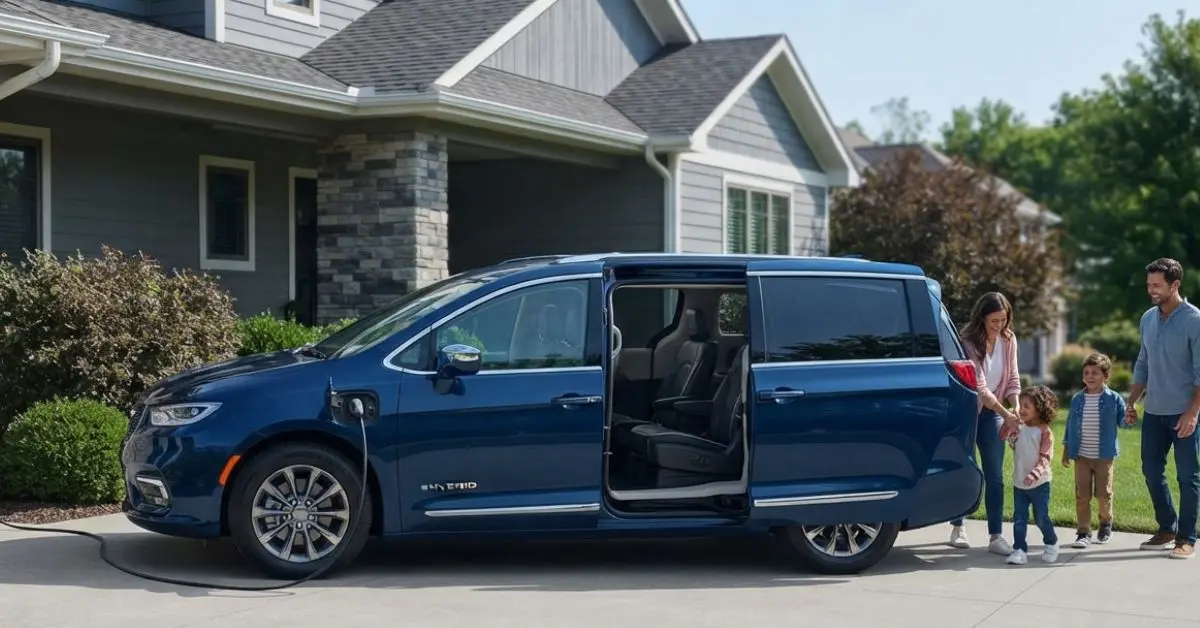
The Chrysler Pacifica Plug-in Hybrid uses a 16 kWh lithium-ion battery. This battery provides 32 miles of driving using only electricity. It is the only plug-in hybrid minivan ever sold in the United States. The 3.6L V6 gas engine and the battery work together to give the van a total driving range of over 520 miles. The system produces 260 horsepower and has an 82 MPGe combined fuel economy rating.
Chrysler stopped making the Pacifica Hybrid in early 2026. You can still find the remaining 2025 models at dealerships, but you will mostly find them on the used market now. If you want a similar vehicle from the same company, the Jeep Grand Cherokee 4xe is the closest plug-in hybrid SUV.
Chrysler Pacifica PHEV Battery: Full Specs
| Specification | Detail |
|---|---|
| Battery capacity | 16 kWh high-voltage lithium-ion |
| EV-only range (EPA) | 32 miles |
| EV-only range (real-world, slow driving) | Up to ~39 miles |
| Total range (full tank + battery) | ~520+ miles |
| MPGe (combined) | 82 MPGe |
| Fuel economy (hybrid mode) | 30 mpg combined |
| System power | 260 hp (V6 + dual electric motors) |
| Transmission | EFLITE SI-EVT electrically variable |
| Drivetrain | FWD (no AWD option) |
| Seating | 7 passengers |
| Level 1 (120V) | ~14 hours full |
| Level 2 (240V, 6.6 kW onboard) | ~2 hours full |
| DC fast charging | Not available |
| Towing | Not recommended on PHEV model |
A Unique Vehicle: The Only PHEV Minivan
The Chrysler Pacifica Hybrid was the world’s only plug-in hybrid minivan. It launched in 2017 and remained the only one in its segment throughout its production life. No other minivan combined PHEV technology with the seven-passenger practicality, sliding doors, and Stow ‘n Go rear seating of the Pacifica. For families who needed both maximum passenger capacity and meaningful EV-mode daily driving, the Pacifica Hybrid was genuinely without competition.
Chrysler discontinued the Pacifica Hybrid early in 2026 — ending an eight-year production run. The reason was low sales relative to the standard Pacifica and a strategic refocus on other Stellantis PHEV priorities. The all-electric VW ID. Buzz is the closest comparable large family EV — but it is more expensive and lacks sliding doors. For U.S. families in 2026, finding a remaining 2025 new or used example is the only path to this unique vehicle.
How the Pacifica PHEV Battery System Works
The Pacifica’s powertrain pairs a 3.6L Atkinson-cycle V6 with dual electric motors through the unique EFLITE SI-EVT transmission. This electrically variable system lets the vehicle operate in pure EV mode, hybrid mode, or a seamless blend. The V6 can either drive the front wheels directly or act as a generator. Unlike some PHEVs, the V6 is also mechanically connected to the drive wheels, enabling efficient highway driving without purely electrical losses.
The 16 kWh battery enables 32 miles of pure EV range. Real-world testing in low-speed urban conditions returned up to 39 miles. This covers most of a family’s daily driving — school runs, grocery trips, and short commutes — with zero petrol consumption. Once the battery depletes, the system transitions smoothly to hybrid mode at 30 mpg combined.
Pacifica PHEV Charging: Fast by Minivan Standards
Method | Power | 16 kWh Pacifica PHEV |
|---|---|---|
Level 1 (120V standard outlet) | ~1.2 kW | ~14 hours full |
Level 2 (240V, 6.6 kW) | 6.6 kW | ~2 hours full |
DC Fast Charge | Not available | N/A |
The 6.6 kW onboard Level 2 charger fills the 16 kWh battery in about 2 hours. This speed is very fast for a plug-in hybrid (PHEV) battery of this size. For comparison, the Jeep Wrangler 4xe takes 2.5 hours to charge a similar 17 kWh battery.
You can easily finish a full charge during a lunch break, a shopping trip, or the first half of your evening. The vehicle does not offer DC fast charging. Because the battery is small, DC charging is unnecessary, as the Level 2 charger already charges in just 2 hours.
Pacifica Hybrid Battery Warranty
Chrysler covered the Pacifica Hybrid battery with a 10-year / 100,000-mile warranty — one of the longest PHEV battery warranties available. For a 2025 production model, warranty coverage extends to approximately 2035. Used buyers should check the original in-service date to calculate remaining coverage. The battery maintains all NMC chemistry characteristics — an annual degradation of approximately 1.5–2% is expected under normal use.
Buying a Used Pacifica Hybrid in 2026: What to Check
- Verify remaining battery warranty: Calculate the original in-service date — 10-year coverage means a 2020 Pacifica Hybrid has coverage through approximately 2030
- Check NHTSA for open recalls: The Pacifica Hybrid has had software and charging system recalls — verify all are complete on the specific VIN
- Test in EV Mode: Charge the vehicle fully and test EV Mode — confirm the 32-mile EPA range is achievable before purchase to assess battery health
- No AWD available: The Pacifica Hybrid is FWD only — buyers who need AWD for winter must consider this limitation before purchase
Pacifica PHEV vs Competitors
| Model | Battery | EV Range | Seats | Sliding Doors | Status |
|---|---|---|---|---|---|
| Chrysler Pacifica Hybrid | 16 kWh | 32 miles | 7 | Yes (power) | Discontinued 2026 |
| Toyota Sienna (gas hybrid) | None (non-PHEV) | 0 miles EV | 7–8 | Yes | Current |
| VW ID. Buzz | 91 kWh BEV | 231 miles (EPA) | 7 | Yes | No 2026 MY (U.S.) |
| Kia Carnival (hybrid) | None | 0 miles EV | 8 | Yes | Current |
Conclusion
The Chrysler Pacifica Plug-in Hybrid (PHEV) offered a special mix of features. It provided 32 miles of electric range and a total range of over 520 miles. It also featured 7-passenger Stow ‘n Go seating, making it the only plug-in hybrid minivan ever sold in the United States. If you want a similar experience in an SUV, check out our Jeep Grand Cherokee 4xe battery guide.
Chrysler stopped making this model in early 2026. This move removes the only electric minivan from the new-car market. For families who need to carry many people and want to drive using electricity every day, the remaining 2025 models and used vans are still great, one-of-a-kind choices.
