
EV Battery Material Recovery Rates: Lithium to Graphite

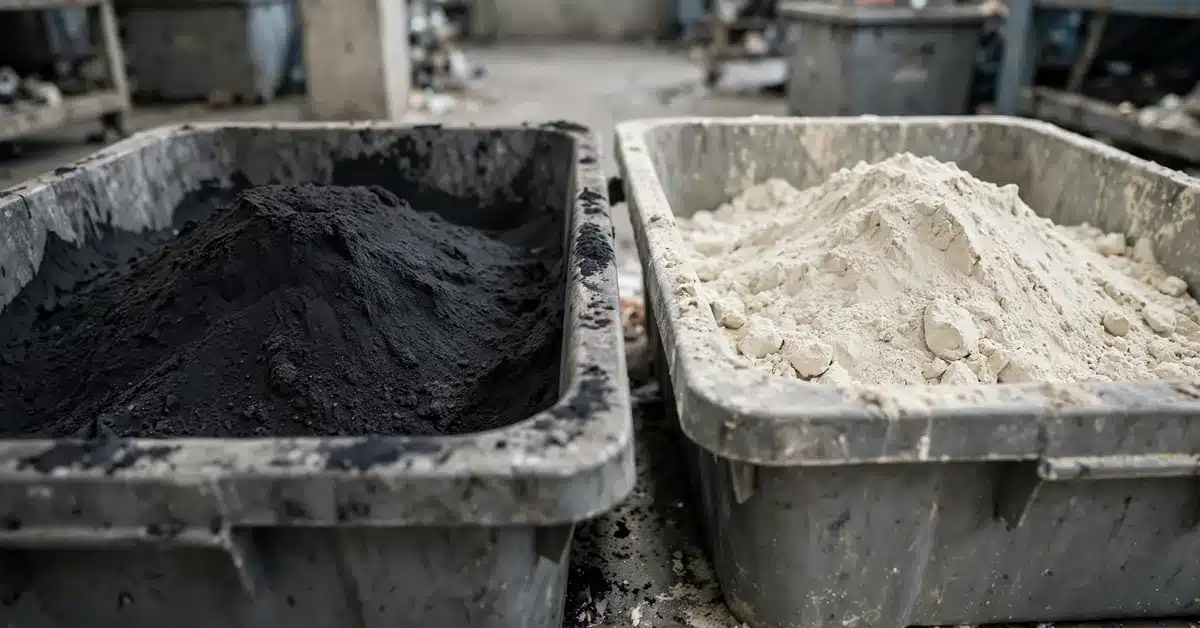
EV battery material recovery rates vary a lot by metal. Modern hydrometallurgical plants recover up to 98% of lithium, cobalt, and nickel from black mass. Graphite lags far behind at under 5% today. This guide breaks down recovery rates for each material, what battery-grade recycled lithium means, and whether recycled metal can go straight back into new batteries.
What Percentage of an EV Battery Can Be Recycled?
Modern recycling facilities can recover more than 90% of an EV battery’s materials by weight. That figure covers metals, plastics, and other recoverable components combined.
Actual recovery varies sharply by material:
- Lithium, cobalt, and nickel: up to 95-99% with advanced hydrometallurgical processing
- Copper and aluminum: recovered efficiently through mechanical separation
- Graphite: historically under 5% recovered, though this is changing fast
- Plastics and casings: less commonly reused, though new processes are emerging
The gap between “technically possible” and “actually happening” matters here. Global recovery rates today sit far lower than lab-tested maximums, mainly due to limited collection and processing scale.
How Is Lithium Recovered From Old EV Batteries?
Lithium recovery starts with black mass, the shredded powder from a battery’s cells. Hydrometallurgical leaching dissolves this powder in acid to isolate lithium in a soluble form.
Recovery rates for lithium have improved dramatically. Some facilities now report leaching rates near 99% under optimized conditions, though real-world commercial rates often land lower, closer to 75-95%.
Lithium recovery faces unique challenges:
- Pyrometallurgy loses most lithium to slag, a low-value byproduct
- The EU Battery Regulation requires 50% lithium recovery by 2028, rising to 80% by 2032
- Recovered lithium typically needs “relithiation” to restore full battery-grade purity
- Global recycling rates for lithium remain under 1% today, despite high technical recovery potential
That gap between technical capability and real-world practice is one of the biggest issues in EV battery recycling today.
What Is Battery-Grade Recycled Lithium?
Battery-grade lithium meets the strict purity standards needed to build new battery cathodes, typically 99.5% purity or higher. Not all recovered lithium reaches this bar immediately.
Recovered lithium carbonate or lithium hydroxide often needs further refining after initial extraction. This step, sometimes called relithiation, restores lithium content lost during a battery’s original use.
Reaching battery grade matters because impure lithium can’t be used directly in new cathode manufacturing. It either needs more processing or gets sold into lower-value markets.
How Is Cobalt Recovered From Recycled EV Batteries?
Cobalt recovery is one of the strongest financial drivers behind battery recycling. Hydrometallurgical processes routinely recover cobalt at 96-99% purity.
Cobalt’s high value comes from limited, geographically concentrated supply. Roughly 70% of global cobalt comes from the Democratic Republic of Congo, where mining raises serious ethical concerns.
This makes recycled cobalt especially attractive:
- Regulatory targets require 90% cobalt recovery by 2028 under EU rules
- Some facilities already report 98-99% recovery in pilot programs
- Cobalt recycling reduces reliance on a single, unstable supply region
- NMC batteries yield far more recoverable cobalt than LFP batteries
Because cobalt carries such high market value, it often drives which batteries recyclers prioritize.
What Is the Recovery Rate for Nickel in EV Battery Recycling?
Nickel recovery closely tracks cobalt’s success rate. Hydrometallurgical methods now recover nickel at 96-99% purity in leading facilities.
Global average recovery still trails these lab and pilot numbers. Current worldwide nickel recycling rates sit closer to 40-68%, depending on collection efficiency and processing access.
Regulatory pressure is pushing this higher. The EU requires 90% nickel recovery by 2028, climbing to 95% by 2032, matching cobalt’s targets under the same battery regulation framework.
Can Graphite Be Recovered From Old EV Batteries?
Yes, but graphite recovery remains the industry’s biggest unsolved challenge. Despite making up to 30% of a lithium-ion battery’s total mass, graphite is rarely recovered at scale today.
Several factors explain this gap:
- Graphite carries lower market value than lithium, cobalt, or nickel
- Recovered graphite often contains metal impurities that reduce quality
- No large-scale commercial graphite recycling exists yet worldwide
- China’s 2024 export controls on graphite are pushing US recyclers to invest more heavily here
Companies like American Battery Technology Company and Orbia are now developing dedicated graphite purification processes. The US Department of Energy is funding graphite recycling research specifically to close this gap.
Recovery Rates by Material: A Quick Comparison
| Material | Lab/Pilot Recovery Rate | Real-World Global Rate | Recovery Method |
|---|---|---|---|
| Lithium | Up to 99% | Under 1% currently | Hydrometallurgical leaching |
| Cobalt | 96-99% | ~30% globally | Hydrometallurgical leaching |
| Nickel | 96-99% | ~40-68% globally | Hydrometallurgical leaching |
| Graphite | Under development | Under 5% | Physical separation, emerging chemical purification |
| Copper/Aluminum | High efficiency | Widely recovered | Mechanical separation |
This table shows the real story: recovery technology has outpaced actual global recycling infrastructure. Scale, not science, is the current bottleneck.
Can Recycled EV Battery Materials Be Used in New Batteries?
Yes, and this already happens today. Recycled lithium, cobalt, and nickel that meet battery-grade purity go directly into new cathode manufacturing.
Some research even shows an advantage here. Lab tests on directly recycled cathode material found batteries built with it can match or exceed the cycle life of batteries made from newly mined metals.
Major recyclers now market this capability directly:
- Redwood Materials produces cobalt sulfate, nickel sulfate, and lithium carbonate ready for battery manufacturing
- Li-Cycle recovers up to 95% of battery materials for direct reuse
- Automakers increasingly sign supply agreements directly with recyclers for recovered metals
This closed-loop model is central to reducing dependence on newly mined materials over time.
The Bottom Line on EV Battery Material Recovery Rates
EV battery material recovery rates tell two different stories. Lithium, cobalt, and nickel can technically be recovered at 95%+ purity using hydrometallurgical methods. Graphite lags far behind, with under 5% currently recovered worldwide. Closing the gap between lab results and real-world recycling rates depends on scaling collection and processing capacity, not just better chemistry.
Frequently Asked Questions
Why is the global lithium recycling rate so much lower than the technical recovery rate?
Most lithium-ion batteries haven’t reached end of life yet, and collection infrastructure is still developing. Technical recovery rates measure what’s chemically possible, not what’s currently being processed at scale.
Which metal is most profitable to recover from EV batteries?
Cobalt and nickel are currently the most profitable, since both carry high market value and strong recovery rates. This is why recyclers often prioritize NMC batteries over LFP.
Will graphite recycling improve significantly in the coming years?
Yes, likely. Government funding, export restrictions on mined graphite, and new purification technologies from companies like Orbia are accelerating commercial graphite recycling development.
Do recovery rates differ between EV battery brands?
Recovery rates depend more on battery chemistry than brand specifically. NMC and NCA batteries yield more cobalt and nickel, while LFP batteries yield mostly lithium and iron phosphate.
