
EV Battery Safety Standards: What They Mean for Your Car

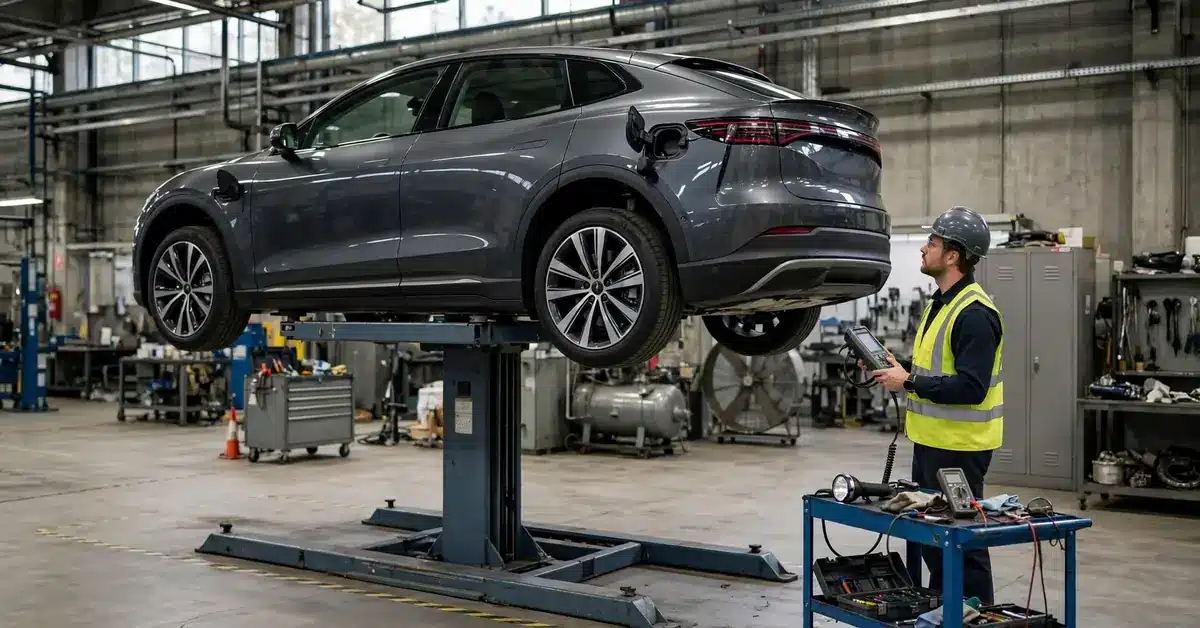
EV battery safety standards exist to make sure every battery pack is tested before it ever reaches the road. These rules cover everything from transport safety to crash protection and fire risk. This guide breaks down the major standards, in plain language, and what each one actually protects you from.
What Safety Standards Do EV Batteries Have to Meet?
EV batteries must pass a mix of international, national, and industry-specific standards before sale. No single standard covers everything. Instead, several tests work together to check different risks.
The major categories include:
- Transport safety (UN 38.3)
- Fire and thermal runaway testing (UL 9540A)
- Vehicle-level electrical safety (ISO 6469)
- U.S. federal crash and shock protection rules (NHTSA’s FMVSS 305a)
Each standard targets a different stage of the battery’s life, from shipping to daily driving to a crash scenario.
What Is UN 38.3 EV Battery Safety Testing?
UN 38.3 is a global standard that tests lithium-ion batteries for safe transport. It applies to cells and packs, whether shipped alone or already installed inside a vehicle.
This standard runs batteries through eight separate tests, including:
- Altitude simulation
- Thermal cycling
- Vibration and mechanical shock
- External short circuit
- Impact and crush resistance
- Overcharge and forced discharge
Passing UN 38.3 is mandatory before a battery can be shipped by air, sea, or land. It exists specifically to prevent fires during transport, not everyday driving.
What Is UL 9540A EV Battery Fire Testing?
UL 9540A evaluates how a battery system behaves during thermal runaway. It’s one of the most detailed fire safety tests in the battery industry.
Testing happens in stages, starting at the individual cell level. If a battery fails to show safe behavior at that stage, testing moves up to the module level, then the full system. Each stage checks how fire and heat spread if one cell fails.
This standard is widely used for battery energy storage systems, but its methods also inform EV battery pack safety design. It helps engineers understand worst-case fire scenarios before a product reaches the market.
What Is the EV Battery Safety Standard ISO 6469?
ISO 6469 is an international standard specifically written for electric road vehicles. It covers three major safety areas, each addressed in its own section.
| ISO 6469 Part | What It Covers |
|---|---|
| Part 1 | On-board rechargeable energy storage system (battery) safety |
| Part 2 | Vehicle operational safety and protection against electrical hazards |
| Part 3 | Protection of people from electric shock |
Manufacturers use ISO 6469 as a design and testing framework. It applies across the vehicle’s entire electrical system, not just the battery pack itself.
What Is the NHTSA EV Battery Safety Rating?
The NHTSA doesn’t issue a single battery “safety rating” the way crash-test star ratings work. Instead, it enforces Federal Motor Vehicle Safety Standard (FMVSS) 305a, which sets specific battery-related requirements for vehicles sold in the U.S.
FMVSS 305a covers:
- Electrical shock protection during normal driving
- Post-crash electrical safety for occupants and first responders
- A requirement that vehicles show no fire or explosion for one full hour after a crash test
- Standardized emergency response guides for every make and model
This standard replaced the older FMVSS 305 and expanded coverage to heavier vehicles, including electric school buses. NHTSA continues to update these rules as battery technology evolves.
How Are EV Batteries Tested for Safety Before Sale?
Before an EV battery reaches a dealership, it passes through multiple rounds of testing. This process usually happens in layers, starting small and scaling up.
- Cell-level testing checks individual battery cells for defects and thermal behavior.
- Module-level testing evaluates how groups of cells behave together under stress.
- Pack-level testing examines the fully assembled battery, including its enclosure and cooling system.
- Vehicle-level crash testing confirms the battery stays safe when installed in the finished car.
Manufacturers typically combine UN 38.3, UL, and ISO testing with their own internal validation. Regulatory bodies like NHTSA then confirm the finished vehicle meets federal requirements before it can be sold in the U.S.
The Bottom Line on EV Battery Safety Standards
EV battery safety standards work together to cover the entire life of a battery, from shipping to a real-world crash. UN 38.3 protects against transport risks. UL 9540A focuses on fire behavior. ISO 6469 and NHTSA’s FMVSS 305a address vehicle-level and crash safety. Together, these standards give EV owners a well-tested, multi-layered safety net.
Frequently Asked Questions
Do all EV batteries sold in the U.S. need to pass NHTSA standards?
Yes, any EV sold in the U.S. must comply with applicable Federal Motor Vehicle Safety Standards, including FMVSS 305a for battery-related electrical and fire safety.
Is UL 9540A required for every EV battery pack?
UL 9540A is most commonly required for stationary battery energy storage systems, though its testing methods heavily influence EV battery fire safety design. Automakers often reference it during internal testing even without a strict mandate.
What happens if a battery fails one of these safety standards?
A failed test typically sends the battery design back for engineering changes before it can proceed further. Manufacturers cannot legally sell or ship non-compliant batteries in most global markets.
Are these standards the same in every country?
Not exactly, though many overlap. UN 38.3 is globally recognized for transport, while ISO 6469 and NHTSA rules vary slightly by region. International harmonization efforts, like UN Global Technical Regulation No. 20, aim to align these standards over time.
