
Ford Capri Battery: 58 kWh LFP, 79 & 77 kWh NMC — Range, Charging & Prices

Researched from Ford UK’s April 2026 customer price list and charging pages, EV Database UK and What Car? — November 2026.
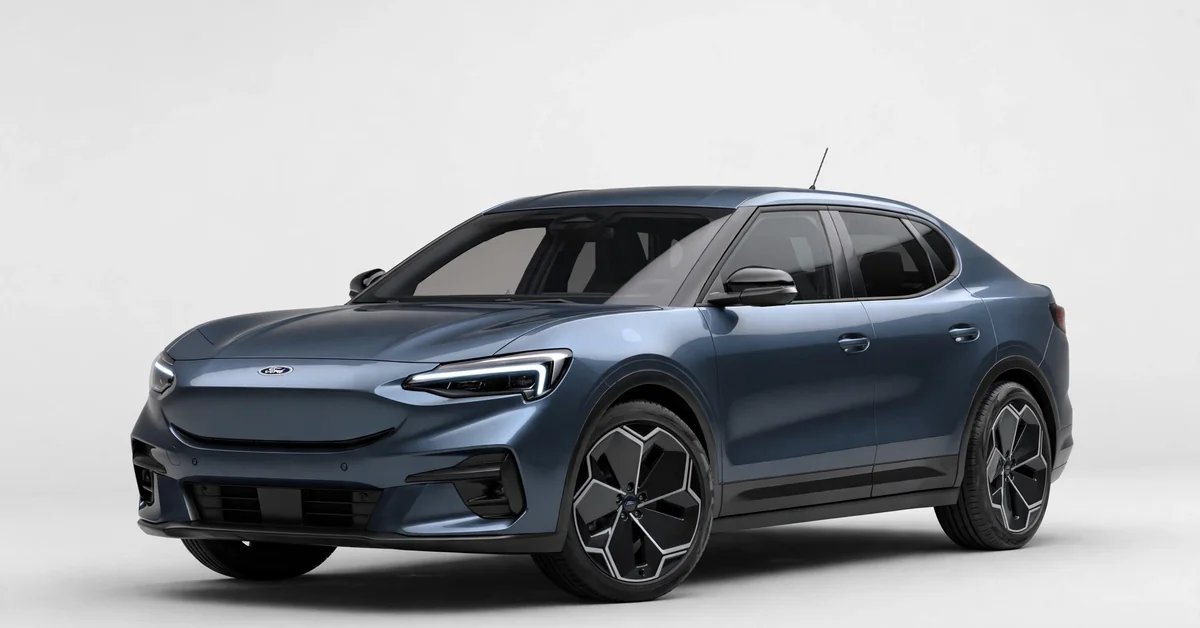
The Capri Ford sells today is not the one that launched. The entry car dropped its 52 kWh NMC pack for a 58 kWh LFP battery in April 2026, gained range, and fell £6,590 to £35,485 (after the £1,500 Electric Car Grant). Above it sit two NMC cars: the 79 kWh Extended Range RWD (£43,285, up to 390 miles WLTP) and the 77 kWh AWD (£52,055). Charging runs 105 kW (LFP) to 185 kW (AWD); the heat pump is a £1,050 option on every version; the battery warranty is 8 years/100,000 miles.
- Batteries now: 58 LFP · 79 NMC · 77 NMC (AWD)
- Ford assembles the VW-supplied packs itself in Cologne
The 2026 lineup: three packs, two chemistries
Ford quietly rebuilt the Capri range in April 2026 — new entry battery, swapped sizes at the top, lower prices everywhere.
What does the 2026 lineup look like?
| Variant | Battery (usable / gross) | Chemistry | WLTP range | DC peak | Price (OTR) |
|---|---|---|---|---|---|
| Standard Range RWD | 58 / 61 kWh | LFP | 286 miles | 105 kW | £35,485 (after £1,500 grant) |
| Extended Range RWD | 79 / 84 kWh | NMC | 390 miles | 183 kW | £43,285 |
| Extended Range AWD | 77 / 82 kWh | NMC | 338 miles | 185 kW | £52,055 |
What changed from the 2024–25 cars?
Watch the top two rows if you read older reviews: the Extended Range sizes have swapped. The 2024–25 cars paired a 77 kWh pack with rear-wheel drive and 79 kWh with AWD; today’s cars do it the other way round. And the Standard Range transformation is the headline. The old 52 kWh NMC car (244 miles WLTP, £42,075) is gone; its LFP replacement is bigger, goes further (286 miles), charges its owners less often to 100% without worry — Ford Europe noted the LFP cells allow “more frequent charging to maximum capacity” — and costs £35,485. Ford was, as electrive reported in January 2026, “the first brand to receive the long-awaited introduction of LFP batteries into the MEB platform”.
A Volkswagen platform wearing a Ford badge
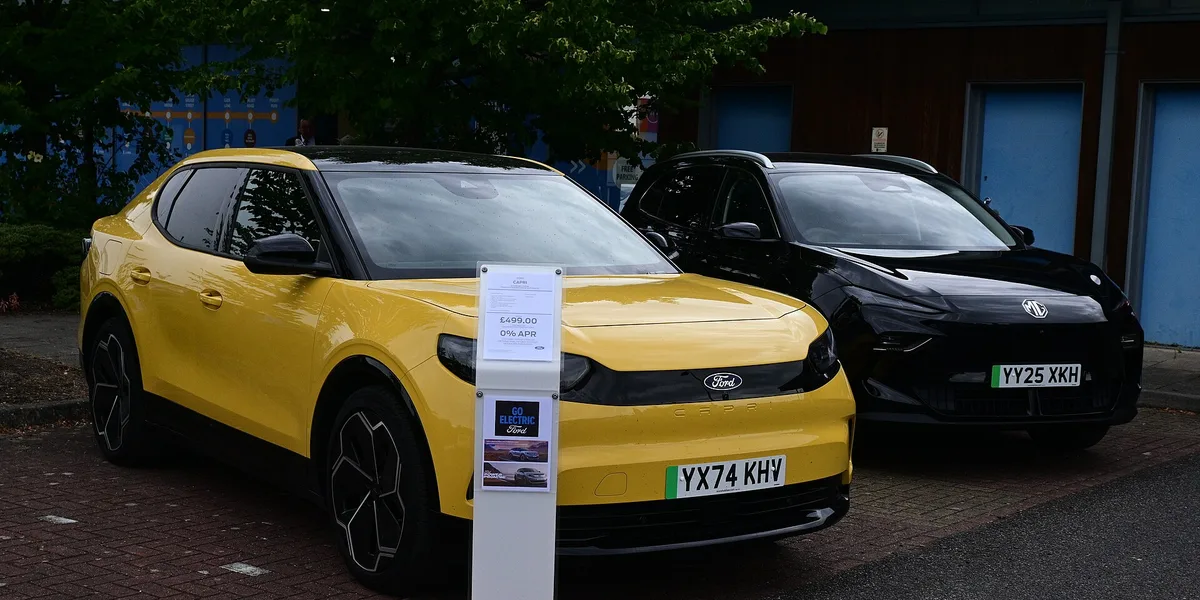
Underneath, the Capri is a VW ID.5 in Ford clothes — and Ford is quite open about the arrangement.
Who makes the Capri’s batteries and platform?
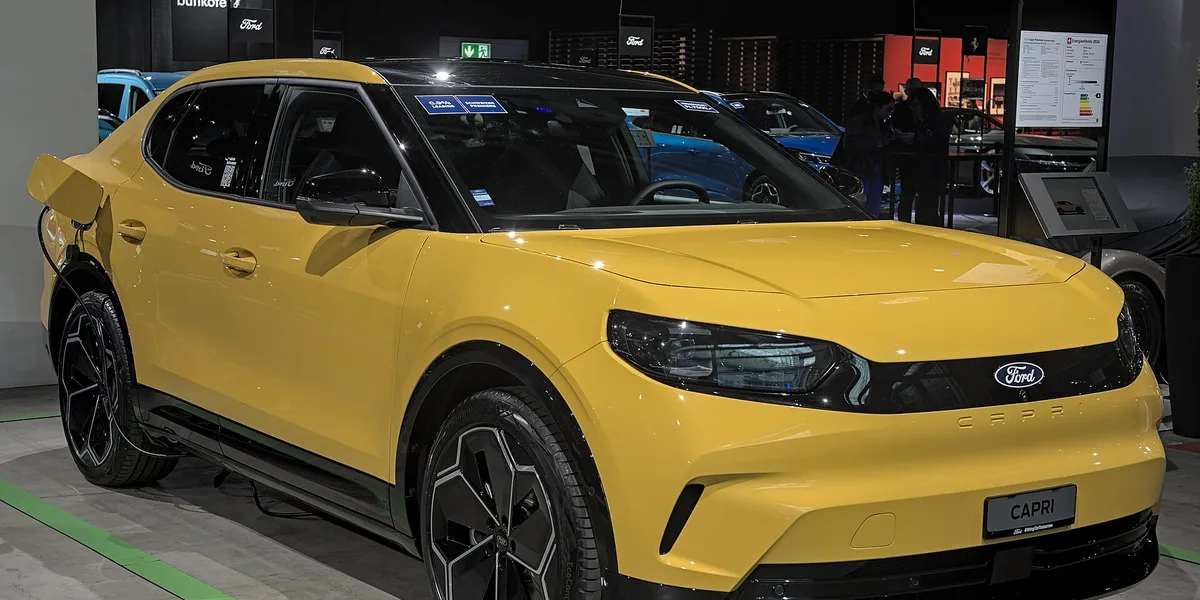
The car is built at Cologne on Volkswagen’s MEB platform, with VW-supplied battery packs — the same MEB packs as the ID.4/ID.5 — and VW’s APP 550 rear motor design. What Ford added in 2025 is its own pack assembly: since June 2025, Ford’s Cologne plant has assembled the drive battery packs for the Capri and Explorer itself, 180 robots putting together some 2,775 parts per pack, part of a $2 billion investment. Ford’s own layer is the cabin and software — the 14.6-inch SYNC Move screen, its trip planner, and access to the BlueOval network’s 800,000-plus charge points. Who manufactures the cells inside the packs is not something Ford or VW states publicly for this car, so this page does not guess. The wider MEB chemistry picture is in our guide to what battery chemistry Volkswagen uses.
Range: the brochure figure and the British one
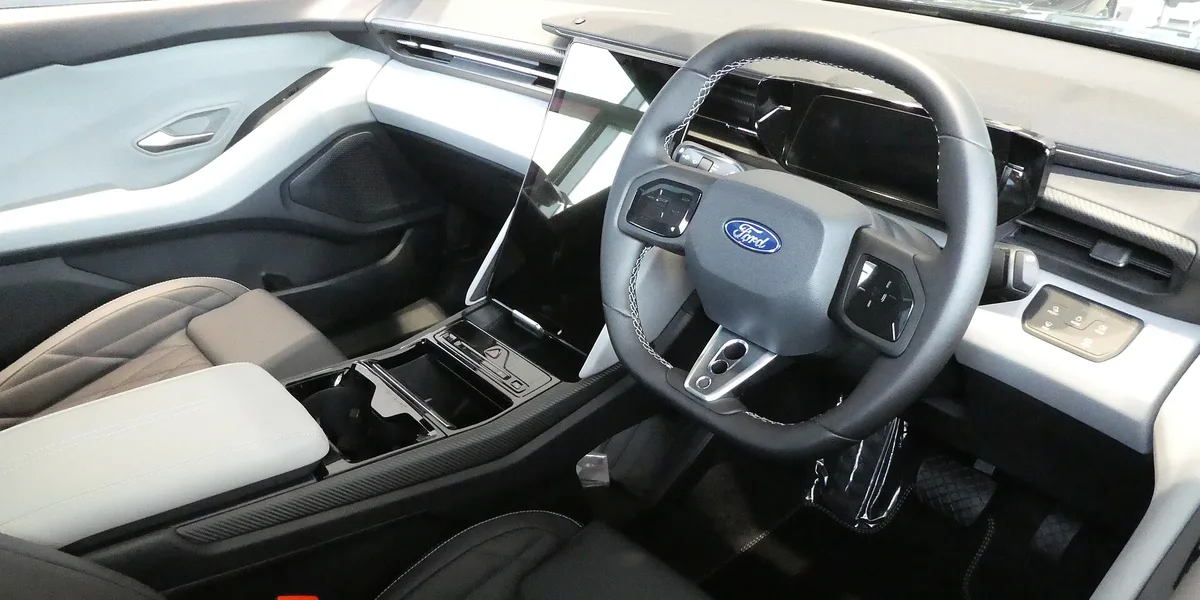
EV Database’s real-range estimates are the honest planning numbers: 215 miles for the LFP car, 290 for the Extended Range RWD, 275 for the AWD.
How do the WLTP figures compare with real driving?
Against WLTP (286 / 390 / 338), that is the usual 70–75% — and there is a measured data point worth more than estimates. What Car? ran the previous 77 kWh car through a cold winter’s day test and got 293 miles, beating a Tesla Model Y Long Range and a Kia EV6 on the same day. The Extended Range’s efficiency is genuinely good; the LFP car’s cold-weather estimate (180 miles, EV Database) is its honest weakness, which is exactly where the next section’s option matters.
Charging, and the £1,050 question
All three charge at 11 kW AC; on DC, the LFP car peaks at 105 kW (10–80% in 26 minutes), the big RWD at 183 kW, the AWD at 185 kW.
Why does the heat pump matter more than peak power?
The old headline — “the AWD charges much faster” — has quietly expired: the RWD’s jump from 135 to 183 kW leaves the AWD a 2 kW advantage that no driver will ever feel. Preconditioning (battery and cabin) is standard on every Capri and works automatically through the navigation. The real charging-adjacent decision is the heat pump: a £1,050 option on every single trim, Style to Premium. What Car? lists its absence as standard among the car’s weaknesses, and for a UK car that will see frost four months a year, it is the one box on the order form this page would tick — particularly on the LFP car, whose winter range has the least margin to give away.
Pro Power: V2L, hidden in a pack
The 2026 Capri can power your gear — 2.3 kW from the charge port, plus a 230V socket in the boot — but Ford sells the ability inside the £1,800 Driver Assistance Pack.
How does Pro Power Onboard work?
Ford calls it Pro Power Onboard. It is a genuine differentiator against the VW cousins, and a slightly cheeky piece of packaging: the hardware story is “your car is a generator”, the price-list story is that it arrives bundled with a head-up display and parking cameras. The earlier cars (2024–25) have no V2L at all. There is no vehicle-to-home or vehicle-to-grid on any Capri.
Warranty: eight years, and a floor Ford doesn’t publish for this car
Ford’s price list and warranty pages agree on the headline: the high-voltage battery and components carry an 8-year/100,000-mile warranty; the car itself gets 3 years/60,000 miles.
What capacity floor does Ford publish?
The capacity question is where care is needed. Ford’s warranty FAQ explains that a dealer compares your pack’s usable capacity against the original and covers “excessive” loss — but the percentage table it publishes names the Mustang Mach-E (70%), not the Capri. No Capri-specific floor appears in Ford’s price list or FAQ as of November 2026, so treat any website quoting a Capri 70% figure as borrowing the Mach-E’s number (our Mach-E guide covers that car’s terms). If the floor matters to your purchase, get the figure from a Ford dealer in writing.
Frequently asked questions
Is the Ford Capri’s battery LFP or NMC?
Both, by variant. The current Standard Range (58 kWh usable) is LFP; the Extended Range cars (79 kWh RWD, 77 kWh AWD) are NMC. Cars built before April 2026 used NMC throughout, including a 52 kWh Standard Range that has been discontinued.
How far does the Ford Capri really go?
EV Database estimates 215 miles for the LFP car, 290 for the Extended Range RWD and 275 for the AWD — roughly 70–75% of the WLTP figures. In What Car?’s cold-weather test, the previous Extended Range car managed a measured 293 miles, the best of its group that day.
How fast does the Ford Capri charge?
DC peaks: 105 kW for the LFP car (10–80% in about 26 minutes), 183 kW for the Extended Range RWD, 185 kW for the AWD. All versions charge at 11 kW on AC. Battery preconditioning is standard and automatic via the navigation.
Does the Ford Capri have a heat pump?
Not as standard — on any trim. It is a £1,050 option across the range in Ford’s April 2026 price list. Given UK winters and the LFP car’s slimmer winter margin, it is the option most buyers should add.
What warranty does the Capri battery have?
Eight years or 100,000 miles on the high-voltage battery and components. Ford does not publish a Capri-specific capacity-retention percentage in its price list or warranty FAQ (the 70% figure on Ford’s site belongs to the Mustang Mach-E’s table), so confirm the threshold with a dealer if it matters to you.
Conclusion
The Capri’s battery story is a mid-life reinvention: an LFP entry car that is cheaper and longer-legged than the NMC car it replaced, VW packs assembled by Ford in Cologne, and prices £12,590 below launch at the bottom of the range.
Judge it as it stands in November 2026, not as it launched: the Extended Range RWD is the sweet spot (390 WLTP miles, 183 kW, £43,285), the LFP car is the value pick with a winter caveat and a £1,050 option you should budget for, and the AWD buys performance, not charging speed. It is a better car than its slow start suggested — Ford just had to change its battery to prove it.
Quick view: The LFP entry car is the value pick, the Extended Range RWD is the sweet spot, and the AWD adds performance rather than charging speed — with the heat pump the one option worth budgeting for.
