
Ford Puma Gen-E Battery: Complete Guide

Facts checked against Ford and Ford UK releases and price lists, EV Database, Euro NCAP and named road tests (Carwow, Electrifying, Auto Express).
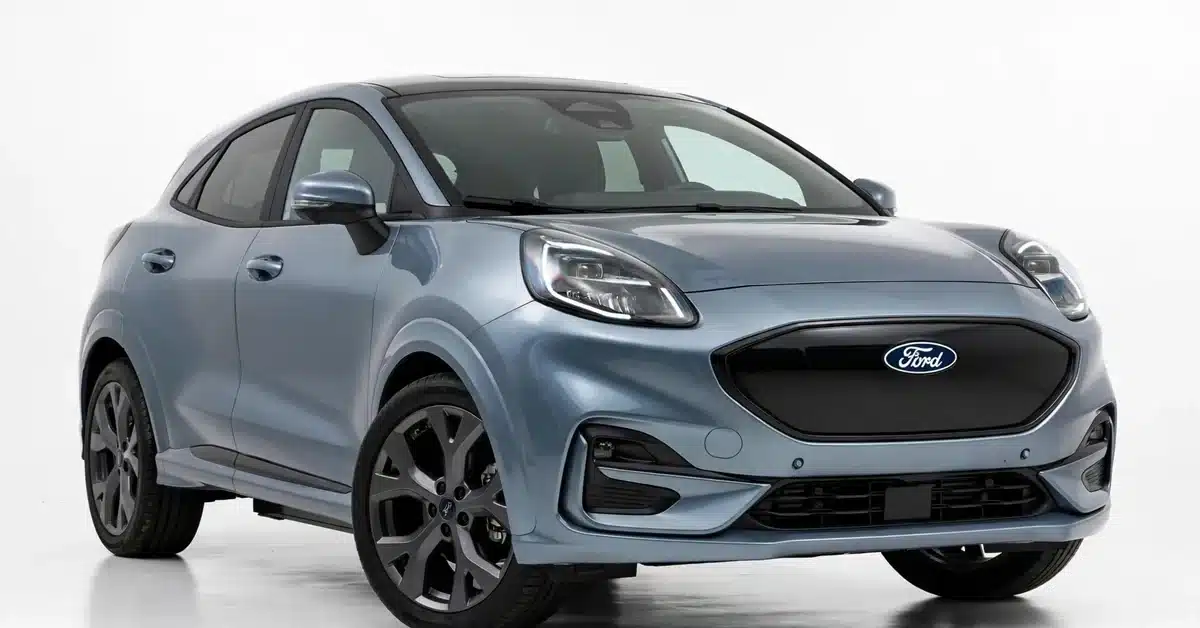
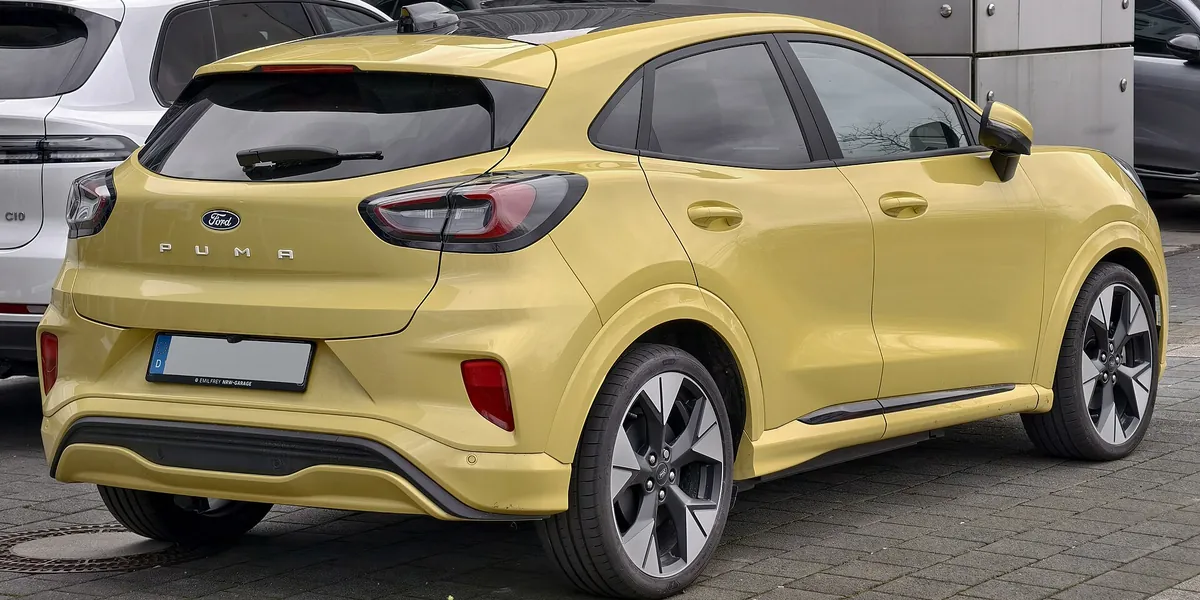
The Puma Gen-E is the electric version of Britain’s best-selling car, and its battery has already lived two lives. The launch car (spring 2025) pairs a 53 kWh gross pack with 43 kWh usable; from spring 2026 the same-size pack yields 46.8 kWh usable and up to 259 miles of WLTP range. Both versions are NMC — a point worth stating plainly, because the question this page is asked most is whether the Puma Gen-E has an LFP battery. It does not.
This guide separates the two versions throughout, because most wrong figures about this car come from mixing them: the update changed the pack’s internals, its usable capacity, its range and even its charging time. The Gen-E is built by Ford Otosan at Craiova in Romania (its drive units come from Halewood in the UK) and sold in Europe only. Ford’s larger electric cars, like the Capri, use a different platform and different packs.
The Ford Puma Gen-E has one battery in two versions: a 53 kWh (gross) NMC pack — not LFP — with 43 kWh usable in the launch car and 46.8 kWh usable from spring 2026. Range is 216–234 miles WLTP (launch) or 240–260 miles (updated); charging peaks at 100 kW DC (10–80% in about 23 or 26 minutes respectively). The battery warranty is 8 years or 100,000 miles at a 70% floor.
Key figures: 53 kWh gross · 43 → 46.8 kWh usable · 123 kW motor, 290 Nm · AC 11 kW · from £29,995 (£26,245 with the full £3,750 grant)
Ford Puma Gen-E Battery Specs: Both Versions
Same 53 kWh shell, two usable capacities — this table is the whole story in one place.
| Launch car (2025) | Updated car (spring 2026) | |
|---|---|---|
| Battery (gross) | 53 kWh | 53 kWh |
| Battery (usable) | 43 kWh | 46.8 kWh |
| Chemistry | NMC | NMC |
| Motor | 123 kW (168 PS), 290 Nm | 123 kW (168 PS), 290 Nm |
| 0–100 km/h · top speed | 8.0 s · 99 mph | 8.0 s · 99 mph |
| WLTP range | 216–234 miles by trim | 240–260 miles by trim |
| DC charging | 100 kW · 10–80% ~23 min | 100 kW · 10–80% ~26 min |
| AC charging | 11 kW | 11 kW |
Ford quotes 43 kWh usable for the launch car; EV Database’s listing splits it as 53.0 nominal / 43.6 usable — the same pack, accounted slightly differently, and its 46.8 kWh figure for the updated car is the usable number, not a new gross size. Ford has never officially named the pack’s cell supplier, and claims naming one (an “SK On” attribution circulates) are not Ford statements. The car is front-wheel drive, and there is no heat pump on either version — worth knowing before the efficiency section.
The 2026 Update: What Actually Changed
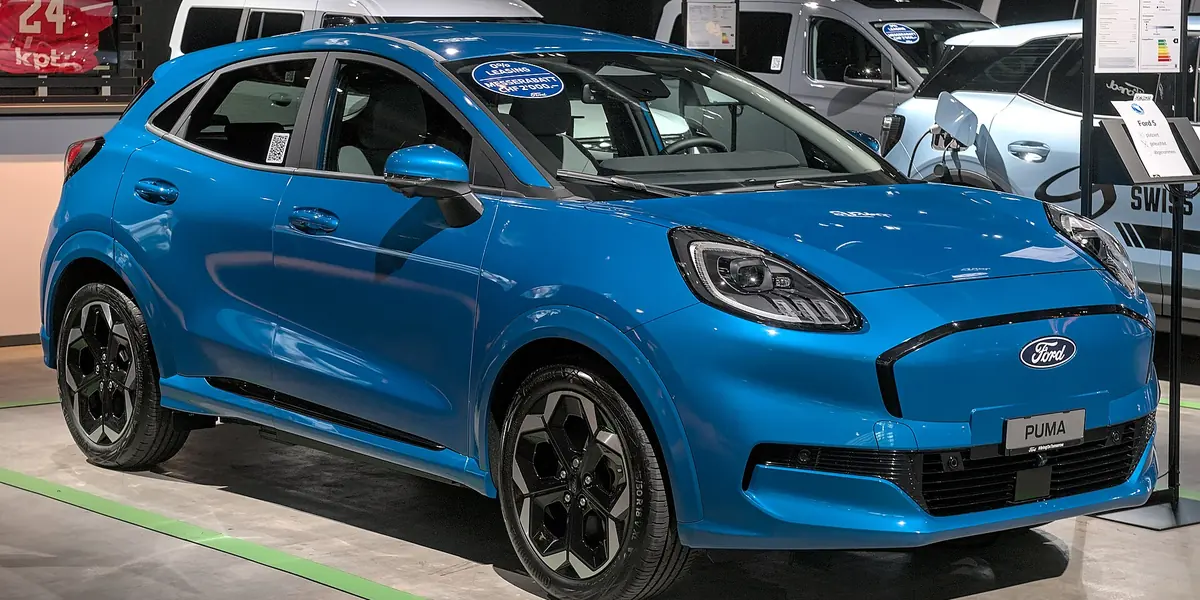
Announced in March 2026 and orderable from April, the update is a redesigned pack, range-wide — the 43 kWh version is no longer sold.
Ford’s own explanation, reported at the announcement (InsideEVs, 6 March 2026), is that it improved the internal design of the battery pack: gross capacity stayed at 53 kWh while usable capacity rose from 43 to 46.8 kWh, lifting the headline WLTP range from 233 to 259 miles. Trim-level figures tell the fuller story: launch cars run 216–234 miles depending on trim and wheels (Select 233, Premium 226), updated cars 240–260 (Select 259; Premium, Black Edition and BlueCruise Edition 251).
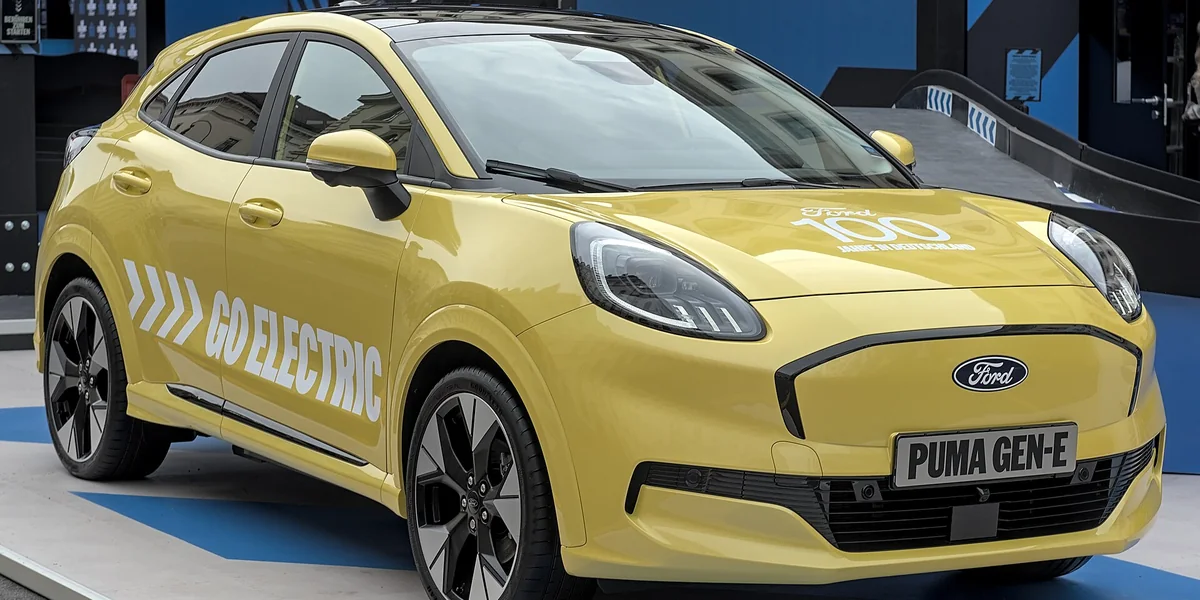
Two consequences follow. The updated car’s 10–80% charge takes about 26 minutes, not the launch car’s 23 — a bigger usable window at the same 100 kW peak. And any “43 vs 46.8” comparison is a comparison of two production versions, not of a setting owners can change: a launch car cannot be updated into the later one.
Ford Puma Gen-E Efficiency: Official Figures and Road Tests
This is one of the most efficient small EVs on sale — and the honest numbers separate Ford’s official figure from what testers measured.
Ford’s headline efficiency is 5.4 miles per kWh — an official WLTP-derived figure, quoted here as such. It underpins the updated car’s city-cycle WLTP figure of up to 355 miles, and it is genuinely strong for a crossover of this size; the Kia EV3 is the rival most often cross-shopped on exactly this point. Independent tests fill in the texture: Electrifying recorded 4.4 mi/kWh on a Spanish launch route and Auto Express 4.4 mi/kWh in cold weather — both for the launch car.
Carwow’s testing adds the caveat this car’s buyers should know: around town the launch car is exceptionally frugal, but at motorway pace it recorded 3.2 mi/kWh and roughly 140 miles of range. Ford’s own motorway figure for the updated car is 187–193 miles. Neither number is a contradiction — a small, tall crossover spends its efficiency advantage where aerodynamics matter least, and gives some of it back at 70 mph.
Ford Puma Gen-E Charging
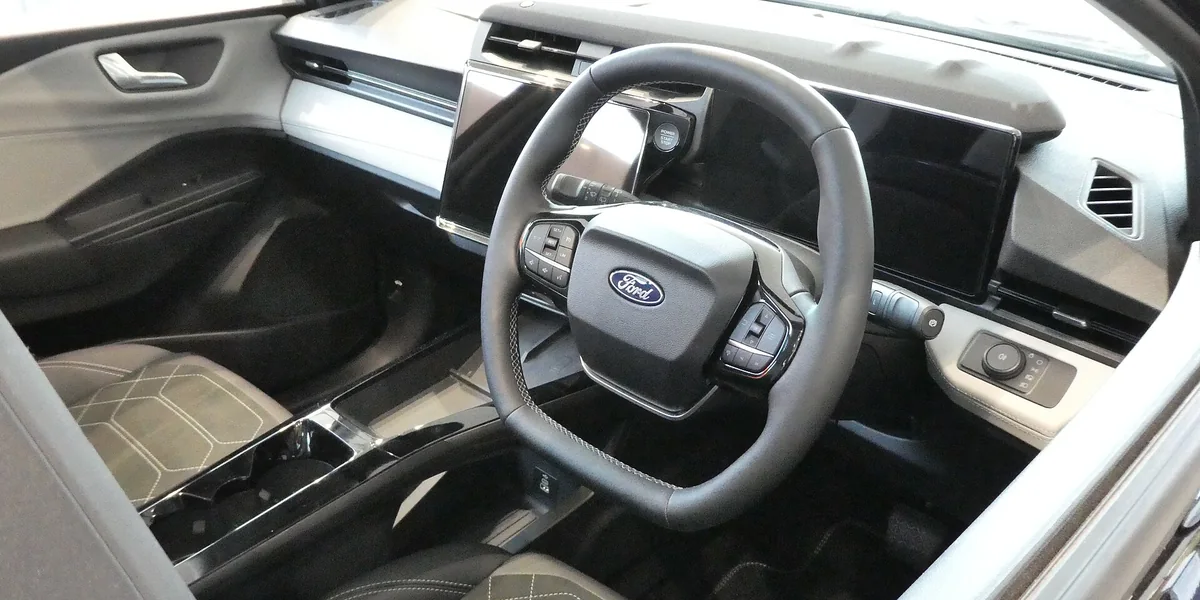
100 kW DC on both versions, 11 kW AC, navigation-linked preconditioning — and no heat pump, which winter buyers should factor in.
DC fast charging peaks at 100 kW: 10–80% in about 23 minutes (launch) or 26 minutes (updated). EV Database’s modelled averages sit well below the peak, as on every car in this class. On AC, the three-phase 11 kW on-board charger fills the launch car in about 4 hours 45 minutes and the updated car in about 5 hours; a 7.4 kW home wallbox takes roughly 7 and 7½ hours respectively, and a 2.3 kW domestic plug most of a day (about 22½–24 hours).
Battery preconditioning is fitted and navigation-linked, which protects those DC times on the way to a charger. There is no vehicle-to-load or bidirectional charging on this car.
Ford Puma Gen-E Range
Use the trim bands, not the headlines: 216–234 miles for launch cars, 240–260 for updated cars — and expect motorway work to cost a fifth to a quarter of that.
The WLTP bands above are the verified figures. Around them: the updated car’s city-cycle WLTP reaches up to 355 miles, which is where the 5.4 mi/kWh official efficiency shows itself; Ford’s own motorway estimate for the updated car is 187–193 miles; and Carwow’s launch-car motorway test returned about 140 miles at 3.2 mi/kWh. A realistic mixed-use expectation sits between the motorway and combined figures for whichever version you are looking at.
Practicality: The GigaBox, Measured Properly
The GigaBox is a 145-litre underfloor box; the 523-litre figure often attached to its name is the boot measured to seatback height.
Ford’s headline practicality numbers: 574 litres of boot space seats-up in Ford’s headline measure, 523 litres to seatback height, 1,283 litres with the seats folded — plus a 43-litre frunk under the bonnet that most coverage omits. The GigaBox itself, the washable underfloor compartment inherited from the petrol Puma, accounts for 145 litres of the total. It is a genuinely useful feature; it is just not a 523-litre box.
Ford Puma Gen-E Prices and the £3,750 Grant
The Gen-E was jointly the first car to win the full £3,750 Electric Car Grant — for how it is made, not where it is made.
What are the UK prices and the £3,750 grant?
UK prices have been strikingly stable: Select £29,995 and Premium £31,995 at launch (December 2024) and unchanged in Ford’s August 2026 price list, which adds a Black Edition at £31,995 and a BlueCruise Edition at £34,295. On 28 August 2025 the Puma Gen-E and the Ford E-Tourneo Courier became the first two models to qualify for the full Band 1 £3,750 Electric Car Grant, taking a Select to £26,245. The grant’s bands are awarded on the sustainability of a car’s production — verified science-based targets and the carbon intensity of vehicle and battery manufacture. Claims that the award reflects UK content are not the scheme’s criteria, and Ford itself has never presented the Halewood drive-unit link as the reason.
What is the Ford Power Promise?
Eligible retail buyers also meet the Ford Power Promise: a free home wallbox (£899 value), five years of free servicing and roadside assistance, and up to 10,000 miles of complimentary charging — an offer with terms, not standard equipment, and worth more to most buyers than the stored version of this page suggested by listing the servicing alone.
Degradation and the Battery Warranty
No degradation data exists for this battery yet — and the warranty floor, which the car’s coverage usually omits, is 70%.
The launch fleet is barely a year old and no measured degradation dataset for the Gen-E pack has been published; any annual percentage figure quoted for this car is unsourced, including the one this page used to carry. What owners hold contractually: a battery warranty of 8 years or 100,000 miles (160,000 km in continental Europe) covering capacity loss below 70% of original capacity, alongside a 3-year/60,000-mile vehicle warranty. LFP-versus-NMC cycle-life generalities do not substitute for data on this specific NMC pack; the first real evidence will come from the 2025 fleet through 2027.
Ford Puma Gen-E Battery Replacement Cost
Ford publishes no replacement price for the Gen-E battery pack, and no verified independent quote for this specific pack exists.
That is the complete, honest position: general figures for packs of this size class exist in our guide to what an EV battery replacement costs, but none of them is a Puma Gen-E price. With an 8-year/100,000-mile warranty at a 70% floor, replacement cost is a post-2033 question for almost every owner.
Recall and Safety Rating
One KBA recall touches this model series and it is not a battery recall; the applicable Euro NCAP rating is the 2022 four-star result.
Germany’s KBA records a recall in the Gen-E’s production window for a front drive shaft inner joint (12,782 cars built September 2025–February 2026; a VIN check settles any individual car). The fuel-line, hybrid-system and 48-volt recalls attached to the Puma name concern the combustion and mild-hybrid cars — different vehicles. No battery recall exists for the Gen-E.
Euro NCAP has not tested the Gen-E separately. The rating that applies to this generation of Puma is the 2022 four-star result (75% adult occupant, 84% child, 70% vulnerable road users, 69% safety assist) — not the five stars of the earlier 2019 assessment.
Frequently Asked Questions
What battery does the Ford Puma Gen-E have?
A 53 kWh (gross) NMC pack: 43 kWh usable in the launch car (2025), 46.8 kWh usable in the updated car (spring 2026). One motor, 123 kW, front-wheel drive, on both versions.
Is the Ford Puma Gen-E battery LFP or NMC?
NMC — on both versions. The LFP question is the most common one asked about this car, and the answer is no: Ford confirmed the NMC chemistry at the launch briefing, and EV Database lists the same.
What is the difference between the 43 and 46.8 kWh Puma Gen-E?
Usable capacity from the same 53 kWh gross pack. Ford improved the pack’s internal design for spring 2026: usable rose 43 → 46.8 kWh, WLTP range rose from up to 233 to up to 259 miles, and the 10–80% charge lengthened slightly to about 26 minutes. It is a hardware revision — launch cars cannot be updated into it.
How far can the Ford Puma Gen-E go on a full charge?
WLTP: 216–234 miles (launch) or 240–260 miles (updated), by trim. On the motorway, expect less: Ford quotes 187–193 miles for the updated car, and Carwow’s launch-car test returned about 140 miles at motorway pace.
How long does the Ford Puma Gen-E take to charge?
10–80% in about 23 minutes (launch) or 26 minutes (updated) on a 100 kW DC charger. At home: about 4¾–5 hours on an 11 kW charger, or roughly 7–7½ hours on a 7.4 kW wallbox.
Does the Ford Puma Gen-E have a heat pump?
No — neither version offers one. It does have navigation-linked battery preconditioning for fast charging.
What is the battery warranty on the Ford Puma Gen-E?
Eight years or 100,000 miles (160,000 km in continental Europe), covering capacity loss below 70% of the original capacity. The vehicle warranty is 3 years or 60,000 miles.
How long will a Ford Puma Gen-E battery last?
Nobody can say with data yet: the fleet is young and no degradation measurements for this pack have been published. The contractual floor is 70% capacity at 8 years or 100,000 miles.
How much does a Puma Gen-E battery cost to replace?
Ford publishes no replacement price, and no verified independent quote for this pack exists. Figures for similar-size packs generally are context, not a price for this car.
Is the Ford Puma Gen-E eligible for the UK EV grant?
Yes — the full Band 1 grant of £3,750, jointly the first car awarded it (28 August 2025, with the E-Tourneo Courier). A Select costs £26,245 with the grant applied. The bands are awarded on production sustainability criteria.
Conclusion
The Puma Gen-E’s battery story is a good one told badly by almost everyone, including, until now, this page.
The truth is better than the myths: a sound NMC pack whose usable capacity grew by hardware redesign, class-leading official efficiency with an honest motorway caveat, the full £3,750 grant, and an 8-year warranty with a 70% floor. Read by version, every figure checks out.
