
Kia EV6 Battery: Complete Guide

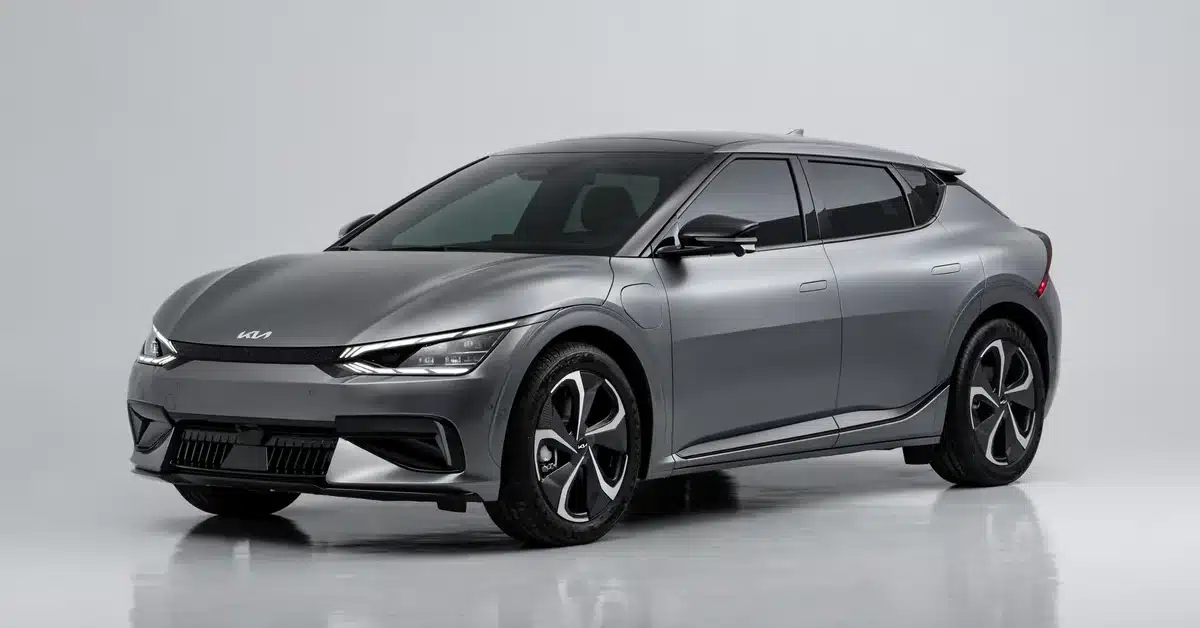
The Kia EV6 battery story is really two stories. The 2022–2024 cars pair a 77.4 kWh nickel-based pack with 800-volt charging that embarrassed cars costing twice as much, and the refreshed 2025–2026 cars answer with a bigger 84 kWh battery, up to 319 miles of EPA range and a native Tesla-style NACS port. Running underneath both is the story every shopper eventually meets: the ICCU charging-unit recalls on the early cars, the 12-volt battery troubles that came with them, and the unusually strong battery-health record the EV6 has built in fleet data.
This guide covers both generations with US figures only: capacities and range by year, the SK On cell chemistry, real charging speeds, what the battery-health studies actually measured, the full warranty including Kia’s 15-year ICCU extension, honest replacement costs, and the checks that matter if you are buying used. Kia cut EV6 prices by $5,000 to $5,900 for 2026, which makes the used and new maths worth redoing carefully.
Specs and prices from Kia America and fueleconomy.gov; recall details from NHTSA filings; battery-health figures from the Kvdbil fleet study, Recharged inspections and Recurrent.
Key figures: 77.4 kWh (2022–24) or 84 kWh (2025–26) · 800V · 10–80% in about 18 min · EPA up to 310 miles (2022–24) / 319 miles (2025–26) · 10 yr/100,000 mi warranty
Kia EV6 Battery Specs by Generation
Two generations, four battery sizes: 58 and 77.4 kWh in the 2022–2024 cars, 63 and 84 kWh in the 2025–2026 facelift.
| Model years | Battery | Usable (est.) | Drivetrain | EPA range | Peak DC |
|---|---|---|---|---|---|
| 2022–2024 Standard Range | 58 kWh | ~54 kWh | RWD | 232 miles | 240 kW class* |
| 2022–2024 Long Range | 77.4 kWh | ~74 kWh | RWD or AWD | Up to 310 miles | 240 kW |
| 2022–2024 GT | 77.4 kWh | ~74 kWh | AWD, 576 hp | 206–218 miles | 240 kW |
| 2025–2026 Light (Standard Range) | 63 kWh | Not published | RWD | 237 miles | — |
| 2025–2026 Long Range | 84 kWh | ~80 kWh | RWD or AWD | Up to 319 miles | 258 kW (claimed) |
| 2025–2026 GT | 84 kWh | ~80 kWh | AWD, 641 hp | 231 miles | Announced, not on sale |
*Standard Range cars share the platform’s 800V system; Kia’s 18-minute 10–80% claim applies to the Long Range battery.
Kia publishes the headline capacities; the usable figures are EV Database estimates and are labelled as such, because Kia does not print a usable number for any EV6 pack. The facelift GT needs its footnote in the open: Kia announced it at $63,800 with 641 hp, but it never actually went on sale in the US, it is absent from the 2026 lineup, and as of March 2026 Kia describes it as delayed until further notice. The 2026 range that did reach showrooms runs from $37,900 for the Light Standard Range to $53,000 for the GT-Line AWD after Kia’s price cuts of $5,000 to $5,900.
Inside the Kia EV6 Battery: SK On NMC Cells
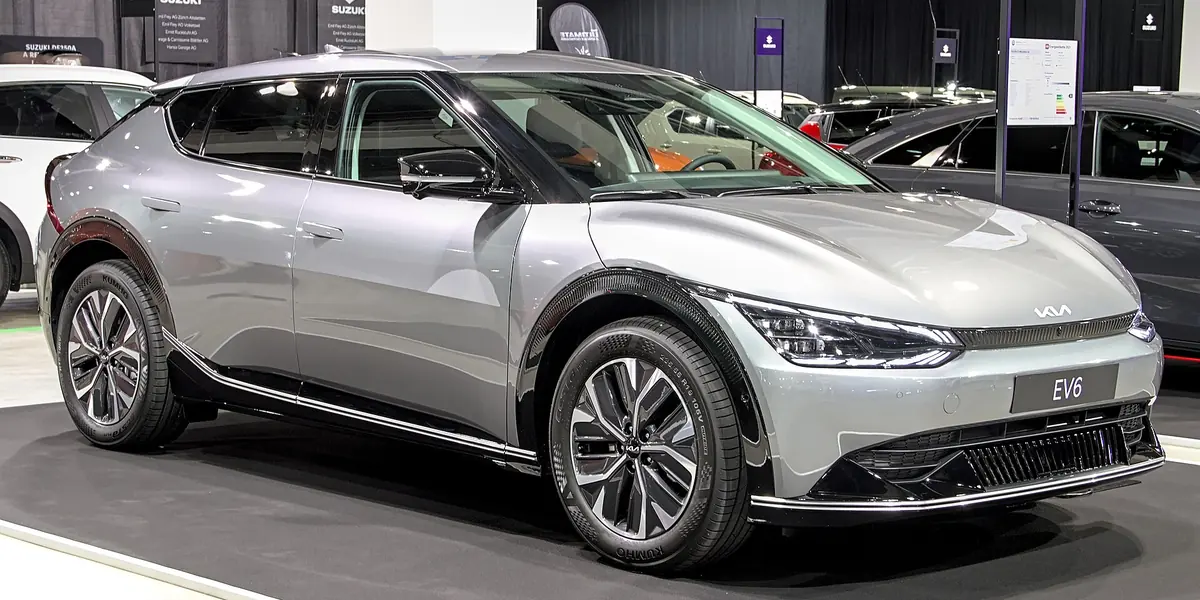
Every EV6 battery is built from SK On NMC 811 pouch cells — the same supply programme NHTSA’s recall documents name directly.
What cells and voltage does the pack use?
The Long Range 77.4 kWh pack contains 384 pouch cells in a 192-series, 2-parallel arrangement and runs at a nominal 697 volts, which is why the EV6 counts as an 800-volt car despite the three-digit figure starting with a six. The 84 kWh facelift pack keeps the same physical footprint and weighs about a kilogram less than the old one; Kia achieved the extra capacity through denser cells rather than a bigger enclosure. All EV6 packs are liquid-cooled, with coolant plates between the cell layers managing temperature for charging and hard driving alike.
Is the pack shared with the Ioniq 5?
The pack is shared with the Hyundai Ioniq 5, which uses the same E-GMP platform and the same cell supply — our Hyundai Ioniq 5 battery guide covers that car’s version of the story. One caution belongs in this section rather than the recall pages: a tiny number of early packs were built with misaligned cell electrodes, which became the 26V-431 fire-risk recall covered below. It involved eight vehicles in total, and Kia’s remedy is a complete new pack.
Why the EV6’s 800-Volt System Matters
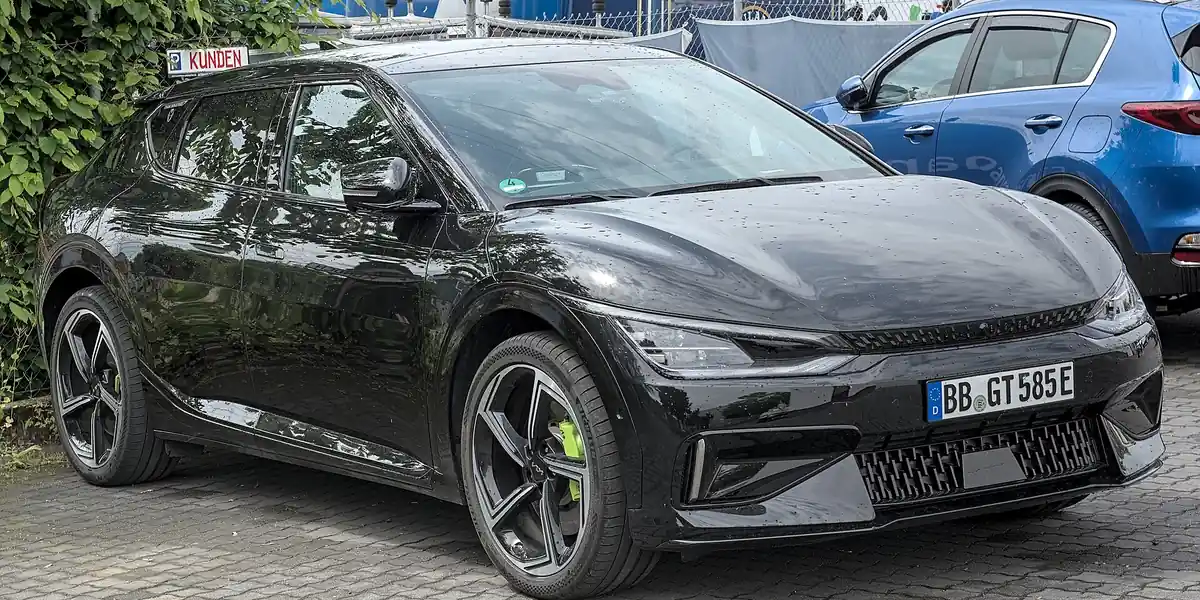
Voltage is the EV6’s party trick: the same charging power at roughly half the current of a 400-volt car, which means less heat everywhere it matters.
Why does higher voltage mean cooler charging?
Heat is what limits fast charging and ages cells. Because the EV6’s pack runs at around 697 volts nominal, a 240 kW charge flows at far lower current than it would in a 400-volt car, so cables, connectors and cells run cooler and the car can hold high power for longer. The system also works backwards: a motor-driven booster lets the 800-volt pack charge on ordinary 400-volt DC stations, so the EV6 is not restricted to the newest hardware. The practical result is the figure owners quote: 10 to 80% in about 18 minutes on a suitable charger, worth roughly 65 to 70 miles of range in the first five minutes.
Does the EV6 charge at 350 kW?
One figure needs retiring wherever it appears: the EV6 does not charge ‘at 350 kW’. That number is the rating of the largest chargers the car can use; the car’s own peaks are 240 kW for the 2022–2024 cars and a claimed 258 kW for the facelift, which is still fast enough that the charger, the weather and the battery’s temperature decide the session more than the car does.
Kia EV6 Charging: 18 Minutes, Two Plug Generations
Long Range cars of both generations claim 10 to 80% in about 18 minutes at their peak rate — what changed for 2025 is the plug, not the promise.
| 2022–2024 | 2025–2026 | |
|---|---|---|
| Charge port | CCS1 | Native NACS (left rear fender) |
| Peak DC | 240 kW | 258 kW (claimed) |
| DC 10–80% | ~18 min | ~18 min |
| AC charging | 10.9 kW | 10.9 kW |
Battery preconditioning is the feature that makes those times repeatable: navigate to a DC fast charger with the car’s built-in navigation and the pack warms or cools itself on the way, arriving ready to take full power. Skipping the built-in nav is the most common reason owners see slow winter charging. Facelift cars charge at Tesla Superchargers natively through their NACS port; the 2022–2024 CCS1 cars need Kia’s NACS adapter for the same stations, and adapter sessions on an 800-volt car run at reduced power compared with a native CCS charger — plan road trips around CCS hardware where it exists.
Real-World Range: What Tests Measured
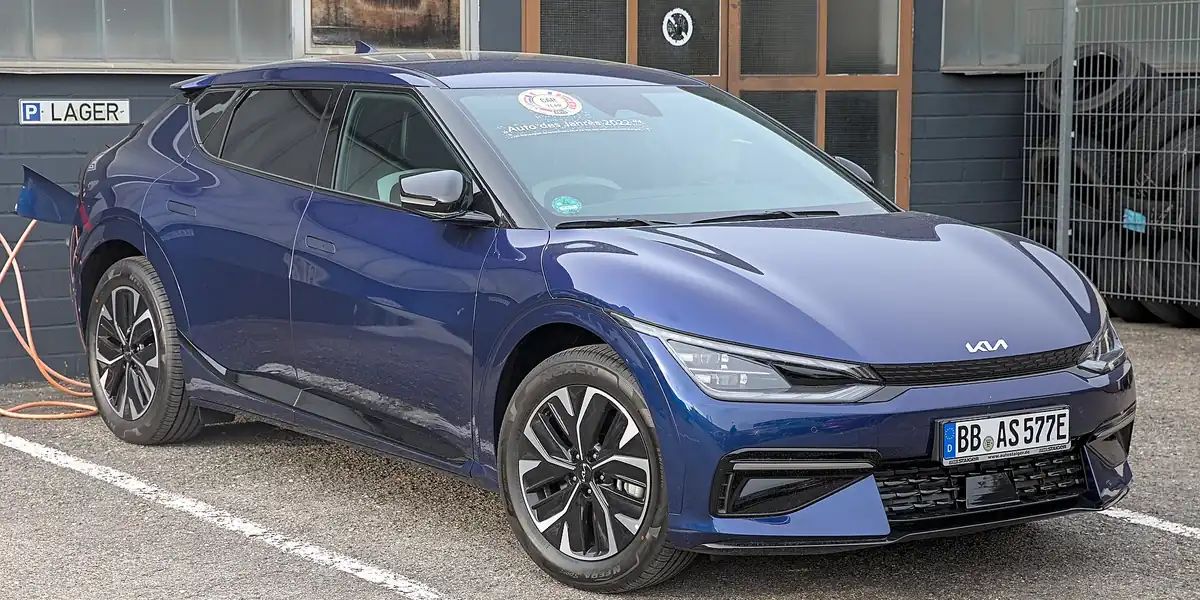
Tested range beats the label often enough to matter: Edmunds ran a 2025 GT-Line AWD to 296 miles against its 270-mile EPA rating.
That Edmunds result is the pattern for the EV6 in US testing — efficient aerodynamics and a honest EPA cycle mean the car usually meets or beats its sticker figure in mild weather. Winter is the honest counterweight: Recurrent’s fleet data puts the EV6 at roughly 82% of its rated range at 32°F, which is respectable for the class but still a real planning factor on a January road trip. Highway speed is the other tax every EV pays; expect the GT-Line AWD’s 296 test miles to shrink toward the low 200s at a sustained 75 mph with the heater running.
How Long Does the Kia EV6 Battery Last?
The EV6 has the strongest battery-health evidence of any car in its class: in a 1,366-car Swedish study it ranked first for state of health, and Kia ranked first as a brand.
What did the battery-health studies measure?
That study, by the Swedish car marketplace Kvdbil, measured real cars rather than modelling them, and its finding was that habits — heat, hard use, charging behaviour — moved health more than age or mileage did. The inspections tell the same story from the other side of the Atlantic: Recharged examined 140 used EV6s and found an average state of health of 98.8%. No EV6-specific dataset from Geotab or AVILOO has been published, so this page does not borrow their fleet averages and call them EV6 figures; the general picture of how EV batteries age is covered in our guide to how long EV batteries last.
What does the warranty guarantee?
Read those numbers with the warranty floor in mind: Kia guarantees at least 70% of original capacity for 10 years or 100,000 miles, and the measured cars are running far above that line. Degradation anxiety is understandable on a car with the EV6’s recall headlines, but the traction battery itself is proving to be the durable part of the car — the 12-volt system, covered below, is where the trouble actually lives.
Kia EV6 Battery Warranty: 10 Years, 70% Floor
The EV6’s battery is covered for 10 years or 100,000 miles, and Kia replaces or repairs it if capacity falls below 70% of the original figure.
The cover sits inside Kia’s EV System Warranty, which the warranty booklet applies to the EV6 by name, and it runs with the car to later owners — the part of Kia’s cover that shrinks for second owners is the powertrain warranty, not the battery’s. Keep the two newer protections separate in your mind, because they answer different questions: the battery warranty covers the pack wearing out, and since April 2026 the ICCU charging unit on 2022–2024 cars carries its own 15-year, 180,000-mile extension, covered in the recalls section below. Between the two, the EV6’s known weak points are warranted longer than almost anything else on the car.
Kia EV6 Battery Replacement Cost
Out of warranty, a full EV6 pack is a five-figure part: dealer catalogues list complete packs between about $20,300 and $32,800 depending on the version, plus a $2,500 core charge.
What does a full pack cost from a dealer?
Those are parts prices before labour, and they are the reason the honest first answer is that almost nobody should pay one: the 10-year warranty covers the pack deep into the car’s life, and failures inside it cost the owner nothing. The second answer is that Kia’s system is built for repair before replacement — dealers are authorised to swap individual modules when the pack’s health is above 70%, and a module lists at about $1,885 plus a $1,000 core charge, which turns many would-be pack failures into four-figure repairs. Independent estimators land in the same territory as the catalogue: RepairPal’s installed estimate for a full replacement is around $29,000.
What about third-party and refurbished packs?
Third-party and refurbished packs exist below those figures, and our EV battery replacement cost guide tracks the wider market, but treat any quote far under the dealer catalogue with care: ask whether it is a complete pack or a module repair, what state of health is guaranteed, and who warrants the work. On a car whose measured battery health runs as high as the EV6’s, a full-pack replacement outside warranty should be the last resort, not the first quote.
Recalls: The ICCU Story, Told Completely
The EV6’s defining recall is not about the battery at all: it is the ICCU, the unit that charges the 12-volt battery and runs the car’s low-voltage systems.
What happened in the two ICCU recalls?
Kia recalled the 2022–2024 EV6 twice for the same component. The first campaign (24V-200, Kia SC302) covered 48,232 cars in 2024; the expanded campaign (24V-867, Kia SC327) covered 62,872 cars, replaced the first, and required even already-repaired cars to come back. The fault is precise: the ICCU’s converter can fail under thermal or electrical stress and stop charging the 12-volt battery, which then runs down until the car loses drive power. The remedy is inspection and replacement of the ICCU and its fuse where needed, plus software. Check any car’s status by VIN on the NHTSA recalls site.
What about failures after the remedy?
Two honest additions complete the story. First, failures after the remedy have been reported — a September 2026 class-action filing and a Transport Canada investigation both concern post-recall ICCU failures, so a completed recall is necessary but not a lifetime guarantee. Second, Kia’s own answer to that concern arrived in April 2026: the ICCU on 2022–2024 EV6s is now warranted for 15 years or 180,000 miles, which converts the car’s biggest used-buying risk into a covered part for most of its life.
What is the eight-car cell recall?
Separately, and much smaller: recall 26V-431 (Kia SC375) covers just eight vehicles — seven 2022–2024 EV6s and one EV9 — built with SK On cells whose electrodes were misaligned, creating a fire risk. There have been no North American incidents; Kia replaces the entire pack free, and owners were told in the interim to park outside and charge to no more than 80%. If you are buying an early EV6, the VIN check covers this campaign too.
The Kia EV6’s 12-Volt Battery — and Why It Keeps Dying
Most ‘dead EV6’ stories are 12-volt stories: when the ICCU stops topping up the small battery, the car goes dark even with a full traction pack.
Why does a dead EV6 usually mean a dead 12-volt battery?
The EV6’s 12-volt battery runs the locks, screens, computers and the contactors that wake the main pack, and it is charged from the big battery by the ICCU’s low-voltage converter. That is why the ICCU fault and the 12-volt complaints are the same story told from two ends: a weakening converter undercharges the 12-volt battery for weeks before anything dramatic happens, so repeated flat 12-volt batteries on a 2022–2024 car are a symptom to report, not just a battery to replace. Jump-starting follows the procedure in Kia’s manual, and a car that needs it twice needs a dealer visit, not a second jump pack.
Is a 12-volt size published?
Kia does not publish the 12-volt battery’s group size or capacity for the EV6 in its US material, so this page does not print one; aftermarket catalogues sell their own fitments, which are not Kia specifications. What can be said is that the 12-volt battery on these cars lives a harder life than the traction pack does, that keeping the ICCU software and recalls current is the real fix, and that the 15-year ICCU extension now stands behind the system that charges it.
Buying a Used Kia EV6: The Battery Checks
A used EV6 is one of the safer electric buys in its class — provided the ICCU paperwork is in order.
What should I check before buying a used EV6?
Run the VIN through the NHTSA lookup and confirm both ICCU campaigns (24V-200, then the expanded 24V-867) show as completed, and that the car is not one of the eight in the 26V-431 cell campaign. Remember that the ICCU itself is now covered to 15 years or 180,000 miles on the 2022–2024 cars, and that the battery warranty — 10 years, 100,000 miles, 70% floor — transfers to you. Ask the seller for a battery health figure or have an inspection read the pack’s state of health; measured cars average remarkably high (Recharged’s 140 inspected EV6s averaged 98.8%), so a car reading far below its peers deserves a price conversation.
Is there an EV6 year to avoid?
On the ‘which year’ question the evidence gives a clean answer: there is no EV6 year to avoid outright, but the 2022–2024 cars ask for the recall checks above, while the 2025–2026 facelift adds the bigger 84 kWh pack, native NACS charging and Georgia assembly at prices Kia has just cut. A 2022 car with completed recalls, a healthy pack reading and the ICCU extension in force is not a risk to dodge — it is arguably the value pick of the whole range.
Looking After the EV6 Battery
Kia’s manual gives the same recipe it gives every EV owner: live on AC charging, treat 80% as the everyday ceiling, and keep DC fast charging for journeys.
The details are worth following exactly as written. Charge mainly on AC; minimise DC fast charging; if the battery falls below 20%, charge to 100% at least once a month to keep the pack balanced; and if the car will sit unused, charge it at least once every three months. Use the built-in navigation to route to fast chargers so preconditioning does its work, and start driving soon after a 100% charge rather than leaving the car sitting full. None of this is folklore — it is the manufacturer’s own text, and the fleet evidence says habits like these are what separate the healthiest packs from the rest.
Kia EV6 Battery FAQs
What kind of battery does the Kia EV6 have?
An SK On nickel manganese cobalt (NMC 811) lithium-ion pack in pouch-cell format, running at a nominal 697 volts on an 800-volt-class architecture. Sizes are 58 or 77.4 kWh in the 2022–2024 cars and 63 or 84 kWh in the 2025–2026 facelift. Kia publishes headline capacities only; usable figures of roughly 54, 74 and 80 kWh are third-party estimates.
How long does the Kia EV6 battery last?
The measured evidence is unusually strong: a 1,366-car Swedish study ranked the EV6 first for battery state of health, and 140 inspected used EV6s averaged 98.8% health. Kia guarantees at least 70% of original capacity for 10 years or 100,000 miles. Winter range is the realistic compromise — fleet data shows about 82% of the rated figure at 32°F.
What is the ICCU problem on the Kia EV6?
The ICCU is the unit that charges the 12-volt battery. On 2022–2024 cars it can fail under stress and stop charging the 12-volt battery, which eventually causes a loss of drive power. Two recalls (48,232 cars, then an expanded 62,872) cover inspection, replacement and software, and since April 2026 the ICCU itself is warranted for 15 years or 180,000 miles on those cars.
Can a Kia EV6 use Tesla Superchargers?
Yes. The 2025–2026 cars have a native NACS port and plug straight in. The 2022–2024 CCS1 cars need Kia’s NACS adapter, and on an 800-volt car an adapter session runs slower than a native CCS fast charger, so CCS hardware remains the better road-trip choice where it is available.
How much does it cost to replace a Kia EV6 battery?
Dealer catalogues list complete packs at roughly $20,300 to $32,800 plus a $2,500 core charge before labour, and independent estimates for a fitted replacement sit around $29,000. In practice the 10-year warranty covers the pack for most of the car’s life, and Kia dealers can often repair a single module — about $1,885 plus core — instead of replacing the whole pack.
Should I charge my EV6 to 80% or 100%?
Kia’s manual points to 80% plus minimal DC fast charging as the everyday pattern that keeps the battery in optimal condition, with 100% reserved for journeys — and one specific exception: if the battery has fallen below 20%, charge to 100% at least once a month so the pack stays balanced. Set the limit in the car’s charge settings and lift it when a trip needs the range.
Conclusion
The EV6’s battery was the car’s headline in 2022 and, unusually, the data since has flattered it: first place in a 1,366-car health study, inspected used cars averaging 98.8% state of health, and range tests that beat the EPA label. The honest cautions are equally specific — two ICCU recalls to verify on early cars, a 12-volt system that depends on that unit, and replacement parts priced like the serious hardware they are. With the ICCU now warranted for 15 years and facelift prices cut for 2026, the EV6’s battery story reads less like a risk and more like the reason to buy the car.
Shoppers cross-shopping Kia’s smaller electric SUV will find the same warranty philosophy in a cheaper package in our Kia EV3 battery guide. Everyone else can buy the EV6 the way its own evidence suggests: check the recalls, read the pack’s health, and enjoy the 18-minute charges.
