
Toyota Urban Cruiser Battery: Complete Guide

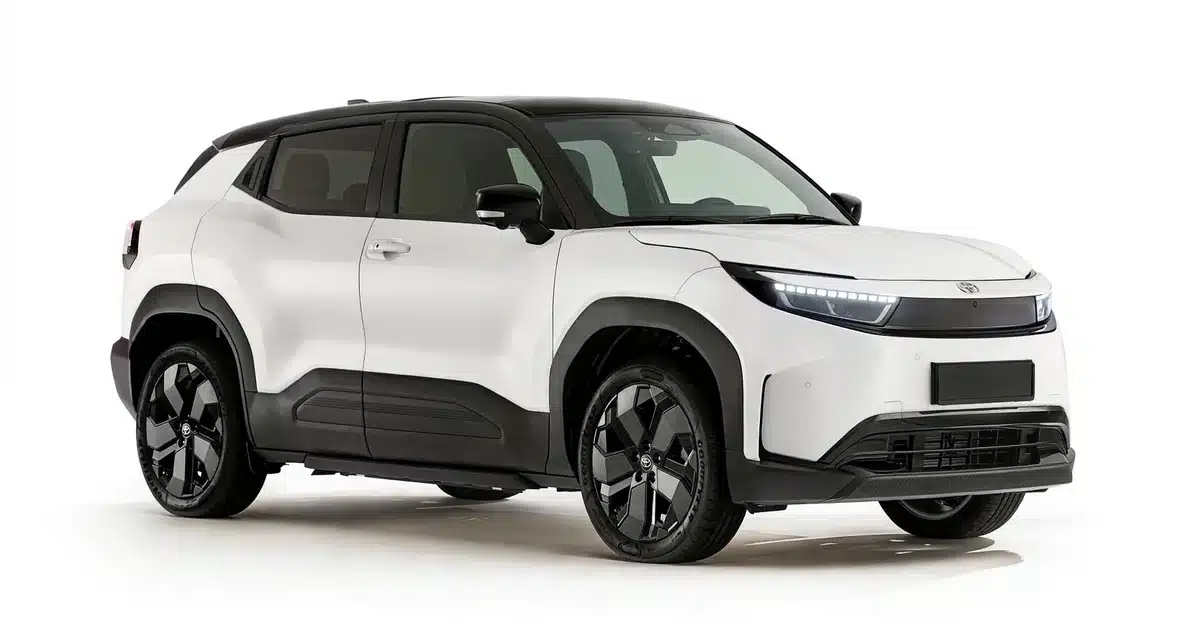
The Toyota Urban Cruiser battery comes in 49 kWh LFP (Icon FWD) and 61 kWh LFP (Design/Excel, FWD or AWD) — both lithium iron phosphate with heat pump standard. The 61 kWh delivers 264–265 miles WLTP; the 49 kWh achieves 214 miles WLTP. The most significant limitation is DC fast charging — capped at just 53 kW (49 kWh) and 67 kW (61 kWh). Both variants take approximately 45 minutes for 10–80% — the slowest DC charging rate in the compact electric SUV class in 2026. The Urban Cruiser shares its Heartect-e platform with the Suzuki eVitara — they are essentially the same vehicle, and it competes directly with the Kia EV3.
Toyota Urban Cruiser Battery: Full Specs
| Variant | Battery | Chemistry | WLTP Range | Power | Drive | DC Rate | 10–80% |
|---|---|---|---|---|---|---|---|
| Icon (entry) | 49 kWh LFP | LFP | 214 miles | 106 kW (144 hp) | FWD | 53 kW | ~45 min |
| Design / Excel (FWD) | 61 kWh LFP | LFP | 264–265 miles | 128 kW (174 hp) | FWD | 67 kW | ~45 min |
| Design / Excel (AWD) | 61 kWh LFP | LFP | ~246 miles | 135 kW (184 hp) | AWD | 70 kW | ~47 min |
Toyota + Suzuki: The Heartect-e Platform
The Urban Cruiser is built on the Heartect-e platform — a joint development between Toyota and Suzuki. The Suzuki eVitara is mechanically identical — same motors, batteries, platform, and interior layout with different bodywork and badges. Toyota and Suzuki co-developed Heartect-e to share costs on a small electric SUV platform. The Urban Cruiser uses Toyota-specific exterior styling, the “hammerhead” grille design from the wider Toyota range, and the MyToyota app ecosystem.
Both batteries use LFP (Lithium Iron Phosphate) chemistry — unusual for a Toyota in Europe, where previous EVs used NMC. LFP supports daily 100% charging without degradation concern — a genuine ownership simplification. Toyota cites durability, safety, and reduced cost as the key reasons for choosing LFP. The 61 kWh AWD version uses a small 2.1% protective buffer — almost the entire gross capacity is usable.
The 67 kW DC Cap: The Critical Limitation
The Urban Cruiser’s DC charging cap is the most discussed weakness across UK press reviews. 67 kW on the 61 kWh pack is significantly slower than class rivals: the Kia EV3 Standard charges at 101 kW, the Ford Puma Gen-E at 100 kW, the Leapmotor B10 at 168 kW. The 45-minute 10–80% session is effectively the slowest result in the compact electric SUV class in 2026. For buyers who primarily charge at home overnight, this limitation is invisible. For drivers who regularly road-trip or need quick DC top-ups on longer journeys, it is a genuine daily friction point.
Toyota has not publicly explained the 67 kW choice for a 2026 model. The Heartect-e platform may have been designed with cost reduction as the primary priority — higher-speed charging requires more expensive power electronics. The Suzuki eVitara shares the same DC charging cap. Real-world tests from Electrifying.com noted 2.8–2.3 miles per kWh in early winter conditions — poor efficiency that further compounds the modest range and slow charging. What Car? called the 67 kW rate “pretty disappointing” for a 2026 launch.
Heat Pump: The Positive
The Urban Cruiser includes a heat pump as standard on all variants — including the entry-level 49 kWh Icon. This is genuinely good news in a class where heat pumps are often optional extras. Toyota’s thermal management also includes a sophisticated battery temperature coordination system. The heat pump and battery preconditioning capability (via MyToyota app) are meaningful cold-weather features — though the 67 kW DC cap still limits range recovery speed in winter.
Urban Cruiser Charging Speeds
| Method | Power | 49 kWh Icon | 61 kWh Design/Excel |
|---|---|---|---|
| Level 2 (7 kW) | 7 kW | ~9.5 hours full | ~9.5 hours full |
| Level 2 (11 kW) | 11 kW | ~6 hours full | ~6 hours full |
| DC Fast | 53 / 67 kW | ~45 min (10–80%) | ~45 min (10–80%) |
Real-World Range: Below WLTP Expectations
- 61 kWh, WLTP official: 264–265 miles — tested under standard European conditions
- 61 kWh, Electrifying.com winter test (10°C): Only 140 miles real-world at 2.3–2.8 miles/kWh — well below the WLTP figure
- 49 kWh, Top Gear cold weather assessment: Approximately 160 miles real-world with the larger battery in winter — consistent with Electrifying’s data
- Hot weather, urban commuting: 4.1–4.2 miles/kWh per Carwow data — the 61 kWh in ideal conditions achieves approximately 250+ miles
4-Star Euro NCAP: A Disappointment
The Urban Cruiser received a 4-star Euro NCAP rating — unusual for a new Toyota. Most class rivals (Kia EV3, Leapmotor B10, Ford Puma Gen-E) scored 5 stars. Adult occupant and vulnerable road user protection scores were only in the 70% range. Toyota’s NCAP statement emphasised its strong child protection score (85%). The 4-star result is worth noting — it does not make the Urban Cruiser an unsafe car, but the 5-star rivals are objectively safer by Euro NCAP’s testing standards.
Toyota’s 10-Year Battery Care Program
Toyota covers the Urban Cruiser battery through its Battery Care Program — annual health checks for up to 10 years or 1 million kilometres. The formal battery warranty guarantee period and capacity threshold are confirmed at the first service. This program is conditional on annual health checks at a Toyota dealer — consistent with Toyota’s other EV battery warranty terms. LFP chemistry’s inherent longevity means battery degradation under normal use should be minimal across this period.
Urban Cruiser vs Competitors
| Model | Battery | WLTP Range | DC Rate | Euro NCAP | Starting Price (UK) |
|---|---|---|---|---|---|
| Toyota Urban Cruiser (61 kWh) | 61 kWh LFP | 264 miles | 67 kW | 4 stars | ~£34,460 |
| Kia EV3 SR (58.3 kWh) | ~55 kWh NMC | 271 miles | 101 kW | 5 stars | ~£34,745 |
| Ford Puma Gen-E (46.8 kWh) | 46.8 kWh NMC | 259 miles | 100 kW | 5 stars | ~£26,245 (after grant) |
| Leapmotor B10 (67.1 kWh) | 67.1 kWh LFP | 270 miles | 168 kW | 5 stars | £29,995 |
Full specs for the Kia and Ford rivals above are in our Kia EV3 battery guide and Ford Puma Gen-E battery guide.
Charging Tips for Toyota Urban Cruiser Owners
- Charge to 100% daily: LFP supports and benefits from regular full charges — Toyota recommends this; set a daily 100% schedule via the MyToyota app
- Plan 45-minute DC stops: Budget 45 minutes for every DC fast charge session — plan road trips around meal or coffee breaks of this length rather than expecting quick top-ups
- Precondition via MyToyota app: Activate battery preconditioning before DC charging sessions via the app or manually in the car — this is especially important in cold weather to achieve the best possible 67 kW rate
- Compare against Suzuki eVitara: The Suzuki eVitara offers identical mechanicals and often qualifies for the UK Government £3,750 EV Grant — compare total cost of ownership carefully before choosing between the two
Conclusion
The Toyota Urban Cruiser battery delivers LFP chemistry with standard heat pump, 10-year care programme coverage, and Toyota’s reliability reputation in a practical compact crossover. Buyers wanting Toyota’s most direct compact SUV rival should compare our Kia EV3 battery guide. The 264-mile WLTP range is adequate; the real-world winter efficiency of 140–160 miles in cold conditions and 67 kW DC charging cap are the honest limitations that press reviewers consistently flag.
