
Toyota Prius PHEV Battery: Complete Guide

Figures on this page come from Toyota USA and the Toyota Pressroom, fueleconomy.gov EPA ratings, NHTSA records, Toyota parts listings, and instrumented tests by Edmunds and Car and Driver. Where Toyota does not publish a figure, this guide says so.
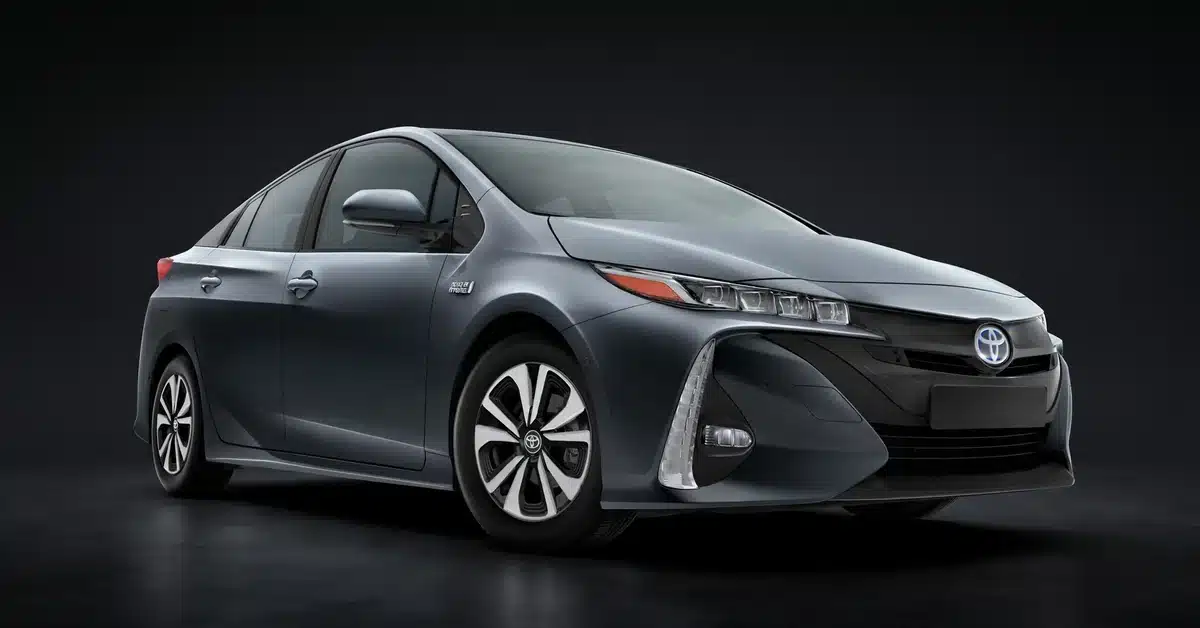
The Prius Plug-in Hybrid is the Prius you charge. Sold as the Prius Prime from 2023 until the name changed for 2025, the current car pairs a 2.0-litre petrol engine with a 13.6 kWh battery and electric motors for 220 hp, and it can cover most daily driving without burning fuel at all. It is the most efficient plug-in hybrid sedan sold in the US.
That battery is also where the confusion starts, because a plug-in Prius pack is not the same part as a standard Prius hybrid battery, and prices, warranties and lifespan advice written for one are routinely applied to the other. This guide keeps the two separate throughout: specs, charging, tested range, lifespan, the real replacement-cost picture, the warranty, the recalls, and the 12-volt battery fault Toyota has issued a service bulletin for. If you are new to the technology itself, our plain-English guide to what a hybrid car is explains how the three hybrid types differ.
Quick answer
The current Toyota Prius Plug-in Hybrid (called the Prius Prime until 2025) uses a 13.6 kWh lithium-ion battery, giving an EPA electric range of 44 miles in SE trim and 39–40 miles in the XSE grades. It charges in about 4 hours on a Level 2 charger and has no DC fast charging. The battery warranty is 10 years or 150,000 miles in every US state, and a plug-in Prius battery is a different, larger part than a standard Prius hybrid battery, so their replacement prices are not interchangeable.
Key figures: 13.6 kWh · EPA EV range 39–44 miles · 220 hp · Level 2 charge ~4 hours · Warranty 10 yr / 150,000 mi (nationwide)
Prius Plug-in Hybrid Battery Specs
One 13.6 kWh pack serves every trim; the SE’s smaller wheels give it the longest electric range.
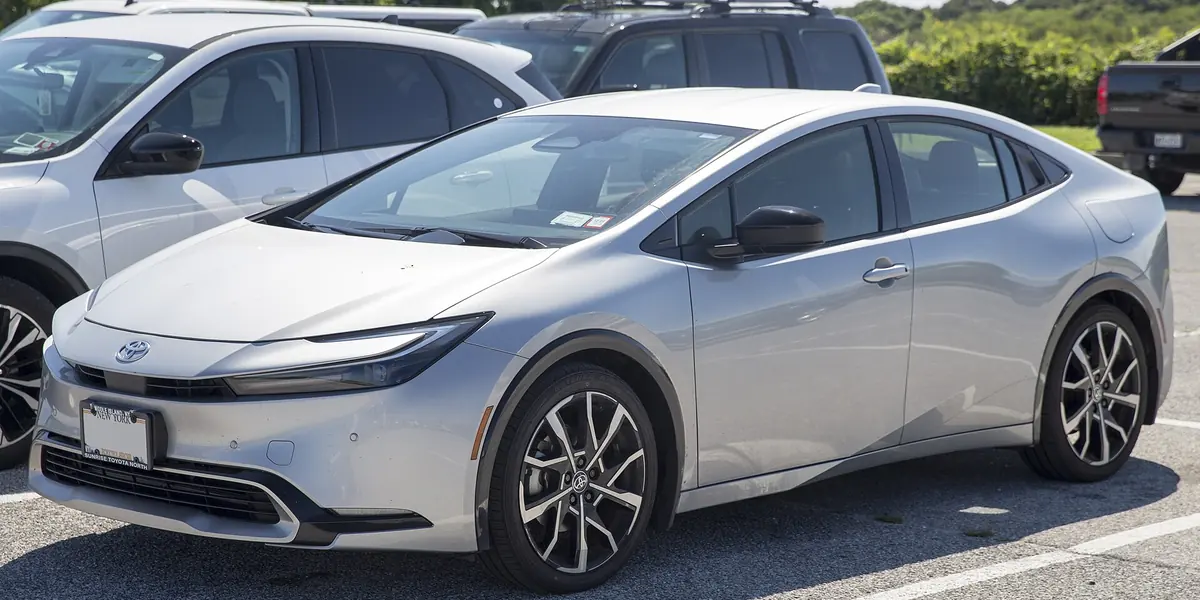
The fifth-generation car, on sale since 2023, is front-wheel drive across the range. The SE is the efficiency trim, with 44 miles of EPA electric range and 127 MPGe; the XSE and XSE Premium trade some range for equipment, at 39 miles on the EPA cycle for 2023–24 cars, with Toyota listing 40 miles for the 2026 model year. In hybrid mode the figures are 52 mpg combined for the SE and 48 mpg for the XSE grades.
| Trim | Battery | EPA EV range | MPGe | Hybrid mpg | 2026 MSRP |
|---|---|---|---|---|---|
| SE | 13.6 kWh Li-ion | 44 miles | 127 | 52 | $33,775 |
| XSE | 13.6 kWh Li-ion | 39–40 miles | 114 | 48 | $37,025 |
| Nightshade | 13.6 kWh Li-ion | 39–40 miles | 114 | 48 | $37,795 |
| XSE Premium | 13.6 kWh Li-ion | 39–40 miles | 114 | 48 | $40,470 |
MSRP excludes Toyota’s delivery, processing and handling fee ($1,195 per Toyota’s footnote). EPA figures from fueleconomy.gov; Toyota lists 40 miles for the 2026 XSE grades against the EPA’s 39 for earlier years.
Inside the Battery
The pack uses prismatic lithium-ion cells of the NMC family, supplied through Toyota’s Panasonic joint venture.
What cells does the pack use?
Toyota USA’s own material describes the pack simply as lithium-ion, and does not name a chemistry grade. Specialist reporting identifies Panasonic prismatic cells of the NCM family, made through PPES, the Toyota–Panasonic battery joint venture, whose cathode material comes from BASF’s NCM supply line; the exact grade is reported as NCM622 but is not Toyota-confirmed, and this guide presents it at that confidence level. The pack sits under the rear seats, keeping the cabin floor flat and the centre of gravity low.
How much of the 13.6 kWh is usable?
Toyota does not publish a usable-capacity figure. Owner metering and EPA charge data put the usable portion at roughly 10.6 kWh of the 13.6 kWh total, the remainder held back as a protective buffer at the top and bottom of the charge range. That buffer is a deliberate longevity feature: a plug-in hybrid battery cycles far more often than a full EV’s, because its smaller capacity is emptied and refilled on ordinary driving days.
Charging the Prius Plug-in Hybrid
Charging is AC-only — about 4 hours on Level 2, about 11 hours on a household outlet — and there is no DC fast charging at any trim.
How long does a full charge take?
The on-board charger is rated at 3.5 kW, so every 2026 Prius Plug-in Hybrid, the SE included, is fully capable of Level 2 charging; it simply cannot take power faster than that rate. A full charge from empty takes roughly 4 hours on a 240V Level 2 supply and roughly 11 hours on a standard 120V outlet, which still covers an overnight charge comfortably. Leaving the car plugged in overnight is exactly what Toyota expects owners to do, and the car stops drawing power when the battery is full.
What does the optional solar roof add?
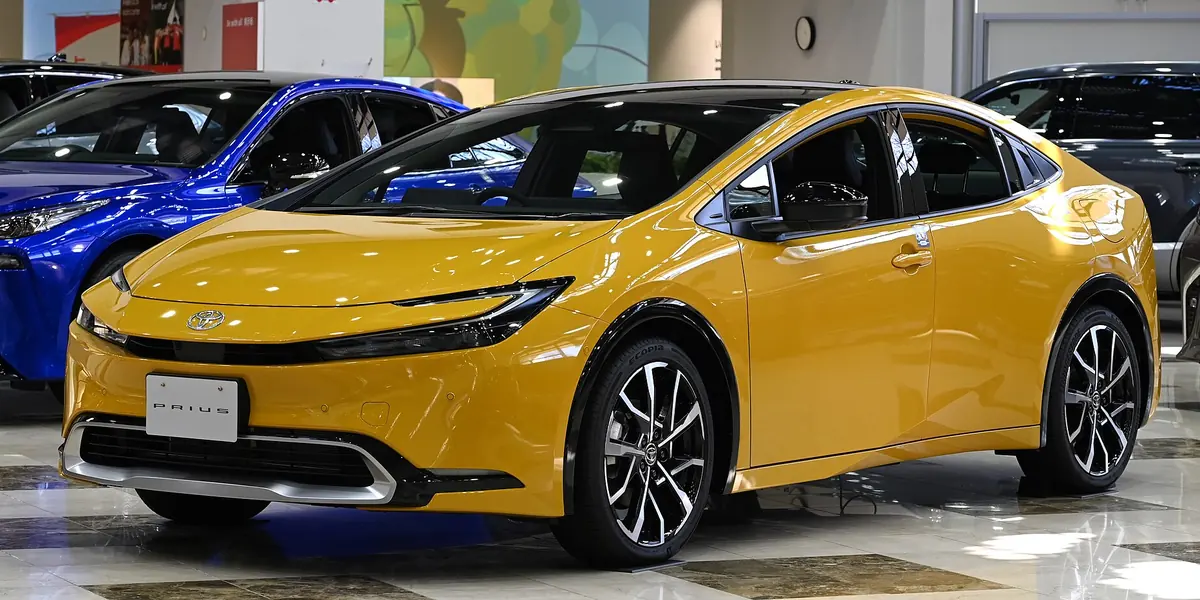
The XSE Premium offers an optional solar roof, a 185-watt panel that can feed the traction battery while parked and the accessories while driving. Toyota’s only quantified claim for it is a global, Japan-based figure of up to about 776 miles of added range per year in favourable conditions; treat it as a small top-up that suits a car parked outdoors all day, not as a substitute for plugging in. Earlier versions of this page credited the roof with roughly twice that output; Toyota’s own number is the one used here.
Real-World Electric Range
In instrumented testing the Prius Plug-in Hybrid fell short of its EPA electric range, the opposite of what this page used to claim.
What did the instrumented tests find?
Edmunds tested a 2023 Prius Prime XSE and recorded 33.7 miles of electric range against the car’s 39-mile EPA rating, and Car and Driver’s own range test returned 33 miles. Those tests run at higher average speeds than the EPA cycle, which is where a small battery works hardest; owners driving gently around town regularly match or exceed the rating, and MotorTrend’s long-term car once managed 48.9 miles on a single charge, an anecdotal best rather than a test figure. The fair summary is that the EPA number is achievable in gentle use and optimistic at highway pace.
Edmunds measured 50.9 mpg in hybrid mode in the same test, so even with the battery empty the Prius Plug-in Hybrid uses less fuel than almost any other car on the road.
What happens once the charge is spent?
Once the charge is spent, the car behaves like a regular Prius: 48–52 mpg depending on trim, and a total range of roughly 600 miles on a full battery and a full tank. That combination — electric miles for the commute, hybrid economy for the long trip — is the entire case for the car, and it does not depend on the battery lasting forever, which is the next question.
How Long Does the Prius PHEV Battery Last?
No fleet dataset exists yet for this generation, and Toyota’s own position is that the battery is designed to last the life of the vehicle.
Is there any degradation data for this generation?
The current car has only been on US roads since 2023, so any claim of five years of fleet data for it, including ones this page previously carried, is impossible on its face. For the previous-generation Prime there is likewise no published degradation study of the kind that exists for high-volume EVs. What can be said is structural: the pack’s protective buffer, its modest charging rate and Toyota’s conservative battery management all favour longevity, and Toyota states publicly that its hybrid batteries are designed to last the average life of the vehicle when properly maintained.
What habits matter more than chemistry?
Ownership habits matter more than chemistry at this pack size. Charging daily on AC power is the intended pattern and does no harm; the battery is built for it. Owners who can charge at work and at home will cycle the pack twice a day, and even then the warranty frame below, not a predicted failure date, is the right way to think about risk. A plug-in Prius whose range has faded noticeably inside the warranty term is a dealer measurement away from an answer.
The same ageing questions, answered with the fleet data that does exist for full EVs, are covered in our guide to how long EV batteries last.
Prius Plug-in Hybrid Battery Replacement Cost
First, the distinction the rest of the internet blurs: this is not a standard Prius hybrid battery, and standard-Prius prices do not apply.
Why don’t standard Prius prices apply?
The plug-in pack holds 13.6 kWh, roughly ten times the energy of the battery in a regular Prius hybrid, and it is a different part with a different price. Shopping results and AI summaries that quote $1,500–$4,500 for a “Prius battery” are describing the standard hybrid pack or aftermarket replacements for it. Quoting those figures for this car understates the real cost by a wide margin.
What does a current-car pack cost?
For the current car, US parts listings for the genuine pack (part numbers G9510-47160, or G9510-47210 for solar-roof cars) sit in a reported range of roughly $10,500–$13,500 for the part alone, before labour. In practice the figure is academic for now: every fifth-generation car is still inside its 10-year battery warranty, so retail replacements are effectively unheard of, and a failed pack today is Toyota’s bill. Owners should also ignore the occasional five-figure estimate generated by automated repair-estimate tools, which for this model includes figures with no basis in any parts listing.
What about earlier generations and the standard Prius?
For the previous-generation (2017–2022) Prime, the specialist market is real and cheaper: around $4,995 for a new-cell pack and around $2,495 for a remanufactured one from established hybrid-battery specialists, fitted prices varying by region. And for completeness, the standard Prius hybrid battery that dominates search results lists at roughly $2,700–$3,300 plus a core charge, or about $3,500–$5,000 installed at a dealer — a fair price for a different, much smaller battery that does not fit this car.
Prius PHEV Battery Warranty
The battery is covered for 10 years or 150,000 miles in all 50 states — it is not a California-only warranty.
How long is the battery covered?
Toyota extended its hybrid battery warranty to 10 years or 150,000 miles nationwide from the 2020 model year, and toyota.com states it without a state restriction; the “(CA)” framing this page previously carried was wrong. Other hybrid components, such as the inverter and control modules, carry 8 years or 100,000 miles. The battery cover transfers automatically to a new owner at no cost, running from the car’s original date of first use.
Is there a capacity threshold?
One point owners ask about directly deserves a plain answer: Toyota publishes no capacity percentage for this warranty. There is no official 70% degradation threshold in Toyota’s US materials; cover is defect-based, meaning a pack that fails or malfunctions is repaired or replaced, while gradual capacity loss is assessed case by case at a dealer. Searches for an “official Toyota degradation threshold” end here because the document people are looking for does not exist.
Prius Plug-in Hybrid Recalls
No recall touches this car’s battery, charging system or hybrid drive — the campaigns that exist are about door switches and a camera.
Which recalls exist?
The largest is the rear door switch campaign: recall 24V-274 covered about 55,486 vehicles including 2023–24 Prius Primes, and it was expanded and replaced by 26V-049, covering 141,286 vehicles in total, of which 23,243 are 2023–24 Primes; the remedy modifies the switch circuit so a rear door cannot be commanded open unexpectedly. A second campaign, 25V-744, updates the rearview camera and panoramic-view software across about a million Toyotas; only panoramic-view-equipped plug-in cars fall inside its scope.
Is there a battery recall?
Owners searching for a battery recall can stop: across the fifth-generation car’s life there is no NHTSA campaign for its high-voltage battery or charging hardware. A free VIN check settles any individual car’s status in a minute.
The 12-Volt Battery and the Drain Fault
The 12-volt auxiliary battery lives in the rear luggage compartment, and on some 2023–24 cars a software fault can drain it if the car is left plugged in.
Where is the 12V battery, and what does it do?
The auxiliary battery is a conventional lead-acid unit, mounted on the right side of the rear luggage compartment, with jump-start terminals under the hood; Toyota’s own TrueStart catalogue fitment for the car is the H4 (LN1) size. Its job is to wake the car’s electronics and close the high-voltage contactors, so when it runs flat the car will not start even with a full traction battery. Most “dead Prius” mornings end at this small battery.
What is the drain fault Toyota confirmed?
Toyota has confirmed one specific cause in a technical service bulletin: on some 2023–24 Primes, the plug-in charge control ECU can fail to go to sleep when the charge cable stays connected more than about two hours after charging finishes, slowly depleting the 12-volt battery. The remedy is a dealer firmware update performed with Toyota’s Techstream system, so an owner whose 12V battery keeps dying after overnight charging should ask the dealer about the bulletin rather than simply replacing the battery again.
Earlier Generations: Prime and the First Plug-in
The plug-in Prius has tripled its battery in three generations, from 4.4 kWh and 11 miles to 13.6 kWh and 44.
The first Prius Plug-in (2012–2015) carried a 4.4 kWh lithium-ion pack rated at 11 miles of blended electric range by the EPA, with a 6-mile all-electric sub-rating, and 95 MPGe. The Prius Prime (2017–2022) grew to 8.8 kWh and 25 miles, with 133 MPGe and a 3.3 kW on-board charger that refilled it in about 2 hours 10 minutes on Level 2. Both generations were lithium-ion — the idea that the Prime used nickel-metal hydride, which this page previously implied, is wrong; NiMH belongs to the standard hybrid models.
| Generation | Years | Battery | EPA EV range | MPGe | On-board charger |
|---|---|---|---|---|---|
| Plug-in (1st) | 2012–2015 | 4.4 kWh Li-ion | 11 miles (blended) | 95 | 2 kW class; ~3 h L1 / ~1.5 h L2 |
| Prime (2nd) | 2017–2022 | 8.8 kWh Li-ion | 25 miles | 133 | 3.3 kW; ~5.5 h L1 / ~2 h 10 min L2 |
| Plug-in Hybrid (3rd) | 2023– | 13.6 kWh Li-ion | 39–44 miles | 114–127 | 3.5 kW; ~11 h L1 / ~4 h L2 |
Tax Credits: What This Car Actually Qualified For
The Prius Plug-in Hybrid never qualified for the $7,500 federal purchase credit, because it is built in Japan.
The clean-vehicle credit required final assembly in North America, which excluded this car from the day it launched; the discount buyers sometimes received came through leases, where dealers could pass on the separate commercial credit. All of those federal credits, purchase, used and commercial, ended for vehicles acquired after September 30, 2025. Any listing or article still advertising a $7,500 credit on this car in late 2026 is out of date.
Frequently Asked Questions
How big is the battery in a Prius Plug-in Hybrid?
13.6 kWh in the current car (2023 onward), against 8.8 kWh in the 2017–2022 Prime and 4.4 kWh in the 2012–2015 original. Toyota does not publish a usable figure; metering puts the usable portion at roughly 10.6 kWh.
How far can a Prius Plug-in Hybrid go on battery only?
The EPA rates the SE at 44 miles and the XSE grades at 39–40 miles. Instrumented tests at higher speeds returned less: 33.7 miles at Edmunds and 33 miles at Car and Driver. Gentle urban driving can match the rating.
Can I leave my Prius charging overnight?
Yes — that is the intended pattern, and charging stops when the pack is full. One caution applies to some 2023–24 cars: a Toyota service bulletin covers a fault where leaving the cable connected long after charging can drain the 12-volt battery; the fix is a dealer software update.
Does the Prius Plug-in Hybrid charge while driving?
Yes, in hybrid mode the engine and regenerative braking both return charge to the battery, and the car manages the pack around a working buffer. It does not refill the battery to full from the engine in normal driving; the plug is how the electric range is restored.
How much does it cost to replace a Prius Plug-in Hybrid battery?
For the current car, genuine-pack US list prices are reported around $10,500–$13,500 for the part alone, but every car is still inside its 10-year/150,000-mile battery warranty, so owners are not paying it. Previous-generation Prime packs run about $4,995 new-cell or $2,495 remanufactured from specialists. Prices around $2,000–$4,000 quoted online are for the standard Prius hybrid battery, a different part.
How many years does the battery last?
Toyota designs its hybrid batteries to last the life of the vehicle and covers this one for 10 years or 150,000 miles nationwide. No published degradation dataset exists yet for the current generation, and Toyota sets no official capacity-percentage threshold for a warranty claim.
Can you drive a Prius Plug-in Hybrid with a dead battery?
With the traction battery’s charge spent, yes — it simply runs as a hybrid at 48–52 mpg. With a flat 12-volt auxiliary battery, no car of this design will start until the 12V is boosted or replaced, because the 12V system is what switches the high-voltage system on.
Can I replace the battery myself?
The traction pack is a high-voltage component under the rear seats and is a dealer or specialist job; this guide does not recommend DIY replacement. The 12-volt auxiliary battery in the rear luggage compartment is a conventional owner-level part.
Conclusion
The Prius Plug-in Hybrid’s battery is best understood as three clean facts: 13.6 kWh, roughly 40 real-world electric miles, and a 10-year, 150,000-mile warranty that applies in every state. Everything confusing about this car online comes from mixing it up with the standard Prius, whose battery, prices and advice are all different. Keep the two apart and the ownership picture is simple: charge it nightly, let it be a hybrid the rest of the time, and treat the warranty, not a predicted failure date, as the plan.
