
What Is a Hybrid Car


You have probably heard the word hybrid everywhere. But you may still feel confused about what a hybrid car actually is. It can be hard to tell a hybrid from a gas car or an electric car. And the choice is not always clear. With fuel costs rising, you may wonder if a hybrid really saves money. Or if it just costs more to buy. You may also wonder if a hybrid needs charging or plugging in. And you may worry that its battery will fail and cost thousands of dollars to replace.
And even if a hybrid sounds like a good idea. You may not know which type to buy, or whether a hybrid is worth it in 2026. That is a fair worry, because the wrong choice can cost you money and add stress to a big purchase. You do not need to guess, and you do not need special car knowledge to get this right.
This article explains it all in simple words. You will learn what is a hybrid car, how it works, and the three types: mild, full, and plug-in. You will also see how much fuel it really saves, the downsides no one mentions first. And whether it is worth buying in 2026. By the end, you will know what fits your driving and your budget.
A hybrid car pairs a gasoline engine with one or more electric motors and a small battery. Mild and full hybrids charge their own battery while driving, so they never plug in. Only plug-in hybrids charge from a wall outlet.
Key figures: 3 types — mild, full, plug-in · Full hybrids use 20–35% less fuel than a gas car · Plug-ins drive 20–50 miles on electricity alone · Typical premium over a gas car: $1,500–$3,000
What Is a Hybrid Car, in Simple Words?
Two Power Sources, One Car
what is a hybrid car? A hybrid car gets its power from two sources that work as a team.
- A gasoline engine, the same kind found in a normal gas car. It burns gasoline to make power.
- One or more electric motors, powered by a battery pack. The motors can help push the car, or move it alone for short, slow trips.
You only put gasoline in the tank. A regular hybrid has no plug and no charging cord. Both kinds of power work together in one car, and that mix is what the word hybrid means.
Why It Is Not an Electric Car
A fully electric car, or EV, has no gasoline engine at all. It runs only on electric motors, and it must plug in to charge its big battery. A hybrid is different: at heart, it is still a gasoline car. Its battery is small, about 1 kilowatt-hour (1 kWh). It is only about 1 to 2 percent of the size of a full EV battery. It cannot carry the car far on its own; it only helps the gasoline engine.
No Plug Needed: How It Charges Itself
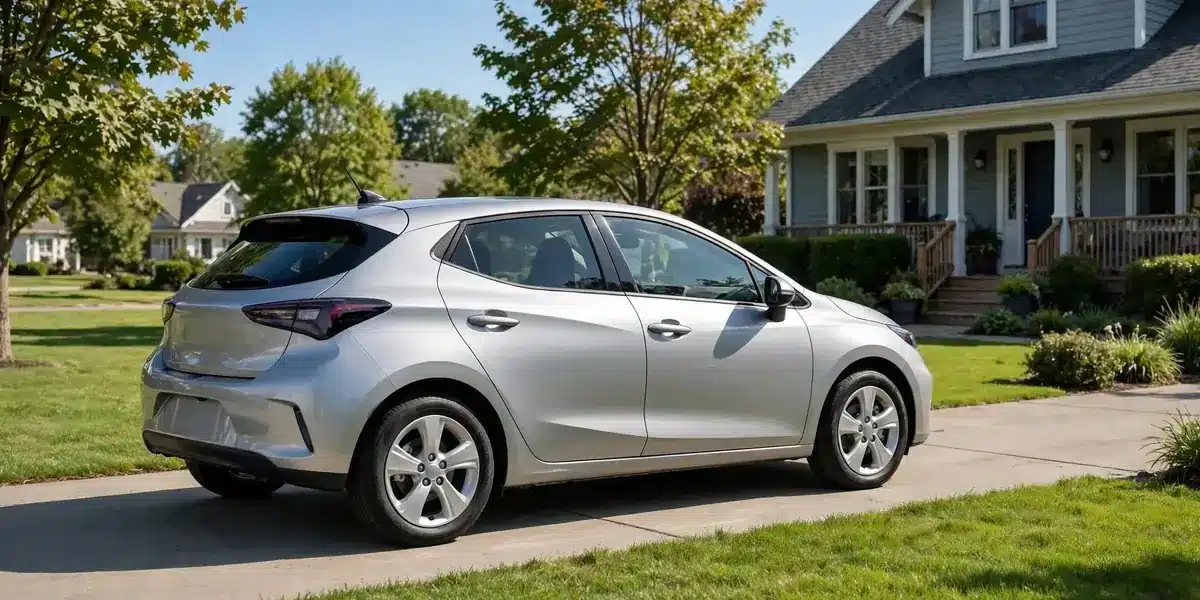
Most hybrids never plug in. The battery charges itself while you drive, in two ways. When you slow down or brake, the electric motor works in reverse, like a generator.
It turns the car’s motion into power and sends it back to the battery. That trick is called regenerative braking: the car saves power that braking would otherwise waste. The gasoline engine can also charge the battery while it runs.
A computer in the car picks the best mix by itself. It may use the motor alone, the engine alone, or both at once, and you never have to pick. At a stop, such as a red light, the engine can shut off to save fuel.
A Short History
- 1899: Ferdinand Porsche builds the first hybrid. A gasoline engine powers an electric motor in each front wheel.
- For almost 100 years after that, cheap gasoline cars rule the road.
- 1999: The Honda Insight arrives, one of the first modern hybrids.
- 2000: The Toyota Prius comes to the United States.
- 2003: A second-generation Prius, a small hatchback, makes hybrids popular.
- By April 2009, more than 707,000 Prius cars have been sold in the US since the 2001 model year.
- End of 2010: The Chevrolet Volt goes on sale, the first modern plug-in hybrid sold in the US.
Hybrids Today
Today, hybrids are no longer rare. The newest Toyota RAV4 and Camry, two of the best-selling vehicles in the United States, are sold only as hybrids. The 2026 RAV4 is fully electrified, so every version is a regular hybrid (HEV) or a plug-in hybrid (PHEV). The regular hybrid makes 236 horsepower with all-wheel drive and 226 with front-wheel drive. The plug-in version makes up to 320 horsepower.
Fully electric cars are still a small part of the market. 5.6 percent of new vehicle sales in the US, up from 3.2 percent in 2021. Hybrids sit in the middle: they still burn gasoline. But they burn less of it, helped by a small battery and a smart computer.
How Does a Hybrid Car Actually Work?
The Computer Decides: Engine, Motor, or Both
A computer decides moment by moment, motor alone, engine alone, or both, so the driver switches nothing. At low speed, it often runs on electric power alone for short distances. When you need more power, the engine joins in. Toyota’s Hybrid Synergy Drive blends the two, recalculating the power split many times per second. With no clutches, the switch is almost unnoticeable. And regenerative braking in a RAV4 Hybrid is always on and cannot be turned off.
Many hybrid engines use the Atkinson cycle, with intake valves open longer. That saves gas but gives less low-speed power, so the motors make up the difference. The motors do more work in town, so a parallel hybrid often gets better city mileage than highway mileage.
Regenerative Braking: Turning Slowing Down Into Electricity

When you lift off the gas, brake, or roll downhill, the motor becomes a generator. The wheels turn it, power flows back to the battery, and that resistance slows the car. Normal brakes waste that motion as heat. But a hybrid saves some of it for the motor and for extras such as audio and climate control.
- Regenerative braking is used first. Friction brakes take over for hard stops, emergencies, very low speeds, and the final stop.
- Past the motor’s limit, more pedal pressure adds friction brakes, and the pedal feel can change.
- It works best above about 9 miles per hour. Below about 5 miles per hour, friction brakes do almost all the work.
- A nearly full battery stores less, and cold weather slows charging. Speed matters too.
- Newer systems return 60 to 70 percent of braking energy. The Department of Energy estimates 5 to 9 percent for hybrids in combined driving, and 22 percent for electric cars.
- It pays off most in stop-and-go city driving, less on the highway. Brake pads can last around or past 100,000 miles. But rear pads can wear faster, and corrosion still needs a check.
- Paddles and Sport, Normal, or Eco modes change the feel. Toyota’s ‘B’ is engine braking for long downhills, not adjustable regenerative braking, and it wastes energy on flat roads. The 2026 bZ Regen Boost Mode only slows the car to about 5 miles per hour.
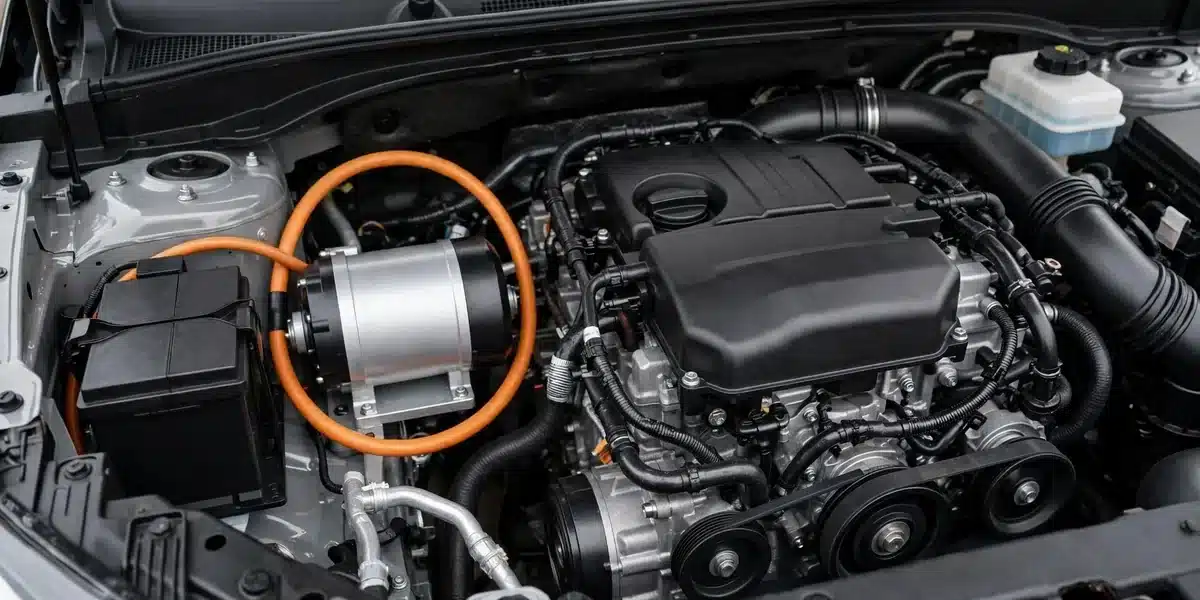
The Main Parts Under the Hood
- Gasoline engine and fuel tank
- Electric motor or motors
- Traction battery pack
- Motor-generator
- Power electronics controller
- DC/DC converter: high-voltage DC to low-voltage DC for accessories and the small auxiliary battery
- Transmission, a gearset or CVT
- Cooling system
- Toyota MG1, starter and generator; MG2, main drive motor and regenerative braking generator
- Planetary gearset (eCVT): one set replaces the gearbox, torque converter, and clutches. The sun gear links to MG1, the planet carrier to the engine, and the ring gear to MG2 and the wheels. Changing MG1 speed changes the ratio, with no shifts, belts, or pulleys.
Three Ways Hybrids Are Built
- Series: only the motor drives the wheels, while the engine only runs a generator. Examples: BMW i3 Range Extender, Fisker Karma, Chevrolet Volt, Ram Ramcharger. In the Volt, the engine can also drive the wheels above 70 miles per hour.
- Parallel: the engine, the motors, or both can drive the wheels.
- Series-parallel, or power-split: engine and motors drive a gearset or CVT together. The Prius popularised this design, also used in the Lexus ES Hybrid and Kia Sportage Hybrid.
Engine Off at a Stop
At a stop, the battery powers the car’s extras while the engine cuts out, so it does not idle. A Toyota engine also shuts off when coasting or on electric power. In a mild hybrid, a starter-generator makes stop-start smoother.
Mild Hybrid (MHEV): The Helper, Not the Driver
What a Mild Hybrid Really Is
A mild hybrid pairs a normal gasoline or diesel engine with a small electric motor and a small battery. The motor only assists the engine; it never drives the car alone. Most systems are 48-volt, separate from the car’s normal 12-volt system, while full hybrid batteries are 200 volts or more. It is the simplest hybrid, more like a normal car with electric help than a true hybrid.
How the Helper Works
- An Integrated Starter-Generator (ISG) or Belt-Driven Starter-Generator replaces the normal starter and alternator. An early example was GM’s belt alternator starter on the Saturn Vue Green Line, with a 36-volt nickel-metal hydride battery.
- It adds torque, up to about 50 Nm, when speeding up. Most of all from a standstill and uphill, so the engine works less hard.
- Regenerative braking recovers energy when slowing or braking, recharging the small battery.
- Stop-start shuts the engine off at a light or while coasting, then restarts it in milliseconds, almost silently. While powering accessories and climate control.
- No plug: it charges itself while driving, and you drive and refuel it like a normal car.
- Driving is smoother and less jerky, with instant torque that can fill turbo lag. It is quieter and idles less.
How Much Fuel Does It Actually Save?
Typically 10 to 15 percent better than a comparable non-hybrid. Up to 15 percent better on city miles per gallon in stop-and-go traffic. A December 2021 controlled study in Case Studies in Thermal Engineering found about 8 percent. Some carmakers claim up to 20 percent. The real figure is usually in between, so no single percentage fits every mild hybrid. Check official figures for the exact trim.
Best in the city and stop-and-go traffic. With little benefit on the highway, where there are few chances to recover energy or switch the engine off. It gives the smallest saving of the three hybrid types. A full hybrid can save up to 45 to 50 percent in city driving. CO2 emissions fall about 10 to 15 percent.
The Good and the Bad
- Good: about $500 to $1,500 extra, versus $3,000 to $5,000 for a full hybrid; cheaper and simpler. No plug, no range anxiety, familiar driving, smoother restarts, and better acceleration from a stop.
- Good: slightly lower CO2; little effect on maintenance, normal transmissions, and service intervals. The 48-volt battery typically lasts the life of the car. Many drivers do not even realise their car is a mild hybrid.
- Bad: no electric-only driving. The engine always runs and still needs gasoline or diesel, so it is not a substitute for an electric car. The saving is modest and will not transform your fuel budget.
- Bad: it still emits more than a full hybrid, plug-in, or EV, and cannot drive silently through zero-emission zones. It can cost more than a non-hybrid, and the savings may not cover the higher price. Benefits depend on driving conditions and are smaller on the highway.
Mild Hybrids You Can Buy in the US
- Mazda CX-90 and CX-70; Ram 1500 V6 with eTorque. BMW in more than 50 models, including the M340i and X3 xDrive20i 48V.
- Audi A3 through A8, including the A4 and A6. Mercedes-Benz C-Class and E-Class with ISG, plus SUVs, sedans, and coupes; Land Rover’s entire lineup.
- Volvo XC60, XC40, S90, and XC60/XC90 B5/B6; Jaguar F-Pace. Earlier US examples: the 2000 Honda Insight, the first mainstream mild hybrid in the US. The 2008 Chevrolet Silverado and GMC Sierra pickups. The Saturn Vue Green Line; and GM eAssist in the 2012 Buick LaCrosse and 2013 Buick Regal.
Full Hybrid (HEV): The One That Drives on Electric Alone
What Makes a Full Hybrid Different
A full hybrid, also called a conventional hybrid by Edmunds, has a larger battery. And it has a more powerful electric motor than a mild hybrid. So the motor can move the car alone for short trips at low speeds. It can run on the motor alone, the engine alone, or both together, switching smoothly on its own. It costs more than a mild hybrid but saves more fuel. The best-known example is the Toyota Prius, first sold in Japan in 1997. US hybrids have been sold since the 2000 model year, the Honda Insight first, then the Prius.
How It Works: The Power-Split System
Most full hybrids are parallel designs: the engine and motor can both drive the wheels. Many use a series-parallel power-split system, like the fifth-generation Toyota Hybrid System. Hybrid Synergy Drive uses one small planetary gear set instead of a normal gearbox, torque converter, and clutches.
The sun gear links to MG1, the planet carrier to the engine. And the ring gear to MG2 and the wheels. Changing MG1 speed changes the drive ratio, like an eCVT with no belts, pulleys, or friction bands. MG1 starts the engine and works as a generator.
MG2 is the main drive motor, with instant torque, and also the generator for regenerative braking. The car charges itself, with no plug: the battery recharges from braking and the engine. And the computer picks the most efficient power source.
How Far and How Fast on Electric Alone?
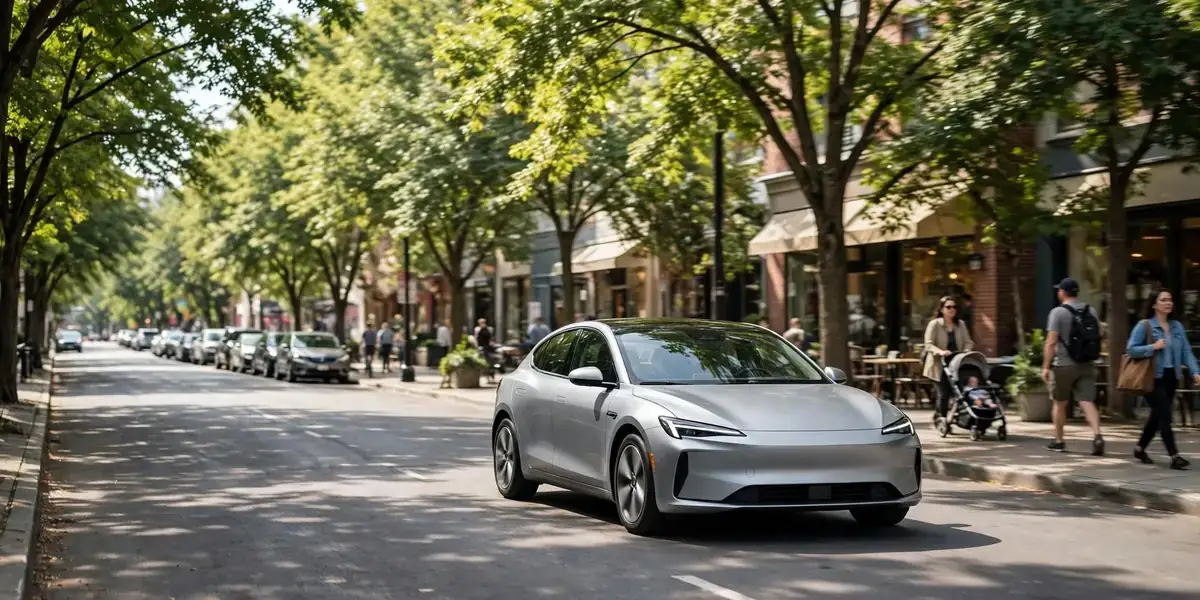
Electric-only driving is for short distances at low speeds only, up to about 30 mph, depending on battery charge. The engine starts at higher speeds, for quick acceleration, or on hills. Toyota EV Mode runs on electric power alone for short, low-speed trips up to about 25 mph. For quiet driving in parking structures or neighborhoods. It switches off above about 25 mph, on hard acceleration. When battery charge drops, or when temperatures move outside the normal range. And the engine takes over smoothly.
How Much Fuel Does It Save?
- 20 to 35 percent better than a gas-only car on average (Green America via KBB).
- Typically 40 to 60 mpg, versus 25 to 30 mpg for a modern gas car. Often 10 to 15 mpg more.
- Prius, the top-rated conventional hybrid: up to 57 mpg combined. Versus 36 mpg for the best gas-only car, the Honda Civic.
- Ford Maverick Hybrid: 39 mpg combined, 56 percent more efficient than 25 mpg combined. Ford F-150 Hybrid: 23 mpg combined, 21 percent better than 19 mpg combined.
- 2026 Prius: LE 57/56/57 mpg city/highway/combined; XLE, Nightshade, and Limited 52 mpg combined.
- Best in the city; savings shrink on the highway.
The Good and the Bad
Good:
- Real electric driving at low speeds, quieter and smoother, with instant torque from a stop.
- Best city mpg. Savings can outweigh a higher monthly payment within two years. A 12,000-mile-a-year driver can save several thousand dollars over five years.
- No plug, no charging setup, and no range anxiety. Refuel at any gas station in minutes, with no lifestyle change for most drivers.
- Emissions up to a third lower than comparable nonhybrids, less brake wear. And the engine shuts off when coasting, stopped, or on electric power, so it runs fewer hours.
- Batteries have proved reliable over decades and hundreds of thousands of miles, and hybrids do well in reliability ratings. Toyota battery warranty: 10 years/150,000 miles, transferable; other hybrid parts: 8 years/100,000 miles.
Bad:
- Higher upfront price, usually $1,500-$3,000 more, about $1,300 for a car and up to $3,000 for a hybrid SUV. Though Consumer Reports notes many now cost about the same as nonhybrid versions.
- Limited electric range: you cannot commute purely on electricity, and the highway gain is smaller.
- More complex, so repairs can cost more, and some eCVTs can drone or flare under hard acceleration. Out-of-warranty battery replacement is typically $1,000-$3,000, depending on model.
- Not zero-emission: it still uses a gasoline engine, and cold temperatures can reduce battery performance.
Full Hybrids You Can Buy in the US
- Toyota: Prius, Camry Hybrid, and RAV4 Hybrid.
- Honda: Civic Hybrid and CR-V Hybrid.
- Ford: Maverick Hybrid, 37 mpg in Consumer Reports testing and 39 mpg combined, and F-150 Hybrid.
Plug-in Hybrid (PHEV): The One You Charge at Home
What Makes a Plug-in Hybrid Different
A plug-in hybrid, or PHEV, is a part-time electric vehicle. It has a gasoline engine, an electric motor, and a much larger rechargeable battery. Its big battery is the main difference. Car and Driver notes that it is about 10 to 20 times the size of a regular hybrid battery. It has two fuel flaps, one for gasoline and one for electricity. Names can confuse buyers: the Chrysler Pacifica Hybrid is really a plug-in hybrid, Lexus uses Plus, and Jeep uses 4xe.
How Far Can It Go on Electric Alone?
Most current models go about 15 to 60-plus miles on electricity alone, according to the U.S. Department of Energy. Car and Driver gives 10 to 70 miles, and CarMax gives 15 to 50 miles. Range depends on battery size, weight, and setup. It fits well if you drive less than 30 miles a day.
- 2024 Toyota Prius Prime SE: 44 miles on electricity alone.
- 2025 Toyota RAV4 Prime: up to 42 miles on electricity alone.
- 2026 RAV4 Plug-In Hybrid: up to 54 miles on electricity alone. And about 41 MPG combined once the battery is spent. This is the newer model year.
How It Works: Electric First, Then Gas
It starts on electricity, then uses gas when it needs to. When the battery runs low, the engine takes over on its own, smoothly, with no action from you. It can also take over during fast acceleration or heavy heating or air conditioning. The battery is never truly empty: about 1 kWh is kept in reserve. So it can keep working like a regular hybrid, with regenerative braking.
- Hybrid mode: the computer mixes electricity and gasoline.
- EV Save mode: it saves charge for later, for a city center or for Jeep 4xe trails.
- Charge mode: the engine charges the battery. But it is less efficient and more costly than plugging in, and mainly useful before a long climb.
- The engine and regenerative braking also add charge. But the engine alone cannot fully recharge the big battery in a useful way.
How Do You Charge One?
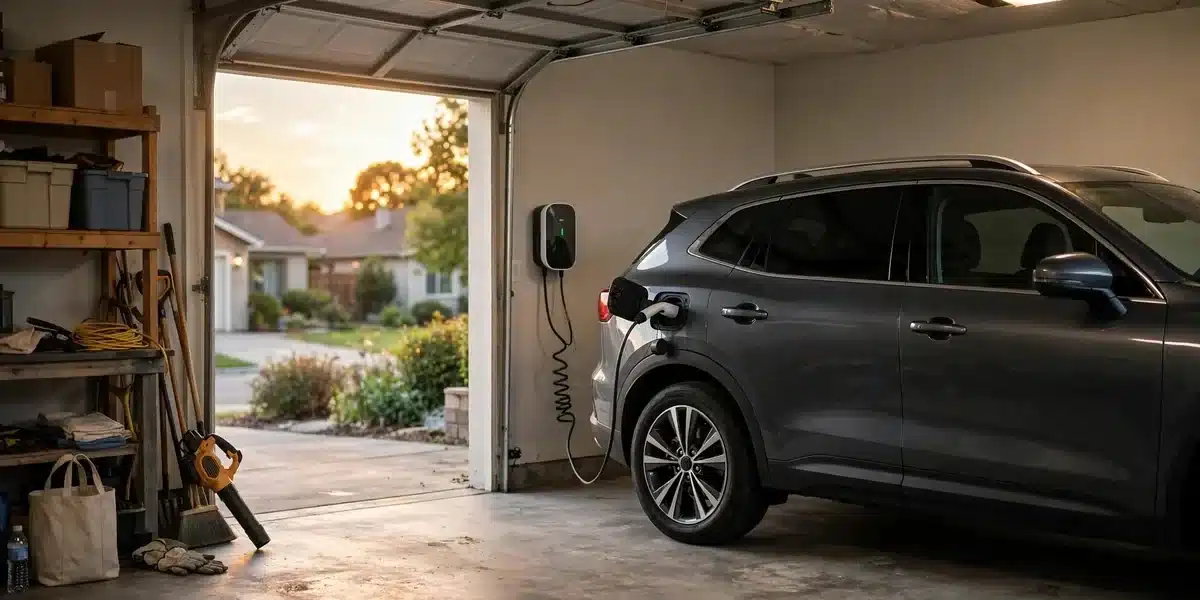
- Level 1: plug into a standard 110/120V home outlet with the cord supplied in the trunk. It takes 10 to 12 hours overnight, or around 8 to 12 hours for a fully empty battery.
- Level 2: use a 240V home or public charger. It takes 1.5 to 3 hours, about 3 times faster than Level 1, not 6 times faster. Most PHEVs have smaller 3.3-kW onboard chargers. While many fully electric cars have 6.6-kW or larger chargers, so a 240V upgrade may not be necessary.
- DC fast charging: most PHEVs do not support it. The battery is not big enough to make the extra cost and complexity worth it. And the gas engine covers long road trips.
How Much Fuel Does It Save?
The 2024 Prius Prime SE gets 127 MPGe combined when fully used as a plug-in. It gets 53 MPG city, 51 MPG highway, and 52 MPG combined in hybrid-only driving. Fuel use depends on charging. Never plug in, and it uses about as much fuel as a similar-sized hybrid. With short trips and charging between them, it may run on electricity only. On gasoline alone, it is often less fuel-efficient than a similar standard hybrid, because it is heavier.
The Good and the Bad
Good:
- Daily trips on electricity, no range worry, and long trips on gasoline.
- Lower fuel cost if charged daily, fewer gas-station visits, and more savings the more it runs on electricity.
- Quieter, smoother, and silent on electricity alone, with much less brake wear.
- Lower emissions on electricity, with many daily trips having no tailpipe emissions, though pollution depends on the electricity source.
Bad:
- Higher price and heavier: the bigger battery costs more and uses more fuel on gasoline.
- Needs home charging for the full benefit. If you rarely plug in, buy a regular hybrid instead. Charging is hard in multi-unit buildings.
- If not charged, it gets similar gas mileage to a typical hybrid. Some battery capacity is wasted, and MPG is worse when the battery is empty.
- More complex, with both electric and gasoline systems to maintain, so upkeep can cost more.
Plug-in Hybrids You Can Buy in the US
- Toyota Prius Prime and RAV4 Prime.
- Kia Niro PHEV and Kia Sportage Plug-in Hybrid, and Hyundai Tucson Plug-in Hybrid.
- Chrysler Pacifica Hybrid/PHEV, Volvo XC60 Recharge, and Volvo S60 Recharge.
- Jeep Wrangler 4xe, Jeep Grand Cherokee 4xe, Mitsubishi Outlander, BMW X5 xDrive45e, and Audi Q5 Plug-in Hybrid.
Incentives have changed, so check current IRS rules before you buy.
Hybrid vs Gas vs Electric: What’s the Real Difference?
A gas car, a hybrid, and an electric car can look alike, but they get power in very different ways. That changes what you pay to buy and run one, how far you go, and how much it pollutes. Here is how all three compare.
How Each One Works
- Gas: A gas car runs on a gasoline engine only. You fill it at a gas station, and the engine does all the work.
- Hybrid: a gas engine plus an electric motor. It charges itself when you brake (regenerative braking), so most hybrids need no plug. A plug-in hybrid (PHEV) can run 20 to 50 miles on electricity alone before the gas engine takes over.
- Electric (EV): An EV runs on a battery and an electric motor only. You plug it in to charge it, and it uses no gasoline at all.
| Gas | Hybrid | EV | |
|---|---|---|---|
| How it works | Engine only | Engine + motor | Battery + motor |
| Fuel cost, 5 years | $7,778 | $5,676 | $3,000 |
| Range | 250-350 miles | 300-500 miles | 200-400 miles |
| Refueling time | Minutes | Minutes | Hours; 30 min fast |
| Tailpipe emissions | Highest | Lower | Zero |
What Each One Costs to Buy
- Consumer Reports, vs. the same gas car: a hybrid costs $0–$3,000 more. A plug-in hybrid $1,300–$14,000 more, and an EV $5,000–$15,000 more.
- MotorTrend prices before destination: Honda CR-V gas $32,370 vs. hybrid $37,080 (+$4,710). Toyota Corolla $24,120 vs. $25,970 (+$1,850); Ford Maverick $28,990 vs. $29,990 (+$1,000). The gap is closing.
- The $7,500 federal EV tax credit ended September 30, 2025. Federal tax credits have expired, and hybrids usually are not eligible for any tax incentives.
Fuel and Running Costs
- Consumer Reports, 5 years, 12,000 miles a year, $3.50/gal, 15c/kWh: gas $7,778. Hybrid $5,676 (saves $2,102); plug-in hybrid $3,955 (saves $3,823); EV $3,000 (saves $4,778). A hybrid saves $300–$800 a year on fuel vs. a gas car, an EV about $1,300 a year.
- Zebra, 14,263 miles/year, gas $4.09 (Aug 2022): gas $2,425/year, hybrid $1,137, EV $998. ChargeMath, California, gas $4.28: gas $0.15/mile, hybrid $0.086, EV $0.083. 5-year fuel $5,310 EV vs. $5,468 hybrid, EV saves $4,454 vs. gas. Zebra: EV about $0.07/mile; 100-kWh battery about $17 for a full charge at $0.17/kWh.
- Fuel economy (Consumer Reports): 27 mpg gas, 37 mpg hybrid. MotorTrend EPA city/highway: CR-V gas 28/33 vs. hybrid 43/36; Corolla 32/42 vs. 53/46; Maverick 22/30 vs. 40/34. EV efficiency: kWh/100 miles or MPGe, not mpg.
Range and Refueling
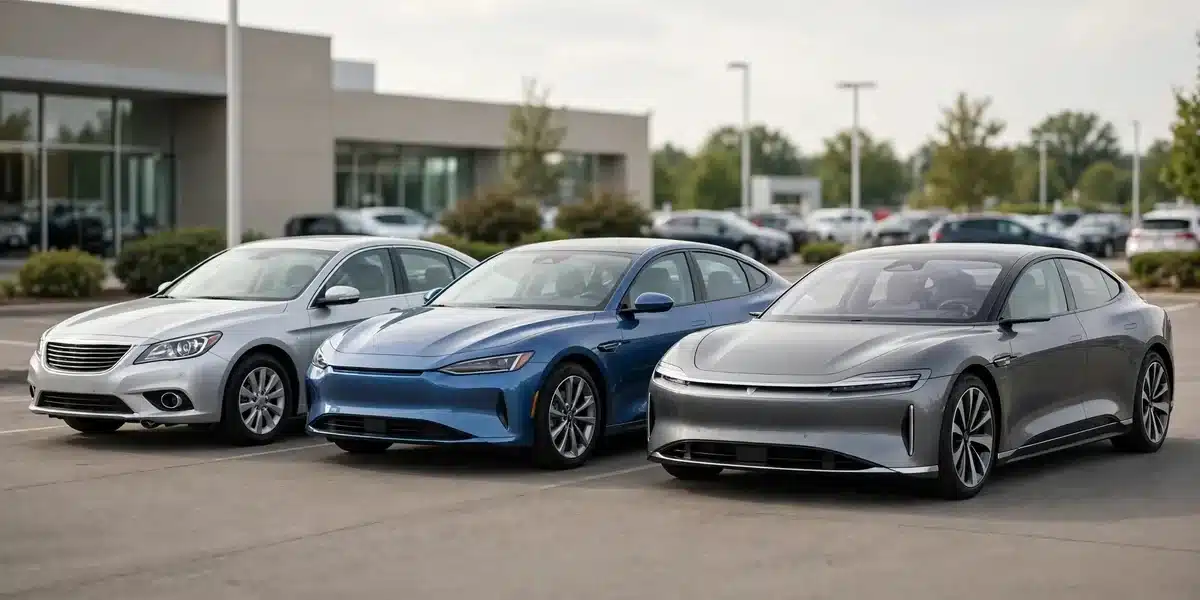
- Consumer Reports: hybrid 300–500 miles on gas. Plug-in hybrid 20–40 miles electric plus 300–500 on gas; EV 200–400 miles between charges. Zebra: gas 250–350 miles/tank, median EV 234 miles/charge, longest-range 2021 EV 405 miles. One model, the 2022 Honda Insight, goes about 728 miles per tank.
- Gas and hybrid cars fill at a gas station in minutes — MotorTrend calls hybrid refueling fast, easy, and reliable. An EV charges mostly at home: Level 2 (240V) adds 20–30 miles/hour, DC fast charging 100–200+ miles in 30 minutes. Home Level 2 setup: about $500–$1,500 (Zebra: roughly $1,000–$2,500, average $1,200 for an EVSE station).
- Cold saps about 25% of EV range (Consumer Reports winter testing); hot summers can cut it 10–15%.
Emissions
- An EV has zero tailpipe emissions. A hybrid has much lower CO2 and tailpipe emissions than gas, especially in cities; gas is highest. Zebra: annual CO2 3,771 kg gas vs. 1,368 kg EV (saves 2,403 kg a year). ChargeMath: EV cuts CO2 vs. gas by 6,192 lbs a year in California.
Maintenance, Reliability and Insurance
- Routine maintenance: EV lowest ($700 over 5 years in Nissan’s example). No oil changes, fewer moving parts, no exhaust system, fewer brake replacements. Gas highest ($4,500 over 5 years); Zebra defaults: gas $800 a year vs. EV $400 a year.
- Hybrid maintenance is debated: Zebra says hybrids can cost more to maintain. Because they have both a gas engine and an electric system. While Nissan’s 5-year example puts hybrid maintenance at $1,300 vs. $4,500 for gas, thanks to reduced engine wear.
- Reliability is separate from maintenance: a Consumer Reports survey found hybrids had 15% fewer problems than gas-only cars. While EVs and plug-in hybrids had about 80% more. So the cheapest to maintain is not the most reliable.
- Insurance: Zebra — gas $1,529 a year, hybrid $1,637 (+7%), EV $2,280 a year. ChargeMath: EV insurance 10–15% higher than gas or hybrid.
Which One Is Right for You?
- Gas: long highway trips, remote and rural areas, lowest upfront cost. Maximum towing, familiar and proven technology, 20,000+ miles a year.
- Hybrid: city and mixed driving, no charging access, fuel savings without a lifestyle change. No range anxiety, best balance of efficiency and convenience. Best at 12,000+ miles a year mixed.
- EV: home charging, predictable daily driving under 200 miles. Home 240V charging you can install, lowest running cost, zero tailpipe emissions.
How Much Fuel Does a Hybrid Really Save?
The short answer is a lot in the city, and less on the highway. Savings depend on the model, how much you drive, and where you drive.
Real-World MPG: Model by Model
- Prius: about 50 mpg; one shopper went from 36 to 60 mpg.
- Corolla Hybrid: 50 combined vs 34 gas (2026). 2024 LE: 53 city / 46 highway / 50 combined vs gas LE 32 / 41 / 35.
- Camry Hybrid: about 52 mpg vs about 32 mpg gas.
- RAV4 Hybrid: about 40 mpg vs about 30 mpg gas; one owner: 40 vs 29 mpg.
- Maverick Hybrid XL 2024: 42 city / 33 highway / 37 combined. The gas EcoBoost XL gets 23 / 30 / 26. City gap far bigger than highway gap.
- Highlander Hybrid: about 36 mpg vs about 24 mpg gas.
- Escape Hybrid: 39 mpg vs 25 mpg for a traditional SUV.
Overall, Motor1 calls 20-30% reasonable; Preston Ford and Sunset Hills Subaru say 20-35%. Dick Hannah says Toyota hybrids are typically 30-50% better.
How Much Money Does That Save Each Year?
- Motor1, 15,000 miles/year: 40 mpg uses 375 gallons vs 500 at 30 mpg, saving 125 gallons, about $438/year at $3.50/gallon.
- KBB, 2026 Corolla, 15,000 miles/year at $3.32/gallon: gas $1,434/year vs hybrid $975/year, saving $459/year.
- Cars.com (EPA, 15,000 miles/year, 50% city, $3.50/gallon): Corolla Hybrid saves $395/year ($7.60/week, about $33/month); Maverick Hybrid saves $607/year ($11.67/week, $50.58/month).
- Dick Hannah (15,000 miles/year, about $4/gallon): Corolla $600-700/year, Camry $800+/year, RAV4 $500-600/year, Highlander $700-900/year.
- Preston Ford (15,000 miles/year, $3.50/gallon): Escape Hybrid $1,346/year vs traditional SUV $2,100/year, saving $754+/year.
Same Corolla Hybrid is quoted at $395, $459, and $600-700 a year. Because savings depend mainly on gas price and model year.
Savings Over Five Years
- Motor1, 40 vs 30 mpg over 75,000 miles: 1,875 vs 2,500 gallons, saving 625 gallons, about $2,188 at $3.50/gallon. Savings rise with gas price and mileage.
- Preston Ford: $3,000-5,000+ on fuel alone over 5 years.
- Dick Hannah: average US driver spends $150-250/month on gas, $9,000-15,000 over 5 years. Savings add up over 5-10 years; keeping a car 5+ years is a sign a hybrid fits.
City vs Highway: Where Hybrids Save Most

Hybrids shine in the city: regenerative braking recovers energy as you slow down. And the engine shuts off at stops and light loads. On the highway, there is less braking energy to recover. And the gas engine does most of the work, so the gap shrinks. Gas engines are efficient at steady highway speeds.
- Maverick Hybrid: city 42 vs 23 mpg, but highway only 33 vs 30 mpg.
- Corolla Hybrid: city 53 vs 32 mpg, but highway 46 vs 41 mpg.
What Shrinks Your Savings
- Cold weather: a gas car loses about 15% of city MPG at 20F vs 77F. Up to 24% lower on short 3-4 mile trips. A hybrid can lose about 30-34%, a bigger hit.
- Why cold hurts hybrids more: the engine takes longer to reach efficient temperature, hurting short trips most. The heater and defroster draw power. Cold batteries work worse and cut regenerative braking. Winter gas has less energy; tire pressure drops and cold air is denser.
- Hot weather: heat itself can help. Because the engine warms up faster, summer gas has slightly more energy, and warm air causes less drag. But air conditioning is the main drag.
- Under very hot conditions, AC can cut a gas car’s fuel economy by more than 25%, mainly on short trips. And the effect on hybrids can be even larger in percentage terms. Windows down also cut economy through drag, mainly at highway speeds.
- Tips: drive smoothly, avoid sudden acceleration, keep tires properly inflated, and use eco-driving modes. Driving 25,000 miles a year saves far more than 5,000 miles a year, especially in city traffic.
How Long Until the Hybrid Pays for Itself?
- KBB: 2026 Corolla LE gas $24,595 (with $1,195 destination) vs Hybrid LE $25,970. A $1,375 premium, about 5.5% more, repaid in about 3 years at $459/year saved.
- Cars.com (EPA): 2024 Corolla Hybrid premium $1,450, payback 3.7 years at $395/year. Maverick Hybrid premium $1,500, payback 2.5 years at $607/year.
- Sunset Hills Subaru: premium often within a few thousand dollars, typical payback 3-4 years, faster in stop-and-go driving. Rising gas prices shorten it; falling prices lengthen it.
- Motor1: going from 25 to 50 mpg but driving under 50 miles a week saves only about $520 a year. So a large premium could take over a decade to repay. At 8,000 miles a year, savings may not justify a large premium.
When a Hybrid Does Not Save Much
- Mostly highway driving.
- Very low mileage: 8,000 miles a year, or under 50 miles a week. Low-mileage drivers may find a gas car cheaper up front.
- Some hybrids are tuned for performance or smoothness, not maximum economy, so the gap can be small. Compare actual EPA ratings, not just the badge.
- Cold weather, short trips, and heavy AC use shrink the advantage.
The Downsides No One Tells You First
Hybrids can save you a lot on gas, but they are not perfect. Before you buy one, it helps to know the trade-offs.
It Costs More Up Front
- Most conventional hybrids cost $1,500 to $3,000 more than the same gas-only car, and plug-ins cost even more. Consumer Reports puts the average at about $1,700. Though some Ford and Lexus models cost about the same as a similar gas model.
- You win the extra cost back slowly, through fuel savings over several years. At $4.28 a gallon and 12,000 miles a year, payback is now 4 years or less. In 2015, Consumer Reports put it at 8 years, and some models then took more than a decade.
The Battery: A Rare but Expensive Worry
- The battery pack is the most expensive part of a hybrid. A new Prius battery costs about $1,200 to replace and install, while a normal 12-volt battery costs $100 to $200. Outside the warranty, the bill can reach $6,000, depending on the car and the battery type.
- Modern batteries often last well over a decade. Expected life is 8 to 10 years or 100,000 to 150,000 miles, or much longer. The federal minimum warranty is 8 years or 100,000 miles. Toyota and Lexus give 10 years or 150,000 miles, and Hyundai and Kia give 10 years or 100,000 miles.
- Consumer Reports says a new battery can cost thousands, but its surveys show replacements are rare. And hybrids have 15% fewer problems on average than gas-only cars. Edmunds warns drivers who keep a car 15 years or more to plan for the cost. And the biggest risk is buying a used hybrid near the end of its battery warranty.
You Cannot Drive Far on Electric Alone
- A conventional hybrid runs on electric power only for short periods at very low speeds. Plug-ins go further, usually 35 to 45 miles: the Mercedes-Benz GLC 350e goes up to 54 miles. The Toyota RAV4 Plug-in Hybrid up to 52 miles. And the Ferrari 296 GTB only 7 miles.
- On electricity alone, acceleration is slower and top speed is lower, and hard throttle can start the engine. Once the battery is empty, a plug-in can be less efficient than a regular hybrid. The RAV4 Plug-in Hybrid gets 41 mpg in hybrid mode. While the regular RAV4 Hybrid gets 44 mpg. Consumer Reports says plug-ins run mostly on electricity for around 25 to 50 miles. If you do not plug in often, a regular hybrid usually costs less and gets slightly better mileage. And a plug-in does not make sense for long commutes.
Less Power, More Weight
- Most hybrids are tuned for fuel economy, not speed, with low-friction tires, a lower-tuned engine, and an efficiency-built transmission. The battery adds weight too, so a hybrid is usually slower than a gas car with similar power. Exceptions like the McLaren P1, Honda NSX, and Porsche Panamera E-Hybrid Turbo S are high-performance cars.
- One Consumer Reports writer remembers an early Prius that took forever to speed up onto the highway. Cost thousands more than a similar Corolla, and was too small for a big family.
- A Prius battery weighs almost 120 pounds, while a normal 12-volt battery weighs 30 to 50 pounds. A 2024 RAV4 XLE AWD weighs 3,515 pounds, the RAV4 Hybrid SE AWD 3,775 pounds. And the RAV4 Prime SE AWD plug-in 4,235 pounds. That extra weight affects braking, acceleration, and handling, and hybrids often need longer distances to stop.
Less Space and Lower Towing
- In most conventional hybrids, the smaller battery leaves cargo and passenger space about the same as in the gas version. But the bigger battery in a plug-in, and in a few conventional hybrids, can take up space. Under the cargo floor or the rear seats, cutting storage and rear-seat room.
- No editorial source we checked gave towing figures, so these are owner reports from Reddit. Not tested figures: all 2026 RAV4 models with all-wheel drive, up to 3,500 pounds. BMW X5 50e plug-in, more than 5,000 pounds; Ford Escape plug-in, 1,500 pounds. One Highlander owner tows a 3,200-pound loaded travel trailer, and another tows a pop-up camper of about 2,500 pounds. A Kia Carnival hybrid owner notes that the regenerative braking was not designed with towing in mind. And capacity rises from 1,000 to 2,500 pounds once trailer brakes are fitted.
Small Highway Advantage

- Hybrids shine in stop-and-go city driving, but at steady highway speeds the gas engine does most of the work. So savings shrink. A 2013 Carnegie Mellon study, cited by J.D. Power, found hybrids make little sense for long highway commutes: on highways. They harm the environment about as much as gas cars. While in city traffic they cut pollution.
Repairs Need Specialists
- A hybrid has high-voltage batteries, power electronics, electric motors, and complex control software. Hybrid parts can be costly, and repairs may need special tools and trained technicians, which limits your choice of shops. J.D. Power notes repairs can be surprisingly pricey if hybrid parts are damaged. And added weight and complexity are the main downsides overall. Kia adds that a skilled mechanic may be hard to find and will likely charge a little more. Hybrid insurance also costs $41 more per month than the average rate in the United States.
Cold Weather Hits Hybrids Harder
- In cold weather, a hybrid battery takes longer to reach the temperature where it works best. The chemical reaction that releases energy peaks more slowly. So the gas engine must provide more power, and fuel use goes up. Hybrids work best in cities and in warmer weather.
Resale Value: Mostly Good News
- An iSeeCars study of more than 3 million vehicles. It found that the average hybrid keeps 61.1% of its value after 5 years.
- Best after 5 years: Toyota Sienna 74.6% ($35,494 average for a 5-year-old model), Honda Prelude 70.6%, Toyota Corolla Hybrid 69.2%. Toyota Prius Plug-in Hybrid 67.8%, Toyota Prius 67.1%, Honda Civic Hybrid 66.9%. Toyota Camry Hybrid 65.4% ($23,674 average), Honda Accord Hybrid 61.7%. Weakest: Hyundai Sonata Hybrid 51.7%, Kia Carnival Hybrid 50%, Chrysler Pacifica Plug-in Hybrid 45.8%, Chrysler Pacifica Hybrid 45.1%.
- Resale depends on the model, not on hybrids in general. The real worry is the used buyer, who fears paying for a new battery, even though replacements are rare.
A Few More Things to Know
- Hybrid batteries need lithium and nickel, which must be mined and processed. Though full-life studies still find hybrids produce fewer emissions overall than gas cars.
- Choice is still limited: minivans and entry-level sedans have fewer hybrid options, GM sells only one hybrid (the Corvette E-Ray). And Stellantis has dropped plug-ins from Chrysler, Ram, Jeep, Dodge, and Alfa Romeo.
- A plug-in needs regular charging for its best fuel economy. And you may need a 240-volt line in your garage, which can mean paying for electrical work.
One Prius owner on Reddit sums up the other side. The first brake job came at 167,000 miles, while a Honda needed new brakes about every 40,000 miles. And the car still got almost 50 miles per gallon. Hybrids have real downsides, but for many drivers the savings are real too. The trick is to match the car to your driving, your budget, and how long you plan to keep it.
Do You Put Gas in a Hybrid? Do Hybrids Need Charging?
Yes, You Put Gas in It
All hybrid vehicles run on gasoline as their main fuel. And filling up is just like in a regular gas car. Toyota hybrids refuel just like a regular gas-only Toyota, and you can fill up at any gas station. The tank fills with a fuel nozzle, and a fill-up takes only about 3 to 5 minutes.
Do Hybrids Need Charging? It Depends on the Type
Mild and full hybrids never need to be plugged in – they have no charging port at all. The battery charges itself as you drive. The gasoline engine charges it, and regenerative braking captures energy each time you slow down. As long as you keep gas in the tank, the battery stays charged.
Plug-in hybrids (PHEVs) are different: you can plug them in, and you should to get the full benefit. But plugging in is not required to keep the car running – a PHEV still drives on gas alone. The plug is what gives you electric-only driving.
- A plug-in hybrid can drive about 20 to 50 miles on electricity alone. The 2026 RAV4 plug-in hybrid goes up to 52 miles. And the Mazda CX-90 plug-in hybrid goes 26 miles on electricity and gets 56 MPGe.
- A standard non-plug-in hybrid can usually drive less than a mile on electricity alone, and only at low speed.
What Happens If You Never Plug In a Plug-in Hybrid?
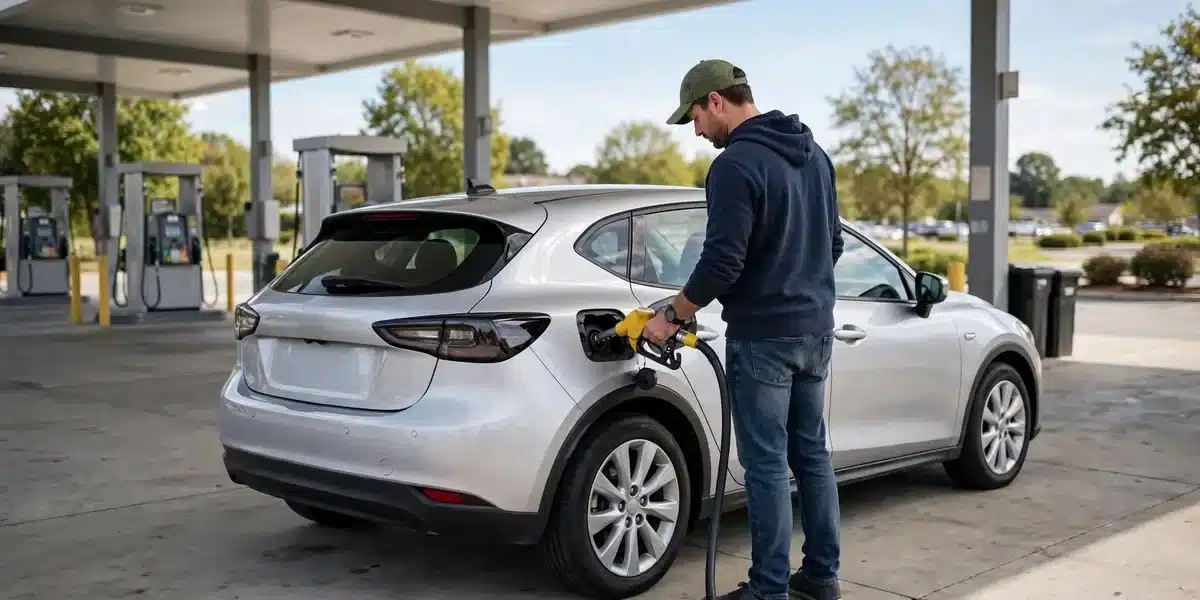
If you never plug in a PHEV, it still works. It just runs as a regular hybrid on gas alone. But you lose the savings: charging daily can cut fuel costs by 60 to 80 percent. And a regularly charged PHEV can reach 80 to 100 MPGe or more, since gas costs much more than electricity.
- Fuel economy drops a little: an uncharged RAV4 Prime gets about 35 miles per gallon. While the regular RAV4 Hybrid gets about 37. Consumer Reports says that once the charge runs out. A plug-in hybrid can use more fuel than its regular hybrid version. That is because of the added weight of the larger battery, motors, and charging parts.
- Mazda puts it plainly: without charging, a plug-in hybrid is less efficient than a similar non-hybrid car. Because you carry the extra weight of the battery pack for no reason, and that uses more gas.
- Battery health can suffer too: a battery that sits at a low charge may wear out faster. For the best balance of battery life and efficiency. Keep the charge between 20% and 80% and check your owner’s manual. A built-in reserve buffer stops the battery from draining fully. But a long stretch at a low charge can still shorten its life. Some plug-in hybrids can recharge the battery from the engine in charge mode, but others cannot.
What Happens If a Hybrid Runs Out of Gas?
Toyota’s official answer is clear: no, a hybrid cannot run without gasoline. It can drive in electric-only mode when there is gas in the tank. But it is not built to run with an empty tank. Doing so could cause severe damage to the hybrid system. So do not count on driving on electricity alone after the tank is empty. And do not let the tank run dry.
Can You Jump-Start a Hybrid?
Yes – but only the small 12-volt battery, never the high-voltage traction battery. A hybrid has two batteries. The 12-volt battery powers the computers, dashboard, locks, lights, and relays. And its main job is waking up the hybrid system. It is often in the trunk. But many models have a special jump terminal under the hood. It is usually under a red plastic cap in the fuse box. The high-voltage battery feeds the electric motor, sits under the rear seat or in the back, and is sealed. If a hybrid will not start, the 12-volt battery is usually the dead one.
- Read the owner’s manual first – terminal and grounding points differ by make and model.
- Use good, undamaged cables. Park both cars on a flat, safe surface, parking brakes on.
- Red clamp to the hybrid’s positive jump terminal, then red to the helper car’s or jump pack’s positive.
- Black clamp to the helper’s negative, then black to a ground point on the hybrid. Unpainted metal away from the battery.
- Start the helper vehicle; let it idle a few minutes.
- Press the brake firmly and the start/power button; look for the READY light. The gas engine may not start right away.
- Remove the cables in reverse order. Leave the car in READY for 20 to 30 minutes so the system recharges the 12-volt battery.
- If it will not enter READY mode, there is a deeper problem – see a dealer.
Never jump-start or boost the high-voltage battery. It carries dangerous voltage levels. And its complex battery system brings a risk of fire and damage. It is not a do-it-yourself job – trained technicians only.
Regular or Premium Gas?
Most hybrids need no special fuel: regular 87-octane unleaded gasoline is all that is required. In a car built for regular gas, premium will not give a meaningful boost in performance or fuel economy. But some models do require premium, so check your owner’s manual or the fuel door. For scale, regular gas is typically 87 octane, midgrade is 88 to 90, and premium is 91 to 94.
How Often Do You Fill Up?
Hybrids go much farther between fill-ups. A 2022 Honda Insight hybrid gets about 728 miles on one tank, at about 8 cents per mile. While most gas cars travel about 250 to 350 miles per tank. The Mazda CX-90 plug-in hybrid has a total range of 490 miles using gas plus electric power. A fill-up takes just 3 to 5 minutes. Compared with 2 to 3 hours for a plug-in hybrid’s Level 2 charge. At 14,263 miles a year and $4.09 per gallon (August 2022 prices). Fuel costs about $2,425 a year for a gas car. Versus about $1,137 for a hybrid. Roughly half the fuel spend and far fewer trips to the pump.
Are Hybrid Cars Worth It in 2026? Who Should Buy One, Who Shouldn’t
The Short Answer: Yes, for Most Drivers
For most drivers, the answer in 2026 is yes. Consumer Reports, updated October 27, 2026, says that in nearly every case, the hybrid version is the better option. Jake Fisher, its senior director of auto testing, calls hybrids a safe bet. They are the most reliable vehicle class, with 15% fewer problems than gas-only models. Consumer Reports recommends 83% of hybrids, compared with 57% of all models. Their emissions can be up to one-third lower than a gas-only counterpart. Nalley Automotive, on August 4, 2026, agrees: For most drivers, a hybrid makes financial sense in 2026. And the math has shifted in favor of hybrids over the past few years.
The Price Gap Is Closing
Hybrids still cost more up front, but the gap is much smaller than it used to be. Consumer Reports puts the average hybrid premium at about $1,700. And some models, such as the Ford Escape Hybrid and some Lexus models, cost the same as the gas version. Nalley puts the premium at typically $1,500 to $4,000, commonly $2,000 to $3,000. Some models have no premium at all. The Honda CR-V Hybrid, Ford Maverick Hybrid, Toyota Sienna, Toyota Camry, and Toyota Tacoma Hybrid. The 2026 Hyundai Santa Fe Hybrid costs $1,350 more than the gas version. And the Honda Civic Hybrid costs $2,700 more.
What It Costs Over Time

Look past the sticker price. At $4.28 a gallon and 12,000 miles a year. Consumer Reports says a typical hybrid pays back its premium in 4 years or less. Versus about 8 years in 2015. Nalley uses $3.50 a gallon and 15,000 miles a year. A gas-only car costs about $3,500 a year in fuel, versus about $2,150 for a hybrid. Saving about $1,350 a year, with a typical payback of 3 to 5 years, depending on the model and mileage.
Edmunds figures, quoted by Fast Company at 15,000 miles a year, show the same range. The Santa Fe Hybrid saves about $850 a year and pays back in under 2 years. The Civic Hybrid saves about $450 a year and pays back in about 6 years. The Hyundai Palisade Hybrid saves about $1,100 a year and pays back in about 2 years. And the Toyota Grand Highlander Hybrid pays back in about 2 years.
Edmunds also notes the 2026 RAV4 is hybrid-only, with up to 43 mpg. While the Toyota Prius reaches up to 57 mpg and the Kia Niro Hybrid up to 53 mpg. Hybrids also tend to hold their value well at resale, Nalley says. That can win back much of the premium at sale or trade-in.
If a new hybrid is still too costly, a used or certified pre-owned hybrid can avoid the new-car premium entirely. Aim for a hybrid that does not cost much more than the gas version. And compare total cost of ownership, not just the sticker price.
Who Should Buy a Hybrid
- City and stop-and-go drivers: hybrids shine in stop-and-go traffic, where the electric motor does most of the work. And they make the most sense for a long, traffic-heavy commute.
- High-mileage drivers: at 15,000 miles a year or more. Or with a long daily commute, the fuel savings add up fastest.
- Drivers without home charging: if you live in an apartment, have no garage. Or cannot install a charger, a hybrid cuts fuel costs without changing your lifestyle. And a regular hybrid never needs to be plugged in.
- Long-term owners: if you keep a car for 5 years or more. Or drive it past 100,000 miles, a hybrid is likely to win on total cost.
- SUV and family buyers: larger vehicles see the biggest gains and save the most money. Because their gas versions use the most fuel. Hybrid SUVs such as the RAV4, Grand Highlander, and Palisade show some of the largest savings.
- Plug-in hybrids: a plug-in hybrid only pays off if you charge it regularly. If you will not plug in, Consumer Reports says you are better off with a regular hybrid.
Who Should Skip One
- Mostly highway drivers: if most of your driving is steady highway cruising, a gas version may make more sense. Because the hybrid’s city advantage shrinks at steady highway speed.
- Very low-mileage drivers: under about 5,000 miles a year, the hybrid premium may take years to pay back. And under 10,000 miles a year a regular gas model may make more financial sense.
- Tight-budget buyers: if you need the lowest possible sticker price, a gas-only compact is still cheaper up front. And the hybrid premium can be a stretch on a tight budget.
- Drivers who can charge at home and drive short distances: an electric car may suit you better. Nalley says an EV can be the better choice if you have home charging. A short daily commute, and can charge overnight, with lower running costs than a hybrid.
- Buyers wanting a hybrid mainly for performance: the 2026 Chevrolet Corvette E-Ray is a hybrid, Car and Driver notes. But it will not save you much on fuel. Its hybrid system is for performance, not economy.
Best Hybrids to Buy in 2026

Hybrids now span cars, SUVs, trucks, minivans, and sports cars. And many models are hybrid-only or hybrid-standard, such as the Toyota Camry, Toyota RAV4, Toyota Sienna, and Ford Maverick.
- 2026 Toyota Camry: U.S. News No. 1, 9.4/10, $29,000-$36,725, 44-53 city / 43-50 highway mpg; Edmunds’ top midsize car, $29,600-$37,525, 43-51 mpg.
- 2026 Honda Civic Hybrid: U.S. News No. 2, 9.3/10, $29,295-$33,495, 50 city / 45-47 highway mpg. Edmunds’ top small car is the 2027 Civic Hybrid, $29,695-$33,895, 48-49 mpg.
- 2026 Honda Accord Hybrid: tied No. 3, 9.2/10, $33,795-$39,495.
- 2026 Hyundai Elantra Hybrid: tied No. 3, 9.2/10, $25,450-$29,800, 49-51 city / 52-58 highway mpg; U.S. News’ most fuel-efficient hybrid.
- 2026 Hyundai Sonata Hybrid: No. 5, 9.0/10.
- 2026 Toyota Prius: No. 6, 8.8/10, $28,550-$36,965, 49-57 city / 50-56 highway mpg; Car and Driver lists it from $29,845, 49-57 mpg.
- 2026 Toyota Corolla Hybrid: No. 7, 8.4/10, $24,975-$29,340; U.S. News’ cheapest hybrid.
- 2026 Hyundai Tucson Hybrid: Edmunds’ top small SUV, $31,300-$42,925, 8.7/10.
- 2027 Hyundai Palisade Hybrid: Edmunds’ top midsize SUV, $44,560-$59,680, 30-34 mpg; also the 2027 Kia Telluride Hybrid, $46,490-$57,590.
- 2026 Honda CR-V Hybrid: from $37,180, 35-40 mpg.
- 2026 Toyota RAV4: from $33,495, 38-43 mpg.
- 2026 Honda Civic / Civic Hybrid: from $25,990, 34-49 mpg.
- 2026 Hyundai Elantra: from $24,120, 31-54 mpg, the most affordable in Car and Driver’s list.
- 2026 Ford Maverick: from $28,990.
- 2026 Toyota Sienna Hybrid: from $42,915, 35-36 mpg.
U.S. News sums it up this way. The best hybrid is the Camry, the cheapest is the Corolla Hybrid at $24,975. And the most fuel-efficient is the Elantra Hybrid. If you drive a lot, sit in traffic, and cannot plug in at home. And if you plan to keep your car for years, a hybrid is a smart buy in 2026. If you drive little, mostly cruise on the highway, or need the lowest sticker price. A gas car may still be the better fit.
Frequently Asked Questions
Here are short, simple answers to the questions drivers ask most.
What is the disadvantage of a hybrid car?
Costs more to buy: about $1,700 more on average. About $1,300 more for cars and about $2,969 more for SUVs. Fuel savings can pay it back in 4 years or less at $4.28 a gallon and 12,000 miles a year. Down from about 8 years in 2015.
Battery replacement is rare but costly: $2,000 to $8,000 if it fails.
Tires can wear a little faster, because hybrids are heavier and the motor gives power right away.
It can be harder to find a mechanic who knows hybrid systems well.
Do you put gas in a hybrid car?
Yes. Fill up at any gas station, just like a gas car. See Yes, You Put Gas in It above for the full answer.
Do hybrid cars need charging?
No. A regular hybrid does not need to be plugged in – it charges its own battery as you drive. Only a plug-in hybrid charges from the grid. It charges for about 25 to 50 miles of electric driving before the gas engine takes over. See Do Hybrids Need Charging? It Depends on the Type above.
Can you still drive a hybrid if you run out of gas?
No. A hybrid is not made to run without gasoline. Toyota warns that it could badly damage the hybrid system, so always keep gas in the tank. See What Happens If a Hybrid Runs Out of Gas? Above.
How long does a hybrid car engine last?
Typical life: 150,000-200,000 miles. Many reach 200,000-300,000 miles and 10-15+ years with good care.
Firestone: 200,000+ miles is “not uncommon” with newer tech. At the U.S. average of 13,476 miles a year, 200,000 miles is almost 15 years.
Dover: hybrids can pass the 15-year mark with good care, and some owners report 200,000 miles.
The Prius and Accord Hybrid often reach 250,000 miles or more. Some owners report 15 years and 200,000 miles or more on the first battery.
The engine is not stronger than a gas engine – it still wears out spark plugs, fluids, and seals. But it works less: the motor does most low-speed and stop-and-go driving. So the engine turns fewer times per mile and needs service less often.
Firestone: shared work can help a hybrid last longer than a gas-only car. And match or beat one with good care. Regenerative braking also cuts brake wear, so brakes last longer.
Toyota’s hybrid eCVT uses a planetary gear set, not a normal automatic. So a drivetrain problem is more likely to show as a hybrid system warning than as shifting trouble.
Battery life: at least 10 years or 100,000-150,000 miles (KBB). Kia: 150,000 miles or up to 15 years. Toyota: 8-15 years, many healthy past 100,000 miles. Car and Driver: 100,000-200,000 miles, with no full study. After almost 25 years of modern hybrids. Failure risk is very low for at least 8 years and up to 100,000 miles.
Battery warranty: federal minimum 8 years/100,000 miles. California and 13 other states require 10 years/150,000 miles. Toyota gave all states 10 years/150,000 miles in 2020; before 2020, Toyotas had 8 years/100,000 miles. Most warranties pass to the next owner.
Some warranties act on lost range: Kia fixes or swaps a battery below 70% of its first capacity. From the 2026 model year, California requires batteries to hold at least 70% for 10 years/150,000 miles. Toyota says its batteries are made to last the normal life of the car with good care.
What shortens battery life: extreme heat (best from 59-95F). Blocked cooling vents or a dirty fan filter, and long spells parked and unused. Driving often is better than letting the car sit. For plug-in hybrids, charging to 100% all the time and frequent Level 3 fast charging can also shorten life. Kia says fast charging can cost about 10% of battery life over 8 years, compared with Level 2 charging.
Replacement cost: $2,000-$8,000, based on make and model. Car and Driver says to expect at least a couple of thousand dollars, plus labor. One Cars.com case: a 2012 Prius battery died after 11+ years and about 80,000 miles. And the dealer charged $4,600 fitted.
A hybrid with a dead battery will not run.
Are hybrid cars reliable?
Consumer Reports (Oct 2026): hybrids are the most reliable kind of vehicle. With 15% fewer problems on average than gas-only cars.
83% of the hybrids Consumer Reports tested are recommended, vs. 57% of all models tested. The Prius is often in the top spot in its reliability surveys, and battery replacements are rare in its surveys.
Camry Hybrid, Highlander Hybrid, Prius and Accord Hybrid ranked above average.

Conclusion
So, what is a hybrid car? A gasoline engine plus an electric motor and battery, working together. The three types are mild, where the motor only helps. Full, which can drive on electric power alone at low speeds. And plug-in, which charges at home for 20 to 50 electric miles.
Mild and full hybrids charge themselves; only plug-in hybrids plug in. They save the most fuel in city and stop-and-go driving, and less on the highway. They cost 1,500 to $3,000 more, but that usually pays back in 3 to 5 years if you drive enough. They are the most reliable vehicle class in Consumer Reports surveys, lasting 150,000 to 200,000 miles or more.
Downsides are the higher price, limited electric range, costly late-life battery replacement, and smaller highway savings. In 2026, hybrids suit most drivers, especially city drivers, high-mileage drivers, no-home-charging drivers, and long-term owners. While mostly-highway drivers, low-mileage drivers, and home-charging short-distance drivers may do better with a gas car or an EV. Choose by driving: a hybrid if you never want to plug in. Choose a plug-in hybrid if you can charge at home and your drive fits its electric range.
