
Honda e:Ny1 Battery: Complete Guide

Facts checked against Honda and Honda UK releases, specification and warranty documents, EV Database, ADAC’s Autotest, Green NCAP and What Car?.
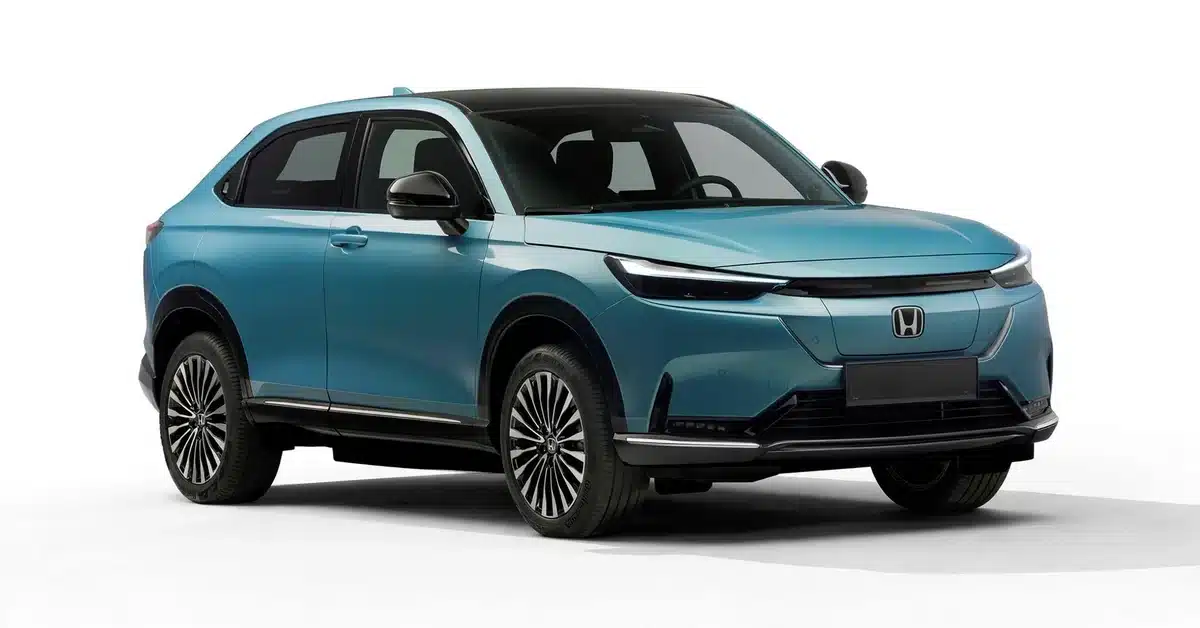
The Honda e:Ny1 keeps its battery simple: one pack, one motor, two trim levels. The pack is a 68.8 kWh unit with 61.9 kWh usable, built with CATL cells, and it gives the car a 256-mile WLTP range. What defines the e:Ny1 is not the battery’s size but its charging speed, its missing heat pump, and a UK price history unlike any rival’s.
The car was built by Dongfeng Honda in Wuhan, China, for Europe — Honda’s second electric car for the region after the Honda e — and sold from late 2023 until Honda withdrew it from the UK line-up in April 2026. It was never sold in the United States or Australia, so this guide works in WLTP figures and UK and European prices, with the market named on each one.
The Honda e:Ny1 uses a single 68.8 kWh NMC battery (61.9 kWh usable) with CATL cells, a 150 kW front motor and 256 miles of WLTP range. DC charging peaks at 78 kW — among the slowest in its class — and there is no heat pump. The battery warranty is 8 years or 160,000 km with a 70% capacity floor. Honda publishes no replacement pack price.
Key figures: 68.8 kWh gross / 61.9 usable · 96 cells, 370 V nominal · DC 78 kW (10–80% ~45 min claimed) · AC 11 kW · built in Wuhan, China · UK launch price £44,995 (Jul 2023), withdrawn Apr 2026
Honda e:Ny1 Battery: Size, Chemistry and Construction
One pack serves the whole range: 68.8 kWh gross, 61.9 kWh usable, NMC chemistry, with cells supplied by CATL.
| Honda e:Ny1 (Elegance & Advance) | |
|---|---|
| Battery (gross / usable) | 68.8 kWh / 61.9 kWh |
| Chemistry / supplier | NMC lithium-ion / CATL cells |
| Construction | 96 cells, 370 V nominal, liquid-cooled, underfloor |
| Motor | 150 kW (204 PS), 310 Nm, front-wheel drive |
| WLTP range / consumption | 412 km / 256 miles · 18.2 kWh/100 km |
| DC / AC charging | 78 kW peak / 11 kW three-phase |
| Platform | e:N Architecture F |
How is the e:Ny1 battery pack built?
Honda publishes the pack’s construction plainly: 96 cells at a nominal 370 volts (a 400-volt-class system), with integrated water cooling, mounted under the floor at the centre of the car. The 6.9 kWh difference between the gross and usable figures is a protective buffer of 10% — the largest buffer among the cars this guide compares it with, and a deliberate piece of Honda conservatism rather than wasted capacity.
Honda e:Ny1 Charging: What 78 kW Means in Practice
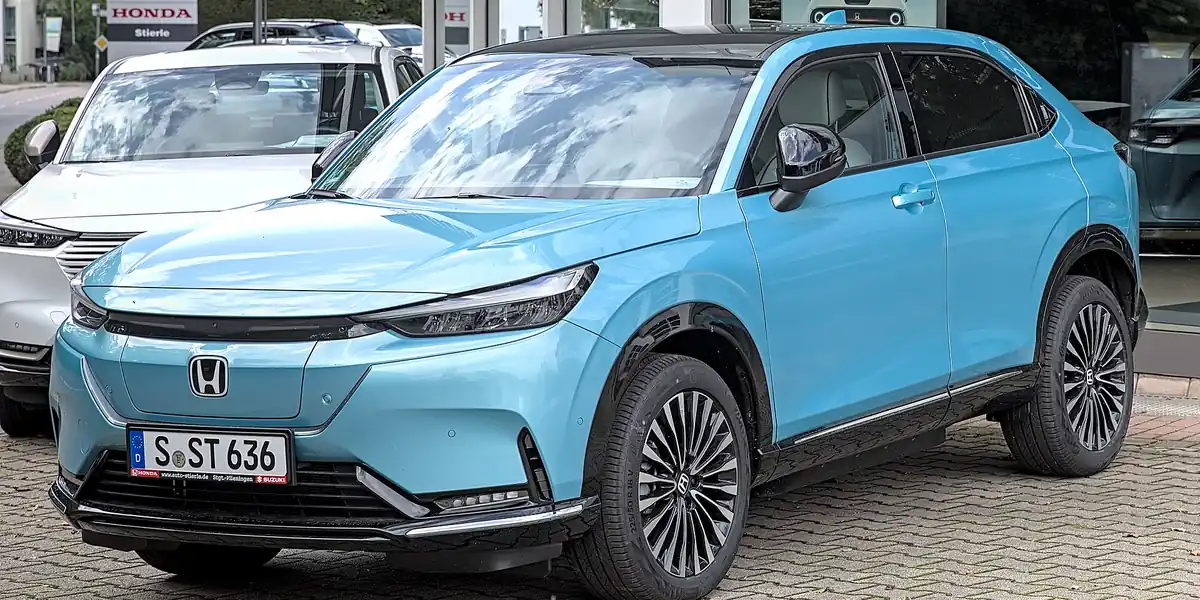
The 78 kW peak is real but modest, the measured curve falls away early, and cold weather stretches a rapid charge toward an hour.
How fast does the e:Ny1 charge on a rapid charger?
Honda claims 10–80% in approximately 45 minutes on a DC rapid charger, with about 100 km added in 11 minutes. Testers found the claim roughly fair in warm weather: ADAC charged 10–80% in 41 minutes at an average of 64 kW, and EV Database records 46 minutes at a 60 kW average. EVKX’s data adds the important detail — the car’s optimal charging window is only about 4–55%, after which the curve falls away well before 80%, so the “sustained, consistent” framing in Honda’s launch material is not what measurements show. A full DC charge takes about two hours. Honda dealer guidance warns that in cold conditions a rapid charge can take up to about 60 minutes.
What about AC charging at home?
On AC, the 11 kW three-phase charger fills the battery in about 6 hours 45 minutes (Honda quotes 10–80% in about 6 hours). There is no smaller onboard-charger variant in Europe; on a single-phase home supply the same charger draws up to about 7.4 kW, for a full charge in roughly 9–10 hours.
What charging features is the e:Ny1 missing?
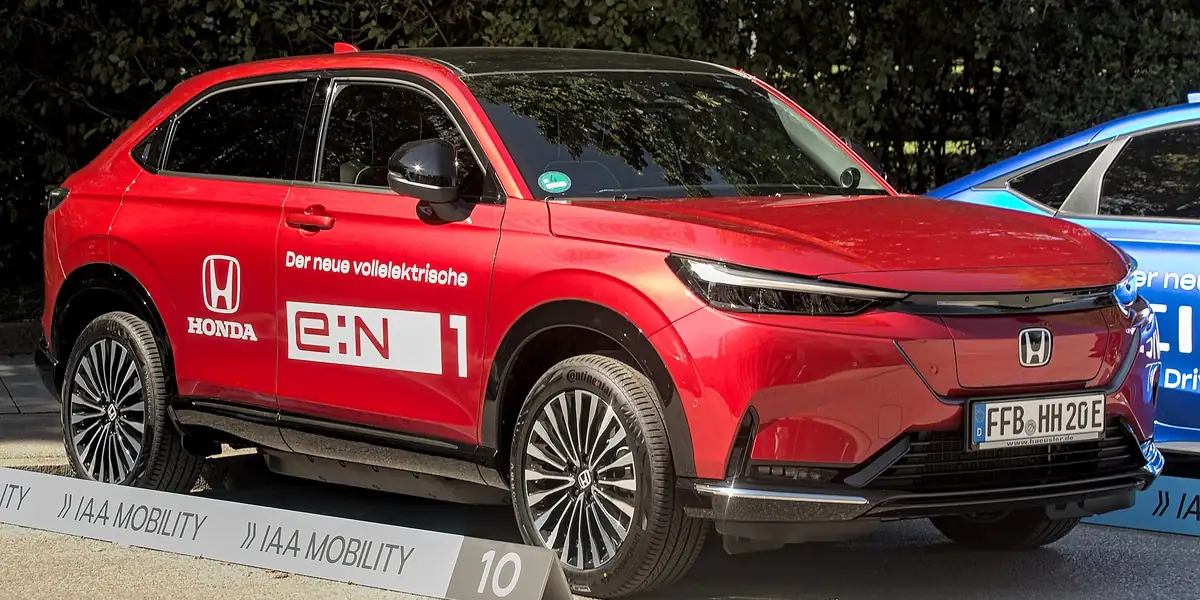
Three absences shape the ownership experience. There is no heat pump — on any trim, and never offered even as an option before production ended. There is no navigation-linked battery preconditioning for rapid charging; the car does have a battery warming system that works while it is plugged in, and the cabin can be preconditioned from the My Honda+ phone app (Honda CONNECT is the in-car system, not the app). And there is no vehicle-to-load output. None of this is hidden by Honda, but all of it matters more in winter than the brochure suggests.
Honda e:Ny1 Real-World Range
Plan on about 205 miles in mixed use, 160–180 miles in cold weather, and far less in deep cold — the missing heat pump is the reason.
What range do the estimates and tests give?
EV Database’s estimates (its own modelling, labelled as such) put the car at about 205 miles combined, 235 in mild combined use, 175 combined in cold weather and 145 on a cold highway run. Measured tests are consistent with that shape. ADAC’s Ecotest recorded 20.6 kWh/100 km including charging losses, for a 320 km range; Green NCAP’s tests averaged the same 20.6 kWh/100 km (331 km), rising to 27.3 on its highway test (234 km).
How far does the e:Ny1 go in winter?
Winter is where the car pays for its resistive heater. Green NCAP’s −7 °C cold test recorded 40.2 kWh/100 km — a worst-case range of about 162 km. Auto Express watched the indicated range fall from 181 to 134 miles simply by turning the heater on, and averaged about 165 miles on a very cold drive; Carwow puts real-world range at 160–180 miles, “and even less in the winter”, and CarGurus managed 167 miles in mixed cold running.

The Honda e:Ny1’s 12-Volt Battery
The 12-volt battery lives under the bonnet — and owners report it going flat when the car stands parked, which is the model’s best-known quirk.
Why does the e:Ny1’s 12-volt battery go flat?
Like most electric cars, the e:Ny1 runs its electronics, lights and computers from a conventional 12-volt battery under the bonnet, charged from the main pack. Owner forums carry a consistent pattern of reports: cars left parked for days — sometimes as little as a few days, sometimes a fortnight — found with a flat 12-volt battery, showing warnings or refusing to wake until jump-started. These are owner reports rather than the subject of any Honda recall or service bulletin, and they are recorded here as exactly that.
What should owners do about a flat 12-volt battery?
The practical reading is simple. A flat 12-volt battery does not mean the main battery has failed — the car jump-starts like a conventional car, following the owner’s-manual procedure — but repeated deep discharges shorten a 12-volt battery’s life, so a car that does it twice deserves a dealer check of both the 12-volt battery and the systems that should be sleeping. Owners who leave the car parked for long periods are the ones who meet this problem.
Is the Honda e:Ny1 Reliable? What the Surveys Actually Say
Honda the brand scores near the top of UK reliability surveys — but the e:Ny1 itself has never been rated, and the distinction matters.
What do the reliability surveys actually say?
The figure usually quoted is genuine: in What Car?’s 2024 Reliability Survey — 29,967 respondents and 31 brands — Honda placed fourth with a 96.6% brand score. Two fences belong on it. It is a brand score built almost entirely from petrol and hybrid Hondas; the e:Ny1 was too new and too rare to be model-rated, and the score says nothing specific about this car’s battery or charging. And it is dated: the following survey (30 brands) placed Honda second at 95.8%. Neither survey gives the e:Ny1 a verdict of its own.
Does the e:Ny1 have any recalls?
What can be said from the record: no DVSA safety recall affects the car in the UK, and no battery or charging recall for it appears in EU listings as of late 2026. Its documented weaknesses are the ones measured elsewhere on this page — slow charging and winter range — rather than failures.
Honda e:Ny1 Prices: The Discount Story
No figure tells this car’s story like its prices: launched at £44,995, cut by £5,000 within nine months, supported by £8,750 of Honda money by late 2025, and withdrawn in April 2026.
How did the e:Ny1’s price change over time?
Honda UK announced prices on 31 July 2023: Elegance at £44,995 and Advance at £47,195, with first UK deliveries in January 2024. In April 2024 Honda cut £5,000 from both — Elegance £39,995, Advance £42,195 — and added a deposit contribution. The April 2025 list showed Elegance from £40,660, and a December 2025 offer stacked £5,000 of deposit contribution with a £3,750 “Honda EV Grant” (Honda’s own money, not the government scheme) plus 0% finance. German prices likewise fell below €40,000, as ADAC noted in its test.
What does the price history mean for used buyers?
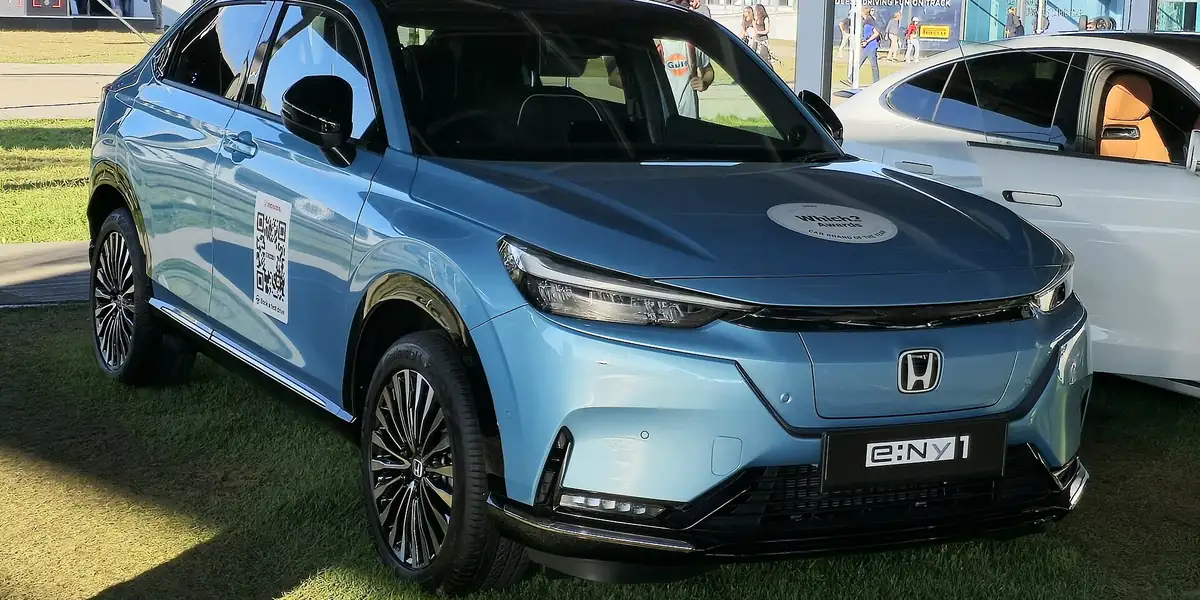
In April 2026 the car left the UK line-up, roughly two and a half years after launch. For used buyers that history cuts both ways: the cars are heavily depreciated for reasons of pricing, not proven unreliability — but the charging speed and winter range that reviewers criticised are real, and they are the things to test on any viewing.
Honda e:Ny1 Battery Replacement Cost
No official, dealer or parts-catalogue price for an e:Ny1 battery pack has been published anywhere.
Has any e:Ny1 pack price been published?
Honda does not list a pack price, and no dealer quote for one appears in reputable coverage. The only price-shaped sighting is the second-hand market — a used 2024 e:Ny1 pack was listed on eBay UK at £4,500, which is a marketplace listing for one used unit, not a price guide. For how EV pack replacements are priced when they do happen, see our guide to what an EV battery replacement costs.
Who pays if the battery pack fails?
In practice the warranty carries the risk for years: a pack that falls below 70% of its original capacity within 8 years or 160,000 km is Honda’s problem. Customer-paid full-pack replacements are not yet a documented market for this car.
Honda e:Ny1 Battery Warranty
The battery carries an 8-year capacity warranty at a 70% floor — longer and clearer than the car’s own warranty story.
What does the e:Ny1 battery warranty cover?
Honda’s European warranty conditions give the high-voltage battery 8 years or 160,000 km (phrased in the UK as 8 years or 100,000 miles), guaranteeing at least 70% of original capacity. The electric powertrain is separately covered for 5 years, and the standard vehicle warranty is 3 years (90,000 miles in the UK).
What was the five-year care package?
The “five-year warranty” sometimes quoted for this car was something else: a complimentary Five Year Care Package bundled at UK launch — five years of servicing, a five-year guarantee made of the 3-year manufacturer’s warranty plus a 2-year extended guarantee, and five years of roadside assistance. It was a launch bundle, not the standard warranty, and later offers used different packages with their own terms. For context against the page’s rivals: Kia’s standard vehicle warranty is 7 years, so Honda’s 3-year standard cover is not the generosity it is sometimes presented as.
Honda e:Ny1 Safety Rating
Euro NCAP never tested the e:Ny1 — there is no star rating for this car, and any source quoting one is inventing it.
Does the e:Ny1 have a Euro NCAP star rating?
The Car Expert’s summary is the accurate one: the e:Ny1 was not assessed by Euro NCAP during its production life, and UK reviewers list the rating as not available. One aggregator site claims a “4-star Euro NCAP rating from late 2023” — no such test exists, and that claim should be disregarded wherever it appears.
What safety-related rating does it hold?
What the car does hold is an environmental rating: Green NCAP assessed it in November 2024 and awarded 5 Green Stars with a 94% average score. Green Stars measure emissions and efficiency, not crash safety — a strong environmental result, and no substitute for a crash test that never happened.
The Other Cars With This Name: e:NS1, e:NP1, e:N1 and the Prologue
The e:Ny1 has Chinese twins, an Asian alias and an American namesake-in-spirit — and none of their figures belong on this page.
What are the e:NS1, e:NP1 and e:N1?
In China the same basic car is sold as the Dongfeng Honda e:NS1 and the GAC Honda e:NP1, launched in April 2022 on the same platform with the same CATL battery family — but with two pack sizes: a 53.6 kWh version (420 km on China’s CLTC cycle) alongside the 68.8 kWh car Europe received (510 km CLTC). Europe only ever got the larger pack, and the twins’ CLTC figures must never be quoted for the European car. In parts of Asia the car is sold as the Honda e:N1 — the same vehicle under a shorter badge, Thai-built for those markets.
Is the Honda Prologue the same car?
American readers should not confuse any of this with the Honda Prologue. Honda’s US electric SUV is a different vehicle entirely — it rides on GM’s Ultium platform with an 85 kWh pack and is built by GM in Mexico — covered in our Honda Prologue battery guide. The Honda e hatchback the e:Ny1 replaced in Europe is also a different car (35.5 kWh, rear-wheel drive, Japanese-built), and Honda’s newer Chinese S7 and P7 crossovers use a different platform and an 89.8 kWh pack — successors in spirit, not relatives in hardware.
Frequently Asked Questions
What size is the Honda e:Ny1’s battery?
68.8 kWh gross, of which 61.9 kWh is usable — the same single pack on both trims (Elegance and Advance). Green NCAP’s laboratory test measured 58.75 kWh usable, an attributed test result rather than a Honda figure.
What chemistry is the Honda e:Ny1 battery, and who makes it?
NMC (nickel manganese cobalt) lithium-ion, with cells supplied by CATL under Honda’s long-running supply agreement for its e:N Series cars. Honda does not publish the cell format.
How far does the Honda e:Ny1 go in the real world?
About 205 miles combined on EV Database’s estimates, with measured tests clustering at 160–180 miles in cold weather. Its official figure is 256 miles (412 km) WLTP; Green NCAP’s −7 °C worst case worked out at about 162 km.
How long does the Honda e:Ny1 take to charge?
Honda claims 10–80% in about 45 minutes at its 78 kW DC peak; ADAC measured 41 minutes warm, and Honda dealer guidance warns cold weather can stretch it toward 60 minutes. On its 11 kW AC charger a full charge takes about 6 hours 45 minutes.
Does the Honda e:Ny1 have a heat pump?
No — not on any trim, and it was never offered as an option. It is the main reason the car’s winter range falls as far as it does.
Where is the Honda e:Ny1’s 12-volt battery, and why does it go flat?
Under the bonnet. Owners report it going flat when the car stands parked for days at a time — an owner-reported pattern with no recall behind it. A flat 12-volt battery is jump-started following the manual’s procedure and does not mean the main battery has failed; repeated cases deserve a dealer check.
How much does a Honda e:Ny1 battery replacement cost?
No official or dealer price has been published. A used pack has been listed on eBay UK at £4,500 (a one-off marketplace listing). The battery is warranted to at least 70% capacity for 8 years or 160,000 km.
What warranty does the Honda e:Ny1 battery have?
Eight years or 160,000 km (100,000 miles in UK phrasing) with a 70% capacity floor. The electric powertrain is covered for 5 years and the car itself for 3 years as standard; the “5-year warranty” in launch coverage was a complimentary care package, not the standard warranty.
Is the Honda e:Ny1 reliable?
Honda scores near the top of What Car?’s brand reliability surveys (4th of 31 in 2024, 2nd of 30 in the following survey), but the e:Ny1 itself has never been model-rated, and no UK safety recall affects it. Its documented weaknesses are slow charging and winter range rather than breakdowns.
Can the Honda e:Ny1’s battery be updated or upgraded?
No capacity upgrade or battery update exists for the car — the pack it was built with is the pack it keeps. Software campaigns for other systems are handled through dealers when they arise.
Conclusion
The e:Ny1’s battery is the most honest part of the car — and the page it deserved is one that says so plainly. A sound, conservatively buffered CATL NMC pack with a proper 8-year capacity warranty, let down by 78 kW charging, no heat pump and a launch price the market rejected within months. Told accurately — measured charging, measured winter range, the 12-volt quirk, the real price timeline — it is a more useful guide than either Honda’s brochure or the aggregators’ inventions. Buyers weighing it against the Korean alternative should read our Kia EV3 battery guide next.
